Heritage – Our Identity – Our Pride

While recognizing monuments as timemarks with a distinct aura around them and that they are older than we can imagine, stimulates us also to philosophize not only about the past and its relationship with the present but also about the eternity, about the age of humanity, the speed of history, the transience of individuals, the achievement of whole cultures and what the monuments may see in future – us for instance. The melancholic appreciations of ancient monuments often easily acquire a political significance when ruins are taken as evidence of former glory or as fetishes for a social nostalgia. So things which are perceived as ancient and foreign must, first and foremost, make people think. This thinking process forms a significant part of their individual identity, a phenomenon which is followed by common men also.
·

·

HERITAGE - OUR IDENTITY - OUR PRIDE

·

·

WOP Editor explains the phenomenon that beckons peoples to seek their roots in heritage, the pride in their glorious past and a means to their identity in the contemporary world.

·

·

by Nayyar Hashmey

·

·

Archaeology enables us view our distant past at the time our life is happening before us. Monuments as long as they exist, give ever new meanings to our lives and acquire an ever new cultural significance; for they are a visible link between our present and the distant past.

Shalimar gardens are a masterpiece of the Mughal style gardens in Lahore, Pakistan. Constructed under orders of Emperor Shah Jahan in 1637, the gardens have marble palaces and mosques decorated with mosaics and gilt. The elegance of these splendid structures on three terraces with lodges, waterfalls and large ornamental ponds, is unequalled.  The Gardens were declared a UNESCO World Heritage Site, under the UNESCO Convention on protection of the world’s cultural and natural heritage sites. (more…)

Reach to the top and beyond

Abbotabad

                 Abbotabad: Jinnah Gardens in Early Spring  

·

A TALE ON THE TRAIL  TO THE ABBOTABAD PEAK

·

  by Nayyar Hashmey 

 ·

Located at a distance of 116 km from Rawalpindi and 217 km from Peshawar, Abbotabad is a popular summer resort in the midst of spacious valleys surrounded by green hills on all sides. The city is noted for its verdant parks, gardens, a beautiful golf course and pine covered hills. Besides, it boasts some prestigious educational institutions of the country and serves as an important gateway to almost all-beautiful places in Pakistan.

The formidable Karakorams and the enchanting Himalayas are approached from Abbottabad. It is a junction from where one goes to places like Hunza, Gilgit, Skardu and Kohistan of the Karakoram Range. One can easily reach Swat, Swati Kohistan, Dir and Chitral of the Hindukush Range along with Naran, Saif-ul-Muluk, Shogran and Babusar Pass of the Himalayan Range. Neelum, Lipa and Jhelum Valley of beautiful Azad Kashmir are also connected through Abbottabad.

While other hill stations are deserted during winter, Abbotabad is blessed with visitors due to its bracing winter season. The place has a beautiful park, the Jinnah Garden, maintained by the local Cantonment Board. The splendid stretch of turf in the city promises plenty of room for sports like polo, football, hockey and golf. The Cantonment area of is still very British. The European bungalows, the club, the church and cemetery are still there.

This is how the city looks nowadays but long time back, when I was doing my HSSC course; it had a different, even more beautiful and natural look than it has today. I was invited then by my elder brother to spend summer vacations in Abbotabad. (My brother in those days, was posted there as a tax officer of the Govt. of Pakistan).

Abbotabad as every one knows, was then and still is the second most important hill station in Pakistan. It was in those days, a clean, fragrant and beautiful town. There was absolutely no stink of diesel fumes, population was small and a rain shower even though a slight one, would dry clean the whole town, giving the small, beautiful Abbotabad a totally new look.

Nestled in the hills of Nawan Shehr locality of Abbotabad, Ilyasi Mosque is Abbotabad’s landmark constrcuted over a natural spring. 

The city had on its brinks green blue hills dotted with poplar forests. Crisscrossing the hills were small streams and rivulets. Up on the hills and their slopes were fruit orchards laden with apples, pomegranates and wild berries of every kind. The place we were living was also on the edge of the city and was called Malikpura. (It exists even today but is a much congested and overcrowded locality now).

Now we had a Gujjar lady who used to bring milk and poultry for us. We called her ‘Masi’. This milk lady or our Masi had a son who sometimes accompanied his mother. One day this son (I would call him a Masizad because I have forgotten his name) told me that up on the peak of the mountain and beyond, down hill there is a cave where Raja Rasaloo, the one time king of the area used to keep his gold and other treasures there. Now the fascination of a place which used to be laden with gold in time unknown coupled with the fact that I had never seen a cave yet, my fascination turned double fold and a strong urge arose to reach the summit of the mountain, descend the other side and sneak into the cave of a Raja who used to rule the valley in ancient days. My younger brother asked this ‘Masizad’ how high is the mountain and how much time will it take to reach there. Came the terse reply “Oh, not much, it’s just a two hours ascent and there you go”.

 My bother and I were so impressed with an idea to scale a peak even though a not very high but then peak is a peak. Our enthusiasm also grew much as a few years back, late Edmund Hillary of New Zealand for the first time had conquered the world’s highest peak on Himalayas, the Mount Everest. If not the highest, yet we would be scaling a peak and that would be great adventure and fun.

A mix of hues, the greens and the blues created by mother nature’s brush on the mountain of Abbotbad. Photo by Usman Qureshi

Now having listened to the very tempting and luring adventure, we decided to go for the expedition next morning. With the feeling of a would be conqueror, from verandah of my house, I just looked at the great mountain in the west, which carries the city like a mother does its child in the lap, I visualized a wonderful, pleasant and comfortable journey upwards. And let it be known dear reader, neither myself nor my younger brother had the least idea of trekking, climbing or mountaineering, yet irrespective of the hazards on the way, we decided to scale the peak of mountain.

Next day, we left at about 7.30 in the morning. While trekking upwards, we felt very pleasant. There was lush green vegetation everywhere; small rivulets came on our way. We happily waded through.. Water was cold and flow was rapid, yet we easily crossed over.

In the beginning our stamina was high so we did not feel the stress and exhaustion of moving upwards. However, at 8.30 am we asked our Masizad, how far it was to the top, to which he calmly replied, “Bhai, just near the top we are”. With these words, we again plucked our spirits and started moving upwards, although both me and my brother were gasping all the time and did not feel like going up any more. But with his words we started going and again gasping, moving upwards, gasping, moving with short breaks for rest and again moving. We asked the Masizad how far was it now to the top and he with his usual calm says” Bhai ab thora sa fasila reh gya hae” (brother, its just few steps now). With these morale boosting words, we again collected our spirits and started moving through but this time it was real hard task because not only was the height a big challenge to our stamina but also the lush green vegetation had turned into thorny bushes. To this malady came another misery in waiting. The grass on the mountain had every now and then shrubs which had a slimy juice in the leaves.

There were many leaves of this type lying on the ground like a creeper. This made us many a time to slip and fall down but we managed it some how. It was almost 9.30 now but the top was nowhere in the sight. We were almost nearing exhaustion both in spirits and physique. Again the morale boosting dosage from our Masizad  “Bhai ab tau aap top per pohnch gayay ho”. (Brothers, you have reached the top almost). These words acted like a tonic but as the poet says “abhi ishq ke imtihan aur bhi haen” we had yet many tests, feats and miracle to perform. That was the price we had to pay for our love, adventure, and persistence to reach the top. Again we collected ourselves and started trekking upwards. We were very much exhausted and now the sun had brightened too much, we could not open our eyes and were terribly thirsty. Fortunately our masizad had with him water in the chhagal. Those of you, who do not know what a chhagal is, well! Chhagal is a canvas container for carrying water. Mostly soldiers used this in their exercises and actual battles. I do not know whether our army jawans still use it but in those days, it was a part of an armor by a soldier, a traveller or a climber in remote areas – whether desert or the mountain. As is the case and this we starkly observed near the top of Abbotabad mountain, that in such places, thirst is another reason to loose one’s life.  But fortunately, we had water so we quenched the thirst to our heart.

After having refreshed ourselves, we started ascending once more. While taking water, we had taken a 15 minutes break and thus had revamped our energies. Our ascent began once again but now we were not so tired as before. Fluid intake had done an elixir’s job. And then we had also the excitement to reach the top. We trekked and we trekked almost for an hour or so and vow! we were on the top. It was an immense joy for me and my brother. We were on the top of a local mountain and yet our excitement was not less than a mountaineer who had reached Mount Everest.

Mountain top was a very fresh and plain ground, lush green shrubbery and pine trees. There was wild fragrance in the air and it was a paradise like atmosphere. All our fatigue had gone in a nu

Having stayed on top for a while, we started descending now and in about an hour’s time, we reached the cave of famed Raja Rasaloo. The cave was not a big one, it was quite muddy inside but in we went. It was as cool as an air-conditioned room. We selected a dry place, plain enough to squat easily. The feel of being inside a Raja’s cave’ even though there was absolutely nothing romantic about the cave, nor anything special, no wealth of the Raja, no gold and nothing else except a hollowed space in the mountain, yet it was a great feel, great fascination and fun for us. At that moment our Masizad asked us whether we had some hunger and both me and my younger brother said we were indeed. To this, he opened his “poatlee” and vow; he had parathas and potatoes made into bhujia done in mountain style by our good masi. There was a special type of achaar made of wild apples, berries and a special fruit which had the look of small black pepper seeds. It was a wonderful recipe, the most sumptuous treat I had ever had in my life especially after such a hectic hike to the mountain and then to the cave of a mythical Raja who used to hide his wealth in the cave. Well dinner with such a relishing food and off we go. We came out of the cave, started ascending once again. The journey back home was quite smooth as we had acquainted ourselves with the whole trek now and were now much experienced hikers.

Later I trekked to many places, the Saiful Malook lake in Kaghan, Parachinar in Kurram Valley, the Alps in Upper Austria and Salzburg, the Czech & Slovak highlands in Eastern Europe and it was a normal way of life with me but the one to mountain in Abbotabad was a tough, yet a very good learning experience to embark on mountain treks, no matter low or the high mountains.

YOUR COMMENT IS IMPORTANT

DO NOT UNDERESTIMATE THE POWER OF YOUR COMMENT

Wonders of Pakistan supports freedom of expression and this commitment extends to our readers as well. Constraints however, apply in case of a violation of WoP Comments Policy. We also moderate hate speech, libel and gratuitous insults.  
We at Wonders of Pakistan use copyrighted material the use of which may not have always been specifically authorized by the copyright owner. We make such material available to our readers under the provisions of “fair use” only. If you wish to use copyrighted material for purposes other than “fair use” you must request permission from the copyright owner.


Can’t Win in Afghanistan, Blame Pakistan

As resistance to the US-led occupation of Afghanistan has intensified, the increasingly frustrated Bush administration is venting its anger against Pakistan and its military intelligence agency, the ISI.

·

CAN’T WIN IN AFGHANISTANBLAME PAKISTAN

·

VIOLENCE & UPRISINGS IN  FATA NOT CAUSED BY “TERRORISM” BUT OUT FALL OF THE US-LED OCCUPATION OF AFGHANISTAN

·

by Eric Margolis

·

Soon after the US invaded Afghanistan and overthrew the Taliban government in 2001, I predicted that Taliban resistance would resume in four years.

My fellow pundits, who were cock-a-hoop over the US military victory over a bunch of lightly-armed medieval tribesmen, became drunk on old-fashioned imperial triumphalism, and denounced me as “crazy,” or worse. But most of them had never been to Afghanistan and knew nothing about the Pashtun tribal people. I had covered the struggle against the Soviet occupation of Afghanistan during the 1980′s and was well aware of the leisurely pace of warfare favored by Pashtun warriors.

“Do not stay in Afghanistan,” I warned in a 2001 article in the Los Angeles Times. The longer foreign forces remained in Afghanistan, the more the tribes would fight against their continued presence. Taliban resumed fighting in 2005.

Now, as resistance to the US-led occupation of Afghanistan has intensified, the increasingly frustrated Bush administration is venting its anger against Pakistan and its military intelligence agency, Inter-Service Intelligence, better known as ISI.

The White House just leaked claims ISI is in cahoots with pro-Taliban groups in Pakistan’s tribal agency along the Afghan border and warns them of impending US attacks. The New York Times, which allowed the Bush administration to use it as a mouthpiece for Iraq War propaganda, dutifully featured the leaks about ISI on front page. Other administration officials have been claiming that ISI may even be hiding Osama bin Laden and other senior al-Qaida leaders.

The Bush administration claims that CIA had electronic intercepts proving ISI was behind the bombing of India’s embassy in Kabul. India and Afghanistan echoed this charge. No hard evidence though was ever produced, but the US media has been lustily condemning Pakistan for pretending to be an ally of the US while acting like an enemy.

During a visit to the US by Pakistan’s newly elected  Prime Minister, President George Bush angrily asked, Yousuf Gilani, “who’s in charge of ISI?” An interesting question, since all recent ISI director generals have been vetted and pre-approved by Washington.

I was one of the first western journalists invited into ISI HQ in 1986. ISI’s then director general, the fierce Lt. General Akhtar Abdul Rahman, personally briefed me on Pakistan’s secret role in fighting Soviet occupation of Afghanistan. ISI’s “boys” provided communications, logistics, training, heavy weapons, and direction in the Afghan War. I kept ISI’s role in Afghanistan a secret until the war ended in 1989.

ISI was primarily responsible for the victory over the Soviets, which hastened the collapse of the USSR. At war’s end, Gen. Akhtar and Pakistan’s leader, Zia ul Haq, both died in a sabotaged C-130 transport aircraft. Unfortunately, most Pakistanis blame the United States for this assassination, though the real malefactors have never been identified and the investigation long ago shelved.

On my subsequent trips to Pakistan I was routinely briefed by succeeding ISI chiefs, and joined ISI officers in the field, sometimes under fire.

ISI, which reports to Pakistan’s military and the prime minister, is accused of meddling in Pakistani politics. The late Benazir Bhutto, who often was thwarted and vexed by Pakistan’s spooks, always playfully scolded me, “you and your beloved generals at ISI.”

But before Gen. Pervez Musharraf took over as military dictator, ISI was the third world’s most efficient, professional intelligence agency. It still defends Pakistan against internal and external subversion by India’s powerful spy agency, RAW, and by Iran. ISI works closely with CIA and the Pentagon and was primarily responsible for the rapid ouster of Taliban from power in 2001. But ISI also must serve Pakistan’s interests which are often not identical to Washington’s, and sometimes in conflict.

ISI was long and deeply involved in supporting the uprising by Kashmiri Muslims against Indian rule, and has been accused by India of abetting groups that have committed bombings and aircraft hijackings inside India, including a wave of terrorist bombings against civilians in Bangalore and Gujarat over recently weeks. For its part, India’s powerful intelligence service, RAW, has mounted bombing and shooting attacks inside Pakistan.

The reason it is often difficult to tell whether Pakistan is friend or foe is because Washington has been forcing Pakistan’s government, military and intelligence services into supporting the US-led war in Afghanistan and in the past, in rounding up and torturing opponents of Pakistan’s military dictatorship. Pakistan was forced to bend to Washington’s will through a combination of over $11 billion in payments and threats of war if Pakistan did not comply. The ongoing prosecution of the US-led war in Afghanistan depends entirely on Pakistan’s provision of bases and troops.

While Pakistan’s government, military and intelligence services were forced to follow Washington’s strategic plans, 90% of Pakistan’s people bitterly oppose these policies. President-dictator Musharraf was caught between the anger of Washington and his own angry people who branded him an American stooge.

Small wonder Pakistan’s leadership is so often accused of playing a double game.

The last ISI Director General I knew was the tough, highly capable Lt. Gen. Mahmood Ahmad. He was purged by Musharraf because Washington felt Mahmood was insufficiently responsive to US interests. Ever since 2001, ensuing ISI directors were all pre-approved by Washington. All senior ISI veterans deemed “Islamist” or too nationalistic by Washington were purged at Washington’s demand, leaving ISI’s upper ranks top-heavy with too many yes-men and paper-passers.

Even so, there is strong opposition inside ISI and the military to Washington’s bribing and arm-twisting the subservient Musharraf dictatorship into waging war against fellow Pakistanis and gravely damaging Pakistan’s national interests. After coming of the new civilian set up under Mr. Zardari as the new President, and Mr. Gilani, the prime minister, for most of the Pakistanis Pakistani people, there seems to be hardly any change in this policy.

ISI’s primary duty is defending Pakistan, not promote US interests. Pashtun tribesmen on the border sympathizing with their fellow Taliban Pashtun in Afghanistan are Pakistanis. Many, like the legendary Jalaluddin Haqqani, are old US allies and “freedom fighters” from the 1980′s. When the US and its western allies finally abandon Afghanistan, as they will inevitably do one day, Pakistan must go on living with its rambunctious tribals.

Violence and uprisings in these tribal areas are not caused by “terrorism,” as Washington and Musharraf falsely claimed. They directly result from the US-led occupation of Afghanistan and Washington’s forcing the regimes to attack theirown people.

ISI is trying to restrain pro-Taliban Pashtun tribesmen while dealing with growing US attacks into Pakistan that threaten a wider war. India, Pakistan’s bitter foe, has an army of agents in Afghanistan and is arming, backing and financing the Karzai puppet regime in Kabul in hopes of turning Afghanistan into a protectorate. Pakistan’s historic strategic interests in Afghanistan have been undermined by the US occupation. Now, the US and India are trying to eliminate Pakistani influence in Afghanistan.

ISI, many of whose officers are Pashtun, has every right to warn Pakistani citizens of impending US air attacks that kill large numbers of civilians. But ISI also has another vital mission. Preventing Pakistan’s Pashtun, 15-20% of the population of 165 million, from rekindling the old “Greater Pashtunistan” movement calling for union of the Pashtun tribes of Pakistan and Afghanistan into a new Pashtun nation. The Pashtun have never recognized the Durand Line (today’s Pakistan-Afghan border) drawn by British imperialists to sunder the world’s largest tribal people. Greater Pashtunistan would tear apart Pakistan and invite Indian military intervention.

Washington’s bull-in-a-china shop behavior pays no heeds to these realities. Instead, Washington demonizes faithful old allies ISI and Pakistan while supporting Afghanistan’s Communists and drug dealers, and allowing India to stir the Afghan pot – all for the sake of new energy pipelines.

As Henry Kissinger cynically noted, being America’s ally is more dangerous than being its enemy.

Eric Margolis, contributing foreign editor for Sun National Media Canada, is the author of War at the Top of the World.. Copyright © 2008 Eric Margolis
Disclaimer: The views expressed in this article are the sole responsibility of the author and do not necessarily reflect those of the ‘Wonders of Pakistan’. The contents of this article too are the sole responsibility of the author(s). WoP will not be responsible or liable for any inaccurate or incorrect statements contained in this post.

YOUR COMMENT IS IMPORTANT

DO NOT UNDERESTIMATE THE POWER OF YOUR COMMENT

Wonders of Pakistan supports freedom of expression and this commitment extends to our readers as well. Constraints however, apply in case of a violation of WoP Comments Policy. We also moderate hate speech, libel and gratuitous insults.


Loey Loey Bhar Lae Kurhriyay…

http://www.youtube.com/watch?v=q4pLOohSIg0

By  Nayyar Hashmey

The magic, the charm of Punjab’s folk songs lies in their heart rendering composition, the poetry which involves a completely synchronized rhythm, emotional import and the melody; the reason this music is untranslatable; can’t be imprisoned in print.

The real spirit of Punjab’s music emanates from this simple and a down to earth poetry blended into text and the tune, a blend which turns into a highly popular genre, a genre of songs that throb the hearts of simple unsophisticated village folk in Punjab.

A folk song is essentially a subjective expression of emotions walling up from the depths. It borrows its metamorphous and imagery from very simple things in life. Punjabi folk is varied and colorful. Laughter, happiness, pain, sorrow, all form ingredients of our folk. It’s simple, charming, and full of the sincerity of emotion, and a purity of the feeling. The entire Punjab culture, so to speak, is reflected in them.

The folk / mystic music of Punjab is part of its people’s body and mind. There is hardly an event or occasion in the countryside which does not find resonance in the soul of Punjabi people. Just as the villagers grow their own food and produce their own raiment’s, they frame folk songs to articulate the wordless passions seething in their hearts. These songs are chastened and polished from generation to generation, and like everything of slow growth, they develop an individuality, which does not lend itself to imitation.

Mazar of Hz Mian Muhammad Bakhsh

Mazar of Hz Mian Muhammad Bakhsh

Historically in Punjab, it is the saints and Sufi poets who not only mastered in religious faculty but had a deep and perfect understanding of the poetry, a poetry which springs from the soil of Punjab. This poetry is as much a literary classic as it is an embodiment of peoples’ feelings, their culture and their whole concept of life. No wonder the music in Punjab is not only a solace to the soul but also a part of the devotion, of love and of a duty to the mystic and divine realm of one’s Guru or Master.

Seen in this context, there is a long list of mystics, the Sufis, the Gurus and the saints who themselves were a practical embodiment of the teachings of Islam and who did not preach like an orthodox Mullah. We find here the saintly stalwarts like Baba Farid Ganj Shakar, Bulley Shah, Shah Hussain, Syed Waris Shah. In this long list of “Men of God” there are many others including Hindu and Sikh mystics as well, most of whom believed in unity of God and preached something which was a blend of Islam, and local beliefs. One of these pious men was also Mian Muhammad Bakhsh of Khari Sharif.

Mian Mohammad was the last Sufi poet of the Arabic-Persian tradition in Punjab. Born in 1824 at Khari Sharif in Mirpur district of Azad Kashmir, he got his education at the famous religious institution of Samar Sharif. After completing his education he travelled all over the province to quench his thirst for knowledge. Later he returned to his native land and became a disciple of Sain Ghulam Mohammad.

His period was a period of turmoil for the sub-continent for the British colonialists had coloured the land red with the native blood,

Mian Mohammad’s thoughts were a blend of Semetic and Arayan tradition with a significant texture of Islam. He believed in the unity of being. The rich tradition of Punjabi poetry mixed with the under currents of Maulana Roomi and Ibn-e-Arabi made his poetry eternal. His famous epic poem Safar-e-Ishaq popularly known as Saif-ul-Muluk is written in the same atmosphere. The poem Saif-ul-Muluk holds a unique place. In this poem Mian Mohammad explains the spiritual secrets of the Real love through a worldly love story. Mian Mohammad had an ample grasp over music which makes his diction highly mellifluous. Mian Muhammad died in 1907.

*

Far away from the city of oneness , logic is wandering aimlessly,

Whosoever knows the secret, He cares for nothing

Devoid of logic and reason, he dances fanaticically,

Inquiring “who am I ?” “from where am I?”

As with other masters he chose poetry as a medium to convey his teachings on the spiritual path and the higher realities in his native tongue thereby allowing access to the illiterate who could hear the verses and memorize them directly. This has been the way of the Sufis throughout history and especially in the non-Arab areas.

Literature for them is just a means of conveying the message and it has to reach out to the greatest number possible in a way that appeals to them. It is in this context that the Saif ul-Malook should be placed. To remove any doubt about the intention one has only to look at the title page of the original book: It is described there as “an epistle on tasawwuf and sulook called Safar ul-Ishq (The Journey of Love) i.e. the tale of Saif ul-Malook and Badi’ ul-Jamal”. Today most people only remember it by the name of its main character: Saif ul-Malook.

The Saif ul-Malook is outwardly a tale of the love of a prince named Saif ul-Malook for the fairy Badi’ ul-Jamal. All the trials and tribulations that had to be undergone before the two lovers would achieve union are described in detail. In reality though, it is an in depth description of the spiritual path, its way stations and its pitfalls and obstacles. Along the way Mian sahib offers jewels of gnosis for those that can recognize them as such. It is a truly amazing tale!

Mer mer ik banawan shisha maar wata ik bhanday

Dunya utay thoray rehnday qadar shanas sukhan day

Awwal tay kujh shauq na kassay kaun sukhan ajj sunn da

Jay sun si tan qissa utla koi na ramzam pun da

Na gayay oh yar piyaray sukhan shanas o’saaray

Sukhan saraf Muhammag Bakhsha lalan day wanjaray

(On top of this title, there is a video of Mian Muhammad’s poetry beautifully rendered by Ata-ullah Eesakhailwi. As always all videos require a high speed internet, otherwise try a replay & you will enjoy this old melody clip without breaks).

President Asif Ali Zardari, A 10% Scammer or a 100% Pakistani?

The Pakistani President Mr. Asif Ali Zardari

The Pakistani President Mr. Asif Ali Zardari

·

MR. PRESIDENT!

WERE 160 MILLION PAKISTANIS WRONG TO ELECT YOU?

·

by Nayyar Hashmey

·

As I write these lines, words echo in my mind, words she uttered in her last speech. So said Mohtarma Benazir Bhutto, “My dear brothers and my dear sisters, this is the time when our country is in turmoil. My country, your country” said B. Bhutto “is in serious travails and turpitudes; I have come to you to help me save this land. Help me my brothers, my sisters, to save our motherland”. Shortly after she had uttered these words, she was shot at by an unknown assailant. She could not even leave the public park she had chosen to address.

After she was out of scene, situation moved at an electric speed. Erstwhile dictator, who had orchestrated all machinations, fair or foul and turned this country into a marionette, had to resign. In the aftermath, Mohtarma‘s hubby got catapulted to the seat of presidency.

But the irony continues to haunt this nation. The inheritor of Mohtarma’s legacy, her vision and her struggle occupies the place where an erstwhile dictator, with the sheer use of force got himself seated for 8 years.

Now when I ponder over BB’s last words, the whole scene seems like an action replay. The words she uttered were as true then as they are now. This country, this most beloved land of ours is still in turmoil, even though the man who was the life partner of that graceful lady, who ruled and still rules over the hearts of millions of have-nots in Pakistan, is sitting on the throne of Pakistan. Yet this country is back to square one. Things have gone from bad to worse. Terrorists whosoever, are bombing the nerve centre of the country. Just day before yesterday at some minutes walk from the National Assembly; they bombed the Marriot Hotel in Islamabad, 60 people, almost all civilians died in the blast.

In last 8 years the ex dictator was telling us, like a worn out recorded tape that he saved Pakistan from wrath of the US when the later threatened him to send Pakistan into stone age. [it later transpired that this threat did not come from the US President, as our the then President Gen.(R) Pervaiz Musharraf maintained but from an Assistant Secretary of State and the language too was not the same that the ex General told this nation].

Although many Pakistanis did not believe then and I myself had strong reservations on this so called Stone Age statement and the way it was played by ex dictator to dread his own people, yet we believed then and we believe it today that had there been a democratic polity, a truly democratic culture in Pakistan, the matter would never have been settled or decided the way, it was [when this country was unconditionally thrown to the mercy of the United States of America and mind it, it was not the US of Thomas Jefferson or of George Washington, it was the US of Neocons like George Walker Bush, Dick Cheney, Donny Rumsfield and Condy Rice who think they have a divine right, destined to annihilate the governments, the people, the armies in the name of democracy, free world and liberty, so on and so forth].

Whether it were the threats, the persuasions or fear of these Pentagon and White House guys, is immaterial. Fact remains that ex dictator succumbed to those threats and accepted whatever the neocons told him. What the then President did on their askance, he said, was to save Pakistan, a position which he later cleverly tried to camouflage under the slogan “Sab Se Pehle Pakistan (SSPP), but the price this country paid for this SSPP policy was the sale of innocent Pakistanis to unknown agents within and outside Pakistan and till today one does not know what was their sin, their doing and where they are now.

In Punjabi there is a story where under similar circumstances this country has been brought to by the ex dictator and the incumbent President, in which a man belonging to the rural singing clan in our villages (who are usually the butts of humour in our countryside) was asked by the village head to opt out of the two options only… Either eat 100 onions at a time, or get 100 shoe beatings (littars). The poor man using all his wits opts to take 100 onions. Thinks he, ‘100 shoe beatings are too hard to bear’, hence take onions. But after having eaten some dozens of onions, he cries “No Sir am going to accept 100 shoe beatings instead”. In this dilemma he eats 100 onions and gets 100 shoe beatings too. So dear readers, this is how the ex General made this country to suffer…either way.

The ex General President allied this country to the US and Pakistan became a frontline state, however, with that status we, Pakistanis, the most allied ally of the US, are being bombed by US forces in Fata where poor, innocent civilians are dying after every chopper attack or through drone raids in our territory. So both ways, we are facing the punishment as it happened with the mirasi boy in a Punjabi village. Perhaps this is the first and the only instance in the history where a major power is attacking its own ally.

Unfortunately there doesn’t seem to be any change from the stance taken by the ex-General. We are still America’s ally and our poor innocent civilians are being bombed by the US and its coalition partners.

Gen de Gaulle, one time President of France once said, 70 million French can’t be wrong, so on an analogy 160 millions Pakistanis can’t be wrong either-to push Mr. Zardari to the coveted seat of the country’s presidency. It’s very much for Mr. Zardari to prove whether 160 million Pakistanis were indeed not wrong to elect him?

YOUR COMMENT IS IMPORTANT

DO NOT UNDERESTIMATE THE POWER OF YOUR COMMENT

Wonders of Pakistan supports freedom of expression and this commitment extends to our readers as well. Constraints however, apply in case of a violation of WoP Comments Policy. We also moderate hate speech, libel and gratuitous insults.


Attacking Pakistan? Don’t Do It.

How do Pakistan’s new leaders propose to deal with the increasingly demanding friends and allies like the Americans? Pakistan’s Army Chief General Ashfaq Kayani won the instant gratitude and admiration of his worried people and surprised the world by standing up to the Coalition of the Willing. The reticent General was lustily cheered by the Americans as ‘our man’ when he took over from Musharraf as the army chief. There was much talk of his ‘Enlightened Moderation’ and his positive outlook on the West. Which was why the Pakistanis were elated to see the general lash out at the Americans promising ‘retaliation’ if they continued to violate Pakistan’s sovereignty and territorial integrity. Whether the Pak Army will really take on America, the leading member of the fabled trinity – the other two being Allah and Army of course – is still a hypothetical question.
·

YOU NEED NO ENEMY, IF HAVE AMERICA AS YOUR FRIEND OR DO YOU?

·

Aijaz Zaka Syed

·

Back home in the sub-continent, they say you should always stay away from the cops; their friendship as well as adversity is bad for your health. I am reminded of the advice as the world’s chief cop, the United States, bombs its allies and friends in Pakistan. With friends like these, do you really need enemies?

When former Pakistani President Pervez Musharraf promptly and so enthusiastically recruited Pakistan in America’s war after that call from Colin Powell, he had assured his people that this was the only option available to Pakistan. Else, the reasonable General reasoned later, the U.S. would have bombed Pakistan back to the Stone Age. Fortunately or unfortunately for Pakistan, Musharraf is not around. Otherwise we could have asked the good general why the Coalition of the Willing has turned on its own ally. (more…)

Folk Tales of Pakistan – Heer Ranjha

It is said that when Waris Shah completed Heer, he showed it to his teacher. The latter was rather disappointed to see his talented student, instead of writing something on fiqh or shariah, had chosen to write a love story. He is reported to have said: “Warsa (deflection of the name, often used in Punjabi to address juniors in age or rank), I am saddened to see that my efforts have gone waste. I taught both you and Bulleh Shah. He ended up playing the sarangi (a string instrument) and you have come up with this.” Waris Shah then opened the book and started reciting Heer. As the teacher listened, the words slowly started sinking in. He was so touched by the language, the poetry, the powerful imagery, the intensity of emotions, and the melody that he is famously reported to have said, “Wah! Waris Shah, you have strung together precious pearls in a twine of “munj” (a coarse string of hemp or jute).”
·

STRINGING THE PEARLS IN A TWINE OF “MUNJ”

·

by Mast Qalandar

·

Note for WoP readers: Here is another post on that great folk tale of Punjab. It already appeared in Adil Najam’s blog. Even then I reproduce this for you, as I think Mast Qalandar is a guy who has done full justice to the leading Sufi poet of Punjab when he details this ever living legend in a very lucid, very absorbing style especially as a writer, who is not a native of Punjab. I myself would never have cast an iota of doubt over his being not a native had he not divulged it himself in this very write up. (more…)

The changing colours of autumn in Leepa

                                                                                                                                                                                                                                                               Leepa - A Valley of Changing ColoursLeepa – a valley of changng colours
 ·

A RICHLY COLOURED ATTIRE OF RED, ORANGE & YELLOW SHADES

·

by Syed Zafar Abas Naqvi 

 ·

The picturesque Leepa valley comprises of several villages, the principal being Reshian Gali, which at a height of 3600 M above sea level is also the gateway to the vale of Leepa. In addition to Reshian, there are other villages in Leepa like:-

  • Nokot
  • Chennian
  • Kappa Gali
  • Bigil Dher
  • Lubgran &
  • Ghaipura

Like Reshian, all these villages, the tiny small hamlets, equally contribute to a wonderful mosaic of patterns mother nature has so ornately and intricately woven here in this part of Kashmir.

Leepa is famous also for its typical Kashmiri style of architecture, mostly in the form of 3 storied wooden houses. A look at the houses here makes one believe, Leepa as a true extension of Indian occupied Kashmir into Pakistan.

The people in Leepa, as in other parts of Azad Kashmir, demonstrate robust character and a steadfast, a resilient way of living. Inspite of 18 years of Indian shelling and continuous fire almost every day (which takes its own tolls in terms of human life and collateral damage), and all this exacerbated by the deadly earthquake of Oct. 2005, life has gradually started turning to normalcy.

The paradise like mini Kashmir in Leepa has numerous water driven flour mills, the only kind of industry in the valley.

The valley has a population of about 75000 inhabitants who generally indulge in farming, cattle rearing and tourism related services. Nearly 400 jeeps ply daily from Reshian to Leepa and back. Jeeps are the only mode of transport in the valley though motor bikes are now also seen in ever increasing numbers on the bumpy jumpy road.

The red Kashmiri rice is grown in October by the farmers in Leepa. This is also the staple food for the people of the area. Husking of rice is done in traditional way, by first beating the rice stack with long sticks, thereafter, threshed along temporarily constructed ditches.

The highest peak is Shmasa Bari, which remains snowbound throughout the year.

Down hills, every year with coming of winter in the valley, when previous year’s snow melted on top of the mountains, soon fresh snow will be falling to interlace them all. It’s the time also when residents of this far flung vale have to brace the chilling winter  which brings heavy snow and thus brings increased hardships  for its 75000 residents. Due to lack of infrastructure, the valley is disconnected from the rest of Pakistan and Azad Kashmir.

Apple is grown in the valley in its different varieties, most popular being Golden, Delicious and Kala Kullo King. These varieties have a unique, highly tempting flavor and taste comparable to none. Walnut is another fruit grown in the valley. It too ripens in early autumn when it is collected, deseeded and then sent to down country markets where they fetch price as high as Rs 450/- per Kg. In Leepa the cost per Kg is Rs. 300/- per Kg.Though poor in infrastructure and no industry worth its name, excepting the water mills, nature has provided spectacular beauty to this valley that can surpass even developed areas of the plains if only its tourism potentials were exploited to the full.

Water in its streams is crystal clear and there is absolutely no pollution. One can breathe, clean fresh air, full of fragrance from virgin forests and wonderful scenery all around to watch.

Allover the valley, high walnut trees likewise put on attire in yellow, red and orange, which adds extra sparkle to our stay in Leepa. We also come across yellow herbs and shrubs tucked nicely into green vegetation comprising of large conifer trees, adding variety to this miracle of changing colors during autumn in the valley.

 Walkways amidst jungle are filled with compost leaves signaling a momentous magnitude of autumn in the valley. The foliage from deciduous trees stays on the ground leaving a damp and decayed trail. The skyline in the whole vale transcends from ardent green to russet red, gold, orange, dark yellow and brown. Strong winds and mild storms also wreack further havoc with the delicate branches, turning them yellow and this too adds to the already damp compost like soil. A walk on these fallen decayed leaves reminds of the harsh winter ahead. Birds are also going nomadic ready to move on an arduous and long journey bracing the chilling winds on the way, to safe havens in down country areas where they can feed and breed.

Kazi Nag Nullah basin also hosts hundreds of poplar trees with ready to fall yellow foliage. Yellow chinar trees acquire a crimson hue as if on a fire, a unique view along the mountains, tracks and the valleys in Leepa.

Soon we reach Burthwar Gali and encounter nearly 300 chinar trees again with their yellow, orange and red mix of colous, shades and hues adding further fire to the panorama of winter in the valley. Local elders said, these trees were planted during the period of emperor Shah Jahan, the builder king of the famed Mughal empire – to provide shade and protection to travelers who used to journey between Srinagar and Punjab either on horses or even on foot. We couldn’t help but admire this wonder of nature which had laid down a carpet of innumerable crimson colored trees, when viewed while passing through Burthwar Gali Pass.

Appreciating the allure of autumn trees in narrow alleys is the best pastime in this vale of wonders – wonders that this picturesque valley showcases to the outside world.

Tailpiece: Daily strolls along the fabulous terraced fields devoid of any crop at this time of the year offers you chance of a life time to enjoy nature’s beauty at its best. No words are able to describe the true beauty and incomparable sight of this touristic paradise in Kashmir.

Each year, on start of autumn in Kashmir, Leepa, which lies at a distance of about 90 KM from capital Muzaffarabad, starts to dress up in a new and richly colored attire-a mix of red, orange and yellow shades. It’s the time when apple picking season in the valley comes to an end.

*Readers who frequently use Google, can view this post also at www.wondersofpakistan.blogspot.com

YOUR COMMENT IS IMPORTANT

DO NOT UNDERESTIMATE THE POWER OF YOUR COMMENT

 Wonders of Pakistan supports freedom of expression and this commitment extends to our readers as well. Constraints however, apply in case of a violation of WoP Comments PolicyWe also moderate hate speech, libel and gratuitous insults.  
 We at Wonders of Pakistan use copyrighted material the use of which may not have always been specifically authorized by the copyright owner. We make such material available to our readers under the provisions of “fair use” only. If you wish to use copyrighted material for purposes other than “fair use” you must request permission from the copyright owner.


Vien Voir – Africa Thinks Africa Blinks

http://www.ziddu.com/download/2467932/09ViensVoir.wma.html

Vien Voir, A Song from Africa

By Umair Ghani

WOP Contributing Editor and Photographer Umair Ghani is nowadays in Africa. On a special photographic assignment to capture the soul of Africa through his lens, he met many African artists, painters and poets there.
In his first report which he filed for our readers, Umair sends me a poem written by African poet, Tiken Jah Fakoly. As I read this poem, I was stunned to observe the feelings, the pain, the anguish Jah feels for his land. Its same story every where. You just put Pakistan in place of Africa and every thing what Jah says, seems to portray a perfect picture – of us – of our country – our own sufferings at the hands of unscrupulous rulers. A fact that betells, common people all over the world think the same way.

Its now time for more people to people contacts. Interaction between different civilizations, people and countries. This will definitely help usher an era of understanding between different cultures. It’s incumbent for our generation to act now, when things like North South, East West Polarization, War on Terror, Uni-polar World have turned this beautiful earth into nightmares, not only for us but also for our coming generations.

Umair Ghani reports…

Tiken Jah Fakoly (1968–)a reggae singer from Côte d’Ivoire, was born into a family of griots and christened Doumbia Moussa Fakoly on June 23, 1968 in Odiené, north-western Côte d’Ivoire. He discovered reggae at an early age, assembling his first group, Djelys, in 1987. He became well-known at a regional level, but would soon ascend to national recognition. Since the rise in political instability and xenophobia in Côte d’Ivoire in recent years, Tiken Jah has been living in exile, particularly in Bamako (capital of the neighboring country of Mali) where his concerts are well-attended. In December 2007, Fakoly was declared persona non grata in Senegal after criticizing President Abdoulaye Wade.

Viens Voir is a moving song by Tiken Jah Fakoly, a symbol of unity and strength for African people. Here in Africa, almost everyone is playing or singing his REVOLUTIONARY songs everyday. All taxi cars consistently blare out his voice, all cafes and bars and everyone on the streets is humming… Jah Fakoly is living in exile in Paris, after his severe criticism of Senegalese, South African, Ivory Coast and Congolesean puppet rulers in his previous albums. One of his songs goes like this….”give me arms Ohhhh people, so I can kill these criminals who are ruling over us for nothing.”

Come See [Viens voir]
Come see, come see
Come see, come see
You who speak without knowing
Bamako, Abidjan ou Dakar Bamako, Dakar or Abidjan
Sierra leone, Namibie, ? come see
My Africa is not what makes you think
It is believed still faces the same
It is believed the same comments
It is believed the same stories
Listening to my Africa would be drought and famine
When we listen, my Africa would be fighting and minefields
Come see
Chorus
My Africa is not doing what you believe
Not a word about the history of this continent
On civilizations and wealth of yesteryear
No word on the meaning of values
People who t’accueillent hand on heart
Chorus
My Africa is not what makes you think
Africa is not doing what you believe
Come in our families
Come to our villages
You know what hospitality
The heat, smile, generosity
Come see those who have nothing
Look how they can give
And leave you richer
And you will not forget
Come see

You can listen to this song by clicking on the title which provides the link to audio player. The website would demand for a code to be filled in (to avoid spammers), therefore, go on putting in the codes provided therein and the song will be played acc.

`Want to offer Comments on this post? Click on the CommentsTab following this line.

Published in: on October 29, 2008 at 5:21 pm  Comments (4)  
Tags: ,

Empower Yourself with the Power of Your History – Taste the Real Essence of Historical Places

Main Enterance to Dai Anga's Tomb

Main Enterance to Dai Anga's Tomb

Have you ever been to Dai Anga’s mausoleum, in case of Yes or No, here we reveal the essence of this historic place, which we call the “History” should be our present, for those whose answer is “No”, have the chance to visit this marvelous piece of architecture and art of our forefathers, its beauty of art is about to end.

This is a monument which gives us a spur to build an incredible future like our marvelous and glorious past. When the sun unveils the day, the horizontal directional rays expose the real texture and art work of this square brick structure built on a raised platform with a large dome and four square pavilion like kiosks carrying projecting eaves and cupolas. 

This is the perfect season to enjoy and understand the real ornamental and symmetrical beauty of the tomb; the fresh morning cool air gives you a rhythmic pleasant breath, which will allow you to properly concentrate on the nature of tomb and its art work. After few moments you’ll understand the splendid, magnificent and regality living of our subcontinent’s Muslim emperors.

As the sun rises gradually this worthy tomb, it’s top borders of the walls (parapet) having “Kashi Kari” (the mosaic) on it, which points towards the quality and kind of tile mosaic that in all likelihood once covered the entire façade and all this show you the love, respect and care for our loved ones. As being the Dai (Wet Nurse) of Mughal Emperor Shah Jahan, she deserves this honor. You can easily understand her importance as a Dai, as our Prophet Muhammad (PBUH) respects his Dai Haleema R.A.

At noon when the sun is at its full glory and its peak, this fully lighted worthy memorial mausoleum describes our generation the real height and boom of our powerful Muslim rulers in this continent. This is the perfect time when the warmth of sun rays increasing the temperature of the surrounding to give us the grandeur feeling of the respect and dignity that we had. Now is the time to let you imagine and float with the feelings that you are in the past and part of that era.

Now it’s the evening after illuminating the whole day of more than 400 years of Mughals’ the sun started setting, and the tomb shows the damages by the Singh and the Englishman.

Sun is setting now, you can hear the sound of birds chirping, birds, those who lived the whole day out from their nests in search of food, just came back their homes awaited by their children, this calm and peaceful atmosphere is available on the roof of the tomb which make you realize that you also have someone who needs your care and love. At this time looking through the arc one of the kiosks towards the red sun it will knock on our minds that we are missing something, we are losing something, where is our glory?

Kanjwani Mela – The Spirit Lives On…


Festivals are a part of human psyche; men in Punjab are no exception to this spirit in the people of all regions, all countries. A change in weather, some saint’s birthday, a harvest or just a show of composure, the folk’s will to rejoice, the people in Punjab find a way to celebrate. Such festivals popularly called mela’s in Punjab are a common sight especially in our rural areas. As the summer ends, the hot and sultry months of June and July are over, a wave of celebrations hits almost every rural district which demonstrates expression of peoples’ enjoyment in an ambience of festivities all over Punjabi.
·

AN ENCHANTINGLY PICTURESQUE EVENT

·

by Nayyar Hashmey

·

Festivals are a part of human psyche; men in Punjab are no exception to this spirit in the people of all regions, all countries. A change in weather, some saint’s birthday, a harvest or just a show of composure, the folk’s will to rejoice, the people in Punjab find a way to celebrate. (more…)

Life in a Pakistani Village

img_5848-copy-2

Culturally, Pakistan’s rural folk enjoy a seemingly happy and contented life. Not that they tend to be passive and lack initiative. On the other hand our rural folk are more energetic and struggle minded than their city dwelling counterparts.
·

A Way of Life…But More Natural

·

by Hira N. Hashmey

·

Pakistan is the cradle of Indus Valley Civilization, civilisation that is spread over more than 4000 years of history. Archaeological excavations here have revealed evidence of the meticulously planned cities of Harappa and Mohenjodaro that lived and died along the banks of the mighty Indus and its tributaries. The ancient Hindu epics narrate life between the 7th and 5th century BC which carry rich descriptions of the land and people of Indus at that time. These relics throw light on the culture and changing architectural styles of Punjab since the Harappan age. At Taxila near Islamabad, sites associated with great Gandhara Civilization yielded remarkable relics that showcase the magnificient age of Buddhism in the region.

But along with its magnificent past, the rural life in present day Pakistan is as rich even today as it used to be before. The lush green crops which ripen in summer to yield golden harvests, fruit laden orchards which bear delicious fruits similar to those of the paradise and above all a mouth watering food that makes many a chefs to envy. The luscious fruits are so dominant in Punjab’s rural culture that a special variety of mangoes is called Samr-e-Bahisht, literally meaning the fruit of the paradise. (more…)

Published in: on November 14, 2008 at 7:05 pm  Comments (56)  
Tags: , ,

Colin David – Avant Garde of Non Conformist Painters


Absorbed in the world of words
Colin was one of those good adroit painters who fashioned human anatomy with skill and imagination. Like Ustad Allah Baksh, Sadiqain, Shakir Ali, Saeed Akhtar, Colin portrayed women figure as a special element in his paintings, a superb draftsman with a technical perfection that is all too rare. According to Marjorie Husain, an art critic, Colin used to paint non traditional style in the highly censored environment created by Gen. Ziaul Haq which consolidated his position as the most popular artist in that period.

·

CREATING BALANCE AND HARMONY IN COMPOSITION

·

by Sehrish Chaudhary

·

Colin David’s mortal body left this world on 25 Feb., 2008 but his soul breathes in his art and people.

Colin was one of those good adroit painters who fashioned human anatomy with skill and imagination. Like Ustad Allah Baksh, Sadiqain, Shakir Ali, Saeed Akhtar, Colin portrayed women figure as a special element in his paintings, a superb draftsman with a technical perfection that is all too rare. According to Marjorie Husain, an art critic, Colin used to paint non traditional style in the highly censored environment created by Gen. Ziaul Haq which consolidated his position as the most popular artist in that period. (more…)

Published in: on November 27, 2008 at 7:03 pm  Comments (4)  
Tags: , ,

Can India and Pakistan live in Peace

pakistan-india-1

The curtain has finally rung down on this current phase of history, at least by explosion of nuclear bombs by both India and Pakistan, and their experimentation with the long range missiles and of satellites that will hit the moon.
In this age of terrifying, lethal gadgets which have supplanted so swiftly the old one, the first great aggressive war, if it should come, will be launched by suicidal little madmen pressing an electronic button. Such a war will not last long and none will ever follow it. There will be no conquerors and no conquests, but only the charred bones of the dead on an uninhabited subcontinent. Should this be our fate?

 ·

by Nayyar Hashmey

·

Hinduism in Pakistan is viewed more in a political sense than religious, an approach that has turned both Islam and Hinduism into adversaries. The politicization of two great faiths in the subcontinent is goaded in the pages of history ever since partition of India and beyond

The Afghan King Mahmud of Ghazni in Pakistan is acclaimed more as a hero than a foreign intruder. His famous saying to Hindu priests while plundering the wealth of Somnath, when the former offered him as much money and gold as he wished but to spare the idols kept in the temple. To their appeal quipped Mahmud, “Am a destroyer and not dealer of idols”. This slogan for a long time after creation of Pakistan has been a rallying cry for the Pakistanis to develop a wave of hate against Hinduism.

While delving into this particular part of history, I came to observe that Mahmud though a Muslim was not the monarch who was determined to destroy Hinduism or spread Islam, like typical imperialist he accepted retributions from conquered peoples and then went back to Ghazni in Afghanistan. The basic aim of Mahmud like any other ruler of the ilk was to retain the largest piece from the cake, the “Gold Bird” called India (here India is synonymous with the South Asian subcontinent). Had he been a Mujahid as most of our Pakistani writers portray and believe, he should have tried to convert Hindus to the fold of Islam, which he did not – not because he was a liberal Muslim but because of his desire to amass the Indian wealth and expand his empire. Like most of the rulers who invaded the subcontinent, he either accepted reparations from Hindu rulers in the subcontinent or demanded abject obedience; in other words slavish statehood for the conquered people and the lands.

Contrary to Mahmud and quite ironically the local Muslim rulers who established themselves in the soil of this subcontinent like certain Afghan and Mughal rulers in the later day periods, the sad fact of history is that the Hindu’s too never accepted even those local Muslim rulers as their own (vis-à-vis the Hindu rulers) a very sad fact indeed, which created a wedge between the Hindus and the Muslims as separate and distinct identities. Then there were incidents in history like Shiva ji stabbing Afzal Khan in the back while he was invited at a dinner by the Maratha leader. Incidents like these exacerbated the gulf between Muslims and Hindus still wider.

model1200632990

It’s in backdrop of such incidents that relations between the Hindus and Muslims always remain tense, creating a perpetual atmosphere of rivalry between the two giants of the subcontinent, rivalry which with every passing day is getting more serious, more vitriolic thus turning the subcontinent  into a flashpoint.

No wonder then that both India and Pakistan even till this day see themselves as arch enemies.

After three successive wars we have come back to square one. There still are many religious extremists on both sides of the sub continental divide, who every now and then start sabre rattling, crying for a war obliviating the very fact that both are nuclear powers.

“I lived through the whole war,” Thucydides remarks in his History of the Peloponnesian war, one of the greatest works of history ever written, “being of an age to comprehend events and giving my attention to them in order to know the exact truth about them”.

I personally find it extremely difficult and not always possible to learn the exact truth about the enmity between the two neighbours who have fought three successive wars in our recent history. The avalanche of history books do throw further light on road to the stark truth, which otherwise would not have been possible, but its very vastness can often be confusing for in all human records and testimony there are bound to be baffling contradictions.

No doubt my own prejudices, which inevitably spring from my experience and make-up, creep thorough while I write these lines.

I detest totalitarian dictatorships in principle and come to loathe the ones we have had in our country and watched their ugly assaults upon the very noble and human spirit of Pakistan. Nevertheless in this approach I try to be severely objective, letting the facts speak for themselves. No incidents, scenes or quotations stem from the imagination; all are based either on documents, the testimony of eye witnesses or writers’ own personal accounts and observations.

My interpretations, I have no doubt, will be disputed by many. That is inevitable, since no man’s opinions are infallible. Those that I have ventured here in order to add clarity and depth to this narrative are merely the best I could come by from the evidence and from what knowledge and experience I have had.

14_op_india_pakistan_41

Pervaiz Musharraf should probably be the last of the generals-conqueror in the tradition of Ayub, Yahya, and Ziaul Haque, or for that matter the democratically elected president and prime minister of India to start a war between two giants of the subcontinent. The curtain has however rung down on that phase of the history, at least by explosion of nuclear bombs by both, and their experimentation with the long range missiles and of satellites that could hit the moon.

In this new age of terrifying, lethal gadgets, which have supplanted so swiftly the old one, the first great aggressive war, if it should come, will be launched by suicidal little madmen pressing an electronic button. Such a war will not last long and none will ever follow it. There will be no conquerors and no conquests, but only the charred bones of the dead on an uninhabited subcontinent. Should this be our fate?

Photo Credits: 1st on top: All Things Pakistan, 2nd on right www.indyarocks.com and 3rd at bottom left www.gulfnews.com

YOUR COMMENT IS IMPORTANT

DO NOT UNDERESTIMATE THE POWER OF YOUR COMMENT

Wonders of Pakistansupports freedom of expression and this commitment extends to our readers as well. Constraints however, apply in case of a violation of WoP Comments Policy. We also moderate hate speech, libel and gratuitous insults.  
We at Wonders of Pakistan use copyrighted material the use of which may not have always been specifically authorized by the copyright owner. We make such material available to our readers under the provisions of “fair use” only. If you wish to use copyrighted material for purposes other than “fair use” you must request permission from the copyright owner.
 

The View Point


images1614431_11


by Swaraj Chauhan

President Asif Ali Zardari is Pakistan’s first head of state to promise a “no-first nuclear-strike” against India. He talked of the need for change and reconciliation in India-Pakistan relationship, and the possibility of doing away with passports for travel between two countries.

The surprise statement came when Zardari was addressing the Hindustan Times Leadership Summit at New Delhi on Saturday via a satellite link from his official residence in Islamabad. Telecast live from India by CNN-IBN, the session was picked up simultaneously by news channels in Pakistan.

“Zardari borrowed a quote from his late wife (Benazir Bhutto), who once said that there’s a ‘little bit of India in every Pakistani and a little bit of Pakistan’ in every Indian. He also talked about Indians’ and Pakistanis’ ‘shared bloodlines’.

” ‘I do not know whether it is the Indian or the Pakistani in me that is talking to you today,’ Zardari said, amid applause from his high-profile audience, which included diplomats, politicians and industrialists.

“The President also talked of a common South Asian economic bloc with other countries. He suggested a ‘flexible Indo-Pak visa regime’, eliminating the travel documents now required and replacing them with a smart-card enabled e-visa system.” More here…

The deteriorating relationship with the US administration seems to be prompting Pakistani leaders to abandon the traditional 60-year-old bitter rivalry with India. India and Pakistan have a shared heritage going back to centuries. But that came to an abrupt end in 1947 with the end of the British colonial rule and a bloody partition.

Polls show that the U.S. already faces ‘mounting popular opposition’ in Pakistan, which has not been significantly influenced by the election of a new civilian government in February,” wrote Jim Hoagland in July 2008 under the heading “India the Key to U.S.-Pakistan Relationship” in RealClearPolitics.

“Pakistani politicians, civil servants and military men have told me in recent months that open ‘collaboration’ with the United States is so ‘dangerous’ that they cannot afford to be seen working with the U.S.

“India’s growing economic power will leave its neighbor in the dust unless Pakistan becomes part of that prosperity. Pakistan’s future will be determined by its relations with India, not by increased U.S. aid or maintaining its support for tribal war in Afghanistan.” More here…

The New York Times has an interesting take on India-Pakistan-US tangle…Please click here.

Courtesy: The Global Voice

Published in: on December 1, 2008 at 4:22 pm  Comments (1)  
Tags: ,

How To Win Elections, The Hindutva Style!

Signs of An Attempted “Soft Coup” in New Delhi

1-54-billboard2


by Ahmed Quraishi

 With a traumatized nation and an apparently paralyzed government, millions of secular ideologues and Hindu nationalists are executing a ‘soft coup’ in New Delhi to bring to power the hawks who want to pursue America’s agenda of grooming India as a regional policeman, sort out Pakistan and confront China. India will self-destroy in the process. India’s military and intelligence has been penetrated. The man who uncovered the plot, Hemant Karkare, the antiterrorism chief of Mumbai police, was the first target of the mysterious terrorists. Patriotic Indians need to wake up and save their country.

Preliminary signs emerging from India’s power center, New Delhi, paint a picture of an unstable situation. Security is already compromised. But a bigger story is taking place in New Delhi, not Mumbai. There are disturbing signs that India, a nuclear-armed nation of a billion people, is witnessing a ‘soft coup’ attempt involving secular rightwing ideologues and Hindu nationalists.      

Exploiting the fears of a traumatized nation and a government caught sleeping at the wheel, a core group of rightwing ideologues within India’s military, intelligence and political elite are trying to overthrow Manmohan Singh’s government. The plan apparently is to help the rise of rightwing elements in power and firmly push India to a confrontation with Pakistan and some other countries in the region. 

The objective of this core group is to see India emerge as a superpower closely allied with the United States. They are excited about American plans for India as a regional policeman and have no problem in confronting China and Pakistan to achieve this status. They think time is slipping and they don’t want a hesitant political leadership in their way. Already the instability in the wake of Mumbai attacks is being exploited to start a war with Pakistan. The fact that this will also help U.S. military that is facing a tough time in Afghanistan appears to be more than just a coincidence.

In the very first hours of the Mumbai attack, the unknown terrorists were able to achieve a singular feat: the targeted murder of Hemant Karkare, the chief antiterrorism officer in the Indian police. The man was responsible for exposing the secret links between the Indian military and Hindu terror groups. His investigation resulted in uncovering the involvement of three Indian military intelligence officers in terrorist acts that were blamed on Muslim groups. At the time of his murder, Karkare was pursuing leads that were supposed to uncover the depth of the nexus between the Indian military and the sudden rise of well armed and well financed Hindu terrorism groups with their wide network of militant training camps across India. 

Curiously, a CCTV camera has caught on tape one of the unknown terrorists when he arrived with his group at their first target: a train station. The man, dressed in a jeans and a black T-shirt and carrying a machine gun [see picture below], is wearing an orange-colored wrist band very common among religious Hindus. As a comparison, a recent picture of a Hindu militant activist taken during an event this year is shown on the top where the militant is wearing a similar band.

A CCTV snapshot of one of the Mumbai terrorists, wearing the sacred Hindu armband and carrying a machine gun. Right, below, a picture of a typical member of Hindu terror groups, wearing the same armband. The band is sacred to fundamentalist Hindus who believe wearing it shows devotion and brings good luck from gods. An aggressive advertisement campaign has already begun across India urging a scared population to rise against the government.On Friday, front-page ads appeared in several newspapers in Delhi showing blood splattered against a black background and the slogan “Brutal Terror Strikes At Will” in bold capital letters. The ads signed off with a simple message: “Fight Terror. Vote B.J.P.”

The Indian, the Pakistani and the international media has not woken up yet to this ‘soft coup’ taking place in New Delhi. Some observers and journalists are beginning to catch its first signs. This is how a New York Times reporter, Somini Sengupta, has characterized it today:

 Mr. Singh’s government had lately hit back at the Bharatiya       Janata Party with evidence that its supporters, belonging to a range     of radical Hindu organizations,         had … been implicated in terrorist   attacks. Indeed, in a bizarre twist,   the head of the police                   antiterrorism unit, Hemant   Karkare, killed in the Mumbai   strikes, had been in the midst of a high-profile investigation of a suspected Hindu terrorist cell. Mr. Karkare’s inquiry had netted nine suspects in connection with a bombing in September of a Muslim-majority area in Malegaon, a small town not far from Mumbai. “
 Evidence is emerging that Karkare  knew he was facing the prospect of a violent death because of the investigation he was pursuing. What Karkare probably didn’t know is that his elimination would come in such a perfectly executed operation.Only hours before Karkare’s violent death, his close friend, retired Colonel Rahul Gowardhan, received an envelope. Karkare called him to say he was sending him a confidential letter. This is how Times of India has reported the story:Just some hours before that, Karkare had sent a letter to him in an envelope which had some “personal” content. “Hemant had called me up on Wednesday,” said Gowardhan, a top official with MSEDCL. “As I was in a meeting, we decided to postpone the talk. He hung up saying he would be sending me an envelope. When I wanted to know the content, he told me to just read the letter that’s inside it. I returned home and read it. I cannot share the content of the letter with anyone,” said Gowardhan.
 

The highly sophisticated nature of the attack in  Mumbai, lasting for almost 60 hours, diminishes the  chances of a foreign invasion and increases the  possibility that influential elements in Indian                      intelligence and Hindu militant organizations might  have helped orchestrate this incident, pretty much like  they did in the Sept. 29 Malegaon attack, in which they  tried to simulate a Muslim terrorist group. In that attack, in which three Indian military intelligence officers have been arrested, the objective was to provoke a Muslim backlash that could justify a massive state crackdown against minorities.
Observers are already seeing how the hawks within the Indian establishment and Hindu militant organizations have seized the initiative from a paralyzed government. The Indian army and intelligence are already penetrated. Now the real culprits are channeling the fears of a traumatized people toward Pakistan.
 India is on the same path today that the  Bush administration hawks took the  American nation on after 9/11. But this  time, patriotic Indians have the benefit of  hindsight. They should stop the secular  warmongers and Hindu militants from  hijacking their country. The future of the  entire region depends on it.

Ahmed Quraishi is a Pakistani writer, TV Anchorman and a Political Commentator

© 2007-2008. All rights reserved. AhmedQuraishi.com  & PakNationalists

MUMBAI ATTACKS – INDIA’S 9/11

Upcoming Post by Michel Chossudovsky

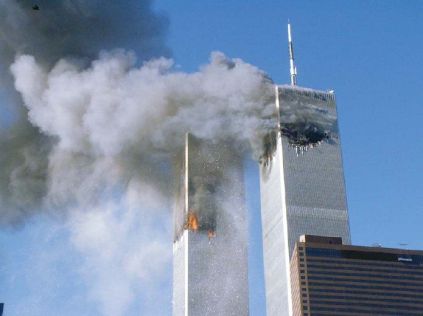
A few days back, I inserted a post by Ahmed Quraishi on India’s so called 9/11. (You can see more here). I say it’s so called because what happened on 9/11 in New York was highly tragic, yet it turned into a bonanza for the neocons in the US who covertly used it as a ploy against Islam and the Muslims.

The real cause and the master mind / s of this act, are still shrouded in mystery. Yet the information gathered from relevant books, interviews and videos creates a lot of doubts on what has been reported in the western media. All research into this incident points to the master minds who seem to have a global agenda to control the world, but the whole blame has solely been shifted to certain extremist Muslims.

Extremism in any form is not desirable, yet it prevails in every religion, every faith, and every society. Highly tragic though the 9/11 was, yet a powerful lobby in the corridors of power in Washington D.C. meticulously used it to bracket extremism only with Islam. With power over the mass media, the west particularly USA succeeded to influence the public opinion there. However, there are also the voices who know the real reason of this tragic incident, the root cause of this propaganda war, and therefore, are raising their voice at every forum, every platform and above all, with the force of their pen because these men believe the pen, the human conscience and the humanity are mightier than the sword even today. One such voice is Michel Chossudovsky’s.  WOP readers are familiar with writers like Eric Margolis, John Maszka, Ron Johnson and so many others who through their writings and the media are doing their best to fight out neocons’ agenda.

I am inserting now for the first time a thought provoking, highly analytical post from Prof. Michel Chossudovsky.  Professor’s analysis enables us to find the way even in the darkest of darkness created by the western media and therefore highly relevant and a “must read” for our policymakers as well.

61 years of independence has not delivered the ‘independence’ our leaders had then thought. From British colonialism we landed into US imperialism. In this regard both Indian as well as the successive Pakistani leaderships played into the hands of the US who fuelled differences between the two neighbors to an extent that we fought three wars, wars which brought no benefit either to the Indians or the Pakistanis. The only beneficiary was US whose war industry sold billions worth of military hardware to both India and Pakistan.

In Pakistan’s context it’s also the oil and in case of India it’s the military sales; and thirdly to install India as Asia’s policeman especially against China. But as the former Shah of Iran, also one time policeman of Asia built up by the US in the area failed miserably, so will India.

Both neighbors need to understand that they have a shared history. Instead of fighting each other, they can peacefully work together to contribute not only towards economic well being of their own people but also play a highly constructive role in the global economy as well. Prof. Chossudovsky’s analysis too points in almost the same direction.


Coming up next

  1. What happened in India’s commercial capital on 26th November?
  2. Who was behind the attacks?
  3. “Clash of civilizations” and Mumbai attacks?
  4. The disinformation in the US and in Indian media. The purpose?
  5. Is Pakistan’s military intelligence America’s Trojan horse?
  6. Pakistan’s Chief Spy appointed by CIA?

To find answers to these questions, see next the first part of Chossudovsky’s article on these pages.

Published in: on December 8, 2008 at 7:43 am  Comments (2)  
Tags: , , ,

deosai__plains

From all of us at Wonders of Pakistan

(wondersofpakistan.blogspot.com, wondersofpakistan.wordpress.com & www.nadeemkhawar.net)

I wish our readers, viewers, contributors, and all those friends, institutions who have been with us since day one, a very happy Eid Mubarik.

 While I send these greetings, I do understand the challenges, the crises and dangers we are facing at the moment but dear readers, nothing is going to happen Insha’ Allah to this great land of ours.

 It has persisted not for decades, centuries but for millennia, a beautiful land that has a history, not from 1947 but far beyond. It started from the time when man got to perceive the basics of a civilized life. Being inheritors of a great civilization, our nation demonstrated a unique type of resilience against all odds; all ups and downs and Insha’Allah will overcome its present predicaments too.

 This Eid is a symbol of a great sacrifice. Let this symbol be a sacrifice for our beautiful land as well. And this sacrifice is nothing but a will that we are one, together do we celebrate, together do we stand and together do we win.

Published in: on December 9, 2008 at 11:25 am  Comments (6)  
Tags: ,

PAKISTAN – The Largest Land of Glaciers [2 of 3]

pic1-128007203_66c0bd4f96
The Majestic range of Karakoram in Northern Pakistan has the honor of having World’s largest glaciers outside north and south poles. The picture here is among one of them taken in the extreme summer month. The place here is a junction of Biafo and Hispar glaciers which together form 118 km of longest layer of ice on the Earth outside the pole.
·

THE LARGEST LAND OF GLACIERS

·

by Dr. Nayyar Hashmey

·

In about 1978, the Indian Army mounted an expedition to Teram Kangri peaks (in the Siachen area on the China border and just east of a line drawn due north from NJ9842) as a precursor-exercise (a camouflage to occupy the area by force). The first public mention of a possible conflict situation was an article by Joydeep Sircar in The Telegraph newspaper of Calcutta in 1982, reprinted as “Oropolitics” in the Alpine Journal, London, in 1984. India launched an operation on 13 April, 1984. The Indian Army and the Indian Air Force went into the glacier region. Pakistan army quickly responded with troop deployments and what followed was literally a race to the top.

CURRENT SITUATION

Ever since then, the Indian Army occupies the high altitude side of the Siachen Glacier and the three main passes of the Saltoro Ridge immediately west of the glacier, Sia La, Biafond La, and Gyong La, thus holding onto the advantage of high ground. However, its tactical advantage by contrast demands a heavy toll in terms of money and human loss. Gyong La (Pass) itself is at 35-10-29N, 77-04-15E; that high point is controlled by India. Pakistan controls the glacial valley five kilometers southwest of Gyong La.

Though Pakistani soldiers have waged a valiant struggle to get up to the crest of the Saltoro Ridge, the Indians resist to come down and abandon their strategic high posts. In 2003 a ceasefire went into effect. Even before then, every year more solders were killed because of severe weather than enemy firing. The two sides have lost more than 2,000 personnel primarily due to frostbite, avalanches and other complications.

WHO OWNS SIACHEN

The glacier is well inside Pakistani territory. But India’s strategic want to keep an eye and a possibility to seek vigilance over Pakistan’s strategic route to China (the Karakorum Highway) in 1982 it sent a training expedition to Antarctica to train under “Siachen Glacier Like” conditions. Then in April 1984, it conducted its Operation Meghdoot’, and invaded Pakistani territory.

Since the glacier is not physically connected to India (there is no natural ground routes connecting India and Siachen Glacier), therefore, it used its Air Force to drop all of its forces at Siachen and still to this day uses helicopters and aircrafts to transport supplies, food and soldiers.

Historically-geographically-and factually this third pole on earth is well Inside Pakistan where Pakistanis are confronting the Indians who have a force 5 times their size. However, India in the process is paying a heavy price. According to a book on the War on Siachen, 50% of Indian soldiers, who make back alive, suffer from permanent mental retardation, not to mention amputations and other terrible things that Indian soldiers have to go through.

The Majestic range of Karakoram in Northern Pakistan has the honor of having World’s largest glaciers outside north and south poles. The picture here is among one of them taken in the extreme summer month.

437960633_cd1228fcf913

Left to Right) Paiju Peak (Trango II?), The Trango Monk, Trango Nameless Tower (6,239 m), and the mass of the Great Trango (6,286 m) on the northern lateral moraine of the Baltoro Glacier in the Baltoro Muztagh Range.

The war has been going on for almost quarter of a century. Though the price has been heavy for both sides (especially for India), Pakistan has been slowly driving the Indians out of Siachen Glacier (Pakistani Territory).

As the conflict between two nuclear neighbors continues, another apathetic side haunts Siachen. Right on the glacier, amid bullets whistling over wild roses and snow leopards’ dens, the already fragile environment is highly endangered due to perpetual warlike conditions since several decades. To save the flora and fauna, the natural habitat in the area, in 2003 this beleaguered bit of no-man’s-land high up in the Himalayas was readied for a radical recasting, when a group of Pakistani and Indian mountain climbers gathered in the Swiss Alps to highlight the plight of Siachen and other threatened cross-border regions.

The solution? Designating the glacier a ‘peace park’ where two hostile nations could cooperate for the sake of sustainable development. However, this process didn’t come to a declaration of an inter-national peace park due to apprehensions and doubts on both sides. Last year, India started inviting foreign climbers to the Siachen to prove its virtual hold over the glacier. This again put things in the back gear.

SIACHEN’S PRESENT  SCENARIO

Just a week before Mumbai attacks on 26th November this year, time had been most opportune. Pakistani President Asif Ali Zardari was sincerely pushing for a serious dialogue between two nations, the idea of a ‘peace park’ was ripe for rejuvenation once again. However, the Mumbai attacks have once again brought both nations to the old ‘worst enemy stance’.

But war in Siachen is a war against nature than a war between ‘”too” Nuclear Neighbours

Many in Pakistan and India perhaps might take this approach being out of tune, but this writer personally believes, the majority of people in Pakistan as well as the Govt. in Pakistan, do wish a permanent peace between India and Pakistan. I have been advocating for friendship parks between India and Pakistan, one at the Wahga border crossing and the other one at the Siachen. But quite ironically this time its India reversing the cycle and resisting attempts for peace and friendship between two neighbours raising issues such as terrorism; ignoring the very fact that Pakistan too is the target of terrorists as much as India is.

Contd…

Previous 1, 2, 3 Next

Photo Credits: On top: Heartkins Photostream, Bottom by Atif Gulzar

YOUR COMMENT IS IMPORTANT

DO NOT UNDERESTIMATE THE POWER OF YOUR COMMENT

Wonders of Pakistan supports freedom of expression and this commitment extends to our readers as well. Constraints however, apply in case of a violation of WoP Comments Policy. We also moderate hate speech, libel and gratuitous insults.
 We at Wonders of Pakistan use copyrighted material the use of which may not have always been specifically authorized by the copyright owner. We make such material available to our readers under the provisions of “fair use” only. If you wish to use copyrighted material for purposes other than “fair use” you must request permission from the copyright owner.

PAKISTAN – The Largest Land of Glaciers [3 of 3]

127340041_004a53950e
Green In the Black refers to the Kararkoram mountains whose name means Balck Mountains and it is surprising that a lush green valley is found inside the snow clad peaks and largest glaciers of the world.
·

THE LARGEST LAND OF GLACIERS

·

by Dr. Nayyar Hashmey

·

BALTORO GLACIER

The Baltoro Glacier, 57 kilometers long, is one of the longest glaciers outside of the Polar Regions. Located again in Baltistan, in our Northern Areas it runs through part of the Karakoram mountain range. The Baltoro Muztagh lies to the north and east of the glacier, while the Masherbrum Mountains lie to the south. At 8,611 m (28,251 ft), K2 is the highest mountain in the region, and three others within 20 km top at 8,000m or above.

The glacier gives rise to the Shigar River, which is a tributary of the Indus River. Several large tributary glaciers feed the main Baltoro glacier, including the Godwin Austen glacier, flowing south from K2; the Abruzzi and the various Gasherbrum glaciers, flowing from the Gasherbrum group of peaks; the Vigne glacier, flowing from Chogolisa, and the Yermandendu glacier, flowing from Masherbrum.

2495025455_b1dfe5ac6f1

Masherbrum (7821 m), enveloped in mist, stands without its usual sheath of ice and snow in the Karakoram summer.

Masherbrum was first named K-1 for Karakoram 1 when it was believed to be the tallest peak in the Karakorams – an honour that was later taken away by the group of 4 mountains just a days trek away where the mighty K-2 (8611m) accompanied by the other 3 Eight-thousanders (Broad Peak, Gasherbrum 1 and Gasherbrum 2) rises out of the Godwin-Austen glacier in all its majesty.

Masherbrum has been summited 4 times.

CONCORDIA

The confluence of the main Baltoro glacier with the Godwin Austen glacier is known as Concordia. Concordia is the name for the confluence of the Baltoro glacier and the Godwin-Austen glacier, in the heart of the Karakoram Range. The name was applied by European explorers, and comes from this location’s similarity to a glacial confluence, also named Concordia, in the Bernese Highlands, part of the European Alps.

This location and K2 base camp are popular trekking destinations. The trough of the glacier here is very wide and its central part is a vast snowfield. Small valley glaciers form icefalls where they meet the trunk glacier. The sidewalls vary from very steep to precipitous. The glacier has carved striations on the surrounding country rocks. Moving ice has formed depressions, which serve as basins for numerous glacial lakes. The glacier can be approached via the important Balti town of Skardu.

2482160571_c9d95f43501

BALTORO GLACIER, Taken upon return to Concordia from the K2 Base-camp day trek, Altitude: 4900 meters. Its around Concordia where some of the highest peaks are clustered as nowhere in the world. Four of the world’s fourteen“eight-thousanders”are in this region, as well as a number of important lower peaks.

Concordia offers the region’s best place to camp for mountain enthusiasts not involved in climbing. With breathtaking views, it also offers short hikes to several important base camps: K2 (three hours), Broad Peak (two hours) and the Gasherbrums (three hours). An alternative exit to returning down the Baltoro glacier is available by climbing the Gondogoro Pass (5,450m). Visitors to the region are advised to carefully monitor their water intake with concern. To avoid often painful and sometimes debilitating stomach upsets at high altitude, water should be obtained from clear water sources, preferably white ice dug from the glacier.

BATURA GLACIER

Batura Glacier (57km long) lies in the Gojal region of Northern Areas just north of Batura (7,795m) and Passu (7,500m) massifs. It flows west to east. The lower portions can be described as a grey sea of rocks and gravelly moraine, bordered by a few summer villages and pastures with herds of sheep, goats, cows and yaks and where roses and juniper trees are common.

BIAFO GLACIER

The Biafo Glacier is a 63 km long glacier in the Karakoram Mountains which meets the 49 km long Hispar glacier at an altitude of 5,128m (16,824 feet) at Hispar La (Pass) to create the world’s longest glacial system outside of the polar region. This highway of ice connects two ancient mountain kingdoms, Nagar (immediately south of Hunza) in the west with Baltistan in the east. The traverse uses 51 of the Biafo Glacier’s 63 km and all of the Hispar Glacier to form a 100 km glacial route.

The Biafo Glacier presents a trekker with several days of very strenuous, often hectic boulder hopping, with spectacular views throughout and Snow Lake near the high point. Snow Lake, consisting of parts of the upper Biafo Glacier and its tributary glacier Sim Gang, is one of the world’s largest basins of snow or ice in the world outside of the Polar Region, up to 1,600m (one mile) in depth.

The Biafo Glacier is the world’s third longest glacier outside of the Polar Region, second only to the 75 km Siachen Glacier and Tajikistan’s 77 km long Fedchenko Glacier.

Camp sites along the Biafo are located off of the glacier, adjacent to the lateral moraines and steep mountainsides. The first three (heading up from the last village before the glacier, the thousand-year-old Askole village) are beautiful sites with flowing water nearby. Mango and Namla, the first two camp sites, are often covered in flowers and Namla has an amazing waterfall very near the camping area. Biantha, the third camp site, is often used as a rest day. A large green meadow, it has a few running streams near the camp and many places to spend the day rock climbing or rappelling.

Evidence of wildlife can be seen throughout the trek. The Ibex and the Markhor Mountain Goat can be found and the area is famous for brown bears and snow leopards, although sightings are rare.

GODWIN AUSTIN GLACIER

The Godwin-Austen Glacier is located near K2. Its confluence with the Baltoro Glacier, the Concordia is one of the most favorite spots for trekking in Pakistan since it provides excellent views of four of the five eight-thousanders in Pakistan.

The five major glaciers are like five monarchs of Pakistan’s ice kingdom that have ruled their territories since ages. With their spellbinding beauty, grandeur and their steadfastness to protect their domains, they offer also a challenge to climbers from all over the world. Many climbers have lost their lives but the lure, the challenge and the spirit to conquer still prevails.

Concluded.

Previous 1, 2, 3

Photo Credits: Top by Atif Gulzar, Centre and Bottom by Aqib, Heartkins Photostream

YOUR COMMENT IS IMPORTANT

DO NOT UNDERESTIMATE THE POWER OF YOUR COMMENT

Wonders of Pakistan supports freedom of expression and this commitment extends to our readers as well. Constraints however, apply in case of a violation of WoP Comments Policy. We also moderate hate speech, libel and gratuitous insults.
We at Wonders of Pakistan use copyrighted material the use of which may not have always been specifically authorized by the copyright owner. We make such material available to our readers under the provisions of “fair use” only. If you wish to use copyrighted material for purposes other than “fair use” you must request permission from the copyright owner.


PAKISTAN – The Largest Land of Glaciers [1 of 3]

map_kashmir_standoff_20031
The dark green part in the map are karakorams and the dark orange, small part is Siachen
·

THE LARGEST LAND OF GLACIERS

·

Dr. Nayyar Hashmey

·

In Pakistan, we have more glaciers than any other land outside the north and south poles. Our glacial area covers some 13,680 sq. km which represents an average of 13 per cent of mountain regions of the upper Indus Basin. Baltistan in our north eastern corner and in the heart of Karakorams, provides the world’s most magnificent mountain scenery and mountaineering possibilities. Renowned for the largest glaciers and towering peaks, it has four 8000m peaks, and many over 7000m.

The glaciers in Pakistan can rightly claim to possess the greatest mass and collection of glaciated space on the face of earth. In fact, in the lap of our Karakoram mountains alone there are glaciers whose total length would add up to about 6,160 sq. km. To put it more precisely, as high as 37 per cent of the Karakoram area is under its glaciers against Himalayas’ 17 per cent and European Alps’ 22 per cent. The Karakorams have one more claim to proclaim; its southern flank (east and west of the enormous Biafo glacier) has a concentration of glaciers which works out to 59 per cent of its area.

Eric Shipton, a great mountaineer who perished in Pakistan’s Northern Areas, while describing the peaks and glaciers in Pakistan wrote in his account “To describe this region is to indulge in superlatives, for everywhere you look are the highest, the longest and the largest mountains, glaciers and rivers in the world”.

Making some allowance for Shipton’s tendency towards slight exaggeration, born out of awe and fascination, the fact remains that Pakistan boasts of the largest share of the highest number of glaciers after the poles.

SIACHEN

The biggest glacier is Siachen, which is 75 kms in length. The Hispar (53 kms) joins the Biafo at the Hispar La (5154.16 metres (16,910 ft) to form an ice corridor of 116.87 kms (72 miles) long. The Batura, too is 58 kms in length. But, the most outstanding of these rivers of ice is the 62 kms Baltoro. This mighty glacier fed by some 30 tributaries constitutes a surface of 1291.39 sq. kms.

Siachen is located in the eastern Karakoram range in the Himalaya mountains. It is the longest glacier in the Karakoram and second longest in the world’s non-polar areas. It ranges from an altitude of 5753m (18,875 ft.) above sea level at its source from a pass near the China border to its snout at 3620m (11,875 ft.)

The glacier lies south of the great watershed that separatesCentral Asia from theIndian subcontinent. The 75 km long Siachen lies between the Saltoro Ridge line immediately to the west and the mainKarakoramrange to the east. The Saltoro Ridge originates in the north from the Sia Kangri peak on the China border in the Karakoram Range. The crest of the Saltoro Ridge’s altitudes ranges from 5450 to 7720m (17,880 to 25,330 feet). The major passes on this ridge are, from north to south, Sia La at 5589m (18,336 ft), Bilafond La at 5450m (17,880 ft), and Gyong La at 5689m (18,665 ft.)

THE CONFLICT ZONE

This largest ice mass in the subcontinent however, continues to mar relations between India and Pakistan.

Located in the disputed region of Kashmir its average winter snowfall is 10.5m (35 ft.) and temperatures can dip to minus 50○C (minus 58○F). In spite of this severe climate, the word ‘Siachen’ ironically means ‘the place of wild roses, a reference some people attribute to the abundance of Himalayan wildflowers found in the valleys below the glacier, but specifically refers to the thorny wild plants which grow on the rocky outcrops.

Presently the glacier is also the highest battleground on earth, where India and Pakistan have fought intermittently since April 13, 1984. Pakistan maintains permanent military personnel in the region at a height of over 6,000m and so does India. The site is a prime example of mountain warfare.

The glacier’s melting waters are the main source of the Nubra River, which drains into the Shyok River. The Shyok in turn joins the Indus River. The glacier’s melting waters are a major source of the river Indus, a vital water source for Pakistan

The conflict in Siachen stems from the confusion in the improperly demarcated territory on the map beyond the map coordinate known as NJ9842. The 1949 Karachi Agreement and the 1972 Simla Agreement did not clearly mention who controlled the glacier, merely stating that from the NJ9842 location the boundary would proceed “thence north to the glaciers.” In the 1960′s and 1970′s, however, the United States Defense Mapping Agency (now National Geospatial-Intelligence Agency) issued maps showing detailed position of the area and made their maps available to the public and pilots as proceeding from NJ9842 east-northeast to the Karakoram Pass at 5534m (18,136 ft.) on the China border. Other international (governmental and private cartographers and atlas producers) confirmed this position. This implied in a cartographical and categorical allocation of the entire 2700 square kilometers (1040 square miles) Siachen area to Pakistan. However, prior to 1984 neither India nor Pakistan had any permanent presence in the area presumably due to the extremely harsh conditions which prohibited any such presence.

Fighting

In the 1970s and early 1980s several mountaineering expeditions applied to Pakistan to climb high peaks in the Siachen area and Pakistan granted them, which reinforces our claim on the area, as these expeditions arrived on the glacier with a permit obtained from the Govt. of Pakistan.

The glacier is well inside Pakistani territory. However, India with a design to keep an eye over Pakistan’s strategic route to China (the Karakorum Highway) in 1982 sent a training expedition to Antarctica to train under “Siachen Glacier Like” conditions. Then in April 1984, it conducted its Operation Meghdoot’, and invaded Pakistani territory.

Since the Glacier is not physically connected to India (there is no natural ground routes connecting India and Siachen Glacier), therefore, it used its air force to drop all of its forces at Siachen. And still to this day uses helicopters and aircrafts to transport supplies, food and soldiers.

On this third pole on earth, Pakistani military is confronting the Indians who have a force 5 times its size. In the process India is paying a heavy price. According to a book on the War at Siachen Glacier, 50% of Indian soldiers, who make back alive, suffer from permanent mental retardation, not to mention amputations and other terrible things that Indian soldiers have to go through.

The war has been going on for about quarter of a century. Though the price has been heavy for both sides (especially for India), Pakistan has been slowly driving the Indians out of Siachen Glacier.

Contd….

Page 1, 2, 3 Next

YOUR COMMENT IS IMPORTANT

DO NOT UNDERESTIMATE THE POWER OF YOUR COMMENT

Wonders of Pakistan supports freedom of expression and this commitment extends to our readers as well. Constraints however, apply in case of a violation of WoP Comments Policy. We also moderate hate speech, libel and gratuitous insults.
We at Wonders of Pakistan use copyrighted material the use of which may not have always been specifically authorized by the copyright owner. We make such material available to our readers under the provisions of “fair use” only. If you wish to use copyrighted material for purposes other than “fair use” you must request permission from the copyright owner.

Tourism in Azad Kashmir

299345642_3ab9d3b3172

A serious follow up of Prime Minister’s initiative on tourism development in Azad Kashmir can definitely turn this area into a real paradise not only for domestic tourists but also for our foreign guests as well.

·

TOURISM IN AZAD KASHMIR

·

by Nayyar Hashmey

·

Last Sunday, the 4th of Jan. 2009, I was watching “Jawabdeh” the Pakistani version of BBC’s HARDTalk show by Geo News. The interviewer was channel’s most popular anchorman Iftikhar Ahmad, who is known for his razor sharp questions – questions that baffle even the sharpest, the wittiest and the wisest guy. At the grinding disc of Itikhar now was none else than the young prime minister of Azad Kashmir, Sardar Ateeq Ahmad Khan.

Though presently the PM is facing a no confidence move in the Assembly, he appeared very confident to emerge successful over what he called move by a bunch of legislators who could hardly muster 2-3 seats in the AJK Assembly.

But politics apart, the most important aspect of this Q & A session was young PM’s approach towards a policy of dialogue vis-á-vis his father’s on Kashmir dispute between India and Pakistan. Quite logically did he respond to pointed questions raised by I.A. and apprised the latter on salient features of phased withdrawal of Pakistani and Indian forces from both parts of Kashmir. A step which, he said, will pave way for a gradual move towards a permanent solution of Kashmir dispute, a solution which would guarantee a face saving formula for all stake holders.

Another idea which this writer found highly innovative was Saradar Ateeq’s approach on development and promotion of Tourism in Azad Kashmir. Hitherto A.K. has been an area where only Pakistanis could see the touristic attractions of this paradise like part of the valley. Foreigners were allowed only on a special permit to visit the area.

During my personal visits to Azad Kashmir I saw lot of developments, which were done during the administration of former prime minister of the state. But this wonderful developmental work was shattered during the terrible earthquake in Oct. 2005. Extensive efforts were made ever since and the life in the affected areas has almost come to normal. Now the state administration endeavors to go beyond restoration and is intending to surpass development much above the pre 2005 level. It is good news that the present prime minister of A.K. recognises the importance of tourism in the economy of the state.

We do hope that he seriously will follow up his own initiative, in which case the area of Azad Kashmir may definitely turn into a touristic paradise not only for domestic but also for our foreign guests.


YOUR COMMENT IS IMPORTANT

DO NOT UNDERESTIMATE THE POWER OF YOUR COMMENT

Wonders of Pakistan supports freedom of expression and this commitment extends to our readers as well. Constraints however, apply in case of a violation of WoP Comments Policy. We also moderate hate speech, libel and gratuitous insults.  
We at Wonders of Pakistanuse copyrighted material the use of which may not have always been specifically authorized by the copyright owner. We make such material available to our readers under the provisions of “fair use” only. If you wish to use copyrighted material for purposes other than “fair use” you must request permission from the copyright owner.


HARAPPA – Whispers of an Ancient Past

indus-civilization-mapMap showing location of the two sites of ancient Indus Valley Civilisation in modern Pakistan

Time present and time past, Are both present perhaps, in time future, And time future contained in time pastIf all time is eternally present all time

is unredeemable.

T.S. Eliot

by Umair Ghani


322

Seated on a high deserted mound amid ruins of Harappa I experience timelessness, envisioning the time when world was not a chaotic blend of tension, power and dominance, but a warm cosmic breath that gave impetus to a simple yet blooming life. I tried to relate frayed ends of an existence distorted by merciless scythe of time.
My imagination flickered and thoughts carried me to times immemorial when cities of ancient Indus Valley flourished on fertile alluvial soils along the banks of mighty Indus River. I started listening to echoes of life amid those ruins and saw shadows walk past me. Who are those figures calling from the stony graves? What do they whisper; from eternity! I am standing among my ancestors, my fore-fathers, mothers, aunts, uncles, now reduced to bony ashes! My friends, foes, sons of the land that my own being is made of.  I saw them buried under tons and tons of dust, fossilized in a state of eternal slumber spanning centuries, waiting for someone to excavate the naked truth of what happened to them.
It was in year 1856, some six miles from River Ravi, that British engineers John and William Brunton were laying the East Indian Railway Company track connecting Karachi and Lahore. Gossip of an ancient ruined city called Brahminabad already existed there. Charles Masson had already mentioned it in 1842. Railway construction workers struck their spades on a mound of backed bricks. The mound crumbled and collapsed. Along with the bricks, some unrecognizable pieces of soapstone (with figures of animals and plants) and other objects were also revealed.

0ok_12_61

Some more brick mounds were reported near the village of Harappa. Buried truth of many thousand years began to yawn and got set for resurrection. In 1872-73, Sir Cunningham confirmed the antiquity of the discovered material (3300 -1700 BC) and archeologists embarked upon a course of astounding discoveries that provided evidence of many missing links to the past of humanity. More sites were unearthed and the world resounded with the discovery of Harappa civilization in the plains of Indus River.
Later, more seals of the ancient Harappa civilization were discovered by J. Fleet, in an excavation campaign under Sir John Hubert Marshall [Sir John Marshall, To Rai Bahadur Daya Ram Sahni and Madho Sarup Vats goes the credit who unearthed much of Harrappa settlements in 1921-22]. Indus Valley settlements were scattered all over present day Pakistan and into some parts of India but main cities were Harappa and Moenjo-Daro. Now the past of human civilization got a new dimension i.e. the Pre- and Post Harappan periods.
“The story of Harappan civilization is a story of a people intricately tied to their environment,”
Harappa flourished as a centre of civilization between 2600-1900 BC [most precisely between 2250-1900BC]. Indus Valley civilization was twice as extensive as earliest civilizations, the Old Kingdom of Egypt and the Sumerian city-states. Its people, towns, markets thrived with economy entirely depending upon agriculture. Use of fire bricks in certain residences suggests that people were governed by a rich bureaucracy [in form of an efficient municipal government] that lived lavishly and enforced a system of collection and distribution of available resources. Ruling elite carefully laid down the city plans [with pathways within the city in a perpendicular criss-cross fashion] and suggested the use of sun backed bricks as an option easily available to everyone [which still continues without much change]. Since financial system revolved mostly around agriculture, huge granaries were built at each city which contained grains. These semi-nomadic people cultivated wheat, barley, peas, sesame seed, and cotton. A system of weights and measurements was also introduced [Indus Valley civilization is credited with the earliest known use of decimal fractions in a uniform system of ancient weights and measures, as well as negative numbers].
Evidence of manufacturing stone and copper drills, large pit kilns, copper melting crucibles, and button seal devices with geometric designs were a hallmark of Indus Valley people. Harappan seals have pictures of animals that relate to a wet and marshy environment. Rhinoceroses, elephants, and tigers are placed in the midst of marshy plants. The Harappans reared a range of domesticated animals such as cats, dogs, goats, sheep, and buffalo.

ok_6_61

The term “Fertile Crescent” was coined around 1900 by archaeologist James Henry Breasted. It involved rivers of Middle East, but Arnold Toynbee with a keen look at world map suggests that earliest civilizations flourished along a wider Fertile Crescent which spanned from Latin America to Yangtze River in China, including Mediterranean, Euphrates, Nile and Indus rivers. River Ravi and Bias provided large scale irrigation to Indus Valley settlements around Harappa. Water was abundant so an advanced drainage system also existed. Drains started from the bathrooms of the houses and joined the main sewer in the street, which was covered by brick slabs. Living quarters even had latrines [which still can be seen in their most ancient traditions in many cities of Sind and also in modern day Harappa village].
Harappan society had a strong social stratification. The towns were planned in a way that the citadel was a good 20 ft higher than the tower of the middle cities. Dr. J.M. Kenoyer, an expert on Indus Valley Civilization states, “Several competing classes of elite who maintained different levels of control existed there. Instead of one social group with absolute control, the rulers included merchants, ritual specialists and individuals who controlled resources such as land, livestock and raw material. Maybe — Just may be — we are seeing an ancient democracy at work”.

ok_5_34

“We know nothing of the religion of the Harappans”, writes Richard Hooker, “Unlike in Mesopotamia or Egypt, we have discovered no building that so much as hints that it might be a temple or involve any kind of public worship. We do, however, have a number of tantalizing figures on various seals and statues. What we gather from these figures is that the Harappans probably exercised some sort of goddess worship”.

I stared at the figures of gods and goddesses of Harappan people with all the qualms of an atheist. There was a time when they governed the fate of an entire civilization, which looked after them as protectors and sought benevolence from them. New all of them mutilated tiny statues of terracotta, helplessly hanging by steel clamps in glass shelves at Harappa Museum. The statue of King Priest found at Moenjo- Daro leads to a speculation that Indus Valley Civilization had a religious hierarchy [or probably a chain of  command and chartered social norms and implemented ethics].
The most copious of the existing artifacts are a series of soapstone seals [some two thousand inscribed seals in good, legible condition], of which the best known are those of the humped Brahmani bull and Pashupati. These seals carry a pictographic script which is enigmatic and undecipherable at present. Some archeologists argue about their nature signifying that they were used as currency; while some believe that they were mere imperial seals and were issued to bestow authority upon some high ranking officials. What puzzles the scholastic world is very short and brief text. The average number of symbols on the seals is 5, and the longest is only 26 and the language is completely dissimilar to anything else, meaning an isolate. It appears that the maximum number of Indus script symbols is 400, although there are 200 basic signs.
In 2005 Steve Farmer, Richard Sproat and Michael Witzel stunned the world by their hypothesis that the Indus sign system was not writing thus thwarting the work of Dr. Asko Parpola who had concluded that the Indus Valley sign system represented an ancient Dravidian language. But Dr Ahmed Hassan Dani, one of the subcontinent’s most remarkable archaeologists, disproves of any possibility that Indus Valley script relates to Dravadian language and asserts that its agglutinative language, without doubt.

ok_7_781

And then Harappans disappeared, and they disappeared without a trace. Between 1800 and 1700 BC, the Harappan cities and towns were mysteriously abandoned. Dr Kenoyer quotes that from the earlier excavations in the Cemetery H, occupation areas have been identified dating to the late Harappan phases [1900-1300 BC)] in contrast to earlier interpretations of decline and abandonment, the city was in fact thriving and at the center of important cultural, economic, and ideological transformations till 1300 BC. However, some scholars believe that they were overrun by the war-like Aryans around 1700 BC. Aryans called themselves the “noble ones” or the “superior ones, who, like a storm, rushed in from Euro-Asia and overran Persia and northern India. Again Dr Ahmed Hassan Dani quotes, “Whatever we know of the Aryans, from the literary records, in the Rig Veda, the earliest book, do not speak at all of any urban life. They speak of only rural life, villages, and as the Indus Civilization is an urban civilization, therefore to talk of any Aryan association with the urban life seems to me rather unthinkable.”
Another possibility is that the periodic changes in the course of Indus contributed to the decline of Indus Valley Civilization. Whatever the cause or the causes, the Harappans disappeared and the archeologists still wriggle and tangle to unlock the heart of the sentinel hush of Harappan ruins. These artifacts for posterity remain shrouded in mystery. Only faint whispers tell the tale to passing winds and yet the secret is guarded by the night.

“Darkness was hidden by darkness in the beginning.”

(Rig Vedas)
Photo Credits www.harappa.com map: Rupeenews.com

————————————

Pictures Description:

Photograph # 1: J. Mark Kenoyer is Professor in Anthropology. He teaches archaeology and ancient technology at the University of Wisconsin, Madison. USA.In this photograph he is sitting in the right foreground taking notes during excavations at site in Harappa.
Photograph # 2: Three Early Harappan zebu figurines from Harappa. The earliest animal figurines from Harappa. They are typically very small with joined legs and stylized humps. A few of these zebu figurines have holes through the humps that may have allowed them to be worn as amulets on a cord or a string.
Photograph # 3: Bird figurine from Harappa. Many bird figurines have circular bases instead of legs and feet. Some have outstretched wings and may represent birds in flight. (Photograph by Richard H. Meadow)
Photograph # 4: Zebu figurine with painted designs from Harappa. Other animal and sometimes anthropomorphic figurines are decorated with black stripes and other patterns, and features such as eyes are also sometimes rendered in pigment. Figurines of cattle with and without humps are found at Indus sites, possibly indicating that multiple breeds of cattle were in use.  (Photograph by Richard H. Meadow)
Photograph # 5: Unicorn seal after conservation. Note the deeply chiseled engraving of the script similar to that found particularly on Period 3C rectangular seals.


Published in: on January 17, 2009 at 10:52 pm  Comments (8)  
Tags: , , , ,

A Peacock Story

The Tale of a Mound in Harrapa

etsy-mwah-creations-peacock-drawn-card-made-from-recylced-paper

 by Umair Ghani

One of world’s most renowned archeologists, Sir John Marshall reacted with sudden surprise when he saw the famous Indus Bronze Statuette of a slender limbed “Dancing Girl” in Mohenjo-daro:

“When I first saw them I found it difficult to believe that they were prehistoric; they seemed to completely upset all established ideas about early art and culture. Modeling such as this was unknown in the ancient world up to Hellenistic age of Greece, and I thought, therefore, that some mistake must surely have been made, that these figures had found their way into levels some 3000 years older than those to which they properly belonged…”

Similar thoughts permeated my being in front of a huge mound in Wahniwal, as I witnessed unearthing of a small piece of pottery with a beautifully drawn figure of subcontinent’s most cherished fowl: a peacock. Sheer awe besieged me. I heard Zubair Ghouri’s victorious yell. I watched his dance of euphoria and triumph in a state of ecstatic delirium. “What a way to end a day!” he cried out loud and ancient winds carried his words to me years across the dust covered mound.

I felt that eternal satisfaction surge through my whole being which comes while witnessing an accomplishment. I was part of this discovery.  I was member of a team which had found this beautiful piece of terracotta pottery that remained buried for several thousand years in oblivion. I touched and felt the rough clay figurines which carried primeval tales of the earliest settlers on these soils.

I and Zubair Ghouri had only arrived at Qutabpur a day before. Spurred by excitement to visit ancient Harappan sites by the side of the dry course of river Ravi and Beas, Ghouri had consented to take me along on one of his very personal explorations of Indus Valley sites. Ghouri, the author of a significant book in Urdu titled Ravi Kinary Ki Harappai Bastiyan [Harappan Settlements on the Banks of River Ravi], loves to talk about his earlier discoveries in Balochistan, Sindh and now in Punjab. Since this was our maiden venture, he was hesitant to deliver scholarly opinions in response to my incessant queries. “I am still in the dark. The evidence is insufficient. It will be too early to establish any authentic opinion on the basis of excavations at Harappa and Moenjodaro only,” he said; as we eagerly started eating Halwa in guest room of Qutabpur railway station, which Ahmed Bukhsh, the station master offered us as a token of gratitude for Ghouri Sahib’s gracious presence.

Tea tasted even better. I sipped it down my cold stomach in big swallows. Wintry winds howled outside cutting through the silence of the dark wintry night. Charpoys felt cozy and I dozed off amid dreams of ancient voices and figures dancing all around me.  

Fog and cold descended stealthily on the mound near Qutabpur cemetery. Probably to guard hush of the ages that laid buried there. ‘Twenty Minutes, Umair sahib,” said Ghaouri as he began to reveal secrets of the dead, “You’ll find surprises awaiting you, but we need to be at Wahniwal before noon!” I looked around with shy curiosity of a bewildered child. Suddenly aware of my presence amid silence and secrets of an epoch now lost forever, shrouded in a deep and mysterious hush, waited me to approach and break the silence. With cautious steps of a dazed explorer, I moved above the mound. Shreds of pottery crunched and creaked under my heavy boots.  Ghouri was busy looking for objects of his particular interest.

 Occasionally he would pick up some portion of ancient pottery and after a close observation would place it into plastic bags [which he carried in abundance] with great care. “What is this,” I pointed to a tiny round piece which apparently looked like fragment of plaster of Paris. “Steatite Bead!” said Ghouri, “also called burial beads and sometimes termed as ankle beads. You’ll find them at almost every mound we visit.” With quivering hands I touched that object from antiquity and watchfully placed it in a synthetic bag which Ghouri Sahib had offered with great bounty. I spotted a piece of stone, sharpened at one edge like a blade, probably used as a knife. And then through Ghouri’s guidance learned my first on field lessons in anthropology.

Looking down consistently, with observant eyes proved to be a tedious task, but the fear to miss something significant was more tiring. My gaze remained glued to the ground and I did reap rewards for that. Ghouri Sahib occasionally glanced back and encouraged me with satisfactory nods.

We arrived at Fojianwala a little later. This mound had a considerable spread. Pottery shred scattered on the surface and I found myself bamboozled in the age old kid’s game of Yasu, Panju, Lal, Kabutar, Doli…a kid’s game but a riddle of never ending times. What I found there, too…was again a riddle… of never ending time.

Published in: on January 19, 2009 at 11:01 am  Comments (1)  

Ralli Quilts of Pakistan


Asia, traditionally is known as a place producing the best in textiles. The art of making fabric from cotton was first perfected here, in the ancient southern part of this subcontinent. The Romans even sent traders to this area to get fine fabrics for their togas.   Womenfolk in the Indus Region of the subcontinent, presently the domain of an independent sovereign state of Pakistan have traditionally been the harbingers of this historical tradition. A particular type of such beautiful textiles produced in the area is the “Ralli” quilts.  Adorned with bright colors and bold patterns, the quilts are also called rilli, rilly, rallee or rehli derived from the local word ralanna meaning to “mix or connect”.
·

THE MAGNIFICENT ART OF PAKISTANI HANDMADE TEXTILES

·
by Hira N. Hashmey

· 

Throughout history

  • Asia has been known as a place producing the best in textiles. The art of making fabric from cotton was first perfected here, in the ancient southern part of this subcontinent. The Romans even sent traders to this area to get fine fabrics for their togas.   Womenfolk in the Indus Region of the subcontinent, presently the domain of an independent sovereign state of Pakistan have traditionally been the harbingers of this historical tradition. A particular type of such beautiful textiles produced in the area is the “Ralli” quilts.
  •  Adorned with bright colors and bold patterns, the quilts are also called rilli, rilly, rallee or rehli derived from the local word ralanna meaning to “mix or connect”. For sake of simplicity and to avoid confusion in terms, used in different places of ralli production, the term “Ralli” has been used in this post; which by no means be taken as a standard term.
  • In Pakistan, rallis are made in the southern province of Pakistan including Sindh, in Balochistan province and Cholistan desert in Bahawalpur district of Punjab. Just across our borders, in India the art is found in the adjoining states of Gujarat and Rajasthan.

Muslim and Hindu women from a variety of tribes and castes in towns, villages and also of nomadic settings usually make rallis. It’s an old tradition which probably dates back to the fourth millennium BCE, (as evidenced by similar patterns found even today on the ancient pottery in the subcontinent).250px-patchwork_detail

Rallis are commonly used as a covering for wooden beds, floor covering, storage bags, rugs and padding for workers or animals. In the villages, ralli is an important part of a girl’s dowry.

Ralli is termed “patchwork” in the west, a nomenclature used because of combining fine craftsmanship with thrifty recycling; more so, because it is the joining of shaped pieces of patterns or colored fabrics to form a rich mosaic. The technique offers a limitless scope to experiment with patterns, color and textures.

Patchwork is either a pieced work or appliqué:

The Pieced workis usually small regularly shaped scraps of material sewn together to form a strong fabric. Since patches are stitched to each other rather than to a background fabric, therefore, pieced work must be lined to hide raw edges at the back.

In Appliqué or the applied patchwork motifs are cut from plain or decorative fabrics. The edges are turned under the pieces and are hemmed or slipstitched to a background fabric. Sometimes the edges are left raw and a buttonhole stitch is used to join the fabric to the base in a more elaborate way

The pattern making possibilities offered by patchwork are almost infinite, but the traditional patterns are still the most popular. The simplest patchworks are one-patch design based on a single geometric shape such as a triangle, a square or a hexagon. Beautiful effects can be achieved by using different fabrics to create patterns. For instance, in the tumbling block design, light, dark and middle tones are used to create a three-dimensional illusion.

cushionsmall1

In the last half of the nineteenth century, crazy patchwork became fashionable. Scraps of unrelated fabrics, silks, ribbons, satins or velvet, were sewn on to a backing. Each piece was outlined with feather stitching in thick silk, often in a golden thread. Crazy patchwork was used for quilts, table coverings, cushions, handkerchiefs and nightdress cases.

Some of the loveliest patchwork comes from the United States, where it is a popular folk craft. The earliest American quilts were made for protection against the harsh winter. As time passed, the colonists developed their own style. Indeed, the names given to many of the patterns – log cabin, barn raising, bear’s paw and cactus basket – reflect their origins.

They evolved in particular, the block method of working, in which case a series of rectangular or square units were made up separately and the stitched together to create a large quilt. The advantage was that the individual blocks were more manageable to work than one large quilt. Sometimes quilts were worked by several different people and became known as friendship quilts. Each individual would work a separate block, often in a different design. The skill came in assembling these independent blocks into an amazing pattern.

On many old quilts one may find a spider’s web embroidered in a corner, as recognition of a creator’s skill. In some areas a spider’s web would be laid on the back of a baby girls’ hand so that she would acquire some of that dexterity. Often, one finds a deliberate error in a patchwork, such as repeating motif worked in the wrong color. This reflected a belief that only God could create perfection and it was therefore inappropriate for a mere mortal to aspire new heights.

The rallis are made from numerous panels, some of which are square and some rectangular. Each panel is individually worked before being joined to its neighbors by means of a network of fine border strips. Some panels are made from colorful patchwork shapes, while others are prettily quilted and appliquéd with a range of motifs.

A patchwork quilt is centuries old craft with intricate patterns and a breathtaking admiration for the talented womenfolk who stitch these quilts. The designs look so intricate and the stitches so tiny and neat; yet in reality anyone who has made a patchwork knows how simple they are for these ladies to make. Patience is indeed the essence of such work because ralli quilts are usually very large and therefore take time to stitch, but most designs, are based on a square pattern made up of about a dozen patches. Once the craftswoman has mastered the design of one square, she can simply repeat it many times over and at the end sew them all together to make the beautiful cover. Some also include interesting border designs which make them extra special.

Once finished, the patchwork is backed with cozy wadding, quilted and lined. The quilting is not essential, but looks decorative and has the practical function of holding the wadding in place.

Related Post:

1. RALLI – Blending One’s Soul & Self into a Piece of Textile

YOUR COMMENT IS IMPORTANT

DO NOT UNDERESTIMATE THE POWER OF YOUR COMMENT

Wonders of Pakistan supports freedom of expression and this commitment extends to our readers as well. Constraints however, apply in case of a violation of WoP Comments Policy. We also moderate hate speech, libel and gratuitous insults.
We at Wonders of Pakistan use copyrighted material the use of which may not have always been specifically authorized by the copyright owner. We make such material available to our readers under the provisions of “fair use” only. If you wish to use copyrighted material for purposes other than “fair use” you must request permission from the copyright owner.

RALLI – Blending One’s Soul & Self into a Piece of Textile

The fascinating fabric called Ralli or Rilli is a remarkable textile artwork converted into quilts, table runners and cushion covers. Thousands of women are involved mostly in Sindh, partly in some parts of Cholistan in Bahawalpur distt. of Punjab and in some areas of Balochistan. A normal ralli whether a quilt, a cushion cover or a table runner, is a textile jewel finished with physical and spiritual labor done with hand and mind putting in almost 180 hours of an artisan woman doing this job. Women start making ralli in early ages as part of their dowry. In other cases, the poor artisans offer these products as gifts to elite families of Sindh on occasion of marriages or births and in return get an animal like cow, buffalo or a goat (locally called as khir piyarina i.e. to provide a regular source of milk for the artisan’s family).
·

THE FABULOUS WORLD OF RALLI TEXTILES

·

by Nayyar Hashmey

·

What’s the true sense of beauty? Does it lie in the eyes of the beholder; or is it manifest in the crafted object itself or is it a coming together of kindred spirits – that of the maker and the beholder, the magical moment when a common chord is struck across the barriers of time and space. Just such chemistry ripples through the articulated patchwork of traditional homemade products crafted by the rural feminina of Sindh in Pakistan.

This fascinating product called Ralli or Rilli is a remarkable textile artwork converted into quilts, table runners and cushion covers. Thousands of women are involved mostly in Sindh, partly in some parts of Cholistan in Bahawalpur distt. of Punjab and in some areas of Balochistan.

A normal ralli whether a quilt, a cushion cover or a table runner, is a textile jewel finished with physical and spiritual labor done with hand and mind putting in almost 180 hours of an artisan woman doing this job. Women start making ralli in early ages as part of their dowry. In other cases, the poor artisans offer these products as gifts to elite families of Sindh on occasion of marriages or births and in return get an animal like cow, buffalo or a goat (locally called as khir piyarina i.e. to provide a regular source of milk for the artisan’s family).

Ralli, the beautiful handicraft from Sindh in Pakistan exhibits the wide array of cultural beauty. Its intricate patterns show the creativity, the skill and dexterity of the Sindhi artisans which places the area among the culturally rich lands of the world.

Sindhi rallis are beautiful and colorful. They are cluster of patchwork and or embroidery. Used also as bed linen Sindhi ralli is made with multicolored pieces of cloth stitched together in attractive designs. The color combinations and unique patterns speak for the aesthetic sense of its creator. The designs vary from floral motifs, waves and images of animals or trees. Many handicrafts of great beauty like cushion covers, embroidered shirts; wall hangers and mirror worked handbags are also made in ralli style mainly in Umarkot and Tharparkar area of Sindh.

Patricia Stoddard, an American author, teacher and expert writes in her book “The Ralli Quilts” Ralli textiles are very traditional made by women in the areas of Sindh, Pakistan, Western India and Gujarat. Ralli textiles are just gaining international recognition, even though women have been making these quilts for hundreds, may be thousands of years. The levels of the people, who make these textiles, are woven into each piece. The symbols of flowers and animals used in the decoration and colors are imaginative and exotic. Every ralli quilt tells a story. It tells of the natural creativity and love of color and design of the woman who creates them. Every ralli tells the story of the strength of tradition and motifs of rallis which have been passed from mother to daughter and woman-to-woman may be for thousands of years.

Cecilia Eddy, a British author and too a teacher of quilts has a deep study on ralli quilts. She in her book “Quilted Planet” says “The pattern and colors of ralli quilts embody all the romance and exoticism of the East. Did you know that in the Indus region of Pakistan where many rallis are made to this day for dowries, the word ralli means to mix or connect”. One of the ralli quilts pictured in her book looks like a bar quilt of flying geese, surrounded by a saw tooth border and a wider border of square-in-a-square on point.

Ironically, this fascinating cultural product, gaining recognition abroad, is loosing its importance back home. Textile market trends are changing as do the changes in ultra fashioned home textiles which influence the purchasing priorities of the buyers. A major reason involved in decline of usage of the cultured goods is also the poverty of the inhabitants of Sindh.

ralli-421

A lot of skilled artisans are leaving their profession because of a lack of patronage. This work of art is exclusively handmade and cannot be duplicated. The skill travels from generation to generation but due to dearth of proper avenues for young artisans, new generation has not much interest in learning the trade of their forefathers. Their priorities too have changed.  Which’s why this centuries old art is on decline. For a revival and preservation of the handicrafts support is needed from the concerned quarters of the society. New markets need to be explored within the country as well as internationally.

AHAN steps in…

To solve the problems and to tackle on-ground issues, due credits go to AHAN (Aik Hunar Aik Nagar) project of the Ministry of Industries, Govt. of Pakistan, wo with a three pronged strategy initiated a pilot project for the craftswomen of Sukkur  (Sindh).

During first phase of this pilot, a large number of designs were reviewed by the designers. They observed that different geographic locations have different ralli designs having their own history and tradition, hence different geographic clusters and craftswomen were identified by AHAN. They were then trained as master trainers. About five clusters of 12 master craftswomen were given one month on-job training at designers’ training centres in Karachi.

The training course provided skills in product development with different themes and tones. The object of this pilot project is that by training the ‘masters’they will then work further at their villages to train more women.

waistcoat1

Renowned Pakistani designer Deepak Perwani was involved to provide his expertise in product development and training. He has now trained a group of female artisans at his factory in Karachi.

The idea behind such trainings is to add value to this village craft by turning out different ralli products like fashion apparel, handbags, embellishments on shawls  and bedroom accessories that include table lamps shades, cushions and toys. The women participants were also trained on modern designs and guided on different marketing channels. Their products were also displayed at a women expo to get the market feedback.

In embroidery and patchwork ralli, Ms. Shehnaz Ismail, Head of the Textile Deptt., of the Indus Valley School was engaged to design and develop a tailor made course for the artisans engaged in embroidery and patchwork.

The first training of the groups was conducted by the craftswomen who were already familiarized with design, measurements and pattern making, improvement of aesthetic- ability / sense and quality aspects of the product. During trainings they were also introduced with different markets for purchase of good quality raw material and sale of their products.

Once the training programs scheduled by the AHAN are completed, we can see some chances for the womenfolk indulged in this rural craft; that their economic lot will be improved and their products will be sold not only in their traditional markets but also in modern, trendy fashion boutiques of the world as well.

Note: This post is based on information from different Internet sources and so are the pictures.

bottom1

Related Post: Ralli Quilts of Pakistan

YOUR COMMENT IS IMPORTANT

DO NOT UNDERESTIMATE THE POWER OF YOUR COMMENT

Wonders of Pakistan supports freedom of expression and this commitment extends to our readers as well. Constraints however, apply in case of a violation of WoP Comments Policy. We also moderate hate speech, libel and gratuitous insults.
We at Wonders of Pakistan use copyrighted material the use of which may not have always been specifically authorized by the copyright owner. We make such material available to our readers under the provisions of “fair use” only. If you wish to use copyrighted material for purposes other than “fair use” you must request permission from the copyright owner.

Welcome Mister President

obama2


     Barack Hussein Obama has already assumed office as the 44th President of the United States of America. Just two days in office, he has introduced some major policy shifts. He seems to prove he has a vision – contrary to shortsighted approach by George Walker Bush who mainly believed in military solutions to every problem everywhere.

     As a sequel to this major change at the White House, we are inserting two posts here. In the first post by Eric Margolis, the existing, outdated, fruitless US policy against its only Communist neighbor in the Americas is reviewed. Eric has also some suggestions for the new American president. In the second post, Michael Carmichael tracks on what Obama primarily needs to do for his fellow Americans and the world.

     These posts are being put up to enable WOP readers have some insight (with respect to US context) of the issues of immediate import for the new President. On global scale, Obama as a pragmatic young leader needs to take such steps, which can save this world from chaos that George W. Bush in collusion with his toadies like Tony Blair and Pervaiz Musharraf left as his legacy. A million dollar question, however, still remains. CAN HE DO it? The neocons who contributed towards Bush’s doctrine of New World Order are still occupying important seats both at the White House as well as the Pentagon. Only time will tell whether the statesmanship of new US president brings tangible results: that he introduces a Universal World Order instead of this so called New Word Order!

by Eric Margolis

The inauguration of Barack Obama as 44th President of the United States of America has more of the mood of a second coming than the investiture of a new president. Of course, the Bush administration, the most catastrophic in memory, is an easy act to follow.

Barack Hussein Obama brings a bounty of hope, whereas the Bush administration brought fear-mongering, wars, flirtation with fascism, and financial ruin.

Some 80% of Americans in a recent poll are strongly positive about Obama. But now that Obama has taken office, reality is going to set in and the euphoria will quickly dissipate as the young president confronts truly gargantuan problems and Washington’s powers that be assert their influence and bind him with a thousand cords.

Still, like most people, I am elated to see the departure of the sinister Bush administration and welcome the new president, a man of dignity, intelligence and strength. 20th Jan. 2009, was a majestic day for all Americans. As an American (and a Canadian) I am awfully proud. It’s been a long time since I felt good about my country.

So all best wishes to our new president. I am happy I suggested that one of his first official acts should be to immediately close the shameful Devil’s Island at Guantanamo Cuba, (which he has already ordered on the very first day of taking office). He should now further order this base, an embarrassing relic of 19th Century American imperialism, returned forthwith to Cuba. His next step should be to ask Congress to end the hypocritical, idiotic 50-year embargo of Cuba.

I am just back from Cuba, and here follows my observations on its 50th anniversary of Communist rule.

HAVANA – The 50th anniversary of Fidel Castro’s revolution has been a very modest, low key affaire, totally out of keeping with this island’s normally boisterous fiestas. Fidel remains gravely ill. He has been out of sight for the past two years, though he publishes news commentary from seclusion.

Economically stricken Cuba is hanging on by its fingernails. Life is grim and hard on this beautiful but impoverished island. Food is rationed and scarce, public transport erratic, and blackouts common. Many people living in decrepit apartment buildings must haul buckets of water up numerous flights of stairs.

In the early 1950′s (an era how seemingly as remote as Ancient Egypt), my parents used to bring me to Havana each winter, and we often joined Ernest Hemingway and his mistress Pilar for daiquiris at its fabled ‘Floridita Bar.’ He was big, vivacious man with a white beard and a rumbling laugh. I took an immediate liking to the famed writer, and he was very kind to me, telling me stories about the Spanish civil war and deep water fishing. I still have one of his books, inscribed, ‘to Eric, from his friend Ernest Hemingway, Havana, 1951.’

Eight years later, a Communist lawyer named Fidel Castro Ruiz stormed ashore with 81 men to begin a guerilla war against the US-backed Batista dictatorship. Cuba was then a virtual American colony: Americans owned 60% of Cuba’s farmland and industry. But, contrary to Communist history, the island was not a wasteland of gangsters, prostitutes and oligarchs. It was the West Indies’ most developed, prosperous island with a well-developed middle class and a living standard that was near the top of Latin America’s.

On 1 January, 1959, Castro’s guerilla fighters arrived in Havana and proclaimed a revolutionary republic. For the first time in its long history (Havana is 50-70 years older than New York City), Cuba was genuinely independent of Spanish rule and American domination.

Once Castro was in power, his comrade-in-arms, Ernesto ‘Che’ Guevera, today an icon of romantic revolution to the uninformed and juvenile, ordered the execution of over 600 ‘bourgeois.’ Che then went off to the Congo to wage revolution but found cannibalism instead of a waiting proto-Marxist proletariat and was quickly run out of the chaotic country by the CIA.

Undaunted, Che headed to Bolivia, where he got killed leading a farcically inept Marxist revolution. That nation’s dirt poor peasants rejected Che and turned him in. CIA’s famed agent, Felix Rodriguez, finished off Che. But, as Che rightly observed, ‘revolutionaries never die.’ His memory went on to live as a pop image on t-shirts and berets around the globe.

Che’s fiascos notwithstanding, in an era when America bullied and exploited Latin America, and treated its people with contempt and scorn, Castro’s revolution was a triumph. His resistance to 50 years of US efforts to overthrow or assassinate him, and a near-lethal embargo, was epic. Recall that this was the era when most of Latin American was ruled by US-backed military dictators or civilian oligarchs.

US attempts to topple Castro nearly led to nuclear war with the USSR in 1962. The Soviets rushed nuclear-tipped missiles into Cuba to thwart a planned US invasion. The US imposed a naval blockade of Cuba and massed forces for an invasion. Nuclear war was very close. I was a student at Washington’s Georgetown University at the time and vividly recall how frightened we all were.

In the end, Moscow won the confrontation, though Americans were led to believe by White House spin, their media, and Hollywood that President John Kennedy was the victor. Moscow withdrew its missiles in exchange for the US agreeing never to invade Cuba and pulling its missiles out of Italy and Turkey. Castro was saved by Moscow.

In recent years, KGB veterans of the Cuban missile crisis have claimed that Castro begged Nikita Khrushchev to fire nuclear weapons at the US mainland. Moscow refused.

The cost of maintaining Cuba’s independence and dignity was poverty, dictatorship, and quickly becoming a Soviet satellite until the USSR collapsed in 1991. Today, only oil-rich Venezuela and Canadian tourists are keeping battered Cuba afloat.

eric2

Havana, once called ‘the naughtiest city on earth,’ is a museum of the 1950′s: decaying, melancholy, dark and depressing.

Cuba has one of Latin America’s best medical and education system, and highest literacy. But life in Cuba is punishing: food and power shortages, endless queuing, grinding poverty and constant supervision by secret policemen and Communist party informers – in short, tropical Stalinism.

Castro blames this misery on the US embargo. The US blames Castro’s failed Stalinist economics for the mess. In fact, both are responsible. Cuba has suffered fifty years of the kind of pitiless collective punishment that Gaza has been experiencing, just in slower-motion.

The US has maintained its crushing boycott under the laughable pretexts that Havana holds 200 political prisoners and is Communist. Yet the US cheerfully deals with Communist China and Vietnam, and itself holds 36,000 Iraqi political prisoners, not to mention Guantanamo. America’s ally Israel holds 10,000 Palestinian political prisoners.

It’s high time the West Indies’ largest island was welcomed back to this hemisphere and given civilized treatment. A recent poll showed that even 55% of Miami’s once fanatically anti-Castro Cubans now support ending the US embargo.

On an interesting side note, Fidel Castro used to warn black and mulatto Cubans, who are about 60% of the population, that the US was a deeply racist nation that hated blacks. The election of Barack Obama has exploded that argument. Cubans are just as agog over Obama as everyone else.

Chinese influence is moving into Cuba, and Russia is reasserting its strategic presence by rearming Cuba’s obsolete military forces. So the US has little time to lose.

First Fidel, and now Raul Castro, have been happy to keep the US at arm’s length by provoking occasional crises. An end to US-Cuban hostility could bring up to two million US tourists. The creaky Communist control system could not withstand this invasion. Nor could the Spartan tourist infrastructure.

Young Cubans are yearning for the kind of anti-Communist revolution that swept Eastern Europe. So the Party, which refuses to implement Chinese-style reforms, may keep Cuba frozen in time.

As I wrote from Havana eight years ago, there will be no major changes until Fidel Castro, whom just about all Cubans regard as their nation’s beloved ‘papa,’ finally dies.

The age of Yankee imperialism in Latin America is over. Cuba raised the banner of revolt, and paid the price. Now is the time for Cuba to rejoin the polity of Latin American democratic nations as a member in good standing. America, I hope, will by now have learned to treat Cuba with dignity, respect and economic restraint.

copyright Eric S. Margolis 2009

Obama: Amaze us!

barack_obama2

As Barack Obama has approached the helm of the American ship of state, he is facing many challenges.


Michael Carmichael


Just as she was being born at the dawn of her journey into history, the American nation is poised on the brink of a new beginning.  In those revolutionary times, America faced a roiling sea of danger, uncertainty and trepidation.  Today, after more than two centuries of venture, America moves forward beyond and away from the final and most tragic acts of the second Bush presidency.
The American journey has been filled with triumph and tragedy.  Triumph over the bonds of colonialism transformed into the tragedy of slavery, Manifest Destiny and the genocide of Native Americans followed by Civil War.  Abolition began to right the wrongs of slavery, but America careened forward into the excesses of the Gilded Age and the arrogance of her Imperialist Presidency that extended her empire to the islands of the Pacific Ocean and the Caribbean Sea.

IH023550

The Roosevelts expanded the American vision to encompass economic justice, environmental preservation and the duty to deliver peace beyond our borders.  At the same time, American philosophers advocated the virtue of selfishness, the goodness of greed and the siren song of supply side trickle down economic miracles, while Martin Luther King, Jr. marched to the beat of a different drummer to demand the fulfillment of civil rights for our black brothers and sisters.
In an ancient scenario, the culture of greed infiltrated the American defense establishment and commandeered the ship of state to instigate conflicts and to impose its will by force.  American power came into conflict with competing ideologies promising a better and more just society through cooperation rather than competition.  For more than three-quarters of a century, America has moved forward toward its promise of freedom for all her people:  freedom of speech; freedom of religion; freedom from want and freedom from fear.
As Barack Obama approaches the dais to take his oath of office, he is focused on delivering the four freedoms to all Americans.  Each of FDR’s four freedoms is in danger in America today.  Freedom of speech was curtailed in pursuit of solidarity against the Axis of Evil in the War on Terror.  Freedom of religion is under threat as Muslims are treated like criminals and terrorists.  Freedom from want is on its deathbed, for millions of Americans have been expelled from their homes, banished from their workplaces and shunned by their employers.  Freedom from fear has vanished, as Americans are convulsed in a paroxysm of panic apprehensive about their financial security and in fear for their very lives.
Barack Obama faces an insurmountable Himalaya of fear.  In its face, Obama brings a message of hope for change.  Obama erases fear with the promise of hope.  Now he must turn to the people of America and deliver the four freedoms they have been promised.
Obama faces anxiety over the economy. While there are differences of opinion about what must be done and what must not be done, Obama has few choices.  Obama’s errant predecessor capitulated to the demands of his capitalist coterie for massive federal bailouts of financial institutions.  With the bloated banking system now in bankruptcy, the calls for government regulation from Wall Street and the Federal Reserve will herald the beginning of state capitalism, a propagandistic oxymoron for a socialized banking system.  While the incomes of financiers, bankers and others will shrivel, the confidence of the American people will be restored.  The new American banking system will resemble a vast public utility, where salaries are strictly limited and profits are regulated.
But, the American people fear for their very lives today. Faced with the rapacious appetite for corporate profit that no population of any other industrialized nation faces, Americans spend more than twice what citizens of other democracies spend for their healthcare.  In order to restore the freedom from fear, Obama must deliver a better system for healthcare that will be nothing less than revolutionary for it must delete the profitability of illness, injury and disease from the national vocabulary.  The people of America are suffering through a stupefying crescendo of ghoulish greed that is pervasive throughout the healthcare industry.  Obama believes that healthcare is a human right that government must deliver to a free people to ensure that they do not experience fears for their own lives.

statue-of-liberty-new-york-city-high-contrast

But, Americans fear for more than their financial futures and their health, they fear for their very existence under threat from those who would destroy the fabric of our society – the terrorists.  Bush launched his War on Terror to galvanize political support for a Gotterdammerung of Islamist terrorists.  In the process, Bush triggered a massive avalanche of fear within America that has led to two immoral and counterproductive wars in Asia. America’s standing in the world has been toppled from the top of a tall column.  For the world at large, the Statue of Liberty has lost all meaning.  America’s prestige has morphed into a global loathing of the stars and stripes.  In 2008, America has become the most feared and hated nation on earth.
Like no other president before him, Obama faces a global challenge to America’s faltering leadership. To address the global challenge, Obama must replace opprobrium with trust and restore equilibrium with peace.  American Muslims must be freed from the burdens of ostracism, stereotyping and the prison of Guantanamo. But, the closure of Guantanamo is only the first step.  The American prison population has inflated beyond all sense of reason.  Alone among all other nations, America imprisons one out of every one hundred of its citizens.  For shame, more American prisoners are from the black and tan minorities rather than from the white majority.  The American prison-industrial complex has transformed the land of the free into a police state where minorities are incarcerated for misdemeanors while whites go free for felonies.  Obama must right this terrible wrong that tarnishes America’s luster in the eyes of the world.
Even more importantly, Obama must forge a new foreign policy that does not genuflect to the Pentagon and resort to military interventions and wars to enforce American power by the simplistic application of force — for force has failed America in Korea, Vietnam, Afghanistan and Iraq.  In the Information Age, hard power is indeed outmoded, outdated, obsolete and counterproductive.  Soft power is now the only instrument available for forging ahead on the global seas of commerce, ecology and culture.

cartercampdavid

Obama’s global challenges are manifold, but none more difficult than in the Middle East. In recent days, hard power inflicted pain and destruction in the Arab-Israeli conflict.  America’s involvement in the Middle East has not delivered peace or security of the freedom from fear to the peoples of the Middle East.  Since the Camp David Accords and the Oslo Agreement, the Middle East has devolved into conflict and crisis.  Under George W. Bush, American policy made the insufferable situation worse by launching the wars in Iraq and Afghanistan and unwise favoritism in the Arab-Israeli conflict. Nowhere does Obama face a more difficult challenge than in the Middle East, but in challenge therein resides opportunity – a unique opportunity to redefine America’s vision in the eyes of the world.

barack-obama-bw11

On Wednesday, the 21st of January 2009, Barack Obama has entered the Oval Office where he wields the power of the American nation.  From that date onwards, the world will judge him for the priorities he engages from the very outset of his presidency.
While he has promised America that he will order the cessation of torture, the withdrawal from Iraq, the final phase of the war in Afghanistan and the restructuring of American involvement with the Arab-Israeli conflict, Obama’s global reputation will be cast in the flames of the forge.
In that moment and in the others rapidly to come, we shall learn the extent and the tenor of the change Obama will bring – not only to America but to the tiny planet where he will be the most powerful leader in world history, a leader for all peoples – for better or worse — and it is indeed quite difficult to imagine how he might be worse than George W. Bush.

President Obama, the time is now ripe.  Bring on all the changes you have promised from sea to shining sea and from nation unto nation – you must now bring peace unto all the nations of the earth.  We, Americans who summoned and supported you are waiting; the nations are gazing intently upon you.  Amaze us.

Courtesy: Globalresearch.ca
Disclaimer: The views expressed in this article are the sole responsibility of the author and do not necessarily reflect those of the ‘Wonders of Pakistan’. The contents of this article too are the sole responsibility of the author(s). WoP will not be responsible or liable for any inaccurate or incorrect statements contained in this post.

YOUR COMMENT IS IMPORTANT

DO NOT UNDERESTIMATE THE POWER OF YOUR COMMENT

Tourrism not Terrorism

mosque2

              ♦ Pakistan can sustain its economy only by promoting tourism.
              ♦ Once normalcy is restored, this country has tremendous potential to become an economic hub of tourism. Its history and heritage alone are fabulously rich – to lure international tourists to this land of immense beauty.
              ♦ The electricity and gas crunches have crippled our textile industry the main source of export earnings and employment provider in this country.

 The end of January, the starting month of the year, the coldest one is ending now. A change in the air is coming. Trees will soon be loaded with fresh green. Multi colored flowers – many with a mosaic of beautiful patterns will open up to fill the airs with a sweet fragrance. The whole ambience all over the country will wear a cool, green and fresh look of spring.

Simultaneously in the months to come, the vales of Swat and the rugged mountains of federally administered areas in our tribal belt will welcome the spring with ear shattering cannon shots. In return shall come again the gun shots. The point is – who is getting killed? If a soldier of the Pakistan army or a paramilitary sepoy loses life, it is the blood of a Pakistani that is spilled on the sacred soil of Pakistan. Again if an unarmed civilian tribal from the other side is killed, it’s the blood of our own country man. Dilemma before us is that guns and the drones do not precisely differentiate between a terrorist and a peaceful civilian living nearby.

Why can’t we understand, in this modern age when technology has reached its zenith, when information revolution has taken the whole world like a storm, we in Pakistan are fighting along with the US, a war which seems to have no end. We should not overlook the very fact that a Pakistani can never be and should never be the enemy of another Pakistani? Our common enemy at the moment is terrorism. And this very enemy is working against acceptability of our country as a modern democratic entity which has endless beauty to offer to its visitors. But alas! With firing of guns, and people getting killed through bomb blasts, would a foreign guest ever think of coming to Pakistan risking his / her life!

It is the time, we as a nation should think, should ponder over the core question: how can we make this land of ours a land of peace, tranquility, a secure and a leisure-full vacationing land so that the endless touristic wonders that we have can be properly marketed to the outside world as an ideal place to visit, for a land infested with wars, extreme polarizations in political and social culture, with acute lawlessness all over, who would ever dare to enter this land just to view such touristic splendors.

 We could perhaps go a step further.  Why not initiate a nationwide dialogue amongst all stakeholders on one point agendum only: “Tourism not Terrorism” will henceforth be the creed, the philosophy and the dictum of Pakistan. Once we succeed to achieve this, we would be leaving a prideful legacy not only for our coming generations but may see happy days in our lifetime as well.

By promoting tourism, not only do we offer a wholesome environment to international guests, to see the real beauty of the country, the hospitality of its people but also succeed to wash our image as  a nation abetting terrorism. (Wrong though, unfortunately this is the image we have).

Published in: on January 31, 2009 at 2:40 pm  Comments (5)  
Tags: , ,

Kashmir: The Country Without a Post Office*

75474-hazrathbal-mosque-srinigar-0 Dargah Hazrat Bal – Landmark of Srinagar, the Capital
·


THE WAIL OF KASHMIR

·


Note for WoP readers: Ever since the 1947 partition of Indian subcontinent, Kashmir has always been on fire. India and  Pakistan fought three wars and the main cause of these wars has always been Kashmir. India maintains that the one time princely state, Kashmir is its integral part. Pakistan contests this stance and has stressed a solution based on fair and free plebiscite which would allow the people decide their own future through a right of self determination; whether they wish to continue living in India or would want to secede and join Pakistan.

Though both India and Pakistan remain ‘fastened’ to their respective stands, there have been efforts on the way to resolve this decades long dispute between two nuclear neighbors. Various formulas were discussed by which no one would lose its face and a solution agreeable to all parties, is finalized. Deliberations of these talks, referred to as Track II diplomacy were kept secret (for obvious reasons). Even in the valley itself three different views persist. 1) Those who think separation of Kashmir from Indian Union is unconceivable. 2) Those who want to secede from India and join Pakistan. 3) Those who would wish Kashmir an independent state.

Scant details of these options available are based on four different scenarios. It is said that the Chenab formula was almost agreed by all the parties before departure of Gen. Pervez Musharraf from the scene.

Shortly before a no confidence move against him, Sardar Ateeq Ahmad Khan, former Prime Minister of Azad Kashmir in an interview, did hint to some extent of a solution on similar lines.(WOP will cover this option including other scenarios in its next post)

The first one of this series is being inserted in our current issue. Written by Shubho, a fellow blogger from India, it will be followed by a second report by BBC on the four scenarios under consideration.

The third and the fourth post again from India show the picture in the valley and views by so many Indians who believe a solution of this 61 years old dispute must be sought.

We at WOP believe: being part of the Indian sub-continent, the two neighbors who share landmass, mountain ranges, rivers and seas, ancient cultures, history, and religions cannot be and should not be a hostage to this or that issue. Soft borders and free trade between the two can release immense potential in terms of tourism, intercultural exchange, and a common South Asian approach to world affairs. [Nayyar]


by Shubho


Since the dawn of independence, Kashmir is the main cause of disagreement between India and Pakistan. The only difference today from what it was in 1947 is, that the state seems to be more divided and communalized. Regular attempts by both countries took place to resolve the dispute through various means: from bilateral talks, wars and state sponsored militancy but the crisis sustained as the major source of tension and dispute between them.

untitleddemocracy-and-secularisim-of-india1

Today the divide among the Hindu and Muslim communities has enormously widened up in the region, credit goes to the intensified promotion of religious politics by major political parties from both sides. When one side desires to justify the ‘Two Nations theory’ that emphasizes that Muslims and non-Muslims can’t live together, the other side promotes jingoistic nationalism and demands Muslims to be treated as second-class citizens. Religious sentiments are repetitively injected to both communities, as it is a well-known fact that religion is the only topic that can easily rouse the ordinary people to fight against each other.

History confirms again and again the famous Karl Marx maxim “Religion is the opium of the masses“. An elderly Muslim shopkeeper in Udarana, a mixed Hindu-Muslim village near the town of Bhaderwah, expresses this enormous divide “Now we hardly visit each other’s homes or patronize each other’s shops. …We really don’t have love in our hearts for each other.” From the early nineties, Hindu-Muslim relations have rapidly been diminished in the state.

Jammu and Kashmir’s first political party, the ‘Muslim Conference’ was founded in 1932 with Shaikh Abdullah as its President. While a student at Aligarh Muslim University, Shaikh Abdullah was influenced by liberal and progressive ideas. He became convinced that the feudal system existing in the land was to blame for the miseries of Kashmir, which was ruled in an oppressive and autocratic manner by a Hindu monarch. ‘Muslim Conference’ changed its name to ‘National Conference’ in 1938 with an objective to create a broader platform and allow people from all communities to join the struggle against the monarch Maharaja Hari Singh.

At the time of partition, when the Maharaja was hesitating over the choice of acceding either to India or to Pakistan, Shaikh Abdullah supported India. He was appointed Prime Minister of Kashmir on March 17, 1948. Until the monarchy existed, most Muslims in the region were landless laborers. Along with the Dalits, they were also treated as untouchables by the ‘upper’ caste Hindus. Under Shaikh Abdullah, radical land reforms were introduced in the state, through which sharecroppers, mainly Muslims and Dalits, got land previously owned by Rajput and Brahmin landlords.

His effort made him a hugely popular mass leader. In 1953, the Indian government betrayed Shaikh Abdullah by sacking him from the Prime Minister’s post. He was accused for conspiring against the State and jailed from 1953 to 1975. Meanwhile, the Indian Constitution, vide Article 370 had granted a special status to the state guaranteeing it autonomy except for defense, foreign affairs and communications.

After his release, he was sworn in as the Chief Minister in 1977 with a massive mandate. For the next five years, until the death of Shaikh Abdullah in 1982, Jammu and Kashmir was politically calm and stable. The separatist movement in the Kashmir Valley restarted from April 1988. The movement gathered momentum through a close nexus between Jammu & Kashmir Liberation Front (JKLF) and Pakistan, which reached its peak in the mid nineties. The controversy on the Amarnath Shrine Board land transfer and the subsequent incidents which arise in the valley one after the other are based on such facts of Kashmir history.

AMARNATH SHRINE BOARD LAND TRANSFER FIASCO

The Amarnath Caves are one of the most famous Hindu shrines located in the Himalayas at the altitude of 12,760 feet. The caves are about 88 miles away from Srinagar, the summer capital of Jammu and Kashmir (Jammu is the winter capital). It is one of the most significant pilgrimage destinations for the Hindus and attracts about 400,000 pilgrims (Yatri) every year. In the year 2000, the Shri Amarnath Shrine Board was set up to take care of the pilgrims passage (Yatra) to the caves that was previously conducted jointly by tourism department of the state government and Dharamarth Trust.

75506-begining-of-the-trek-leading-2-yatra-of-amarnath-cave-01

On 26 May 2008, the Congress-led coalition government of Jammu and Kashmir decided to transfer 100 acres of forestland to the Shri Amarnath Shrine Board to set up temporary shelters and facilities for the pilgrims. The government decision snowballed into a huge public outcry in the Kashmir valley. During protests, six people were killed and 100 injured in police firing at Srinagar. The coalition partner PDP pulled out its support and the government was reduced to a minority.

Keeping in mind the coming state election and under pressure from different quarters, the government revoked the order on 1 July. Immediately, violent counter protests sparked off in the Jammu region spearheaded by Shri Amarnath Yatra Sangharsh Samiti, a conglomeration of several Hindu chauvinist groups but with a large mass support. Here also at least three people were killed by police firing. Questions were raised by the Samiti, which was formed around the Hindu sentiment, that if the decision to transfer the land was revoked after the protests in the Kashmir region, why not it is further restored after the more aggressive Jammu counter protests?

On 7 July, Chief Minister Ghulam Nabi Azad resigned after loosing the trust vote in the state assembly and Governor’s rule was imposed in the state.

The Yatra and Yatris were largely assisted by the local people of the region, who are Muslims. Apart from the obvious gesture of religious harmony, the Amarnath Yatra is also economically important for the local peopl

In this political chaos, the role of the PDP (Jammu and Kashmir People’s Democratic Party) was the most to condemn. The decision to transfer the forestland to the Shri Amarnath Shrine Board was a unanimous cabinet decision cleared by the state forest ministry and the deputy chief minister, both top notches from the PDP leadership. PDP president Mehbooba Mufti’s remark that she came to know about the decision only from newspaper reports were a full-size lie. The fact is that the PDP leadership could not foresee the huge public protests following the order and when the situation turned worst did a volte-face to safeguard its political ambitions in the coming election. After the government revoked the land transform order, PDP started demanding a credit for it. This is a clear example of the politics of opportunism being played by political parties jeopardizing the life of the ordinary people of Jammu and Kashmir.

THE AFTERMATH

The turmoil clearly shattered the myth of Jammu and Kashmir as a single entity. The deep-rooted religious and social divide prevailing in the region entirely exposed as a ‘Jammu versus Kashmir’ dispute. In the Jammu region, the Muslims are a minority compared to Kashmir where the Muslims are the majority. Therefore, while protesters in Jammu enforced an economic blockade of the Kashmir Valley by stopping traffic on the Srinagar-Jammu National Highway, on 11 August last year separatist leaders of the Kashmir region instigated a march to Muzaffarabad (the capital of Pakistan controlled Kashmir referred as Azad Kashmir) bypassing Jammu. The intention was to explore new trading options by crossing the Line of Control, the temporary border dividing Kashmir between India and Pakistan. The march violated the imposed curfew, clashed with the security forces leading to ten more deaths including All Parties Hurriyat Conference (APHC) leader Sheikh Abdul Aziz. The polarization in the state became absolute and there was no space of suppleness visible from either side.

My memory is again in the way of your history. Army convoys all night like desert caravans:

In the smoking oil of dimmed headlights, time dissolved— all winter—its crushed fennel.

We can’t ask them: Are you done with the world?

In the lake the arms of temples and mosques are locked In each other’s reflections.

Have you soaked saffron to pour on them when they are found like these centuries later in this country

I have stitched to your shadow?

In this country we step out with doors in our arms. Children run out with windows in their arms.

You drag it behind you in lit corridors.

If the switch is pulled you will be torn from everything.

Farewell: Agha Shahid Ali

Political gambits have caused a colossal damage to the economy, education system and social fabric of Jammu and Kashmir. The once tranquil and gorgeous land has turned into a ‘valley of fear’. It has turned into a land of orphans and widows, a land of graveyards. After frequently witnessing violent deaths and funerals of near and dear ones, the people here have lost their normal human feelings. Violence has affected all sections of life. It has in fact become a way of ‘communication’. Human lives are so devalued that a few killings hardly shock anybody. Students have lost their inquisitiveness to learn. Teachers lost their enthusiasm to teach. To visit homes of friends and relatives people have to prove their innocence before security personnel. Everyone has to carry an identity card, which is regarded almost as oxygen. The situation is best described by Agha Shahid Ali in his poem, “everyone carries his address so that at least his body will reach home“. Anxiety and tension has become a part of the daily life here. A very disturbing psychology of suspicion and fear has permanently etched in the minds of local people.

Though located within free and democratic India, Jammu and Kashmir no more signifies to be a free place. The presence of army and security forces in every nook and corner has developed a feeling of confinement and repression. To the ordinary Muslim minds in particular, the most humiliating feeling must be to live under regular scrutiny about their ‘patriotism’ and allegiance to the Indian state. Armed conflict and disputes have halted the economic development of the state. In one and a half month following the Amarnath Shrine Board land dispute, the local economy suffered a loss of nearly Rs. 200-250 crores.

We shall meet again, in Srinagar,

by the gates of the Villa of Peace,
our hands blossoming into fists
till the soldiers return the keys
and disappear. Again we’ll enter

our last world, the first that vanished  in our absence from the broken city.

We’ll tear our shirts for tourniquets and bind the open thorns,

warm the ivy into roses. Quick, by the pomegranate-  the bird will say-Humankind can bear

everything. No need to stop the ear

- A Pastoral: Agha Shahid Ali

There is very little hope left over for the ordinary people of Jammu and Kashmir today, the hope for an exuberant future. In the present circumstances, it is almost impossible even to dream about a brotherhood involving the two communities, as the poet Agha Shahid Ali did in his deeply emotional poem A Pastoral dedicated to his Kashmiri Hindu friend Suvir Kaul. To hope, one should regain trust and rely on truth. Who will bring back trust and truth among the people of Jammu and Kashmir?

Note:

* Derived from the title of Kashmiri-American poet Agha Shahid Ali’s book The Country Without a Post Office published by W. W. Norton & Company in 1998. Agha Shahid Ali was born in New Delhi, grew up in a distinguished Muslim family in Srinagar, Kashmir and was later educated at the University of Kashmir, Srinagar, and the University of Delhi. He earned a Ph.D. in English from Pennsylvania State University in 1984, and an M.F.A. from the University of Arizona in 1985. He died peacefully, in his sleep, of brain cancer in December, 2001.

_______

Source: The Words from  Solitude
Disclaimer: The views expressed in this article are the sole responsibility of the author and do not necessarily reflect those of the ‘Wonders of Pakistan’. The contents of this article too are the sole responsibility of the author(s). WoP will not be responsible or liable for any inaccurate or incorrect statements contained in this post.

YOUR COMMENT IS IMPORTANT

DO NOT UNDERESTIMATE THE POWER OF YOUR COMMENT

Wonders of Pakistan supports freedom of expression and this commitment extends to our readers as well. Constraints however, apply in case of a violation of WoP Comments Policy. We also moderate hate speech, libel and gratuitous insults.


Post Mumbai: Conclusions


news-jehangir

An article carrying an excellent analysis on post Mumbai situation has recently come up from Gen. (Retd). Jahangir Karamat, formerly Pakistan’s Ambassador to the US, Chief of Pakistan’s armed Staff and one of the few generals who literally followed the constitution of Pakistan 

Hitherto our army generals (the COAS-cum CMLA’s-cum Presidents) have been lecturing us only on dangers that this country faces and they as Supremos of Pakistan army are the only saviors, the only judge to decide on patriotism of an ordinary Pakistani. Anybody who opposed their government (which was in every case, without any single exception100 percent dictatorial) was either a mulk-dushman or agent of somebody who is outright determined to undo this land.

In case one didn’t fit into any of the above categories, he was a communist, an Indian agent or many a time just a “persona non grata”. (I remember once our friend from Safma (South Asia Free Media Association) an ardent supporter of India Pakistan Friendship while speaking on this subject, was told by then Governor of Punjab, again a military general that to him the former appeared to be an agent of RAW and to this quipped our friend, “my dilemma is when I speak of friendship between two of us (India and Pakistan) in India am told, am an agent of ISI and here in my own country I become an agent of Raw. The fact is General Sahib! Am agent of Pakistan only and as a Pakistani I sincerely believe in friendship between the two countries”.

In this context, am extremely delighted to read this post and find it extremely heartening that Gen. (R) Jehangir Karamat has the sagacity to utter the stark truth, a truth that most of our policy makers always tend not to recognize. Rightly says he, we just shove our eyes in the sand and forget that there is something happening, something which we need to redress. By now so much has been said and written and has happened that there is a dire need to draw conclusions. Not just draw conclusions but to evaluate them, prioritize them and act on them.

 The general consensus is that India and Pakistan need to talk. This is a decision that the political leadership on both sides needs to take. The how, when, where and what can be sorted out once this political decision has been made.

by Gen. Jahangir Karamat ex COAS

 By now so much has been said and written and has happened that there is a dire need to draw conclusions. Not just draw conclusions but to evaluate them, prioritize them and act on them.

The general consensus is that India and Pakistan need to talk. This is a decision that the political leadership on both sides needs to take. The how, when, where and what can be sorted out once this political decision has been made.

By now it is clear to all except the ostriches that Pakistan faces a serious internal crisis. This crisis is multifaceted and has many interconnected dimensions. It cannot be addressed unless there is an in-depth understanding of its reality. To do this it is necessary to develop a comprehensive picture of the scale and magnitude of the internal threat

Recent writings, discussions and decisions have made it abundantly clear that Pakistan lacks a national intelligence coordination mechanism and a policy planning and decision making structure. This gap leads to reliance on intelligence agencies for not just intelligence but also the response options. This must change. Coordinated intelligence will produce the threat picture and the policy planning process will develop response options. From these options the decision maker will choose the course of action. This process will also respond to the criticism of intelligence agencies.

Political stability will be one facet of the response to the internal threat but the general conclusion being reached by most Pakistanis is that has to be the first step and it can be a comparatively easy step if personal ambitions and vendettas are shelved and simple decisions taken on restoring the parliamentary system, empowering the judiciary and election commission and removing controversial appointees.

 There is a dawning realization that Pakistan should not seek an identity beyond our region in Arab lands. Our identity is in the greater South Asian sub-continent that includes Afghanistan. If we come to terms with this reality our bilateral relations with our neighbors will take on a whole new significance and urgency. For this a process of re-education has to start. Muslim countries and particularly Arab countries will remain our close allies and friends.

 Finally it is clear that in a globalized world Pakistan’s foreign policy has to be on a global scale and Pakistan should never be seen as a threat to global peace. To climb out of the economic quagmire Pakistan has to forge relationships on the basis of trade, economic activity, technology transfers, investment, education, health care and support at the international level. This should help in prioritizing relationships and developing public opinion that supports foreign policy rather than opposing it. This is what will redefine and drive our relationship with the West.

Courtesy: http://www.wichaar.com

US war against Pakistan?

article-1078092-01d5924a00000578-28_468x286
Instead of intimidating the pro-Taliban Pakistani Pashtuns, limited US air strikes flown from secret US bases inside Pakistan have ignited a firestorm of anti-western fury among FATA’s warlike tribesmen and all Pakistanis are now united in their opposition to any US strikes into their nation and enraged at the United States for supporting dictator Pervez Musharraf. In doing this, the US still emulates Britain’s colonial divide and rule policy by offering up to $500,000 to local Pashtun tribal leaders to get them fight pro-Taliban elements. However the big question still looms large over the horizon in Pakistani borderlands. Will these old colonial tactics succeed in today’s world as well??

·

WIDENING THE AFGHAN WAR INTO PAKISTAN

A MILITARY STUPIDITY ON A GRAND SCALE

·


by Eric Margolis
· (more…)

Mehrgarh: The Lost Civilisation [1 of 4]

mehrgarh_female1
Pakistan is the epitome and zenith of diverse cultures and harmonized expressions of human creative influences ranging from initial agricultural relics at Mehrgarh and the first human dentistry which was practiced here in Balochistan. The archaeological evidence revealed in the vast span of this country gives the sense of immense cultural origins of civilization from the cave art of Chilas to the well developed and oldest urban civilisation in the world excavated so far. The ancient history of the world has heitherto bee more centered on Mesopotamia and Egypt in the Middle East, specially the sites in present day Israel. China. However, a comparative study leads us to realization that all civilisations like Middle East, Europe, China, Asia and other parts of the world are not older than 4000 BC. [Image: Female Figurine of fertility from Mehrgarh]
·

THE FIRST URBAN SETTLEMENT IN HUMAN HISTORY

·

by Mahmood Mahmood

·
  • The people of Mehrgarh in ancient Pakistan were the first to start a community life in human history
  • They knew the art of making fabric “just” 9000 years ago.
  • They had an organized social life when the humanity at large was ‘housed’ in caves.

·

The origin of man on this earth is one of the most mysterious and intriguing questions boggling the human mind. The search for the origin of man’s endeavors and any traces of these activities is rightly considered a step forward in the solution of the jigsaw puzzle of human endurance and survival.

The knowledge developed for the search of the origin of the humanity is called anthropology and it has a diverse mosaic of tools and branches developed to assist in the understanding of the basic question of humanity’s origin. The range of subjects and techniques applied in tracing and understanding the bases and origin of humanity in the universe and earth is exhaustive. But on the earth the archaeology is the most potent field in understanding the remnant and footsteps of the ancestors of the human being. (more…)

Published in: on February 18, 2009 at 12:09 pm  Comments (9)  
Tags: , ,

Tourism: A Vista of Opportunities for Our Ailing Economy

f10200021
Imagine! What could have been our share had we captured only 5% of 20 billion US dollars? By the year 2020 the number of Chinese travelers is expected to grow up to 100 million generating 200 billion US dollars. If we could target just 5% of that Chinese market by 2020 it would mean 10 billion US dollars directly added to our economy from one country only. Above: Masood Ali Khan talking to ‘Wonders of Pakistan’ in his office
·

NEED FOR TOURISM FACILITIES

TO MEET THE MINIMUM INTERNATIONAL STANDARDS

··

Masood Ali Khan

·

In 2001around 10 million Chinese traveled all over the world spending 20 billion US dollars.

What could have been our share had we captured only 5% of 20 billion US dollars? By the year 2020 the number of Chinese travelers is expected to grow up to 100 million generating 200 billion US dollars. If we could target just 5% of that Chinese market by 2020 it would mean 10 billion US dollars directly added to our economy from one country only. (more…)

The Indus Civilisation- “Boring No More”

hornedgoddess

[Left:HORNED GODDESS ... depiction. It's dated 6,000 BC and has been found at Mehrgarh site, in the then Ancient Balochistan, the earliest phase of Pakistan’s Indus Valley Civilisation."]
·

by Nayyar Hashmey

·

Since start of humanity’s civilized settlements on this planet, man has always tried to trace its origin. Consequent to this endeavor, archeological excavations were undertaken all over and conclusive evidence on many ancient civilizations gathered. In this regard, holy scriptures of Muslims, Jews, Christians and other religions / beliefs were a big source to educate and guide researchers about those ancient people and their civilizations.

In Holy Quran there is a complete discourse over such ancient civilizations; civilizations which prospered and then perished during different time periods of ancient history. In Bible’s old and new testaments too, there is a mention of such civilizations. The three holy books carry details of the life and time of prophet Abraham (Hazrat Ibrahim Alay-his-salaam) that period related to civilization in Mesopotamia in present day Iraq. Places like Ur, Babel and Nineveh belong to the same region. That period probably dates to 4000-5000 BCE. It has been a common belief that Mesopotamians were the oldest, and the successive ones were the people in the ancient Indus Valley.

The archeological excavations, however, done at Harappa and Moenjo Daro in present day Pakistan reveal the people in Indus Valley were no less advanced and culturally rich than the civilizations in Mesopotamia or Egypt. But many things remained unexplained and so remain till this day.  Even today there is no conclusive edict about the Indus script. There is also a school of thought which considers these signs as a depiction of certain figures only and no alphabets at all. Contrary to this there are many who believe the script is agglutinative and hieroglyphic, much older than the one found in Egypt and Sumer. The ancient Indus script was to some extent deciphered by famous Pakistani archeologist Dr. Ahmed Hassan Dani, yet a full understanding of the language is still a puzzle to all archeologists.

Fortunately new studies are on the way. Many excavations have been done in recent times especially by US and European teams. In their pursuit they have dug out places, some by chance, many by man’s inquisitive approach to find its anthropological origin and thus discovered many such sites where remains of ancient civilizations lie buried for centuries. This includes the Indus Valley Civilisation as well.

Researchers like Andrew Lawler hint on the changing views of scientists about the Indus. These views throw new light on how does IVC compare to its other contemporaries (Mesopotamia and Egypt) and of what might have happened to it all. These things are undergoing stark and important reconsideration, says Lawler. The scientists consider it to be “BORING NO MORE” and indeed the emerging new understanding of the Indus Civilisation, suggests that it might have been a power house of commerce and technology in the third millennium BC”.

In June last year, in a cover story Andrew Lawler (Science vol 320, p 1278-1285), says a fellow blogger Dr. Adil Najam (pakistaniat.com) in a post on his site, “Much has been written about the Indus Civilization including fascinating and detailed reports in the National Geographic etc. but the Science report is different because it highlights, how our scientific in this case archeological – knowledge on the subject is not only expanding, but changing. As says Lawler, “Boring No More, a trade savvy Indus Emerges.””

Striking new evidence from a host of excavations on both sides of the tense border that separates India and Pakistan has now definitively overturned that second class status. No longer is the Indus the plain cousin of Egypt and Mesopotamia during the third millennium BC. Archeologists now realize that the Indus diversified its grand neighbors, in land, area and population, surpassed them in many areas of engineering and technology and was an aggressive player during humanity’s first globalization 5000 years ago.

The old notion that the Indus, people were an insular, homogenous egalitarian brunch is being replaced by a view of diverse and dynamic society that stretched from the Arabian Sea to the foothills of Himalaya and was eager to do business with peoples from Afghanistan to Iraq. And the Indus people worried enough about the privileges of their elite to build the thick walls and to protect them.

“This idea that the Indus was dull and monolithic – that’s all nonsense”, says Louis Fram, another archeologist at the City University of New York. According to Fram, who has worked in Pakistan, there was a tremendous amount of variety.

“These people were aggressive traders, there is no doubt about it, adds [Gregory] Possehl of the University of Pennsylvania], who has found Indus style pottery made from Gujarat clay at a dig in Oman. Shehnaz Sheikh Vice Chancellor, Shah Bhitai University, takes the assertion a step further, arguing that “the Indus people were controlling the trade; they controlled the quarries, the trade routes and they knew where the markets were”. Thus ends Adal Najam his highly interesting post. But the story goes still further.

In 2000-2003, teams led by archeologist Andrea Cucina visited the area around Mehrgarh. There they found signs of human settlement dating back to a period 9000 years BC. Surprisingly they also found remains which show dental decay which might have been treated 8,000-9,000 years ago.

It is some of the earliest evidence of dentistry.


_1272010_dental_work_close3002

[Left: An example of modern-day dental work. Tiny holes found in teeth suggest even prehistoric man may have had to fear the dentist's drill].

“It is very tantalising to think they had such knowledge of health and cavities and medicine to do this” says Professor Andrea Cucina of the University of Missouri-Columbia

The people of that time and area were extremely sophisticated not only in controlling the anguish and pain to human body; they also cultivated crops and made intricate jewellery from shells, amethysts and turquoise. But before this discovery was made, no one was aware they also had dentistry skills.

Cucina, from the University of Missouri-Columbia made the discovery when he was cleaning the teeth from one of the men in year 2000.

Under a microscope, the scientists discovered the holes were too perfectly round to have been caused by bacteria. But they did see concentric grooves left by what they think was a drill with a tiny stone bit. Although no drill has been found, archaeologists discovered beads of the same 2.5mm diameter as the holes found in the teeth, indicating the people did have the capacity to do delicate work.

The physical anthropologist who carried out the examinations, Professor Cucina said the work could have been done to treat tooth decay, and suggested some plant or other material, which would have since decayed, could have been inserted into the hole.

The archaeologist discovered perfect tiny holes in two molar teeth from the remains of different men.

Through their breakthrough work, the two world renown archeologists (Jean-François Jarrige and Anrea Cucina) have enabled us know the Mehrgarh man, who has thus proved his advancement in the dental surgery right at the start of humanity on this planet. Researchers now agree that Indus Civilisation originally started to develop in Mehrgrah and its surroundings and these people later moved around the river Indus because of its fertile delta.

Now rivers have always been the centres to attract human settlements; as means of transport and above all a continuous source of nourishment as water has always been, now and then too a sustainer of life (human beings, animals and plants). This very fact seems to have motivated rather forced the people to migrate to much fertile lands around Indus which later turned into a highly developed Indus Valley Civilisation of Moenjo Daro and Harappa.

___

YOUR COMMENT IS IMPORTANT

DO NOT UNDERESTIMATE THE POWER OF YOUR COMMENT

Wonders of Pakistan supports freedom of expression and this commitment extends to our readers as well. Constraints however, apply in case of a violation of WoP Comments Policy. We also moderate hate speech, libel and gratuitous insults.


Derawar Fort: The Symbol of Defiance and Defence

wallpaper91
Derawar is a fortified structure – the true manifest of the massiveness and glory of the ancient times when technology was just toddling to know how to stand and walk. Even then the engineers of those bygone days were able to evolve a concept of strength – strength that lay in the huge walls which they thought should be the best solution for protection against vagaries of weather and evil eyes of their adversaries. The time proved their efficacy and the fort even after a span of more than 1100 years stands as fast as from the day one.
·

THE GATEWAY TO CHOLISTAN

·

WoP Research Desk

·

Pakistan can rightly take pride in its legendary, colorful and traditional life style, a heritage that transcends since ages  into the psyche of its people, right from the prehistoric period.

The fossils found in the salt range talk about the homo-erectus (the early ‘man’ in the development of humanity’s social habitat and the ruins of the Indus Valley Civilization, starting right from Mehrgarh in Balochistan to Moenjo Daro and Harappa, respectively in Sind and Punjab provinces hint on emergence of civilisation on this planet right from Pakistan the land of eternity. (more…)

Should We Talk of Tourism under Terrorism?

34                      

                                   by Nayyar Hashmey

           With most parts of Pakistan’s northern belt having fallen into terrorists’ grip, to many it sounds out of tune to talk about tourism. No wonder that I received a call from one of my readers after I had put up a post on WOP by Masood Ali Khan on “ Tourism,  A vista of opportunities for our ailing Economy”. But sanity demands that we should not obliviate ourselves of the very fact that tourism offers a healthy avenue where our youth cannot only find solace but also get economic benefits, for economic benefit is one of major factors which motivates our boys getting astray and fall into the hands of extremists.

         Our balance of payment hangs in the pawn, at the mercy of the IMF, so why not seriously reassess our dependence, living on doled out money by these lending agencies, who lend us this on Shylock’s terms. The days of bipolar world are over since years. hence no more aid, no more grants and no more special benefits of getting favors as an ally. So its high time we endeavor to get rid of these IMF and other lending agencies.

          Our government and its bureaucracy need to understand ‘God helps those who help themselves’. Why not then help ourselves, and explore all possibilities to generate our income from our own resources. Implementing measures of austerity and utilizing one of the most prospective, indigenous resource, our touristic wealth, we can do this. Why not then gear it up and see ourselves how quickly it helps us stand on our own feet. 

For the perfect idler, for the passionate observer it becomes an immense source of enjoyment to establish his dwelling in the throng, in the ebb and flow, the bustle, the fleeting and the infinite. To be away from home and yet to feel at home anywhere; to see the world, to be at the very center of the world, and yet to be unseen of the world, such are some of the minor pleasures of those independent, intense and impartial spirits, who do not lend themselves easily to linguistic definitions. The observer is a prince enjoying his incognito wherever he goes.


          Charles Baudelaire (1821-1867) French poet.


Published in: on February 21, 2009 at 1:40 pm  Comments (1)  
Tags: ,

Escalating war in `a graveyard of empires`: Afghanistan

afghanistan10-28-2008-11

The United States is planning to send an additional 17,000 troops to one of the world`s most battle-scarred nations – Afghanistan – long described as `a graveyard of empires`.

by Thalif Deen

UNITED NATIONS -First, it was the British Empire, and then the Soviet Union. So, will the United States be far behind?

“With his new order on Afghanistan, President (Barack) Obama has given substantial ground to what Martin Luther King Jr., in 1967 called ‘the madness of militarism’”, Norman Solomon, executive director of the Washington-based Institute for Public Accuracy, told IPS.

“That madness should be opposed in 2009,” said Solomon, author of ‘War Made Easy: How Presidents and Pundits Keep Spinning Us to Death.’

The proposed surge in U.S. troops will bring the total to 60,000, while the combined forces from the North Atlantic Treaty Organisation (NATO), including troops from Germany, Canada, Britain and the Netherlands, amount to over 32,000. When in full strength, U.S.-NATO forces in Afghanistan could reach close to 100,000 by the end of this year.

Still, in a TV interview Tuesday, Obama said he was “absolutely convinced that you cannot solve the problem of Afghanistan, the Taliban (insurgency), and the spread of extremism in that region solely through military means.”

“If there is no military solution, why is the administration’s first set of decisions to continue drone attacks and increase ground troops?” Marilyn B. Young, a professor of history at New York University, told IPS.

She said the uncertainty around Afghan policy seems to be spreading even while the Obama administration announces an increase in troops. “This is one of the ways events seem to echo U.S. escalation in the Vietnam War,” said Young, author of several publications, including ‘Iraq and the Lessons of Vietnam: Or, How Not to Learn From the Past’.

On Tuesday, the U.N. Assistance Mission in Afghanistan (UNAMA) released a report revealing that in 2008, there were 2,118 civilian casualties in Afghanistan, an increase of almost 40 percent over 2007.

Of these casualties, 55 percent of the overall death toll was attributed to anti-government forces, including the Taliban, and 39 percent to Afghan security and international military forces.

“This is of great concern to the United Nations,” the report said, pointing out that “this disquieting pattern demands that the parties to the conflict take all necessary measures to avoid the killing of innocent civilians.”

During his presidential campaign last year, Obama said the war in Iraq was a misguided war. The United States, he said, needs to pull out of Iraq, and at the same time, bolster its troops in Afghanistan, primarily to prevent the militant Islamic fundamentalist Taliban from regaining power and also to eliminate safe havens for terrorists.

But most political analysts point out that Afghanistan may turn out to be a bigger military quagmire for U.S. forces than Iraq. Solomon of the Institute for Public Accuracy said Obama’s moves on Afghanistan have “the quality of a moth toward a flame.”

In the short run, Obama is likely to be unharmed in domestic political terms. But the policy trajectory appears to be unsustainable in the medium-run, he added.

“Before the end of his first term, Obama is very likely to find himself in a vise, caught between a war in Afghanistan that cannot be won and a political quandary at home that significantly erodes the enthusiasm of his electoral base while fueling Republican momentum,” Solomon argued.

Dr. Christine Fair, a senior political scientist with the RAND Corporation and a former political officer with UNAMA in Kabul, told IPS she is doubtful that more troops will secure Afghanistan.

“Perhaps several years ago more troops would have been welcomed. My fear is that more troops means more civilian losses and further erosion of good will and support for the international presence,” Fair said.

In the short run, Obama is likely to be unharmed in domestic political terms. But the policy trajectory appears to be unsustainable in the medium-run, he added.

“Before the end of his first term, Obama is very likely to find himself in a vise, caught between a war in Afghanistan that cannot be won and a political quandary at home that significantly erodes the enthusiasm of his electoral base while fueling Republican momentum,” Solomon argued.

Dr. Christine Fair, a senior political scientist with the RAND Corporation and a former political officer with UNAMA in Kabul, told IPS she is doubtful that more troops will secure Afghanistan. 

In Afghanistan, Solomon argued, the U.S. president is proceeding down a path that can only be too steep and not steep enough.

The basic contradiction of his current position – asserting that the situation cannot be solved by military means yet taking action to try to solve the problem by military means – signifies that Obama is bargaining for short-term wiggle room at the expense of longer-term rationality, he added.

“In a very real sense, Obama is kicking a bloody can down the road, unable to think of any other way to confront circumstances that will grow worse with time in large measure because of his actions now,” he said.

Even while disputing some thematic aspects of the “war on terrorism” at times, Obama is reinvesting his political capital – and re-dedicating the Pentagon’s mission – on behalf of a U.S. war effort that is probably doomed to fail on its own terms, Solomon said.

“Reliance on violence is a chronic temptation for a commander-in-chief with the mighty U.S. military under its command. We’ve seen the results in Iraq – or, more precisely, the people of Iraq and many American soldiers have seen and suffered the results,” he added.

Courtesy: www.mathaba.net

Origin of Civilisation

priest-k-copy
Till recently it was taken as universal truth, that the Indus Valley Civilisation emerged after the Mesopotamians—somewhere between 3,000 –1,000 BCE. However, elaborate archeological work by researchers like Jarrige, Cucina and Dani totally altered this picture. Their works revealed the startling fact that the IVC people started building their cities much earlier than the Sumerians and Mesopotamians. Their studies traced the origin of IVC to excavations in Mehrgarh, Balochistan to a period as far back as 9, 000 years BCE. Image above: The Priest King from The Indus Valley Civilisation
·

MAN’S JOURNEY FROM MEHRGARH TO MOENJO DARO & HARAPPA

·

by Nayyar Hashmey

·

Samuel Huntington, (who died last year) in his treatise ‘Clash of Civilisations’ propounds a hypothesis of two different worlds, two civilizations opposing each other, and who, said he, sooner or later are going to clash against each other. Western civilization with its democratic institutions, liberalism and a respect of law is bound to come into conflict with Islamic civilization. A civilization based on tenets of Islam or the followers of Islam according to Huntington will be the next enemy of the West. Consequent to this hypothesis, a new charter for NATO (the North Atlantic Treaty Organization) which was principally constituted to fight out Communism, was chalked out. How far this concept is relevant in today’s world, is a debatable question. No wonder it’s being contested all over, but my present post is not about this clash of civilisations but civilisation itself. (more…)

Mehrgarh: The Neolithic Period (From 7th Mill. BC)

mehrgarh

These houses were builyt by Mehgarh dwellers c. 8000 years BC

Here follows an account of Mehrgarh by pioneer French archeologist who explored the area from time to time, and was first to excavate the Mehrgarh site. Let us now see what does world’s top most researcher on Mehrgarh say about the archeological excavations at Mehrgarh — a breakthrough that bestows a totally singular position to Indus Valley Civilisation — the first civilized, urban settlement on face of this earth.

by C. Jarrige

In the fourth millennium and in the first half of the third, the Mehrgarh potters and those from other parts of Balochistan alike became known for producing very high quality ceramics which were either exported or copied in eastern Iran, southern Afghanistan, and even as far as present-day Tadjikistan, notably at the Sarazm site. These periods are also distinguished by the manufacture of human figurines of a high aesthetic quality, whose attributes seem to suggest references to an underlying mythology still unclear to us.

Nausharo

The Nausharo excavation, 6 km from Mehrgarh as the crow flies, revealed a dwelling-site contemporaneous and identical to the Mehrgarh, one between 3000 and 2500 BC and another, divided into three periods between 2500 and 1900 BC, characteristic of the urban civilization of the valley of the Indus, which is also referred to as the Harappan civilization, from the name of the eponymous site of Harappa. This excavation of Nausharo allows the Indus civilisation to be linked to the cultures which preceded it since the Neolithic and the ancient Chalcolithic times. The excavation of the Harappan layers led to the uncovering of a settlement which met the criteria of the urban civilization of the Indus, with discrete rectangular zones, and with the existence of baths and hydraulic features. The study of Harappan ceramics in Naushara has brought to light a clear stylistic evolution over time, thus contradicting the theories claiming that Harappan pottery had remained static for several centuries.

Starting from a period of about 2100 BC, which corresponds to phase-IV of Nausharo, ceramics and other objects begin to appear in the Bolan basin which are comparable to those from sites in Afghanistan, Turkmenistan, Uzbekistan and the east of Iran. Some of these objects had been found previously, notably on the upper levels of the great civilization sites of the Indus, such as Mohenjo-daro and Chanhu-daro. It had been thought that these were in fact remains which indicated the arrival of invaders from the West and from the North-West. Thanks to the Nausharo dig and to the discovery of necropolises (the Mehrgarh VIII cemetery) and of various sites on the edge of Nausharo or Mehrgarh, it is now clear that the “exotic” objects belong to groups who have co-existed with the “Harappan” populations, evidently peaceably. It can even be asserted that all these objects are an indication of the development of very important trading activities whose agents between the Indus valley and Mesopotamia were groups who controlled the routes for inter-Iranian exchanges around 2000 BC.

Pirak

Between 1800 and 1900 BC, the urban civilization of the Indus disappeared to survive, in derivative forms, only in the territory of present-day India. The excavation of Pirak, a settlement of about ten hectares inhabited between 1800 and 600 BC, reveals the beginning of a new age. Several miniatures of horsemen and horses and of two-humped camels – animals unknown in the Indus civilization – symbolize important changes in society. The emergence of horsemen at Pirak, just like the discovery of horse skeletons at the time in the Swat in the north of Pakistan, is to be considered in the context of the arrival of new populations belonging, perhaps, to the very first Indo-Aryan groups mixing with a local community with an increasingly diversified agricultural economy. It has been noted that in fact the cultivation of rice, which demands the use of irrigation techniques, became predominant.

As for the structures where the interior walls are punctuated with rows of symmetrical marks, sometimes on four levels: these represent a style which was still found a few years ago in houses, particularly in Hindu areas, in this region. About 1200 BC, iron utensils and weapons would emerge.

Since the end of the expedition in 2000 to the Neolithic part of the Mehrgarh site, fieldwork has been halted to allow for deeper analysis of date and to write up publications. In 2003 there was an expedition to study the material at Mehrgarh, and the dig was scheduled to resume in 2004.

Concluded.

Courtesy: Guimet.com

Mehrgarh… The Lost Civilisation [2 of 4]

mehrgarh_figurine
Although Mehrgarh was abandoned by the time of the emergence of the literate urbanized phase of the Indus Civilization, its development illustrates the development of the civilization’s subsistence patterns as well as its craft and trade specialization. Following its abandonment it was covered by alluvial silts until it was exposed following a flash flood in the 1970s. The French Archaeological Mission to Pakistan excavated the site for thirteen years between 1974 and 1986, and they resumed their work in 1996. The most recent trenches have astonishingly well preserved remains of mud brick structures proving the urban streak of this civilization.[Image above: Female figurine from Mehrgarh excavation ca.6000-3000 BC]
·

INNOVATION RIGHT FROM THE START

·

by Mahmood Mahmood

·

•  The artifacts from Mehrgarh are far more advanced and developed as compared to those obtained from excavations in Turkey and Middle East especially Jericho.

• The most unique discovery is the first known origin of the dental surgery and related medicinal activities exercised in Mehrgarh area. The discovery proves the great innovative mind and developmental level of those people about 9000 years ago.

• Mehrgarh was also a centre of manufacture for various figurines and pottery that were distributed to surrounding regions. These products are of a high quality given the circumstances and the time they were fabricated.

• No other civilisation in any other part of the world existed then; what to speak of a level of perfection in the art and craft elsewhere. (more…)

Post Mumbai Conclusions: Tourism Not Terrorism

Building Peace: This file photo shows a Pakistani soldier greeting a BSF jawan on the occasion of Holi at the Attari – Wagah International Border. A powerful awakening among the masses on both sides is required for the successful India-Pak relationship.
·


TOURISM NOT TERRORISM

·

Dilnawaz

·

The PAKISTANI GOVERNMENT under President Zardari started peace initiatives with India taking tentative steps to liberalise trade and tourism with India. Zardari doing a live webcast (his first ever) with English speaking Internet users in India and coining terms like “we are all half Indian / half Pakistani” was very optimistic.

In the time period between 6 September presidential inauguration and 26 / 11 Mumbai terrorist attacks, Zardari administration  was still struggling in its initial days inside Pakistan with terrorist attacks on Marriot and the worsening law-and order situation in the tribal belt and north west frontier province (NWFP). There was “made-in-Taliban” tag in the world media; which scared off most westerns.

However, the peace initiative was a rare opportunity to kindle the beacon of peace between India and Pakistan. The Indian leadership (barring Sonia and her son Rahul) is in their old age of retirement, hardly a material for pragmatic and dynamic leadership. The anti Pakistan lobby headed by fire breathing Parnab Mukherjee who the people of his own west Bengal have rejected a number of times, fails to take the hint and quit gracefully. The oxford educated bureaucrat Man Mohan Singh sounds like a Punjabi supervisor from a Russian Tractor factory rather than an accomplished economist that he used to be. The right-wing leadership in BJP Vajpai and Advani have become irrelevant and cannot function properly.

It is the young leadership of India (Sonia and Rahul) who can effectively talk with young Pakistani government ( Zardari, Gilani and Qureshi). The vigorous TV campaign for a Visit India on the European channels was highly successful in “Incredible India” promoting Indian tourism and culture till 26 / 11 attacks when suddenly British and American visitors got scared about Indian tourism.

The Pakistan government initiatives — we have learned through previous experience of Visit Pakistan Year 2007 which went up in smoke of chief justice movement and terrorist attacks after the Red Mosque siege — are most of the time riddled with bureaucratic red tape, half-hearted, half-baked and ill-conceived tourism departments.

Nevertheless, Zardari made a start, which every one thought might bring better results this time around, but it wasn’t to be. The hawks in Indian and Pakistani establishments and media started talking of Terrorism rather than Tourism and dark clouds of war started gathering over the whole subcontinent , thankfully the sane leadership of India (Sonia & Man-Mohan) and Pakistan (Zardari and Qureshi) saved the countries from the brink of war.

exploration18

There are a few silver linings appearing on even the darkest of clouds. Tourism today is one of the biggest industries in the world; it brings employment, opportunities and equality to otherwise less-developed areas in India such as Rajasthan, even more so in Pakistan. The terrorist attacks came at a worst time for tourist industry in India when the tourist season was just starting after hot monsoon season.

Pakistan is the best-kept secret of tourism industry. After the 9 / 11 and Afghan war Pakistan became a dangerous destination for western tourists. The Himalayan valleys in northern areas, The Kite runner Festival of “Basant” in the ancient walled inner city of Lahore (capital of Punjab and the north-Indic culture), Pakistan cultural and religious tourism for Sikh religion and Sufi shrines and  K-2 mountain climbers disappeared from the tourism industry radar , these are still as good as any in the world. Pakistan has to showcase the Indus Valley and Ghandhara Buddhist civilizations, Basant festival, performing arts festival, truck art, chicken-tikka masaala cuisine, Buddhist, Hindu and Sikh pilgrimage places to new markets.

The Peace Tourism discussion is about how ordinary Pakistanis and Indians can play a part in defining what is meant by new friendship initiative. The Pakistani government focused on cultural exchanges, peace cricket tours with India (which was cancelled by Indian hawks in their war posturing), festivals at Shiv Mandir in Katas Raj and Kali Mandir in Hinglaj Balochistan. Also, religious tourism, if opened, can bring Non-resident Indians (Sikhs especially) NRIs from Europe and America. Its high time Indians are allowed free access to Pakistani destinations.

Common Indians are not scared of terrorism threats that world media projects about Pakistan. They know that most of Pakistan (and India as well) is a peaceful destination and the people are friendly and are nostalgic about the communal harmony in pre-partition days from British India.

Entry visas at arrival for business, family and package tourists will be the first right step in normalizing the peace process and increasing people-to-people contacts between the two countries.

Millions of Indians will be eager to cross the Wahga border for a day trips to savour the culinary delights of Lahore Food Street and Basant and other Punjabi festivals. This nostalgia and the bond of friendship was shown in Indian cricket tour of Pakistan 2004 when thousands of passionate Indian cricket fans turned Pakistan tour into a festive occasion and places like Peshawar (NWFP capital), the birth place of Dilip Kumar and Raj Kapoor and the family home of Shah Rukh Khan, welcomed Indians with open hearts.

Everyone has his own ideas on South Asian future and identity, there are right and left wing views on secular, religious, urban and rural commoners and elites population diversities. Pakistan is a multi-cultural, multi-lingual, multi-religious society, which can fosters the concept of “unity in diversity” and “peace for friendship”, and this must be the key to “tourism for peace”. Pakistan tourism must focus on commonalities between the two countries so that Pakistani destinations become a permanent spot on the Indian tourism map.

Most Indians still have historical links with families, festivals, cities, food, culture, music and art of Pakistan. Pakistan can make it a year-long campaign. Institutions like PIA, already flying to Delhi and Mumbai, can become a calling card for Pakistani tourism and hospitality by increasing the number of flights to Indian cities. Private airlines from India and Pakistan can also share the frequencies in domestic network.

The shipping industry in both countries has already joined hands to promote trade and tourism. The Indian government terrorism assessment after 26 / 11can damage sea links between Mumbai-Karachi. State-run Pakistan TV and Dordarshan India should be allowed mutual reach in Pakistan, India and the Middle East. Organisations like South Asian Free Media Association (SAFMA) and Pakistan India peoples forum for peace and democracy (PIPFPD) can spearhead the peace campaign. Major Pakistani satellite channels like Dawn TV, Indus Group, ARY, Geo and Jang. AAJ TV are already collaborating with Indian film and media industry to bridge the gaps between two estranged siblings. Will India reciprocate the Zardari peace initiatives remains to be seen?

If Indians and Pakistanis decide to take ‘peace initiative” Westerns will surely follow Indian and Pakistan tourism

The  writer is the editor of Bradistan Calling, a website in Bradford, UK (Little Pakistan). Image

YOUR COMMENT IS IMPORTANT

DO NOT UNDERESTIMATE THE POWER OF YOUR COMMENT

Wonders of Pakistan supports freedom of expression and this commitment extends to our readers as well. Constraints however, apply in case of a violation of WoP Comments Policy. We also moderate hate speech, libel and gratuitous insults.


Indus Valley Civilisation: The Genesis of Pakistan!

LL002185A sculpted object from the ancient city of Mohenjo-Daro, now placed in the Karachi Museum.


“NO GOLDEN TOMBS, NO FANCY ZUGGURATS. FOUR THOUSAND YEARS AGO CITY BUILDERS IN THE INDUS VALLEY MADE DEALS, NOT WAR, AND CREATED A STABLE, PEACEFUL, AND PROSPEROUS CULTURE.”

·

by Shanti Menon

·

The link for railway from Lahore to Multan in Pakistan is 4,600 years old. In truth, the rails were laid down in the middle of the nineteenth century, but to build the railway bed, British engineers smashed bricks from crumbling buildings and rubble heaps in a town called Harappa, halfway between the two cities. Back in 1856, Alexander Cunningham, director of the newly formed Archeological Survey of British India, thought the brick ruins were all related to nearby seventh-century Buddhist temples. Local legend told a different story: the brick mounds were the remnants of an ancient city, destroyed when its king committed incest with his niece. Neither Cunningham nor the locals were entirely correct. In small, desultory excavations a few years later, Cunningham found no temples or traces of kings, incestuous or otherwise. Instead he reported the recovery of some pottery, carved shell, and a badly damaged seal depicting a one-horned animal, bearing an inscription in an unfamiliar writing. (more…)

Gorby smarter than Obama

mikhail_gorbachev_1Soviet leader accepted defeat and brought his troops home from Afghanistan 20 years ago

 by ERIC MARGOLIS

 Twenty years ago this week, the last Soviet forces pulled out of Afghanistan. During the Soviet occupation (1979-1989), 1.5 million Afghans died at the hands of the Red Army and Afghan Communists. 

The new Soviet chairman, Mikhail Gorbachev, proved a leader of great humanity, decency and intellect. I rank him with Nelson Mandela. Gorbachev determined the Afghan war, begun by his dim predecessor, Leonid Brezhnev, and a coterie of party and KGB hardliners, could not be won. 

Gorbachev courageously accepted defeat and brought his soldiers home. Soon after, the Soviet Union, a bankrupt imperium held together by fear and repression, began to crumble. Gorbachev refused to employ force to hold the Soviet empire together. 

The new president of the bankrupt American imperium should heed Gorbachev’s wisdom. Barack Obama’s inauguration offered a perfect opportunity to pause the U.S.-led Afghan war and open talks with Afghans resisting foreign occupation (both the Soviets and U.S. branded them “terrorists.”)

Instead, Obama vowed to intensify the eight-year, $62-billion war. Ottawa’s cost: $600-800 million in 2009 alone. 

President Obama just declared he will send 17,000 more U.S. troops to Afghanistan on top of the 6,000 troops dispatched by George W. Bush. 

Another 13,000 will follow. Reinforcements are supposed to come from the U.S. Iraq garrison. But the Pentagon is trying to delay or thwart the drawdown from Iraq. 

OBAMA’S WAR 

obama_080107_fresh1

Welcome to President Obama’s war. Obama just defined his goals in Afghanistan as: “Preventing it from being used as a launching pad for attacks on North America” and “defeating al-Qaida.”

 He also allowed that some sort of negotiations to split the Taliban might be tried.

 Both goals are patently bogus. The 9/11 tragedy was organized in Germany and Spain, allegedly by Saudis and Pakistanis. Attacks on New York, Washington, London, Madrid and Mumbai were plotted in apartments and houses, not the mountains of Afghanistan.

 If Obama plans to “crush” anti-U.S. groups in South Asia, he will have to invade Pakistan, a nation of 167 million. Al-Qaida never had more than 300 men and is today reduced to a handful hiding in Pakistan. Its primary role, as my new book, American Raj: Liberation or Domination?, explains, was as a guesthouse and data base for foreign mujahidin fighting the Soviets, not a worldwide “terrorist organization.”

 By expanding the Afghan war, Obama fuels the growing threat of a major explosion in Pakistan. Today, U.S. warplanes and CIA killer drones operate from three secret Pakistani air bases. Washington has rented 120,000 Pakistani troops for $100 million monthly (plus secret CIA payments) to support the U.S. occupation of Afghanistan.

PAKISTAN

sharia-pakistan-3 Pakistan’s government, a key American ally, is being paid by Washington to attack its own people, and allow U.S. forces to do the same. Pakistan is bankrupt. Its last U.S.-backed regime stole whatever money there was. Yet at some point, Pakistan’s rent-an-army is going to rebel and turn against the government that orders it to kill its own people.

 Our high expectations for Obama are fading fast. His administration seems set on continuing many of the illegal, repressive policies of the disgraced Bush White House it vowed to end: Torture, kidnapping, wiretapping, assassinations, constitutional infringements, denial of due process.

What happened to the Obama who was supposed to bring change? Leftover hardliners from the Bush days appear to be driving Obama’s foreign policy in the Mideast and Afghanistan.

 Soviet veterans of Afghanistan warn the U.S. and its dragooned allies face defeat there. I suspect Obama politely suggested to his hosts in Ottawa this week, “if you want to keep GM in Canada, keep your troops in Afghanistan.”

 The Obama White House cannot even articulate a coherent political strategy for Afghanistan. Its latest big idea is to kick out the hapless President Hamid Karzai and install a new puppet.

margolis3 Washington hopes U.S. troop reinforcements finally will bludgeon the Afghan national resistance into accepting American domination. Then the long-planned pipeline from the Caspian Basin across Afghanistan to Pakistan can finally be built. George W. Bush must be smiling.

Courtesy: http://canadiandimension.com. Writer is a Contributing Editor of the daily Toronto Sun. He can be reached at his site ericmargolis.com

Sufism and Pakistan

sufi_dervishes

·

Sufis are lovers of truth

·

The message of Sufis, the mystics who touch our mind and soul, is universal. Because of truth, richness, and its down to earth approach, Sufi philosophy finds a following amongst elite as well as the masses – irrespective of color, creed or religion.

Though Sufis’ message of love reached almost every nook and corner in the subcontinent, it was particularly so in Pakistan where it spread to find big success with the common folk, yet the universality of Sufis’ message found support and following equally amongst the nobility.

Sufis’ message being part of people’s psyche now, rich tributes are paid to these noble souls at their birth or death anniversaries.  Involvement of common men in paying tributes is so deep, so vehement that these have taken the form of ecstatic celebrations, celebrations which have almost acquired the form of carnivals.

Every year many such festivals are celebrated across the whole of Pakistan.  The homage to these godly souls is so deep rooted that such occasions are perhaps the only places where true demonstration of secular gatherings is observed. Here one finds Muslims and non Muslims of different sects who otherwise will not offer prayers with each other, but in Sufi shrines at a particular Urs they would not only celebrate but dine, sleep and, pray together. Such is the force of Sufis’ following: these people feel themselves like children of same father, the patron saint under whose blessings they feel like brothers and sisters. Before partition, at such celebrations the Hindus and Sikhs in the area joined these celebrations with same enthusiasm and attachment as their Muslim counterparts because they believed the message was as much applicable to their lives as those of their Muslim followers.

SUFISM IS A BLEND OF ISLAM AND MYSTICISM

The mystic tradition of Sufism found home in Islam encompassing a diverse range of beliefs and practices dedicated to Allah and divine love to help a fellow man. Its not surprising, therefore, that Sufi orders associated with every branch of Islam exist.

It is widely believed though that Sufi thought emerged from the Middle East in the eighth century, yet its adherents are now found every where in the world.

Almost all traditional Sufi schools (orders) trace their “chains of transmission” back to the Prophet (PBUH) via his cousin and son-in-law Imam Ali ibn Abi Talib, except the Naqshbandi order which traces its origin to Caliph Abu Bakr. From their point of view, the esoteric teaching was given to those who had the capacity to contain the direct experiential gnosis of God, and then passed on from teacher to student through centuries.

Sufi is the Arabic word for “wool”, in the sense of “cloak”, referring to the simple cloaks the original Sufis wore, but the Sufis use the composing letters of the words to express hidden meanings, and so the word could also be understood as “enlightenment.”

Sufism became organised and adopted a form and institution in the 12th and 13th centuries A.D.  The two great pioneers in this field were Sheikh Abdul Qadir Jilani and Hazrat Shahabuddin Suhrawardy.  By introducing the system of ‘silsila’ which was a sort of association / order, and takia / khankha, a lodge or hospice, they invested the movement with a sense of brotherhood and provided it with a meeting place.  The ‘silsila’ and the takia / khankha were the king-pins of the organization.  With a stream of selfless workers available and with no dearth of devoted and assiduous leadership, the movement made swift progress and spread far and wide.

The character of Sufi movement was such that it did not require official patronage or military protection.  It succeeded without both in a number of countries like Malaya, Indonesia, East and West Africa.  The same is true of their work in Pakistan.  In fact, power was a hindrance rather than a help to the progress of Sufi mission. Eminent Sheikh Nizamuddin refused to consider a proposal made by Mohammad Tughlaq to coordinate missionary activity with political expansion.” (Indian Muslim by Prof. M. Mujeeb)

THE SUFI SPIRIT

Sufism has universal appeal and its characteristics are universally acclaimed. Sufism on the whole is primarily concerned with direct personal experience, and as such may be compared to various forms of mysticism such as Zen Buddhism and Gnosticism. It negates rigidity and promotes free religious thought that emphasizes God’s love and mercy that sustains the whole universe. Sufism stresses the essence of faith rather than mere observance of rituals. It shuns wealthy, monarchic and bureaucratic infestations of big cities and detests false values based on pelf and power and charters to restore morality in its proper place.

THE SUFI TRADITIONS IN PAKISTAN

ghulam-rasool-qalandarPakistan and Sufism are inter-related, inter-woven and inseparable from each other.  If Pakistan’s beginning is traced back to the conquest of this sub-continent by Muslims armies, as is erroneously thought, then the whole sub-continent should have become Pakistan since Muslim arms were successful throughout the area.  But Pakistan emerged only in those territories where Sufism met with success.  Pakistan, therefore, can be described as the fruit of the Sufi movement.

Early in the 8th century A.D. when Mohammad Bin Qasim conquered Sind (which included most of Punjab), yet the general conversion to Islam in Pakistan, according to scholars, began on a sizeable scale two hundred years later from the 13th century.  This period starts with the arrival of Hazrat Khwaja Moinuddin Chishti in the subcontinent followed by a large number of Chishti and Suhrawardy Sufis.

The great pioneers of the 13th century Sufi movement in the areas of present-day Pakistan were the four friends known as ‘Chahar Yar:’ Hazrat Fariduddin Masud Ganj Shakar of Pak Pattan (1174-1266), Hazrat Syed Jalaluddin Bukhari of Uch-Bahawalpur (1196-1294), Hazrat Bahauddin Zakaria of Multan (1170-1267) and Hazrat Lal Shahbaz Qalandar of Sehwan (1177-1274). It is said that 17 leading tribes of the Punjab accepted Islam at the hands of Hazrat Fariduddin Masud Ganj Shakar.

But the Sufis did not do their work in a hurry. They first set an example of highest probity by their personal acts and propagated the message of Islam in a simple, yet forceful manner without exerting any political or economic pressure so that the work of conversion continued for centuries throughout the Delhi Sultanate, down to the days of the British Raj.

Contrary to conventional Islam, music also played a significant role in spread of Islam through Sufi’s creed. Classic music is the only art where a synthesis between Hindu and Muslim artistic traditions took place in the Indian subcontinent. Sufis with their spiritual preoccupations also remained in the forefront of this synthesis. Khawaja Moeenuddin Chishti, the founder of the Chishtyia order in the subcontinent and his successor Khwaja Bakhtiyar Kaki, both listened to music as a spiritual stimulant. In the assemblies of Nizamuddim Auliya, Amir Khusro’s ghazals were sung along with the other pieces of music.

The Chishti tradition regarded music as an indispensable aid to ecstasy and a means to attain revelations through it. It relied on Persian verse as the content to musical composition but in some provinces it soon borrowed or adapted mixed Persian and Hindi wording.

It is said that the Sufi practice of listening music first took place in the Indo-Pak subcontinent and then passed on to rest of the Muslim world. Our Sufi poets such as Baba Farid, Shah Husain, Sultan Bahu, Shah Latif Bhitai, Bulleh Shah, Sachal Sarmast, Khwaja Ghulam Farid, Mian Muhammad Bakhsh and Maulvi Ghulam Rasul continued the finest tradition of poetry and music. Still today, the shrines of these Sufi saints host classical music contests. Festivals and carnivals abound with dhamal, whirling in a ritual reverie. Men, and sometimes women, in bright traditional robes dance and shout around frantically following their own path to enlightenment. A traditional drum called dhol beats deafeningly and hypnotically, making everyone to dance to forget surrounding and tread in a voyage of ecstasy. Another popular genre of Sufi music is qawwali, the most important and widespread in the Khusrau tradition, which has remained alive for more than seven centuries.

SUFI FESTIVALS AND TOURISM

The fairs at Sufi shrines or Sufi saints (popularly called the Urs) generally mark the death anniversary of a saint. At every Urs, devotees assemble in large numbers and pay homage to the memory of a saint. Soul inspiring music with dhamaal (when devotees dance in ecstasy on beat of a drum) on such occasions takes the colour of a folk festival and appeals to all and sundry. It forms a part of the folk music carrying mystic messages (verses) of the Sufi or saint which throbs the heart of every one and people from all walks of life throng the dargah or mausoleum. The countryside of Punjab but not excluding the urban centres or metropolises, abound with Urses like the ones of Data Ganj Bakhsh, Hazrat Mian Mir and Shah Hussain in Lahore, Urs of Baba Farid Ganj Shakar in Pakpattan, Urs of Hazrat Bahaudin Zakria in Multan, Urs of Sakhi Sarwar Sultan in Dera Ghazi Khan, Urs of Hazrat Bulleh Shah in Kasur and Urs of Hazrat Imam Barri Lateef in Islamabad. A big fair is organized at Jandiala Sher Khan in the Sheikhupura district on the Mausoleum of Syed Waris Shah.

A great festival of lights, called Mela Chiraghan, is held in the last week of March, outside the Shalimar Gardens, Lahore, in the memory of Sufi poet Madhu Lal Hussain. Every year, no less than 500,000 people come from across the country and from abroad to attend the festival.

The touristic importance of these festivals is so strong that they need be incorporated in the overall tourism policy of the country. In the tourism year 2007 one of the slots was to organise Sufi Festivals in Multan and Sehwan. Such type of events directly relate to Islam’s eternal message of peace, tolerance and international human brotherhood promoted through the works of our Sufi saints. These festivals could be held in the month of September, in synchronization with the Urs of  our great Sufi Saint Lal Shahbaz Qalandar which is held every year from Sep. 3rd  to Sep. 6th .

Multan is famous as the city of Peers and Shrines, and has some landmarks in this regard. Shams Tabriz’s Shrine is a beautiful tourist attraction. The sky-blue engravings and glazed red bricks further add beauty to this monument. Shah Rukh-e-Alam Shrine is popular for its large domes. The shrine was built during the period of Tughlaq. The Sheikh Yusuf Gardez shrine is the other place worth visiting.

Uch Sharif is another beautiful and the historical site. Located at the confluence of the two rivers Sutlej and Chenab, Uch Sharif is a wonderful tourist destination. Basically famous for its various beautiful shrines and tombs, the place offers another venue to host Sufi festival. Its beautiful shrines and tombs attract thousands of general tourists and people of Sufi following from almost every place in the world. Famous shrines in Uch Sharif include Hazrat Jalaluddin Surkh Bukhari, Makhdoom Jahanian Jahangasht, Hazrat Bahawal Haleem, Shaikh Saifuddin Ghazrooni and Bibi Jawandi.

Pakistan and sufism are inter-related, inter-woven and inseparable from each other.

Me Has Struck The Arrow Of Love, says Bulleh Shah, the Sufi Saint and Poet from Kasur.

bullehshah

Me struck by the arrow of love,

What should me, do ?

Neither— do— me— live, nor— do— me die.

Listen Ye to me!

My ceaseless – outpourings,

Me have angst, me – no peace by—the—night, nor—by day.

Me cannot live – without my love

Not for a moment.

Me struck by the arrow of love,

What should me, do ?

The seething fire

Of separation—unceasing !

Let someone take care

Of my love.

Me cannot be saved – without seeing?

Me Struck by the arrow of love,

What should me, do?

Bulleh Shah was a Sufi who lived around 1680. Bulleh studied Islam and became a great scholar. However, on meeting his master, Inayat Shah he became absorbed in a passionate longing for the Divine. So great was his desire for union with God that he frequently exhibited unorthodox behavior such as weeping openly.

Bulleh is now viewed as one of the greatest Sufis. His poetry richly portrays his divine experiences.

Published in: on March 3, 2009 at 12:15 pm  Comments (21)  
Tags: , ,

Data Ganj Bakhsh, the patron saint of Lahore

61The Mazar of Hazrat Data Ganj Bakhsh in Lahore

CELEBRATIONS of the 965th Urs of Hazrat Data Ganj Bakhsh concluded on 15th of Feb. 2009, as thousands of devotees bade farewell to the annual urs celebrations full of rich spiritual and cultural events.

Devotees gathered at the shrine of Data Sahib to participate in the three-day  celebrations including, Naat recitals, Qirat (recitation of Holy Quran), Qawwalis and spiritual gatherings addressed by noted ulema, mashaikhs and gaddi nasheens from spiritual centers and darbars across the country.

Punjab Chief Minister Shahbaz Sharif inaugurated the Urs. The Urs was supervised by Auqaf and Religious Affairs Minister Haji Ehsanuddin Qureshi and chairman religious affairs committee of the shrine Ishaq Dar and other officials, including Auqaf Secretary Khizar Hayat Gondal and DG Religious Affairs Auqaf Department Dr. Tahir Raza Bukhari, Director Admin Rizwan Sharif and others. 

At this occasion, WOP brings to its readers, a write-up by fellow blogger Raza Rumi who has two wonderful blogs, Lahore Nama and the Pak Tea House.

by Raza Rumi

Accompanying a visitor from the Mecca of Sufis, Delhi, I reconnected with the Data Darbar or the royal pavilion of the great saint of Lahore, Ali bin Usman Al Hajveri. This shrine is the oldest and perhaps the most vibrant cultural marker of the past one millennium in Lahore. The title of Ganj Bakhsh was bestowed by the saint of the saints Khwaja Moin ud din Chishti of Ajmere, whose ascendancy in the Chishtia Sufi order is recognised by all and sundry. Pilgrimage to Ajmere by itself is a matter of spiritual attainment for the majority of Muslims in the subcontinent. It is not difficult then to imagine what the stature of Lahore’s Data Darbar is in this esoteric yet real and lived Islam in South Asia. 

While Khwaja Moin ud din Chishti honoured the Lahori saint with the title “bestower of treasure,” ordinary folk on Lahore’s streets were more direct by naming the saint as Data, the one who facilitates the fulfilment of aspirations. 

Living nearly 11 centuries ago, Syed Ali bin Usman Al Hajveri was not a Lahori but a resident of Lahore’s cultural step-cousin, Ghazni, until he arrived in the then India and wandered in its northern part before settling in Lahore for the last 34 years of his life. This was the time when mystics from Central Asia, in their constant urge to discover new vistas of spiritual exploration, started to travel and settle in different parts of the Indian subcontinent. It remains a mystery as to why Data Ganj Bakhsh would have chosen Lahore as the final stop in his life long journey. Perhaps the secular interpretation could be that Lahore was an inevitable stopover for all the Central Asian and Turkic caravans and armies and provided the right kind of environment for a foreign mystic to amalgamate into. A little before Ganj Bakhsh’s arrival, Lahore had been resurrected from the earlier ravages of time by the Ghaznavid ruler Mahmood and his son Masood. 

Lahore’s fame had also spread deep into the rugged, mountainous climes of Central Asia. Its old fortified city, the banks of a gushing river and the motley collection of artisans, masons, artists, poets and musicians were all too well known. 

During the 34 years of his Lahore residence, Ali Hajveri became the most revered of dervishes whose inclusive and tolerant mystical path attracted the majority of its non-Muslim population. Let us not forget that the non-Muslim population was also a subject of a pernicious caste hierarchy where access to templar gods and clerical blessings was denied to a good number of the population. This was the beginning of a centuries’ long process of peaceful conversions. Islam’s egalitarianism and its larger message of equality before God was quite a magical idea for many, not to mention that the Sufi path did not require conversion per se. This is why Data Darbar has been a hub of inter-communal quests for spiritual attainment. 

Other than that, Ali Hajveri’s important contribution to the corpus of documented mystical thought is the treatise that he authored and left for posterity. Known as Kashf- al- Mahjub, or “Unveiling of the Hidden,” it is a monumental document striking for its communicative tone and systematic way of discussing mysticism.

1514172-pilgrims-shrine-of-data-ganj-bakhsh-hajveri-1-11

Through the dynasties that were to follow Mahmood Ghaznavi’s controversial military campaigns, the primacy of Ali Hajveri’s shrine continued. Its centrality to the evolution of Muslim rulers meant that the origins of Islam were paradoxically not rooted in the capture of power. Voluntary conversions at Sufi khanqahs and dergahs were a constant process. The Sultans of Delhi and the Moghuls were all enamoured by the mythical might of the saint, and while the imperial grandeur continued, the ordinary Lahoris had already renamed Lahore as “Data ki Nagri”- Data’s city. 

Khawaja Moin ud din Chishti undertook 40 day long meditative sojourn at this shrine before he moved to Ajmere to carry on the Sufi mission of spreading love, tolerance and harmony and of re-emphasising the indivisible equality of man. The Moghul prince and heir apparent Dara Shikoh, like his great-grandfather Akbar, was also a true devotee of Data Ganj Bakhsh. 

The decline of the Moghul Empire did not impact the energy of the shrine. In fact, the formidable Punjabi leader, Maharaja Ranjit Singh, like his predecessors, invested in the upkeep and expansion of the shrine complex. The rulers dare not afford the wrath or displeasure of the saint, such has been the power of imagination. Therefore, it is but logical that Mian Shahbaz Sharif, during his first tenure as the chief minister of Punjab, initiated the mega project of Data Darbar’s physical renewal, expansion and “beautification” in the late nineties.

My visit on that night took me by surprise at the melee of the devotees. This was the first time that I actually experienced the chaotic enthusiasm of the thousands that had gathered on just a regular Thursday night. We entered as a matter of caution from the old Mela Ram street and walked to the shrine passing through the interesting web of narrow streets and by lanes with courtyards boasting a few ancient pipal trees. This was not an easy walk given the jam-packed streets around the shrine. We tried to enter the shrine by the golden gate erected by Zulfiqar Ali Bhutto in 1974 and after a little argument with the hordes of volunteers – razakars as they are called to maintain order – we reached the all-marble inner precincts of the shrine. 

Standing near the tomb is a fabulous experience, for it brings together the innate diversity of our cultures and faiths. From the absorbed mystics, the mazjoobs , to the green turbaned formal clerics, there are dozens of interesting followers all in the same compound. If at one end a naat khwan is reciting verse eulogising Prophet Mohammad (PBUH), at the other end one would find another person reciting some Punjabi folk tale in lyricised format. Sounds of zikr - organised remembrance of God – sessions are in progress, and not too far away a little group would be offering prayer in a more ritualistic manner. 

Men and women access the tomb from different sides and mercifully women are not denied entry unlike a few other shrines in India and Pakistan. Over the years, many verses in Persian have been engraved in white marble either as part of a government project or through individual philanthropic contributions. The most famous of these happens to be Moin ud din Chishti’s famous verse:

Ganj Baksh Faiz i Alam Mazhar i Noor i Khuda
Naqisa ra Pir i kamil, kamilan ra rahnuma

(Ganj Baksh is a manifestation of divine light and a bounty for all
For the lesser mortals he is the perfect guide and for the perfect, he is the leader). 

There is a little hamam that is believed to be an old source of water at the shrine and contains healing powers. Little trays full of salt are also to be found here and these are meant to be tasted by visitors for medicinal and spiritual benefaction. 

In Kashf al Mahjoob, Ali Hajveri writes on the essence of Sufism that places loving devotion of God at its core: “Sufism is the heart’s being, pure from the pollution of discord.” He further elaborates that, “love is concord and the lover has but one duty in the world, namely to keep the commandment of the beloved and if the object of desire is one how can discord arise?” And if one is striving to keep the heart free of discord and clear in the pursuit of the single most important priority, i.e., love for the creator, then love for all creation is but a natural consequence. 

About the Sufi attire of the patched frock, Ali Hajveri has a creative mystical interpretation to offer: its collar is annihilation of intercourse (with men), its two sleeves are observance and continence, its two gussets are poverty and purity, its belt is persistence in contemplation, its hem is tranquillity in (God’s) presence and its fringe is settlement in the abode of union. 

This translation by Nicholson may not do justice to the original Persian prose but it does covey to us the richness of metaphor and the light of imagination that can only emanate from the purest of hearts. 

275432132vtuonh_fs1

Langar, the distribution of food, at the Sufi Khanqah (abode) is a centuries-old tradition. It allows devotees to eat together, feed the hungry and attend to an exhausted traveller and is a means of redistributing wealth. Data Darbar is also an important location, for it feeds thousands of people every day through the complex networks of langar, its financiers, distributors and organisers. 

Perhaps the greatest of the experiences at Data Darbar is to find oneself connected to a stream of humanity, shoulder to shoulder, with a shared sense of spirituality that cuts across ethnicity, sect, ritual and even religion at times. The serenity of the place despite the mayhem is also soothing. On less busy days, the interaction with the shrine becomes even more comforting.

In years that I have not visited Ganj-Baksh’s tomb, I have remained connected. It has little to do with the search for miracles and seeking petty, transient favours from divinity and God’s chosen few. It has to do with the pursuit of the purity, of an unpolluted being, free of “discord.” This uncanny feeling has been best defined in the words of the great saint: 

“To traverse distance is child’s play: henceforth pay visits by means of thought; it is not worthwhile to visit any person, and there is no virtue in bodily presence.”

Whether one visits Data Darbar or not while living in Lahore, it is not difficult to be connected. Lahore’s last millennium and its spiritual-cultural centrepiece – Data’s shrine – characterises us, whether we recognise it, or not.

Courtesy:www.razarumi.com

Pakistan, A Treasure Trove of Wonders. But do we care!

174
The magnificent architecture: of the Shrine of Hazrat Shah Rukn-e-Alam in Multan attracts visitors from almost every corner of the world


Nayyar Hashmey


The Indus Valley occupies a unique place on the world map as the birth place of civilisation. Previously, it was one of the four principal sites where humanity got its birth. However, after explorations done at Mehrgarh by French Archeologist J.F. Jarrige, with amazement learnt the world, of a highly startling fact that first urban settlement on this planet rose in c. 7000 BC in the Kachhi plain of Balochistan. Then the rise of Muslims in the early eighth century in the region yielded a new form of architecture that has the potential even today to attract people from all over the world.

With such prideful history and heritage the country has the right potential to become world’s choice as a top tourist destination.

Till 2006 Pakistan had a regular inflow of tourists. Though meager, yet with a very poor infra structure, no publicity, no brand image and to that a highly unprofessional approach by tourism authorities especially the Babu’s of our tourism ministry and its ancillary corporations, even that meager amount of inbound tourism was not bad (while visiting Pakistan; in 2006, the foreign tourists spent over one million US dollars). However, tourism met a serious jolt when the US and the EU countries put Pakistan on a negative advisory list (even though the country from day one has been aligned to the west in its war against terror). Ever since then the tourism sector has almost come to a halt. Surprisingly countries like Sri Lanka and India where terrorism also takes its toll were not at all put to such restriction. (more…)

Mehrgarh…The Lost Civilization [3 of 4]

mehrgarh_figurines2

Though Mehrgarh was abandoned at the time of the emergence of the literate urbanized phase of the Indus civilization around Moenjodaro, Harappa etc., the development illustrates its synchronization with the civilization’s subsistence patterns, as well as its craft and trade. It also shows that the sequence of civilization was not broken and the flow of civilization kept moving into the Indus Civilization. The similarity of Indus Civilization to Mehrgarh in many respects shows the linkages and relationships among the Mehrgarh and later periods, but the important thing is that between the Mehrgarh and Indus civilization in Punjab and Sind side respectively, Suleman Range and Kirthar Range separate the Balochistan Plateau and the other geographical areas. Image: Mehrgarh figurines]

·

LINK BETWEEN OUR PAST AND PRESENT

·
by Mahmood Mahmood

·

There are indications that bones were used in making tools for farming, textile, and there is good amount of evidence on use of cotton even in that period. The skeletons found at the site indicated that the height of people of that era was larger than that of the later periods. The architecture of the area at that time was well developed. Rice was the staple food for those people and there were also indications of trade activities.

Most of the ruins at Mehrgarh are buried under alluvium deposits, though some structures could be seen eroding on the surface. Currently, the excavated remains at the site comprise a complex of large compartmental mud-brick structures. Function of these subdivided units, built of hand-formed plano-convex mud bricks, is still not clear but it is thought that many were used probably for storage, rather than residential purposes. A couple of mounds also contain formal cemeteries, parts of which have been excavated. (more…)

Mehrgarh…The Lost Civilization [4 of 4]

46511

·

MEHRGARH SAGA:

·

THE DRIFT TOWARDS MAIN INDUS VALLEY CIVILISATION

·

by Mahmood Mahmood

·

One amazing bit of info about this town is that in 7000 BC it had a population of 25000 people, which was the number of people living in the entire Egypt in 7000BC. [8]

During excavations, the archaeologists discovered clay female figurines associated with fertility rites, and believed to have been worshipped by the natives. Similar figurines have surfaced in other archaeological sites in the province. Several of these statues are carved with necklaces, and have their hands on their breast or waist. Some have children on their laps.

The people of that era used to wear woolen or cotton clothes. Some of the deities had their braid on their back and shoulders. Most of the male statues wore turbans, which is still in vogue in Baluchistan. While the opinion of several archaeologists that several of the statuettes discovered at the site might have been children, there are many who link these terracotta figures to the religious beliefs of Mehrgarh people and the eon-old concept of the power of nature and female deities.

Moreover, terracotta figures of bulls have also been discovered at Mehrgarh pointing to the possible worship of animals or their exalted status as life-givers for the food they yielded. The figurines reveal the attire women possibly put upon; lace-like material round their waists and adorned their upper bodies with necklaces. Archaeologists are still clueless as to how they wove the material and whether they used cotton or wool to make their garments. [9]

The first use of cotton in the history of mankind has been found at Mehrgarh. This shows the deep rooted affiliation of Pakistan’s geography and economy to cotton since old ages. The local cotton which is the present day white gold for Pakistan’s economy has roots in the ancient past. Even today whenever there is good rain in the Suleman range, excellent quality of cotton is grown in the areas adjoining the Baluchistan range over the Suleman range.

The knowledge gained from Mehrgarh excavation is supported further by the nearby discoveries of Nausharo situated on the Kachi plain approximately 10 kilometers southwest of Mehrgarh, Nausharo… was excavated by the French team from 1980 to 1998. This site was first occupied at around 2800 BC before the Harappan period under an influence of the early farming culture of Baluchistan. The material culture of the site indicates that the site fell under Harappan influence or occupation by circa 2500 BC and reverted to the Baluchistan cultures by 2100 – 2000 BC. This is the period when new summer crops such as rice were introduced into the Kachi plain in peripheral regions where the Indus Civilization had formerly flourished.

Additionally, farming in this region involves domestication of the native cattle rather than sheep and goat, and the early layers are a ceramic, at odds with the arrival of a “package” from Southwest Asia. This region’s Neolithic probably developed locally.

The statements cited above show the tendency of the scholars to create confusion as the majority of the scholars are Western trained and interestingly whenever there is a mention of some historical evidence of the age old civilizations, they add a lot of ifs and buts. Same idea was floated by Mortimer and Wheeler in their book Indus Valley civilization written in 1950’s where they attributed the rise of Indus Valley Civilization to the Middle Eastern influences. The research at Mehrgarh was done decades later but the old passions die hard, the new evidence in Mehrgarh is not taken independently and the real place of Mehrgarh is denied due to lack of knowledge and wrong frames of reference.

Recent archaeological evidence especially from Mehrgarh has established that the Indus Civilization was essentially an indigenous development growing out of local cultures in an unbroken sequence from the Neolithic at the end of the eighth millennium BC, through the Chalcolithic (about 5000-3600 BC) and Early Harappan (about 3600-2600 BC) to the commencement of the Mature Harappan period in about 2550 BC.[10]

Mehrgarh has all the ingredients of indigenous and local civilization and symbolic expression of its originality, uniqueness to be placed as foremost place of human heritage and human endurance and struggle to survive in a permanently changing universe and globe.

That the domestication of animals began at Mehrgarh; the artifacts excavated from Mehrgarh fully substantiate this fact. The first pottery evidence is found in Mehrgarh.

The originality and the local and indigenous nature of Mehrgarh is beyond any doubt and there is need to accept it as such not on the bases of nationalistic or ethnic point of view but upon the bases of rational and logical scientific evidence which is in abundance in Mehrgarh. The continuous flow and development of Mehrgarh was entirely local in its scope, development, technological and symbolic expressions. No doubt around 6000 BC there was human activity in Middle East and some areas of Turkey but the developmental level of Mehrgarh in art, symbolism, nature control, and technology was far more developed and continuous as compared to the pastoral, grazing communities of the Middle East and Turkey.

From Mehrgarh the flow of civilization travelled to other areas of Pakistan in the fertile plains of Indus with more hospitable environment and relatively more refined conditions of the civilization taking inspiration and innovation to new heights from the local and independent source of Mehrgarh to its unique contours and expressions.

Indus civilization was most scattered and had a different scope and point of climax, but the uniqueness, originality of Mehrgarh will always hold the crown of being the pioneer in the journey of civilization in present day Pakistan’s past and hidden heritage!

Concluded.

Previous 1,  2, 3. 4

Source
Disclaimer: The views expressed in this article are the sole responsibility of the author and do not necessarily reflect those of the ‘Wonders of Pakistan’. The contents of this article too are the sole responsibility of the author(s). WoP will not be responsible or liable for any inaccurate or incorrect statements contained in this post.

YOUR COMMENT IS IMPORTANT

DO NOT UNDERESTIMATE THE POWER OF YOUR COMMENT

Wonders of Pakistan supports freedom of expression and this commitment extends to our readers as well. Constraints however, apply in case of a violation of WoP Comments Policy. We also moderate hate speech, libel and gratuitous insults.
We at Wonders of Pakistan use copyrighted material the use of which may not have always been specifically authorized by the copyright owner. We make such material available to our readers under the provisions of “fair use” only. If you wish to use copyrighted material for purposes other than “fair use” you must request permission from the copyright owner.

Footnotes:

1. http://www.nature.com/nature/journal/v440/n7085/pdf/440755a.pdf
2. The development of the technique of carbon dating is the most scientific method to gauge the age of the artifacts. It determines the age of old artifacts as per the proportion of carbon in the artifacts
3. Personal observation and experience in Punjab, Pakistan.
4. Walker and Erlandson 1986.
5. http://www.nature.com/nature/journal/v440/n7085/pdf/440755a.pdf
6. This is proven by the examples quoted above in the article
7. http://www.answers.com/Mehrgarh
8. This is the first urban civilization of the world see http://www.harappa.com/indus/indus4.html
9. http://varnam.org/history/2004/10/mehrgarh.php
10. http://www.harappa.com/script/maha1.html

WOP Editor Speaks to Pakistani Spectator

Q & A WITH

GHAZALA KHAN:

The other day Ghazala Khan of Pakistani Spectator asked me if I could be available for an interview. I told her bloggers are mostly the people who do things mainly for passion, so she would be welcome for any such questioning session. Ghazla had a round of questions concerning this blog and me which she thinks is the pen behind this blog; it’s though as much an effort of my friends in the world of writing, photography, web formatting and above all my readers. Excerpts…

What made you enter the blogging world? Just an accident, a chance or an inspiration!

 Have visited many countries, firstly during my higher studies and later during my professional assignments. There are so many beautiful things there to see but Pakistan is unique. It has everything for everybody. Its beauty is original, untempered and as such attracts every mind. But people outside do not know this. My idea about ‘Wonders of Pakistan’ has been first of all to enable our own countrymen know the wonderous sites in their homeland and then to let the outside world know how beautiful, how wonderful and a hospitable country Pakistan is.

 Another motivating factor which necessitated / rather pushed me to launch this blog has been the discouraging and totally non professional approach of our government run establishments related to tourism. Many a time, I myself faced an indifferent, cold attitude from our various tourism outlets, so I decided to establish a platform, where people are able to learn a lot about our country; its rich history, heritage its mountains, rivers, art, everything.  

In what way do you think, Wonders of Pakistan is different?

We at WOP concentrate particularly on veracity of its contents. We try that each and every content that we insert, be it the history, heritage, art, and culture, tourism, every thing, is subjected to a strong testing ground, so overall quality editing is our forte. 

The top 7 wonders of Pakistan, in your opinion?

  1. Mehrgarh
  2. Karakorams
  3. Deosai Plain
  4. Moenjodaro
  5. Taxila
  6. KKH
  7. Uch Sharif

The top 3 places in Pakistan for ‘just married’ I mean the honeymooners?

Honeymooners have both the honey and the moon so it shouldn’t matter much for them where to go but if you ask me then:

  1. Shangrila Resort
  2. Murree
  3. A beach hut in Karachi

Only one characteristic you think has brought you success in life?

Ready to accept challenge.

The happiest and the gloomiest day of your life?

When I was informed by the title awarding committee of the Prague University of Technology that I was being conferred the degree of Doctor of Philosophy in Food Sciences. That was the happiest.

The day Mohtarma Benazir was shot at in Rawlapindi:

Am neither a PPP wala, nor do I sympathize with their political philosophy (its another matter that in theory what they say is at the heart of every Pakistani but actions speak louder than words; which I do not find in case of present PPP leadership), the day I learnt that Mohtarma Benazir Bhutto has been shot in Rawalpindi, I was so grieved including my family that for complete two days we didn’t take any thing. These fits of gloom grip me sometimes even now.

Urdu Blogs seem to have a huge potential, when do you think they can really take on the online horizon in Pakistan?

 At the moment, mostly the Pakistani blogs are being put up in English; the reason being the problem with its script. No suitable software is available in Urdu as yet. The script being used is cumbersome and hard to read. (Even today there is an ad in Urdu daily newspaper from world’s largest search engine Google on copy rights of authors & writers but being in computer script of Urdu its hardly readable).

Many a time when I find something of interest in an Urdu blog, I have to skip because of the poor readability. Though some blogs do use the ‘nastaleeq’ and in such a case I definitely read the piece of my interest. Am not computer savvy but I do believe ‘nastaleeq’ is being used in MS picture format. Once a completely new and perfected script is evolved, Urdu blogs will definitely get more readership, for then it would be far easier to become popular because majority of people find it more convenient to read Urdu rather than English.

 If I ask you to pick 3 top travel destinations in the world, with no worries about how it’s paid for – what would you choose?

  1.  The Taj Mahal in Agra, India
  2. Nagara Falls in Niagara, Canada
  3. Venice, the city on water (was there once, but still “Hae daikhnay ki cheez issay bar bar daikh!”). Venice is an Italian city.

Your favorite book and why?

History being my favorite subject, I mostly read books on history and of course a masterpiece in history, written by an American writer “The Rise and the Fall of Third Reich” is the book I liked most. William L. Shirer was the best selling author in mid sixties when he first published this book. I read it much later. Its style is so lucid and Shirer’s pen is so forceful and contents so interesting, that everything seems to proceed natural – it’s so absorbing you feel you are wandering in the streets of Hitler’s Germany. The day he enters the stage as a Nazi desperado after the end of WWI, goes through the great recession of 1930’s, the Reichstag Fire, waging the Second World War till the Nuremberg Trials. Shirer’s style is superb; while reading you feel you are a participant to the events of history he is describing in the book.

 And your favorite meal, dress, and sport?

Love sizzling chicken with rice done in Pakistani style. As for dress, I feel comfortable in western casual dress as well as shalwar qameez. About sports, frankly speaking, I do not have much interest in sports; instead I love to read books on history and travel.

 The first thing you notice about a person (whether you know him / her already or meeting for the first time?

Per se, I view the figure and then listen what he  / she has to say, for it’s the mind or thoughts which determine my assessment about the person am engaged in interaction or otherwise involved in one way or the other.

English blogs or Urdu Blogs, which one has a brighter future in Pakistan?

Already taken abbove.

How can Pakistani bloggers benefit from blogs financially?

 Blogs are an initial step to come into the world of publishing. Lately this medium of publication has become so strong in generating an independent, individualistic reader- viewership base that it has tempted even the giant publishing houses of the printed world, like New York Times, Washington Post, the weeklies Time and Newsweek, you name any and it will most probably be there on the web as a blog. But in essence it is a medium for those who want to write, what they want to write, not what they are asked or ordered to write. For such people, publication over a blog is the first step.

For writers, editors and publishers, weblogs offer a quick and free platform to express themselves. Once the people who are in the business or trade and start taking interest in the work of a particular writer, his value as a writer, analyst, editor, strategist is assessed, he or she can then market that skill to concerned business or trade through one’s own blog or through another whom one may think as stronger in marketing such a skill. Otherwise too, a writer can even launch a book through his own blog and market it too.

I personally foresee a tremendous potential on the financial side of blogging. As I already said, with internet getting high speed through new technologies, ISP charges getting down, internet usage is now further moving from desktops to mobile media like laptops, PDA’s and mobile phones. Message communication to focus groups and targeted readerships / viewers is more effective than other media. The role of President Obama’s weblogs and websites has been reported as one of the factors in his reaching the youth of America more effectively than his Republican rival John McCain.

Pakistani bloggers tend to remain somewhat self-centered and really don’t go out of their shells? Is it the oriental style of blogging, or are they still unsure which way to go about it?

Since I mostly view English blogs, whether Pakistani or foreign, I do not find much difference. Our bloggers are as loud, independent and bold to express their opinions, just like their western counterparts. Being self centered, ‘may be’ and I repeat ‘may be’ true for Urdu bloggers (as I said I do not view much of Urdu blogs) but Pakistani bloggers in English are not the inward looking, not just ensconced in their shells, no, no, I don’t think so.

 Where does Pakistani blogosphere stand right now?

Our blogosphere is more expressive and bolder than other media. As such it should be in the takeoff stage but it lacks professionalism. This too will come up gradually and will definitely be reflected in the PK bloggers by passage of time.

In this regard I wish to quote one instance. There is a site called PKKH (Pakistan ka Khuda Hafiz). Now this is a sentence uttered by our former dictator president Gen. (Retd). Pervaiz Musharraf, while he was announcing his resignation over Pakistani TV channels. If you go deep into the meaning of this sentence, it has connotations like “Goodbye forever Pakistan”.

Now this is something highly despisable. A dictator could say it because every dictator believes ‘après moi deluge’ but a site administrator ought to be careful in choosing a title. To be on the web doesn’t mean you can play with the wishes / sentiments of the people.

I sometime feel this site is perhaps being administered by a Hindutva guy because only such extremists can have sites like these. Even if the intention of the administrator who chose this title was sincere, yet, the title itself connotates a bad feeling for patriotic Pakistani nationalists.

Your top five favourite bloggers in Pakistan?

The following four:only:-

  1. Pakistaniat.com
  2. Rupeenews.com
  3. Lahore nama / Pak Tea House
  4. Chowk.com

 Have you ever been stunned by uniqueness of any blogger in Pakistani blogosphere?

It’s of course Adil Najam’s pakistaniat.com. Its uniqueness is its pakistaniat, its format and the contents.

 The future of blogging in Pakistan?

 Blogging is getting highly popular in Pakistan. The only problem is the speed. Since majority of net users do not have a high speed broadband facility (which is basically the technology for long term quality blogging), therefore, the high cost of broadband is a big deterrence. However, with net technologies getting more competitive, blogging may become as strong as other media (electronic as well as the hard print).

You have also got a blogging life, how has it directly affected both your personal and professional life?

 I do blogging whenever I have free time. I partly do it to satiate my passion for reading and writing, especially about the slugs I have chosen for my own blog. Secondly it’s also a part of my professional activity, so I fully enjoy my blogging time. My family too, is very responsive and cooperative in this regard.

And finally your future plans?

At the moment am financing all expenses of my blog (which is an e-magazine appearing every month on the web) from my own pocket. The writers and photographers, who contribute in WOP, too are doing this with a missionary zeal, but ultimately one has to stand on one’s own to sustain. I get a lot of requests from Pakistanis at home and abroad whether ‘Wonders of Pakistan’ is being printed in solid format which presently it is not.  I wish ‘Wonders of Pakistan’ could raise funds to meet its expenses through sponsorships from various stakeholders in tourism, history, heritage, hospitality, travel and similar activities and trades. Once we are successful, I would like that a magazine in hard format (printed on paper) comes up too. 

Then I get lot of mail from people in the US, Canada, the EU countries and Australia, who want to come to Pakistan, some want to see our culture, others want to delve in our history, there are others who just want to be here, this even at this moment now when we have this terrible menace called extremism with us.

I think we can have group visits too, provided our federal authorities can get us out of the negative advisory list.

Finally I would say through WOP, I intend to utilize our medium as the prime mover and shaker in developing and promoting the tourism potential of this country which is TREMENDOUS – if properly perceived and marketed.

Any Message for readers of our blog ‘The Pakistani Spectator’?

Be a proud Pakistani. All of us have great hopes for this country. Pakistan is developing and we certainly do have shortcomings. But they are all surmountable. We have a history of resilience right from the ancient times and we have a great future before us.

The legacy of our forefathers who demonstrated perseverance and a flair for innovation beacons us to a roadmap for Pakistan as a progressive, strong and great country. Let us work together, wherever we are, to make this a reality – within our life time

Published in: on February 28, 2009 at 10:11 pm  Comments (3)  
Tags: , ,

Obama wastes no time in finding his own war

000001b0-11

  Former presidents John F. Kennedy and Lyndon B. Johnson smile as they intensify the 1960’s war in Vietnam.

Did they know the cost of that war for the people of the United States of America (what to speak of the cost for Vietnamese people)? The cost, as always, a war demands, in the form of newly placed gravestones. Mangled bodies. Shattered minds. Broken hearts and homes. Economic instability. Depression and all its attendant miseries. Back-breaking taxation for generations and generations.  

by Gwynne Dyer

You aren’t really the United States president until you’ve ordered an air-strike on somebody, so Barack Obama is certainly president now, having ordered two in his first week in office. But now that he has been blooded, can we talk a little about this expanded war he’s planning to fight in Afghanistan?

Does that sound harsh? Well, so is killing people, and all the more so because Obama must know that these remote-controlled Predator strikes usually kill not just the “bad guy,” whoever he is, but also the entire family he has taken shelter with. It also annoys Pakistan, whose territory the United States violated in order to carry out the killings.

It’s not a question of whether the intelligence on which the attacks were based was accurate (although sometimes it isn’t). The question is: Do these killings actually serve any useful purpose? The same question applies to the entire U.S. war in Afghanistan.

President Obama may be planning to shut Guantanamo, but the broader concept of a “war on terror” is still alive and well in Washington. Most of the people he has appointed to run his defence and foreign policies believe in it, and there is no sign that he himself questions it. Yet even 15 years ago, the notion would have been treated with contempt in every military staff college in the country.

That generation of American officers learned two things from their miserable experience in Vietnam. One was that going halfway around the world to fight a conventional military campaign against an ideology (communism then, Islamism now) was a truly stupid idea. The other was that no matter how strenuously the other side insists it is motivated by a world-spanning ideology, its real motives are mostly political and quite local (Vietnamese nationalism then, Iraqi and Afghan nationalism now).

Alas, that generation of officers has now retired, and the new generation of strategists, civilian as well as military, has to learn these lessons all over again. They are proving to be slow students, and if Obama follows their advice then Afghanistan may well prove to be his Vietnam.

The parallel with Vietnam is not all that far-fetched. Modest numbers of American troops have now been in Afghanistan for seven years, mostly in training roles quite similar to those of the U.S. military “advisers” whom presidents Eisenhower and Kennedy sent to South Vietnam in 1956-1963. The political job of creating a pro-Western, anti-Communist state was entrusted to America’s man in Saigon, Ngo Dinh Diem, and the South Vietnamese army had the job of fighting the Communist rebels, the Viet Cong.

Unfortunately, neither Diem nor the South Vietnamese army had much success, and by the early 1960s the Viet Cong were clearly on the road to victory. So Kennedy authorized a group of South Vietnamese generals to overthrow Diem (although he seemed shocked when they killed him). Lyndon Johnson, who succeeded Kennedy soon afterwards, authorized a rapid expansion of the American troop commitment in Vietnam, first to 200,000 by the end of 1965, ultimately to half a million by 1968. The United States took over the war. And then lost it.

If this sounds eerily familiar, it’s because we are now at a similar juncture in America’s war in Afghanistan. Washington’s man in Kabul, President Hamid Karzai, and the Afghan army he theoretically commands, have failed to quell the insurrection, and are visibly losing ground.

So the talk in Washington now is all of replacing Karzai (although it will probably be done via elections, which are easily manipulated in Afghanistan), and the American troop commitment in the country is going up to 60,000. Various American allies also have troops in Afghanistan, just as they did in Vietnam, but it is the United States that is taking over the war.

We already know how this story ends. There is not a lot in common between presidents John F. Kennedy and George W. Bush, but they were both ideological crusaders who got the United States mired in foreign wars it could not win and did not need to win.

They then bequeathed those wars to presidents who had ambitious reform agendas in domestic politics and little interest or experience in foreign affairs.

That bequest destroyed Lyndon Johnson, who took the rotten advice of the military and civilian advisers he inherited from Kennedy because there wasn’t much else on offer in Washington at the time. Obama is drifting into the same dangerous waters, and the rotten advice he is getting from strategists who believe in the “war on terror” could do the same for him.

He has figured out that Iraq was a foolish and unnecessary war, but he has not yet applied the same analysis to Afghanistan. The two questions he needs to ask himself are first: did Osama bin Laden want the United States to invade Afghanistan in response to 9/11? The answer to that one is: yes, of course he did.

And second: Of all the tens of thousands of people whom the United States has killed in Afghanistan and Iraq, would a single one have turned up in the United States to do harm if left unkilled? Answer: probably not. Other people might have turned up in the U.S. with evil intent, but not those guys.

So turning Afghanistan into a second Vietnam is probably the wrong strategy, isn’t it?

Courtesy: http://canadiandimension.com

Writer is a London based journalist. His new book, Climate Wars, has just been published in Canada by Random House.

The War on Terror is a Hoax

p21

The most obvious indication that there are no terrorist cells is that not a single neocon has been assassinated.

 by Paul Craig Roberts 

(Counter Punch)

According to US government propaganda, terrorist cells are spread throughout America, making it necessary for the government to spy on all Americans and violate most other constitutional protections.  Former President Bush’s last words as he left office, was the warning that America would soon be struck again by Muslim terrorists.  

If America were infected with terrorists, we would not need the government to tell us.  We would know it from events.  As there are no events, the US government substitutes warnings in order to keep alive the fear that causes the public to accept pointless wars, the infringement of civil liberty, national ID cards, and inconveniences and harassments when they fly.

The most obvious indication that there are no terrorist cells is that not a single neocon has been assassinated.

I do not approve of assassinations, and am ashamed of my country’s government for engaging in political assassination.  The US and Israel have set a very bad example for al-Qaeda to follow.

The US deals with al-Qaeda and Taliban by assassinating their leaders, and Israel deals with Hamas by assassinating its leaders.  It is reasonable to assume that al-Qaeda would deal with the instigators and leaders of America’s wars in the Middle East in the same way. 

Today every al-Qaeda member is aware of the complicity of neoconservatives in the death and devastation inflicted on Muslims in Iraq, Afghanistan, Lebanon and Gaza.  Moreover, neocons are highly visible and are soft targets compared to Hamas and Hezbollah leaders.  Neocons have been identified in the media for years, and as everyone knows, multiple listings of their names are available online. 

Neocons do not have Secret Service protection.  Dreadful to contemplate, but it would be child’s play for al-Qaeda to assassinate any and every neocon.  Yet, neocons move around freely, a good indication that the US does not have a terrorist problem.

If, as neocons constantly allege, terrorists can smuggle nuclear weapons or dirty bombs into the US with which to wreak havoc upon our cities, terrorists can acquire weapons with which to assassinate any neocon or former government official.

Yet, the neocons, who are the Americans most hated by Muslims, remain unscathed. 

The “war on terror” is a hoax that fronts for American control of oil pipelines, the profits of the military-security complex, the assault on civil liberty by fomenters of a police state, and Israel’s territorial expansion.  

There were no al-Qaeda in Iraq until the Americans brought them there by invading and overthrowing Saddam Hussein, who kept al Qaeda out of Iraq.  The Taliban is not a terrorist organization, but a movement attempting to unify Afghanistan under Muslim law.  The only Americans threatened by the Taliban are the Americans Bush sent to Afghanistan to kill Taliban and to impose a puppet state on the Afghan people.

Hamas is the democratically elected government of Palestine, or what little remains of Palestine after Israel’s illegal annexations.  Hamas is a terrorist organization in the same sense that the Israeli government and the US government are terrorist organizations.  In an effort to bring Hamas under Israeli hegemony, Israel employs terror bombing and assassinations against Palestinians.  Hamas replies to the Israeli terror with homemade and ineffectual rockets.

Hezbollah represents the Shi’ites of southern Lebanon, another area in the Middle East that Israel seeks for its territorial expansion.

The US brands Hamas and Hezbollah “terrorist organizations” for no other reason than the US is on Israel’s side of the conflict.  There is no objective basis for the US Department of State’s “finding” that Hamas and Hezbollah are terrorist organizations.  It is merely a propagandistic declaration.

Americans and Israelis do not call their bombings of civilians terror. What Americans and Israelis call terror is the response of oppressed people who are stateless because their countries are ruled by puppets loyal to the oppressors.  These people, dispossessed of their own countries, have no State Departments, Defense Departments, seats in the United Nations, or voices in the mainstream media.  They can submit to foreign hegemony or resist by the limited means available to them.

The fact that Israel and the United States carry on endless propaganda to prevent this fundamental truth from being realized indicates that it is Israel and the US that are in the wrong and the Palestinians, Lebanese, Iraqis, and Afghans who are being wronged.

The retired American generals who serve as war propagandists for Fox “News” are forever claiming that Iran arms the Iraqi and Afghan insurgents and Hamas. But where are the arms?  To deal with American tanks, insurgents have to construct homemade explosive devices out of artillery shells.  After six years of conflict the insurgents still have no weapon against the American helicopter gunships.  Contrast this “arming” with the weaponry the US supplied to the Afghans three decades ago when they were fighting to drive out the Soviets.

The films of Israel’s murderous assault on Gaza show large numbers of Gazans fleeing from Israeli bombs or digging out the dead and maimed, and none of these people is armed.  A person would think that by now every Palestinian would be armed, every man, woman, and child.  Yet, all the films of the Israeli attack show an unarmed population.  Hamas has to construct homemade rockets that are little more than a sign of defiance.  If Hamas were armed by Iran, Israel’s assault on Gaza would have cost Israel its helicopter gunships, its tanks, and hundreds of lives of its soldiers.

Hamas is a small organization armed with small caliber rifles incapable of penetrating body armor.  Hamas is unable to stop small bands of Israeli settlers from descending on West Bank Palestinian villages, driving out the Palestinians, and appropriating their land. 

The great mystery is:  why after 60 years of oppression are the Palestinians still an unarmed people?  Clearly, the Muslim countries are complicit with Israel and the US in keeping the Palestinians unarmed.

The unsupported assertion that Iran supplies sophisticated arms to the Palestinians is like the unsupported assertion that Saddam Hussein had weapons of mass destruction.  These assertions are propagandistic justifications for killing Arab civilians and destroying civilian infrastructure in order to secure US and Israeli hegemony in the Middle East. 

Paul Craig Roberts was Assistant Secretary of the Treasury in the Reagan administration. He is coauthor of The Tyranny of Good Intentions. He can be reached at: CraigRoberts@yahoo.com

War on Plastic Bags

swandm2902_468x304

Plastic bags billow in the wind, they are a hazard in our daily life and pose serious dangers to wildlife and motorists alike.

·

REJECTING THE PLASTIC PLAGUE

·

by Randeep Ramesh

·

Plastic bags are a menace to our environment.Not only do they clog the municipal drains and disposal outlets, but also are breeding grounds for mosquitoes which cause and spread malaria and the dengue fevers. In India like in other countries such as Bangladesh and Bhutan, the poly bags have been banned but not in Pakistan.

Here in Lahore, Pakistan’s second largest city, the cantonment authorities too introduced a ban last year. But it did not succeed as the alternative was a paper bag of very low grammage. The tenacity of these paper bags was so poor that they busted on the way to shoppers’ homes. Gradually the ban became ineffective and now again the poly bags are being used by shoppers in the cantonment as well. The damage to environment, however, continues. [Nayyar]

The global battle against plastic took a draconian turn recently when officials in Delhi announced that the penalty for carrying a polythene shopping bag would be five years in prison. Officials in India‘s capital have decided that the only way to stem the rising tide of rubbish is to completely outlaw the plastic shopping bag. According to an official note, the “use, storage and sale” of plastic bags of any kind or thickness will be banned.

The new guideline means that customers, shopkeepers, hoteliers and hospital staff face a 100,000 rupee fine and a possible jail sentence for using non-biodegradable bags.

Delhi has been steadily filling up with plastic bags in recent years as the economy boomed and western-style shopping malls sprang up in the city.

There are no reliable figures on bag use but environmentalists say more than 10 million are used in the capital every day. Not only are the streets littered with them, they clog the drains and polythene takes hundreds of years to decompose.

To begin with, the ban will be lightly enforced, giving people time to switch to jute, cotton, recycled paper and compostable bags.

Officials say that it will be up to the court to decide on how harsh a sentence an offender might face.”Delhi has a population of 16 million which means we cannot enforce [the new law] overnight”, said J.K. Dadoo, Delhi’s top environment official.

“But we want people to understand that they will not get away with (using plastic bags), if they choose to defy the law repeatedly, then the court has the measures it deems necessary to fit.”

Civil servants said that punitive measures were needed after a law prohibiting all but the thinnest plastic bags – with sides no thicker than 0.04mm – was ignored.

Green groups welcomed the tough new measures. Shop-owners had long complained that no viable alternatives exist in India for plastic bags. However, the authorities appear to have been swayed by environmentalists who pointed out that used bags were clogging drains and so providing breeding grounds for malaria and dengue fever.

There is ample evidence that prohibition can work: poor countries such as Rwanda, Bhutan and Bangladesh have bans.

The first targets in Delhi will be the industrial units that manufacture the plastic bags in the capital, which officials say will be closed down.

Bangladesh was the first country to ban plastic bags in 2002 amid worries that they were blocking drains during the monsoon. Taiwan, Australia, Rwanda and Singapore have since moved to ban, discourage or promote reuse of plastic bags, hundreds of billions of which are handed out free each year.

Towns and cities in India, the US and UK have followed. Denmark and Ireland have both experimented with taxing plastic bags. Dublin said the tax, imposed in 2002, had reduced usage by more than 95 per cent.

Source:

YOUR COMMENT IS IMPORTANT

DO NOT UNDERESTIMATE THE POWER OF YOUR COMMENT

Wonders of Pakistan supports freedom of expression and this commitment extends to our readers as well. Constraints however, apply in case of a violation of WoP Comments Policy. We also moderate hate speech, libel and gratuitous insults.


Published in: on March 2, 2009 at 5:20 pm  Comments (5)  
Tags: , ,

SUFISM can counter the Taleban?

_45489060_qawali-listeners_enlargedSufism is Islam expressed in the traditions and psyche of Muslims in the subcontinent, especially those of Pakistan.


by Barbara Plett


It’s one o’clock in the morning and the night is pounding with hypnotic rhythms, the air thick with the smoke of incense, laced with dope.
I’m squeezed into a corner of the upper courtyard at the shrine of Baba Shah Jamal in Lahore, famous for its Thursday night drumming sessions. It’s packed with young men, smoking, swaying to the music, and working themselves into a state of ecstasy. This isn’t how most Westerners imagine Pakistan, which has a reputation as a hotspot for Islamist extremism.

DEVOTIONAL SINGING

But this popular form of Sufi Islam is far more widespread than the Taleban’s version. It’s a potent brew of mysticism, folklore and a dose of hedonism.

Now some in the West have begun asking whether Pakistan’s Sufism could be mobilised to counter militant Islamist ideology and influence.

Lahore would be the place to start: it’s a city rich in Sufi tradition.

At the shrine of Data Ganj Bakhsh Hajveri, musicians and singers from across the country also gather weekly, to perform qawwali, or Islamic devotional singing.

Qawwali is seen as a key part of the journey to the divine, what Sufis call the continual remembrance of God.

“When you listen to other music, you will listen for a short time, but the qawwali goes straight inside,” says Ali Raza, a fourth generation Sufi singer.

“Even if you can’t understand the wording, you can feel the magic of the qawwali, this is spiritual music which directly touches your soul and mind as well.”

But Sufism is more than music. At a house in an affluent suburb of Lahore a group of women gathers weekly to practise the Sufi disciplines of chanting and meditation, meant to clear the mind and open the heart to God.

One by one the devotees recount how the sessions have helped them deal with problems and achieve greater peace and happiness. This more orthodox Sufism isn’t as widespread as the popular variety, but both are seen as native to South Asia

_45489063_drummer

‘LOVE AND HARMONY’

“Islam came to this part of the world through Sufism,” says Ayeda Naqvi, a teacher of Islamic mysticism who’s taking part in the chanting.

“It was Sufis who came and spread the religious message of love and harmony and beauty, there were no swords, it was very different from the sharp edged Islam of the Middle East.

“And you can’t separate it from our culture, it’s in our music, it’s in our folklore, it’s in our architecture. We are a Sufi country, and yet there’s a struggle in Pakistan right now for the soul of Islam.”

That struggle is between Sufism and hard-line Wahhabism, the strict form of Sunni Islam followed by members of the Taleban and al-Qaeda.

It has gained ground in the tribal north-west, encouraged initially in the 1980s by the US and Saudi Arabia to help recruit Islamist warriors to fight the Soviets in Afghanistan.

But it’s alien to Pakistan’s Sufi heartland in the Punjab and Sindh provinces, says Sardar Aseff Ali, a cabinet minister and a Sufi.

“Wahhabism is a tribal form of Islam coming from the desert sands of Saudi Arabia,” he says. “This may be very attractive to the tribes in the frontier, but it will never find resonance in the established societies of Pakistan.”

So could Pakistan’s mystic, non-violent Islam be used as a defence against extremism?

An American think tank, the Rand Corporation, has advocated this, suggesting support for Sufism as an “open, intellectual interpretation of Islam”.

chaddar1Devotees  carrying Chaddor to the shrine of Hazrat Lal Shahbaz Qalander of Sehwan Sharif in Sindh.

There is ample proof that Sufism remains a living tradition.

In the warren of Lahore’s back streets, a shrine is being built to a modern saint, Hafiz Iqbal, and his mentor, a mystic called Baba Hassan Din. They attract followers from all classes and walks of life.

‘ATROCITIES’

The architect is Kamil Khan Mumtaz. He describes in loving detail his traditional construction techniques and the spiritual principles they symbolise.

He shakes his head at stories of lovely old mosques and shrines pulled down and replaced by structures of concrete and glass at the orders of austere mullahs, and he’s horrified at atrocities committed in the name of religion by militant Islamists.

But he doubts that Sufism can be marshalled to resist Wahhabi radicalism, a phenomenon that he insists has political, not religious roots.

“The American think tanks should think again,” he says. “What you see [in Islamic extremism] is a response to what has happened in the modern world.

“There is a frustration, an anger, a rage against invaders, occupiers. Muslims ask themselves, what happened?

“We once ruled the world and now we’re enslaved. This is a power struggle, it is the oppressed who want to become the oppressors, this has nothing to do with Islam, and least of all to do with Sufism.”

Ayeda Naqvi, on the other hand, believes Sufism could play a political role to strengthen a tolerant Islamic identity in Pakistan. But she warns of the dangers of Western support.

“I think if it’s done it has to be done very quietly because a lot of people here are allergic to the West interfering,” she says.

“So even if it’s something good they’re doing, they need to be discreet because you don’t want Sufism to be labelled as a movement which is being pushed by the West to drown out the real puritanical Islam.”

Back at the Shah Jamal shrine I couldn’t feel further from puritanical Islam. The frenzied passion around me suggests that Pakistan’s Sufi shrines won’t be taken over by the Taleban any time soon.

But whether Sufism can be used to actively resist the spread of extremist Islam, or even whether it should be, is another question.

Courtesy: Text and Photographs BBC News, however the last picture by Umair Ghani, a Pakistani Photographer and Writer.
Disclaimer: The views expressed in this article are the sole responsibility of the author and do not necessarily reflect those of the ‘Wonders of Pakistan’. The contents of this article too are the sole responsibility of the author(s). WoP will not be responsible or liable for any inaccurate or incorrect statements contained in this post.

YOUR COMMENT IS IMPORTANT

DO NOT UNDERESTIMATE THE POWER OF YOUR COMMENT

3/3 Attacks in Lahore, Part II

27160044Liberty Chowk, Lahore, Pakistan – The venue of 3/3 attacks on Sri Lankan Cricketers.

WHO? WHY? AND THE AFTERMATH

·

by Nayyar Hashmey

·

The attack on Sri Lankan cricketers on 3/3 in Lahore has raised many questions about our political setup running the affairs of the Punjab province.

Different analyses and versions by individuals, groups, think tanks and the media including the blogosphere are being put up at relevant forums.  But a very interesting and thought provoking pinup appeared on the pages of Pak Tea House blog “PTH” (pakteahouse.wordpress.com). The questions raised in this post had already been in the minds of different quarters not only in Pakistan but in India as well.

Naturally different scenarios are being constructed as to who could possibly these people have been, who indulged in this barbarism and who did mastermind the plot.

Interestingly many people in India have been pondering over such acts like the one on 26/11 in Mumbai and of 3/3 in Lahore. One such voice is of Arundhati Roy. Roy is a voice that has been highly vocal in her views on Kashmir, on minorities, on Hindutva extremists and on unilateral demonizing of Muslims in the Indian and the international media.

I therefore present first the views expressed by a contributor of the PTH, who has reproduced an article written by one Professor R. Vaidyanathan of the Indian Institute of Management in Bangalore, India. This is then followed by comments by the Pakistani contributor; and finally the comments by blogger himself (Raza Rumi) to which I fully subscribe as well.

This is then followed by Roy’s detailed viewpoint.

Suzanna Arundhati Roy is an Indian writer and activist who won the Booker Prize in 1997 for her novel, The God of Small Things, and in 2002, the Lannan Cultural Freedom Prize. This is being published courtesy outlookindia.com

It should be interesting for WOP readers that Roy expressed these views almost two months before Lahore attacks when whole of India was gripped in the fever of going for an attack on Pakistan.

PTH’s report continues…

The Pakistan People’s Party government has found what it feels is compelling evidence of a convergence of Al-Qaeda and Indian Research and Analysis Wing (RAW) to carry out the Lahore travesty.   While not ruling out the Tamil Tiger connection, the government has rounded up over 100 people all over Pakistan, especially in cities of Hyderabad, Rahim Yar Khan and Quetta.  The suspects said to be involved in this violence are identified as an Afghan citizen named Abdul Rahman,   an unidentified Uzbek citizen, one “Aslam” arrested from Hyderabad Sindh, who is said to be a RAW agent.

Four suspects have been taken into custody from Firdaus Market, Lahore, who, sources claim, have been positively identified by eye-witnesses including the driver of the car and the rickshaw that were snatched and then used in the travesty. It may be remembered that given a popular local TV channel’s convenient location nearby as well as close circuit TVs that are found in the back alleys of Liberty Market, all the terrorists are caught on tape and the government is very confident that they can crack the case.

If accusation of the involvement of Indian Raw is true, it just shows the mindlessness of the entire episode. Hindsight is 20/20.  It is said that Indian government had “prophetically” warned the Sri Lankan Cricket Team against touring Pakistan.  The Indian government had seen it as a slight by the Island nation which has faced enough terrorism and violence itself. It is possible that Sri Lanka was dragged into the whole mess because it dared to defy the might of India.

For reference and discussion we reproduce here an article widely circulated in the Indian media in the aftermath of Mumbai outrage which seems to have caught the imagination of policy makers in New Delhi:

Contd….. Part III

Destabilise Pakistan, says the Indian Professor, Part III

mumbai_tajmahalhotelThe Taj Mahal in Mumbai, India, which prompted the writer to express his views in the following report.

·

TWELVE STEPS TO SHOCK-AND-AWE PAKISTAN’S ECONOMY

·

by R. Vaidyanathan

·

I did not anticipate the huge response my inbox received for the article last week (December 2/08) slamming Pakistan. Many of those who wrote in have sought concrete steps to tackle the Terror Central. The terror attack on world citizens at Mumbai has created revulsion and outrage all over the world.

IT IS IMPERATIVE  THAT INDIA SEIZE THE OPPORTUNITY PROVIDED TO DESTABILISE PAKISTAN

A stable Pakistan is not in the interest of world peace, leave alone India. Army controls the country and owns its economy. A significant portion of its GDP is due to army-controlled entities (See Military Inc. Inside Pakistan’s Military Economy by Ayesha Siddiqa; OUP; 2007). One can easily say that Pakistan Economy and its Army / ISI are synonymous.

Unless this elementary fact is internalised, we are not going anywhere. This implies we should stop talking of a stable Pakistan since a stable Pakistan means multiple attacks on many more cities of India by that rogue organisation ISI, which is the core of the Pakistan Army and the heart of Pakistan’s economy.

Let us not even assume that Zardari is in control. Poor man – he did not trust his own investigators to probe his wife’s assassination – he wanted Scotland Yard (The author is wrong here too, it was former dictator- president of Pakistan who invited the Scotland Yard to conduct a probe into Benazir’s murder case; Zardari on the other hand has asked the UN team to investigate his wife’s murder case. Ed).

Now he blabbers that if his investigators are satisfied, then he will initiate action against terrorists sitting inside Pakistan. Periodically, the Pakistan Army likes to present some useful idiots (as Lenin would have called them) as elected representatives and we swoon over such events.

INDIA SHOULD TAKE THE FOLLOWING STEPS  TO DESTABILISE THE ECONOMY OF PAKISTAN:

Identify the major export items of Pakistan (like Basmati rice, carpets etc) and provide zero export tax or even subsidise them for export from India.

HURT PAKISTAN ON THE EXPORT FRONT:

Identify the major countries providing arms to Pakistan and arm twist them. Tell Brazil and Germany (currently planning to supply massive defense items to Pakistan) that it will impact their ability to invest in India.

TELL GERMANY THAT RETAIL LICENSE TO METRO WILL BE OFF AND OTHER EXISTING PROJECTS WILL BE IN JEOPARDY:

Incidentally,

after the arrival of Coke and Pepsi in China, the human rights violations of China are not talked about much by US government organs. Think it is a coincidence? Unless we use our markets to arm-twist arms exporters to Pakistan, we will not achieve our objectives.

Tell American companies that for every 5% increase in FDI limit for them; their government needs to reduce equipping Pakistan by $5 billion.

That is real politics, not whining. Let us remember that funds are in desperate search of emerging markets and not the other way about. Let us also remember that international economics is politics by another name.

Create assets to print / distribute their currency widely inside their country. To some extent, Telgi types can be used to outsource this activity. Or just drop their notes in remote areas.

Pressurise IMF to add additional conditionality to the loans given to them or at least do not vote for their loans.

CREATE ASSETS WITHIN PAKISTAN TO DESTABILISE KARACHI STOCK MARKET. it is already in shambles.

Cricket and Bollywood are the opium of the Indian middle classes. Both have been adequately manipulated / controlled by the D-company since the eighties. Chase the D-company money in cricket / Bollywood and punish by burning D-assets in India instead of trying to have them auctioned by the IT department when nobody comes to bid for it.

Provide for capital punishment to those who fund terror and help in that. We have the division in the finance ministry to monitor money laundering, etc. It is important that terror financing is taken seriously and fully integrated into money laundering monitoring systems and this division is provided with much larger budget and human resources. And it should coordinate with RAW.

Encourage and allow scientists/ academicians / elites of Pakistan to opt for Indian passport and widely publicise that fact since it will hurt their self-respect and dignity. There will be a long queue to get Indian passports — many will jump to get our passport — since they will not be stopped at international airports. It is rumored that Adnan Sami wants one. Do not give passports to all — make it a prized possession. Let it hurt the army and ISI controlled country.

THIS ONE STEP WILL DESTROY THEIR IDENTITY AND SELF CONFIDENCE:

Discourage companies from India from investing in Pakistan, particularly IT companies, till Pakistan stops exporting its own IT (international terrorism).

In all these, it is important that we do not bring in the domestic religious issues. The target is the terror central, namely Pakistan, and if there are elements helping them here then they also should be punished-irrespective of religious labels. If Pakistan is dismantled and the idea of Pakistan is gone, many of our domestic issues will also be sorted out.

WILL THE INDIAN ELITE GO FOR THE JUGULAR OR JUST LIGHT MORE CANDLES AND SCREAM AT THE FORMLESS / NAMELESS POLITICAL CLASS BEFORE TV CAMERAS?

It is going to be a long haul and may be in a decade or so, we can find a solution to our existential crisis of being attacked by barbarians from the West. We need to combine strategy and patience and completely throw to the dustbin the ‘Gujral Doctrine’ by that mumbling Prime Minister about treating younger brothers with equanimity.

The doctrine essentially suggests that if we are slapped on both the cheeks we should feel bad that we do not have a third cheek to show. He, according to security experts, seems to have dismantled our human intelligent assets inside Pakistan, which has resulted in the gory death of thousands of Indian citizens in the last few years. Such is our strategic thinking in this complex world since our political class is not adequately briefed and the elite don’t think through issues. Better to be simple in our talks and vicious in our actions rather than the other way.

HOPEFULLY, THIS NOVEMBER WILL CREATE A NEW VIBRANT INDIA CAPABLE OF TAKING CARE OF ITS OWN INTERESTS.

The writer is professor of finance and control, Indian Institute of Management - Bangalore, and can be reached at vaidya@iimb.ernet.in

Contd…..

YOUR COMMENT IS IMPORTANT

DO NOT UNDERESTIMATE THE POWER OF YOUR COMMENT

Wonders of Pakistan supports freedom of expression and this commitment extends to our readers as well. Constraints however, apply in case of a violation of WoP Comments Policy. We also moderate hate speech, libel and gratuitous insults.


TO ALL WISH WE PEACE, Part I

friendship


They say patriotism is the last refuge of a scoundrel.  But what can one do if scoundrels begin determining public policy?   The author of this article is supposedly a”responsible” member of the Indian society but it is clear that there is a complete loss of balance on part of “intellectuals” like this.   Whatever Pakistan’s flaws, you won’t find a professor from LUMS, IBA or GIKI writing drivel such as this.    It is, therefore, entirely possible that the outrage that was carried out in Lahore was ”revenge for Mumbai” and part of the greater game plan of de-stabilizing Pakistan as the writer of the article above suggests India must do.


What is worse, is that if this is true, unlike Mumbai attacks which were probably carried out by non-state actors, there could be a direct link to the state and establishment of India.

The end note by PTH to which we at Wonders of Pakistan fully subscribe to:-

We consider ourselves patriots of Pakistan but first and foremost we are human beings,

which is why we vociferously condemned the Mumbai massacre and stood in solidarity with our Indian friends.   We believe Pakistan must leave no stone unturned to catch the perpetrators of Mumbai massacre because

we strongly believe that any nationalism or patriotism that blinds us to our common humanity is not  worth having or worth fighting for.  And our love for Pakistan reinforces, instead of negating, our common humanity.

This is the reason why we started this blog and this is what keeps us going.     The outrages committed against India are not committed by us who want the same things as anyone else in the world.   They are committed by mindless terrorists who have no territorial loyalty to any nation state.    If tomorrow it turns out, and we hope and pray it doesn’t, that there was indeed an Indian connection to the violence in Lahore, we will not write articles like the one by the “responsible” Indian intellectual from IIM.   We will not call for retributions against the hapless and helpless Indian multitudes facing the same issues of poverty, backwardness and disease. This is a promise from us to all its Indian friends and readers.

To peace for all regardless of which side of the border you live.

Contd…. Part II

9 Is Not 11 [1 of 5]


AND NOVEMBER ISN’T SEPTEMBER

·

by Arundhati Roy’

·

We’ve forfeited the rights to our own tragedies. As the carnage in Mumbai raged on, day after horrible day, our 24-hour news channels informed us that we were watching “India’s 9/11″. And like actors in a Bollywood rip-off of an old Hollywood film, we’re expected to play our parts and say our lines, even though we know it’s all been said and done before.

As tension in the region was building, US Senator John McCain warned Pakistan that if it didn’t act fast to arrest the ‘Bad Guys’ he had personal information that India would launch air strikes on ‘terrorist camps’ in Pakistan and that Washington could do nothing because Mumbai was India’s 9/11.

But November isn’t September, 2008 isn’t 2001, Pakistan isn’t Afghanistan and India isn’t America.

So perhaps we should reclaim our tragedy and pick through the debris with our own brains and our own broken hearts so that we can arrive at our own conclusions.

It’s odd how in the last week of November thousands of people in Kashmir supervised by thousands of Indian troops. lined up to cast their vote, while the richest quarters of India’s richest city ended up looking like war-torn Kupwara—one of Kashmir’s most ravaged districts.

The Mumbai attacks are only the most recent of a spate of terrorist attacks on Indian towns and cities this year. Ahmedabad, Bangalore, Delhi, Guwahati, Jaipur and Malegaon have all seen serial bomb blasts in which hundreds of ordinary people have been killed and wounded. If the police are right about the people they have arrested as suspects, both Hindu and Muslim, all Indian nationals, it obviously means something’s going very badly wrong in this country.

If you were watching television you may not have heard that ordinary people too died in Mumbai. They were mowed down in a busy railway station and a public hospital. The terrorists did not distinguish between poor and rich. They killed both with equal cold-bloodedness. The Indian media, however, was transfixed by the rising tide of horror that breached the glittering barricades of India Shining and spread its stench in the marbled lobbies and crystal ballrooms of two incredibly luxurious hotels and a small Jewish centre.

We’re told one of these hotels is an icon of the city of Mumbai. That’s absolutely true. It’s an icon of the easy, obscene injustice that ordinary Indians endure every day. On a day when the newspapers were full of moving obituaries by beautiful people about the hotel rooms they had stayed in, the gourmet restaurants they loved (ironically, one was called Kandahar), and the staff who served them, a small box on the top left-hand corner in the inner pages of a national newspaper (sponsored by a pizza company I think) said ‘Hungry, kya?’ (Hungry eh?). It then, with the best of intentions I’m sure, informed its readers that on the international hunger index, India ranked below Sudan and Somalia.

But of course this isn’t that war. That one’s still being fought in the Dalit bastis of our villages, on the banks of the Narmada and the Koel Karo rivers; in the rubber estate in Chengara; in the villages of Nandigram, Singur, Lalgarh in West Bengal; in Chhattisgarh, Jharkhand, Orissa; and the slums and shantytowns of our gigantic cities. That war isn’t on TV. Yet. So maybe, like everyone else, we should deal with the one that is.

There is a fierce, unforgiving fault line that runs through the contemporary discourse on terrorism. On one side (let’s call it Side A) are those who see terrorism, especially ‘Islamist’ terrorism, as a hateful, insane scourge that spins on its own axis, in its own orbit and has nothing to do with the world around it, nothing to do with history, geography or economics. Therefore, Side A says, to try and place it in a political context, or even try to understand it, amounts to justifying it and is a crime in itself.

Continue reading. ..

Page 2, 3, 4.5Next

Source, Title Image

YOUR COMMENT IS IMPORTANT

DO NOT UNDERESTIMATE THE POWER OF YOUR COMMENT

Wonders of Pakistan supports freedom of expression and this commitment extends to our readers as well. Constraints however, apply in case of a violation of WoP Comments PolicyWe also moderate hate speech, libel and gratuitous insults.


9 Is Not 11 [2 of 5]

Muslims are not the only one in the gun sights of the Hindu Right, Dalits and Christians have also been the target of Hindutva extremists. In the picture above, a hapless Christian victim of Hindu violence looks on at a relief camp in Bhubaneshwar, India
·

TERRORISTS, THEIRS AND OURS

·

by Arundhati Roy

·

Side B believes that though nothing can ever excuse or justify terrorism, it exists in a particular time, place and political context, and to refuse to see that will only aggravate the problem and put more and more people in harm’s way. Which is a crime in itself.

The sayings of Hafiz Saeed, who founded the Lashkar-e-Tayyaba (Army of the Pure) in 1990 and who belongs to the hardline Salafi tradition of Islam, certainly bolster the case of Side A. Hafiz Saeed approves of suicide bombing, hates Jews, Shias and Democracy, and believes that jehad should be waged until Islam, his Islam, rules the world.

Among the things he has said are:

“There cannot be any peace while India remains intact. Cut them, cut them so much that they kneel before you and ask for mercy.”

And, “India has shown us this path. We would like to give India a tit-for-tat response and reciprocate in the same way by killing the Hindus, just like it is killing the Muslims in Kashmir.”

But where would Side A accommodate the sayings of Babu Bajrangi of Ahmedabad, India, who sees himself as a democrat, not a terrorist? He was one of the major lynchpins of the 2002 Gujarat genocide and has said (on camera):

“We didn’t spare a single Muslim shop, we set everything on fire…we hacked, burned, set on fire…we believe in setting them on fire because these bastards don’t want to be cremated, they’re afraid of it…. I have just one last wish…let me be sentenced to death…. I don’t care if I’m hanged…just give me two days before my hanging and I will go and have a field day in Juhapura where seven or eight lakhs of these people stay…. I will finish them off…let a few more of them die…at least twenty-five thousand to fifty thousand should die.”

And where, in Side A’s scheme of things, would we place the Rashtriya Swayamsevak Sangh bible, We, or Our Nationhood Defined by M.S. Golwalkar ‘Guruji’, who became head of the RSS in 1944. It says:

“Ever since that evil day, when Moslems first landed in Hindustan, right up to the present moment, the Hindu Nation has been gallantly fighting on to take on these despoilers. The Race Spirit has been awakening.”

Or:

“To keep up the purity of its race and culture, Germany shocked the world by her purging the country of the Semitic races—the Jews. Race pride at its highest has been manifested here…a good lesson for us in Hindustan to learn and profit by.”

Of course, Muslims are not the only people in the gun sights of the Hindu Right. Dalits have been consistently targeted. Recently in Kandhamal in Orissa, Christians were the target of two-and-a-half months of violence which left more than 40 dead. Forty thousand people have been driven from their homes, half of whom now live in refugee camps.

All these years, Hafiz Saeed has lived the life of a respectable man in Lahore as the head of the Jamaat-ud-Dawa, which many believe is a front organisation for the Lashkar-e-Tayyaba. He continued to recruit young boys for his own bigoted jehad with his twisted, fiery sermons. On December 11, the UN imposed sanctions on the Jamaat-ud-Dawa and the Pakistani government succumbed to international pressure, putting Hafiz Saeed under house arrest. Babu Bajrangi, however, is out on bail and continues to live the life of a respectable man in Gujarat.

A couple of years after the genocide, he left the VHP to join the Shiv Sena. Narendra Modi, Bajrangi’s former mentor, is still the chief minister of Gujarat. So the man who presided over the Gujarat genocide was re-elected twice, and is deeply respected by India’s biggest corporate houses, Reliance and Tata. Suhel Seth, a TV impresario and corporate spokesperson, has recently said, “Modi is God.” The policemen who supervised and sometimes even assisted the rampaging Hindu mobs in Gujarat have been rewarded and promoted.

A young activist of one of the many Hindu militant outfits in India

The RSS has 45,000 branches, its own range of charities and seven million volunteers preaching its doctrine of hate across India. They include Narendra Modi, but also former prime minister A.B. Vajpayee, current Leader of the Opposition L.K. Advani, and a host of other senior politicians, bureaucrats and police and intelligence officers.

And if that’s not enough to complicate our picture of secular democracy, we should place on record that there are plenty of Muslim organisations within India preaching their own narrow bigotry.

So, on balance, if I had to choose between Side A and Side B, I’d pick Side B. We need context. Always.

In this nuclear subcontinent, that context is Partition. The Radcliffe Line which separated India and Pakistan and tore through states, districts, villages, fields, communities, water systems, homes and families, was drawn virtually overnight. It was Britain’s final, parting kick to us.

Partition triggered the massacre of more than a million people and the largest migration of a human population in contemporary history. Eight million people—Hindus fleeing the new Pakistan, Muslims fleeing the new kind of India—left their homes with nothing but the clothes on their backs.

Each of those people carries and passes down a story of unimaginable pain, hate, horror, but yearning too. That wound, those torn but still unsevered muscles, that blood and those splintered bones still lock us together in a close embrace of hatred, terrifying familiarity but also love. It has left Kashmir trapped in a nightmare from which it can’t seem to emerge, a nightmare that has claimed more than 60,000 lives.

Pakistan, the Land of the Pure, became an Islamic republic, and then, very quickly a corrupt, violent military state, openly intolerant of other faiths.

India on the other hand declared herself an inclusive, secular democracy. It was a magnificent undertaking, but Babu Bajrangi’s predecessors had been hard at work since the 1920s, dripping poison into India’s bloodstream, undermining that idea of India even before it was born.

By 1990, they were ready to make a bid for power. In 1992, Hindu mobs exhorted by L.K. Advani stormed the Babri Masjid and demolished it.

By 1998, the BJP was in power at  the the Centre.

(Left) Bajrang Dal flag with emblem of the Nazis
It shouldn’t surprise us that Hafiz Saeed of the Lashkar-e-Tayyaba is from Shimla (India) and L.K. Advani of the Rashtriya Swayamsevak Sangh is from Sindh (Pakistan).
In much the same way as it did after the 2001 Parliament attack, the 2002 burning of the Sabarmati Express and the 2006 bombing of the Samjhauta Express, the Government of India announced that it has ‘incontrovertible’ evidence that the Lashkar-e-Tayyaba backed by Pakistan’s ISI was behind the Mumbai strikes. The Lashkar has denied involvement, but remains the prime accused. According to the police and intelligence agencies, the Lashkar operates in India through an organisation called the ‘Indian Mujahideen’. Two Indian nationals—Sheikh Mukhtar Ahmed, a Special Police Officer working for the Jammu and Kashmir Police, and Tausif Rehman, a resident of Calcutta in West Bengal—have been arrested in connection with the Mumbai attacks. So already the neat accusation against Pakistan is getting a little messy.
Continue reading.. ..
Previous1, 2, 345


Source

IDisclaimer: The views expressed in this article are the sole responsibility of the author and do not necessarily reflect those of the ‘Wonders of Pakistan’. The contents of this article too are the sole responsibility of the author(s). WoP will not be responsible or liable for any inaccurate or incorrect statements contained in this post.

YOUR COMMENT IS IMPORTANT

DO NOT UNDERESTIMATE THE POWER OF YOUR COMMENT

Wonders of Pakistan supports freedom of expression and this commitment extends to our readers as well. Constraints however, apply in case of a violation of WoP Comments Policy. We also moderate hate speech, libel and gratuitous insults.


9 is not 11 [3 of 5]

RELEASING FRANKENSTEINS

·

by Arundhati Roy

·

TERRORISM HAS GLOBAL DIMENSIONS, ITS AS MUCH IN PAKISTAN AS ITS ELSEWHERE

Almost always, when these stories unspool, they reveal a complicated global network of foot-soldiers, trainers, recruiters, middlemen and undercover intelligence and counter-intelligence operatives, working not just on both sides of the India-Pakistan border, but in several countries simultaneously. In today’s world, trying to pin down the provenance of a terrorist strike and isolate it within the borders of a single nation-state is very much like trying to pin down the provenance of corporate money. It’s almost impossible.

WORLD’S MOST DEADLY TERRORIST GROUP LTTE WAS TRAINED BY INDIA

In circumstances like these, air strikes to ‘take out’ terrorist camps may take out the camps, but certainly will not ‘take out’ the terrorists. And neither will war. (Also, in our bid for the moral high ground, let’s try not to forget that the Liberation Tigers of Tamil Eelam, the LTTE of neighbouring Sri Lanka, one of the world’s most deadly terrorist groups, were trained by the Indian army.)

Thanks largely to the part it was forced to play as America’s ally, first in its war in support of the Afghan Islamists and then in its war against them, Pakistan, whose territory is reeling under these contradictions, is careening towards civil war. As recruiting agents for America’s jehad against the Soviet Union, it was the job of the Pakistan army and the ISI to nurture and channel funds to Islamic fundamentalist organisations. Having wired up these Frankenstein’s monsters and released them into the world, the US expected it could rein them in like pet mastiffs whenever it wanted to.Certainly it did not expect them to come calling in the heart of the Homeland on September 11. So once again, Afghanistan had to be violently re-made.

A SUPER POWER NEVER HAS ALLIES, IT ONLY HAS AGENTS

Now the debris of a re-ravaged Afghanistan has washed up on Pakistan’s borders. Nobody, least of all the Pakistan government, denies that it is presiding over a country that is threatening to implode. The terrorist training camps, the fire-breathing mullahs and the maniacs who believe that Islam will, or should, rule the world is mostly the detritus of two Afghan wars. Their ire rains down on the Pakistan government and Pakistani civilians as much, if not more, than it does on India. If at this point India decides to go to war, perhaps the descent of the whole region into chaos will be complete. The debris of a bankrupt, destroyed Pakistan will wash up on India’s shores, endangering us as never before. If Pakistan collapses, we can look forward to having millions of ‘non-state actors’ with an arsenal of nuclear weapons at their disposal as neighbours. It’s hard to understand why those who steer India’s ship are so keen to replicate Pakistan’s mistakes and call damnation upon this country by inviting the United States to further meddle clumsily and dangerously in our extremely complicated affairs. A superpower never has allies. It only has agents.

On the plus side, the advantage of going to war is that it’s the best way for India to avoid facing up to the serious trouble building on our home front.

The Mumbai attacks were broadcast live (and exclusive!) on all or most of our 67 24-hour news channels and god knows how many international ones. TV anchors in their studios and journalists at ‘ground zero’ kept up an endless stream of excited commentary. Over three days and three nights, we watched in disbelief as a small group of very young men armed with guns and gadgets exposed the powerlessness of the police, the elite National Security Guard and the marine commandos of this supposedly mighty, nuclear-powered nation. While they did this, they indiscriminately massacred unarmed people, in railway stations, hospitals and luxury hotels, unmindful of their class, caste, religion or nationality.

Thanks largely to the part it was forced to play as America’s ally, first in its war in support of the Afghan Islamists and then in its war against them, Pakistan, whose territory is reeling under these contradictions, is careening toward civil war.

As recruiting agents for America’s jihad against the Soviet Union, it was the job of the Pakistani Army and the ISI to nurture and channel funds to Islamic fundamentalist organizations. Having wired up these Frankensteins and released them into the world, the U.S. expected it could rein them in like pet mastiffs whenever it wanted to. Certainly it did not expect them to come calling in the heart of the homeland on September 11. So once again, Afghanistan had to be violently remade.

Now the debris of a re-ravaged Afghanistan has washed up on Pakistan’s borders.

Nobody, least of all the Pakistani government, denies that it is presiding over a country that is threatening to implode. The terrorist training camps, the fire-breathing mullahs, and the maniacs who believe that Islam will, or should, rule the world are mostly the detritus of two Afghan wars. Their ire rains down on the Pakistani government and Pakistani civilians as much, if not more, than it does on India.

If, at this point, India decides to go to war, perhaps the descent of the whole region into chaos will be complete. The debris of a bankrupt, destroyed Pakistan will wash up on India’s shores, endangering us as never before.

If Pakistan collapses, we can look forward to having millions of “non-state actors” with an arsenal of nuclear weapons at their disposal as neighbors.

It’s hard to understand why those who steer India’s ship are so keen to replicate Pakistan’s mistakes and call damnation upon this country by inviting the United States to further meddle clumsily and dangerously in our extremely complicated affairs. A superpower never has allies. It only has agents.

On the plus side, the advantage of going to war is that it’s the best way for India to avoid facing up to the serious trouble building on our home front.

The Mumbai attacks were broadcast live (and exclusive!) on all or most of our 67 24-hour news channels and god knows how many international ones. TV anchors in their studios and journalists at “ground zero” kept up an endless stream of excited commentary.

Over three days and three nights we watched in disbelief as a small group of very young men, armed with guns and gadgets, exposed the powerlessness of the police, the elite National Security Guard, and the marine commandos of this supposedly mighty, nuclear-powered nation.

While they did this, they indiscriminately massacred unarmed people, in railway stations, hospitals, and luxury hotels, unmindful of their class, caste, religion, or nationality.

(Part of the helplessness of the security forces had to do with having to worry about hostages. In other situations, in Kashmir for example, their tactics are not so sensitive. Whole buildings are blown up. Human shields are used. The U.S. and Israeli armies don’t hesitate to send cruise missiles into buildings and drop daisy cutters on wedding parties in Palestine, Iraq, and Afghanistan.)

But this was different. And it was on TV.

The boy-terrorists’ nonchalant willingness to kill – and be killed – mesmerized their international audience. They delivered something different from the usual diet of suicide bombings and missile attacks that people have grown inured to on the news.

Here was something new. Die Hard 25. The gruesome performance went on and on. TV ratings soared. Ask any television magnate or corporate advertiser who measures broadcast time in seconds, not minutes, what that’s worth.

Eventually the killers died and died hard, all but one. (Perhaps, in the chaos, some escaped. We may never know.)Throughout the standoff the terrorists made no demands and expressed no desire to negotiate. Their purpose was to kill people, and inflict as much damage as they could, before they were killed themselves. They left us completely bewildered.

COLLATERAL DAMAGE

When we say, “Nothing can justify terrorism,” what most of us mean is that nothing can justify the taking of human life. We say this because we respect life, because we think it’s precious.

So what are we to make of those who care nothing for life, not even their own? The truth is that we have no idea what to make of them, because we can sense that even before they’ve died, they’ve journeyed to another world where we cannot reach them.

One TV channel (India TV) broadcast a phone conversation with one of the attackers, who called himself “Imran Babar.” I cannot vouch for the veracity of the conversation, but the things he talked about were the things contained in the “terror emails” that were sent out before several other bomb attacks in India. Things we don’t want to talk about any more: the demolition of the Babri Masjid in 1992, the genocidal slaughter of Muslims in Gujarat in 2002, the brutal repression in Kashmir.

“You’re surrounded,” the anchor told him. “You are definitely going to die. Why don’t you surrender?

“We die every day,” he replied in a strange, mechanical way. “It’s better to live one day as a lion and then die this way.” He didn’t seem to want to change the world. He just seemed to want to take it down with him.

If the men were indeed members of the Lashkar-e-Tayyaba, why didn’t it matter to them that a large number of their victims were Muslim, or that their action was likely to result in a severe backlash against the Muslim community in India whose rights they claim to be fighting for?

Terrorism is a heartless ideology, and like most ideologies that have their eye on the Big Picture, individuals don’t figure in their calculations except as collateral damage.

It has always been a part of, and often even the aim of, terrorist strategy to exacerbate a bad situation in order to expose hidden fault lines. The blood of “martyrs” irrigates terrorism. Hindu terrorists need dead Hindus, Communist terrorists need dead proletarians, Islamist terrorists need dead Muslims. The dead become the demonstration, the proof of victimhood, which is central to the project.

A single act of terrorism is not in itself meant to achieve military victory; at best it is meant to be a catalyst that triggers something else, something much larger than itself, a tectonic shift, a realignment. The act itself is theater, spectacle, and symbolism, and today the stage on which it pirouettes and performs its acts of bestiality is Live TV. Even as TV anchors were being condemned by other TV anchors, the effectiveness of the terror strikes was being magnified a thousand-fold by the TV broadcasts.

[Abovet] Former PM V.P. Singh: His death passed without a mention

Through the endless hours of analysis and the endless op-ed essays, in India at least, there has been very little mention of the elephants in the room: Kashmir, Gujarat, and the demolition of the Babri Masjid.

Instead, we had retired diplomats and strategic experts debate the pros and cons of a war against Pakistan. We had the rich threatening not to pay their taxes unless their security was guaranteed. (Is it alright for the poor to remain unprotected?) We had people suggest that the government step down and each state in India be handed over to a separate corporation.

We had the death of former Prime Minster V. P. Singh, the hero of Dalits and lower castes, and the villain of upper caste Hindus pass without a mention.

We had Suketu Mehta, author of Maximum City and co-writer of the Bollywood film Mission Kashmir give us his version of George Bush’s famous “Why They Hate Us” speech. His analysis of why religious bigots, both Hindu and Muslim, hate Mumbai: “Perhaps because Mumbai stands for lucre, profane dreams and an indiscriminate openness.

His prescription: “The best answer to the terrorists is to dream bigger, make even more money, and visit Mumbai more than ever.”

Didn’t George Bush ask Americans to go out and shop after 9/11? Ah yes. 9/11, the day we can’t seem to get away from.

Continue reading

Previous 1,  2, 3. 4, 5 Next

Source

Disclaimer: The views expressed in this article are the sole responsibility of the author and do not necessarily reflect those of the ‘Wonders of Pakistan’. The contents of this article too are the sole responsibility of the author(s). WoP will not be responsible or liable for any inaccurate or incorrect statements contained in this post.

YOUR COMMENT IS IMPORTANT

DO NOT UNDERESTIMATE THE POWER OF YOUR COMMENT

Wonders of Pakistan supports freedom of expression and this commitment extends to our readers as well. Constraints however, apply in case of a violation of WoP Comments Policy. We also moderate hate speech, libel and gratuitous insults.


9 is not 11 [4 of 5]

Key BJP, RSS, VHP and Bajrang Dal activists speak openly of how Narendra Modi blessed the anti-Muslim pogrom.
·
 

A SHADOWY HISTORY OF SUSPICIOUS TERROR ATTACKS


by Arundhati Roy


Though one chapter of horror in Mumbai has ended, another might have just begun. Day after day, a powerful, vociferous section of the Indian elite, goaded by marauding TV anchors who make Fox News look almost radical and left-wing, have taken to mindlessly attacking politicians, all politicians, glorifying the police and the army, and virtually asking for a police state. It isn’t surprising that those who have grown plump on the pickings of democracy (such as it is) should now be calling for a police state. The era of ‘pickings’ is long gone. We’re now in the era of Grabbing by Force, and democracy has a terrible habit of getting in the way.Dangerous, stupid television flash cards like the Police are Good, Politicians are Bad/ Chief Executives are Good, Chief Ministers are Bad/ Army is Good, Government is Bad/ India is Good, Pakistan is Bad are being bandied about by TV channels that have already whipped their viewers into a state of almost uncontrollable hysteria.

Tragically, this regression into intellectual infancy comes at a time when people in India were beginning to see that the business of terrorism is a hall of mirrors in which victims and perpetrators sometimes exchange roles. It’s an understanding that the people of Kashmir, given their dreadful experiences of the last 20 years, have honed to an exquisite art. On the mainland we’re still learning. (If Kashmir won’t willingly integrate into India, it’s beginning to look as though India will integrate/disintegrate into Kashmir.)

It was after the 2001 Parliament attack that the first serious questions began to be raised. A campaign by a group of lawyers and activists exposed how innocent people had been framed by the police and the press, how evidence was fabricated, how witnesses lied, how due process had been criminally violated at every stage of the investigation. Eventually the courts acquitted two out of the four accused, including S.A.R. Geelani, the man whom the police claimed was the mastermind of the operation. A third, Shaukat Guru, was acquitted of all the charges brought against him but was then convicted for a fresh, comparatively minor offence. The Supreme Court upheld the death sentence of another of the accused, Mohammad Afzal. In its judgement, the court acknowledged that there was no proof that Mohammad Afzal belonged to any terrorist group, but went on to say, quite shockingly, “The collective conscience of the society will only be satisfied if capital punishment is awarded to the offender. ” Even today we don’t really know who the terrorists that attacked Indian Parliament were and who they worked for.

More recently, on September 19 this year, we had the controversial ‘encounter’ at Batla House in Jamia Nagar, Delhi, where the Special Cell of the Delhi police gunned down two Muslim students in their rented flat under seriously questionable circumstances, claiming that they were responsible for serial bombings in Delhi, Jaipur and Ahmedabad in 2008.
-
THE ‘BRAVEHEARTS’ OF THE INDIAN LAW ENFORCING AGENCIES

An Assistant Commissioner of Police, Mohan Chand Sharma, who played a key role in the Parliament attack investigation, lost his life as well. He was one of India’s many ‘encounter specialists’, known and rewarded for having summarily executed several ‘terrorists’. There was an outcry against the Special Cell from a spectrum of people, ranging from eyewitnesses in the local community to senior Congress Party leaders, students, journalists, lawyers, academics and activists, all of whom demanded a judicial inquiry into the incident. In response, the BJP and L.K. Advani lauded Mohan Chand Sharma as a ‘Braveheart’ and launched a concerted campaign in which they targeted those who had dared to question the integrity of the police, saying it was ‘suicidal’ and calling them ‘anti-national’. Of course, there has been no inquiry.
-
THE POLICE JUSTICE!

(Left) Hemant Karkare, The ATS Chief who was killed in the 26/11 Mumbai attacks. Karkare digged out the possible role of Sangh Privar behind the Malegaon tragedy. 

Only days after the Batla House event, another story about ‘terrorists’ surfaced in the news. In a report submitted to the court, the CBI said that a team from Delhi’s Special Cell (the same team that led the Batla House encounter, including Mohan Chand Sharma) had abducted two innocent men, Irshad Ali and Moarif Qamar, in December 2005, planted 2 kg of RDX and two pistols on them, and then arrested them as ‘terrorists’ who belonged to Al Badr (which operates out of Kashmir). Ali and Qamar, who have spent years in jail, are only two examples out of hundreds of Muslims who have been similarly jailed, tortured and even killed on false charges.

This pattern changed in October 2008 when Maharashtra’s Anti-Terrorism Squad (ATS), which was investigating the September 2008 Malegaon blasts, arrested a Hindu preacher, Sadhvi Pragya; a self-styled godman, Swami Dayanand Pande; and Lt Col Prasad Purohit, a serving officer of the Indian army. All the arrested belong to Hindu Nationalist organisations, including a Hindu supremacist group called Abhinav Bharat. The Shiv Sena, the BJP and the RSS condemned the Maharashtra ATS, and vilified its chief, Hemant Karkare, claiming he was part of a political conspiracy and declaring that “Hindus could not be terrorists”. L.K. Advani changed his mind about his policy on the police and made rabble-rousing speeches to huge gatherings, in which he denounced the ATS for daring to cast aspersions on holy men and women. 

(Left) Hands in Glove Nirendra Modi & Praveen Togadiya

THE MALEGAON BLASTS
-
On November 25, newspapers reported that the ATS was investigating the high-profile VHP chief Praveen Togadia’s possible role in the Malegaon blasts. The next day, in an extraordinary twist of fate, Hemant Karkare was killed in the Mumbai attacks. The chances are that the new chief, whoever he is, will find it hard to withstand the political pressure that is bound to be brought on him over the Malegaon investigation. 

While the Sangh parivar does not seem to have come to a final decision over whether or not it is anti-national and suicidal to question the police, Arnab Goswami, anchorperson of Times Now television channel, has stepped up to the plate.

He has taken to naming, demonising and openly heckling people who have dared to question the integrity of the police and armed forces. My name and the name of the well-known lawyer Prashant Bhushan have come up several times. At one point, while interviewing a former police officer, Arnab Goswami turned to the camera; “Arundhati Roy and Prashant Bhushan,” he said, “I hope you are watching this. We think you are disgusting.” For a TV anchor to do this in an atmosphere as charged and as frenzied as the one that prevails today amounts to incitement as well as threat, and would probably in different circumstances have cost a journalist his or her job.

So according to a man aspiring to be India’s next prime minister, and another who is the public face of a mainstream TV channel, citizens have no right to raise questions about the police. This in a country with a shadowy history of suspicious terror attacks, murky investigations, and fake ‘encounters’. This in a country that boasts of the highest number of custodial deaths in the world and yet refuses to ratify the International Covenant on Torture. A country where the ones who make it to torture chambers are the lucky ones because at least they’ve escaped being ‘encountered’ by our encounter specialists. A country where the line between the Underworld and the Encounter Specialists virtually does not exist.
-
Continue reading,,,
Disclaimer: The views expressed in this article are the sole responsibility of the author and do not necessarily reflect those of the ‘Wonders of Pakistan’. The contents of this article too are the sole responsibility of the author(s). WoP will not be responsible or liable for any inaccurate or incorrect statements contained in this post.
YOUR COMMENT IS IMPORTANT
DO NOT UNDERESTIMATE THE POWER OF YOUR COMMENT
Wonders of Pakistan supports freedom of expression and this commitment extends to our readers as well. Constraints however, apply in case of a violation oWoP Comments Policy. We also moderate hate speech, libel and gratuitous insults.

9 is not 11 [5 of 5]

shahalam Terror’s Proud Merchants: The VHP and the Bajrang Dal in Gujarat were indistinguishable from terror outfits, manufacturing and distributing bombs, rocket launchers and firearms across the state.


MONSTER IN THE MIRROR


by Arundhati Roy


How should those of us whose hearts have been sickened by the knowledge of all of this view the Mumbai attacks, and what are we to do about them?

There are those who point out that U.S. strategy has been successful inasmuch as the United States has not suffered a major attack on its home ground since 9/11. However, some would say that what America is suffering now is far worse.

If the idea behind the 9/11 terror attacks was to goad America into showing its true colors, what greater success could the terrorists have asked for? The U.S. military is bogged down in two unwinnable wars, which have made the United States the most hated country in the world. Those wars have contributed greatly to the unraveling of the American economy and who knows, perhaps eventually the American empire.

(Could it be that battered, bombed Afghanistan, the graveyard of the Soviet Union, will be the undoing of this one too?)

Hundreds of thousands of people, including thousands of American soldiers, have lost their lives in Iraq and Afghanistan. The frequency of terrorist strikes on U.S. allies/agents (including India) and U.S. interests in the rest of the world has increased dramatically since 9/11.

George W. Bush, the man who led the U.S. response to 9/11, is a despised figure not just internationally, but also by his own people.

Who can possibly claim that the United States is winning the War on Terror?

Homeland Security has cost the U.S. government billions of dollars. Few countries, certainly not India, can afford that sort of price tag. But even if we could, the fact is that this vast homeland of ours cannot be secured or policed in the way the United States has been. It’s not that kind of homeland.

We have a hostile nuclear-weapons state that is slowly spinning out of control as a neighbor;we have a military occupation in Kashmir and a shamefully persecuted, impoverished minority of more than 150 million Muslims who are being targeted as a community and pushed to the wall, whose young see no justice on the horizon, and who, were they to totally lose hope and radicalize, will end up as a threat not just to India, but to the whole world.

If 10 men can hold off the NSG commandos and the police for three days, and if it takes half a million soldiers to hold down the Kashmir valley, do the math. What kind of Homeland Security can secure India? Nor for that matter will any other quick fix.

Anti-terrorism laws are not meant for terrorists; they’re for people that governments don’t like. That’s why they have a conviction rate of less than 2%. They’re just a means of putting inconvenient people away without bail for a long time and eventually letting them go.

Terrorists like those who attacked Mumbai are hardly likely to be deterred by the prospect of being refused bail or being sentenced to death. It’s what they want.

What we’re experiencing now is blowback, the cumulative result of decades of quick fixes and dirty deeds. The carpet’s squelching under our feet. The only way to contain – it would be naive to say end – terrorism is to look at the monster in the mirror. We’re standing at a fork in the road. One sign says “Justice,” the other “Civil War.” There’s no third sign and there’s no going back. Choose.

Concluded.

Previous 12, 3 4. 5
Source
YOUR COMMENT IS IMPORTANT
DO NOT UNDERESTIMATE THE POWER OF YOUR COMMENT

Wonders of Pakistan supports freedom of expression and this commitment extends to our readers as well. Constraints however, apply in case of a violation of WoP Comments Policy. We also moderate hate speech, libel and gratuitous insults.


F r e e d o m is in the air

Rowan Laxton: Freedom in the Air

freedom1

Rowan Laxton

       Mr Rowan Laxton watched the Jews pour napalm and brimstone on hapless children of Gaza on live TV. Oh bloody Jews, said he, and I am sure so would you. He was immediately arrested and charged with `inciting religious hatred`.

       by Israel Shamir

       (Leading Edge Publications)

     “Britons never shall be slaves”, claims the song. Never say “never”. They were so free that they could rhyme ‘the queen’ with ‘her fascist regime’ and ‘she ain’t no human being’, in the Sex Pistols song. But that was then, and anyway the queen had enough of a sense of humour to invite the Pistols to the Palace. Now, a British gentleman Mr Rowan Laxton watched the Jews pour napalm and brimstone on hapless children of Gaza on live TV. Oh bloody Jews, said he, and I am sure so would you. He was immediately arrested and charged with “inciting religious hatred”. Mr Laxton can be sentenced to seven years of jail. 

    Never mind that none of the Israeli top war criminals (Olmert, Barak, Livni) is religious. Multiple identities of Jews (class, race, religion, nation, state) are used to protect the lot from every side. I checked some blogs covering the story – right-wing bookworms are furious about Laxton. Incidentally, they do not mind to “incite religious hatred”: they freely refer to “Muslim savages” and “Islam’s demonstrable bloody-minded nihilism”. On the leftist sites Laxton is described as “racist”, and whoever defends his righteous anger is asked to move to a White Power site. These antiracists also disapprovingly mention Laxton’s marriage to a Muslim lady. Even his highly commendable wish to see the killer army going up in smoke is re-described as “desire to murder every Israeli teenager”. 

     Religious hatred laws are peculiar beasts. While Jews murder Christians and Muslims, or destroy churches and mosques, these laws remain dormant. But if you notice the murders, the laws wake up from their slumber. We reported that a church in Migdal ha-Emek was vandalised by Jews. A Russian newspaper carried this report. A Jewish representative in Russia appealed to the attorney general against the newspaper: such a report “incites religious hatred”. The attorney general rejected the Jewish claim, but have no doubt: this attack will make every newspaper in Russia think twice before they mention any misdeed or crime committed by Jews. And in this field, Russia is less inhibited than most. 

     Laxton had lost his important position in the Foreign Office, too, as his Jewish boss, Foreign Secretary David Miliband, is not as broad-minded as the queen. If Laxton were to say of a Jew that “he ain’t human being” he would be probably deported to Guantanamo. The very story of his arrest reminds us the horrors told of 1930s. A man sits in the fitness room, he sees mass murder being broadcast on TV live, he exclaims: bloody murderers; and his fellows call for the NKVD or the Gestapo. Not much of freedom is left for the once-proud Britons. They can’t even vent their anger in the gym. 

    The Gaza pictures you could see on your telly were already sanitised; you were spared the real horrors. But what you did see was strong enough to break the taboo. The Jews are not satisfied with killing, they also want everyone to keep his mouth shut about it. But it is not going to work. These prohibitions against speaking one’s mind are demonstrably unfair. 

    Sure, not every Jew bombed Gaza. 

    But not every German – hardly any German alive today – is connected to anything unseemly. 

    Still, it is perfectly permissible to nourish “healthy, virile hate” for Germans, in the words of Elie Wiesel. 

    Jews have no problem with writing (in the Jerusalem Post): “the Norwegians were the ones who rounded up Jews and robbed them before shipping them off to Auschwitz.” Somehow, nobody screamed: Wot! All Norwegians!? 

    The SA Jewish Board of Deputies’ David Saks did not mind writing: “the Palestinians are obsessed by – self willed prisoners of – the Islamist death cult”. Mr Ehud Barak, the Israeli Labour leader and Defence Minister, called them “virus”, and nobody objected. 

    But Palestinians are vilified by Jews on daily basis. 

    Americans routinely observe that the Swiss are a Nation of Cowards, Tax Cheats, And Fugitive Financiers – and no hate law of Switzerland has gone into action. 

    They also proposed to burn every Frenchman alive, and the French did not give a damn. 

    If Mr Laxton were to shout “Fuck Yanks!” – nobody would mind, not even the Yanks. 

    It appears that the Gaza war broke down some important protection valve the Jews used. Was it when they poured white phosphorus on the schools? Or when they employed their usual sophistry in order to prove that it is all right to kill civilians in Gaza, but it is crime to kill a Jew? Or when we learned that they block even macaroni from entering Gaza, in their drive to put Palestinians on a diet? 

    You would not notice it from reading your Jewish-owned newspaper, or by watching your Jewish-edited TV programme, but the divergence between public and official points of view has never been greater. Masses of Europeans, Americans and Russians are justifiably angry. They are angry because the economic crisis is about to destroy their way of life. They are angry because they saw the mass murder of Gaza. Both reasons of anger lead to the same culprit. There are more Jewish billionaires than of any other creed, race or nation. They have gotten more money from financial operations than anybody, and now they get even more from the state. Their preaching against racism blew up in their faces in Gaza. 

   The elites are aware of this pent-up anger. Recently in Davos, the Turkish Prime Minister told off the Israeli war criminal of a president, and flew home to a heroes welcome by thousands. Every prime minister, every president – including president Obama – will be received as a hero by multitudes if he tells the Jews where to get off. 

    The Jews do not know when to stop. It is true, they got to the top this way. The wildest dreams of the Elders of Zion have been realised. But while admittedly it is difficult to get to the top, it is nigh impossible to stay there forever. Now the Jews are already past the position the Catholic Church had got to when Voltaire called for squashing the slime (“Écrasez l’Infâme!”). There is freedom in the air. 

    In London, Caryl Churchill’s wonderful play Seven Jewish Children trod the forbidden path: she calls the Gaza oppressors ‘Jews’ instead of “Israelis”, politically incorrect though factually right, as non-Jewish Israelis did not participate in the onslaught. 

   The State Secretary Hilary Clinton dared to get offended by an insult given by a Jew. The new illegal mayor of Jerusalem, a boorish brutish nationalist atheist Jew, planned to level a Palestinian neighbourhood and to build a Jewish one on the top. Clinton mildly objected. He pooh-poohed her objections as “so much hot air’. Normally, an American official, even a state secretary would just give a small silly smile and say that she was misunderstood, as Condoleezza Rice did. Now, Hilary expressed full volume of her displeasure, and the little worm crawled back into his office. Meanwhile, Mme Clinton, who was rather disliked in the region, became the darling of the Middle East just by saying pasta

   Elections can be won, fame can be achieved, problems can be solved this way. Even the economic crisis can be taken by the people in their stride. Britain needs a man like Mr Laxton, a man who gets furious watching bloody murder, and who dares to speak up his mind. 
www.israelshamir.net/English/Freedom.htm

Israeli Attacks on Ghaza (Action & Reaction)

article-1139249-02fcad0d000005dc-429_468x286

Laxton was alleged to have been watching TV reports of the Israeli attack on Gaza as he used an exercise bike in a gym when he began the tirade

The following post comes from Israel Shamir.

 To apprise my readers about the writer and Rowan Laxton, here is a pin up on the two.

 Am giving this to enable our readers have a peep into the background of the gentlemen who expressed their thoughts on Israel’s recent acts of savagery in Gaza.

 I do give in many may consider this as being harsh on Israel, because in today’s world, opposing Israel’s aggressive policies vis-à-vis its adversaries, the Arabs (both the Muslims and the Christians) is equivalent to being anti-Semitic. It could also be on account of our being anti Israel merely because its a Jewish state which I think isn’t fair either. It, therefore, shouldn’t mean if anybody criticizes Israel’s Zionism, he should be termed racial and anti-Semitic, which happened in case of Rowan Laxton. 

     May be a lot of our readers do not know that all Israelis are not so myopic as the ruling Zionistic elite in Israel are, as there are also Jews in Israel who want to live in peace with their Arab neighbors.  Yet it’s the Zionists who believe in Israel which as a state they think should ultimately have the whole Arabian Peninsula under their domain. 

Israel Shamir

Israel Shamir

Israel Shamir, whose post now follows, is himself a Jew, is a radical spiritual and political thinker, Internet columnist and writer. His comments on current affairs and their deeper meaning are published on his site www.israelshamir.net and elsewhere. His works are also collected in three books, Galilee Flowers, Cabbala of Power and recently published Masters of Discourse available in English, French, German, Spanish, Russian, Arabic, Norwegian, Swedish, Italian, Hungarian etc. 

     A native of Novosibirsk, Siberia, Shamir moved to Israel in 1969, served as paratrooper in the army and fought in the 1973 war. After the war, he turned to journalism and writing. In 1975, he joined the BBC and moved to London. In 1977-79 he was living in Japan. After returning to Israel in 1980, Shamir wrote for the Israeli daily newspaper Haaretz, and was the Knesset spokesman for the Israel Socialist Party (Mapam). 

     He has translated and annotated the cryptic works of S.Y. Agnon, the only Hebrew Nobel Prize winning writer, from the original Hebrew into Russian. In 2006 he published his mammoth annotated translation of a medieval Hebrew classic Sefer Yohassin (The Book of Lineage) and has also translated the Odyssey, and selected chapters of Joyce’s Ulysses. 

     And now about Rowan Laxton

     Rowan Laxton a Middle East expert and a high ranking official in Britain’s Foreign Office, was arrested after allegations that he launched a foul-mouthed anti-Semitic tirade.

     Laxton, 47, was watching TV reports of the Israeli attack on Gaza as he used an exercise bike in a gym. Stunned staff and gym members allegedly heard him shout: ‘F**king Israelis, f**king Jews’. It is alleged he also said Israeli soldiers should be ‘wiped off the face of the earth’.

    His rant reportedly continued even after he was approached by other gym users.

     Laxton, who is still working normally, is head of the South Asia Group at the Foreign Office, on a salary of around £70,000. He is responsible for all the UK’s diplomacy in that area and for briefing Foreign Secretary David Miliband, who is Jewish. 

    Mr Laxton has worked extensively in the Middle East – is married to a Muslim woman (since 2000), and has been deputy ambassador to Afghanistan.

Note: There is an unsanitized Youtube video on the raid, courtesy Aljazeera TV.

IN THE NEWS

People Power Prevails: Deposed CJ Reinstated

chief-justice-iftikhar1

Lahore, March 16, 2009

Deposed Supreme Court Chief Justice Iftikhar Muhammad Chaudhry is expected to be reinstated to his position as part of a series of steps to be taken by the ruling PPP to end a confrontation with the lawyers and opposition led by PML- N that had triggered a major political crisis.

The decision to reinstate the Chief Justice, who was removed from his office when former military ruler Parvez Musharraf imposed emergency in November 2007, was announced by the Prime Minister Yousuf Raza Gilani early this morning. The decision has been taken after due  consultations with PML-N Chief Mian Nawaz Sharif and Barrister Aitzaz Ahsan, a  leading figure of the lawyers community, who spearheaded the movement to restore the deposed C.J.

PML-N spokesman Siddique-ul-Farooq told reporters that his party had been informed that Chaudhry was being reinstated through an executive order.

The decision was announced by Gilani during an address to the nation 5.50 PST in the morning today.

The move came after former prime minister and PML-N chief Nawaz Sharif defied restrictions imposed on him and led thousands of his supporters in Lahore to join a long march organised by lawyers and opposition parties to press the Pakistan People’s Party-led government to restore the deposed judges.

Published in: on March 16, 2009 at 9:24 am  Comments (4)  
Tags: , ,

Spring in Hunza

_mg_2522-light_dxo-copyApricots Blossom: its spring time in Hunza.

·

HUNZA

Where -Time-Stops-And-The-Fairies-Tread

·

WoP Research Desk

 ·

Hunza,the mythical country mostly attired in a white snow, undrapes its white gown in spring. It is the time when its sensuous hilly contours become bare and like a magnet tempt all, to view the magnificent beauty of a youthful, vibrant and humming vale of Hunza. The indigenous population welcomes the naked beauty of their country-at its best in spring with an ongoing feeling of love, inspiration and fortitude.

Hunza, the land of fairytales, is like an Aphrodite dancing on the floor, a floor located right on the base of glorious Rakaposhi mountain, where the visitors hear the rivers roar in jubilation and excitement to appreciate Hunza’s dancing beauty. In an ecstasy they brush stones to pebbles. It is the time when a soft breeze murmurs to divulge the centuries old secrets, when the old pines embrace the clouds with a passion to swing the droplets on flexible twigs. A terrain of serenity, the eternal beauty that beholds onlookers for a second or two, oblivious of their worldly life.

Hunza is in the northern-most part of the federally administered northern areas in Pakistan. Once a princely state, Hunza lost its royal status in 1974 and joined hands with the Federal Government based in Islamabad. In the South, Gilgit agency borders Hunza while in the East the former princely state of Nagar fringes its margins. The valley also enjoys the neighborhood of China to the north and Afghanistan to the northwest. The celebrated town of Baltit, which now, is known, as Karimabad is its capital.

b-fort-in-spring-light_dxo-copy1
Hunza: The Baltit Fort in spring.

Hunzawas an independent princely state for 900 years ruled by “Mirs” until 1974. It remained as a subordinate of Kashmir during the regime of Maharaja Ranbir Singh, while the Mirs of Hunza used to send an annual tribute, as a token of their loyalty to the Raja’s court till 1947.

Geographically, gigantic mountains that have stretched over an area of 110 kilometers surround the valley. The terrain is full of variety with diversity in the heights of the peaks of 1500 meters to 8000 meters, the world-famous Rakaposhi (7788 m) peak is one of them which, against the calm blue sky, shimmers to the maximum and creates an illusion to captivate the eye up to a level where time seems to be stopping for ever.

The heights of Rakaposhi (7788 m) and the Ultar (7738 m) are the backdrops of this paradise valley where the glacial water of Ultar is known for some therapeutic distinctiveness, which, in favorable circumstances have caused the aboriginal populace, long life and a very low ratio of heart diseases. Researchers are pondering over the natural composition of this glacial water to disclose the secret that causes a longer life.

59-copy1

Spring in Hunza is a myriad of colours, hues and shapes.

The valley is blessed naturally with luxuriantly green orchards (mostly of Apricot), streams full of dancing waters, roaring rivers, and meadows stretching in the quietude like that of heavens at a height which, is a unique feature of Pakistan’s northern areas. The juniper, pine and Devdar are the trees that, in their trunk rings, have recorded the cycles of rainy and snowy seasons of centuries.

The blue of sky, the emerald of flora and the turquoise of water add to the palette, nature has used to paint this landscape full of mountains, trees and flowers with a divine composition of colors and the brightness of the rising sun, worshiped by the whiteness of the snow which, on some peaks, have never melted for millions of years. Spring in Hunza has a myriad of colous, shapes and hues.

The federally administered northern areas of Pakistan are divided into five districts where the chief secretary who is appointed by the federal government from Islamabad rules the roost.

Hunza has seen invasions of the horse ridden Greeks, the Persians, the caste ridden Aryans, to maverick British, and sturdy Afghans and many other hordes of attackers including the Muslims. Having seen and experienced that chivalry of invaders, the soil saw the brutal times of Dogras of Kashmir. However, contrary to the Kashmiris of the main valley, the Hunzavadis through their Mirs, never allowed the Jammu Dogra dynasty have a full sway over their affairs, which is why the loam of this area has engrossed the aroma of different civilizations and the culture of various bordering nations but retained its distinct identity.

The first century AD marked this area as a trade center like Kashgar. From 4th to 11th century AD, it was a hub of Buddhist culture under the Sogdiana dynasty. Later the Kushans, Hindushahis and then the Muslims had their influence on the country called Hunza.

Hunza being a remote area was almost a myth, a legend in the world of tourism. Its gate opened to the entire world in 1970 when the historic Korakoram Highway (KKH) was built up. Constructed on the remains of ancient silk rout from Pakistan into China, the highway itself is a wonder of engineering.

There is a common belief that the people of Hunza are descendants of the soldiers from Alexander’s army, a belief which is subject to reservations by many scholars. Its indigenous language Burushaski too is an enigma in itself, no traces or links have been found yet regarding this language having an affinity or link to other known tongues of the globe.

The people here mostly cultivate apricots, a brand produce of the valley. In Hunza, one often finds the roofs having acquired an orange colour because in every home the drying of apricots is in full swing, they spread the valley’s major produce for drying on their roofs and hence the orange hue which dominates every roof. A word of caution, however! If you feel obsessed to capture these shades of orange, be careful! Often, it is the ladies who indulge in this art of drying apricots and would not like to be exposed to any sort of lens, man’s, digital or conventional.

The Baltit Fort in Karimabad is a place of unique enjoyment and pleasure. Here standing on its terrace, you can have a stunning look of beautiful mountains all around, but if you look downwards, right at the foot of the fort there are beautiful little houses of the town of Karimabad, which equally captivate you; it’s highly natural and picturesque urban landscape in a hilly locale.

Spring in Hunza is a season to enjoy, celebrate and experience the height of delight and a delight of the height, an expression of elation for your body and soul. Birds sing in spring, plants ornate with new leaves, brightly coloured flowers sprout up every where. This is a scene which can’t be described in words; it’s a scene which must be seen. Seeing is Believing folks!

“ALL THOSE THINGS ARE BEAUTIFUL, THE PERCEPTION OF WHICH PLEASE”, SAID SHAKESPEARE.

Hunza FactSheet:

Hunza offers multiple coices in holiday spending including the Climbing Expeditions

  •  Trekking / Hiking
  • Cultural Tours
  • Geographic –Expeditions
  • Silk Route /Central Asia Tours
  • Safaris: Air-Jeep and Camel
  • Boat trips
  • White water Rafting
  • Mountains Bike Tours
  • Autumn / Blossom

Other Features

  • Elevation
  • Peaks
  • Best Season to visit
  • Temperatures
  • Transportation
  • Languages

Special Note: Hunza like other districts in the Northern Areas of Pakistan (FANA) is a peaceful valley and security situation there is normal. (Unlike FATA where visitors are at the moment strictly advised NOT to travel).

Images by Nadeem Khawar

YOUR COMMENT IS IMPORTANT

DO NOT UNDERESTIMATE THE POWER OF YOUR COMMENT


Do We Understand Tourism? Asks the Industry Guru

f1020013

Masood Ali Khan

Immediate and aggressive marketing is needed to attract international tourists to Pakistan. New policies need be introduced to promote domestic tourism as well.

·

PAKISTAN TOURISM

NEEDS AGGRESSIVE MARKETING

·

WoP research desk

·

The country having been engulfed by extremists, some Islamic, some nationalistic and others just anarchic, it seems quite odd to talk of things such as tourism. Yet there are people who have a passion to develop and promote tourism in Pakistan under all circumstances, all odds, and all challenges. (He cites examples of countries like India and Sri Lanka who equally have similar problems including terrorism, then asks why can’t we do this in Pakistan!)
Masood Ali Khan is one such person who believes in Pakistan’s tourism potential as a conviction.  In this second session we had with him, he further dilates upon different nuances of tourism, principal being heritage, historical, cultural, education, medical, and religious tourism. He says…

Immediate and aggressive marketing is needed to attract international tourists to Pakistan. New policies need be introduced to promote domestic tourism as well.

“Sadly, we do not take tourism in its true perspective,” says Masood Ali Khan, the Industry Guru and the former Managing Director of the PTDC, (Pakistan Tourism Development Corporation).

In heritage tourism, people come to see different heritage sites including the museums and other such places. Then there is sports tourism and the entertainment and event oriented tourism. This includes festivals like the carnival in Brazil, spring festival of Pakistan, and the Basant in Lahore which though, has been discontinued due to the killer string. (more…)

Popular Will: Pakistan being reshaped as never before

img54307_t2Scuffle berween a demonstrator and the police on 16th March 2009 in Lahore.

The decision to reinstate the chief justice is a fillip for democracy – and bad news for those waging war in Afghanistan

by Mohsin Hamid

The announcement on 16th of March (a few hours before the long march by the lawyers, the civil society and all major /  minor political parties was to start) the restoration of the chief justice of the Pakistani supreme court, is a victory for those who desire a more representative state in Pakistan. But it is a blow for Barack Obama, who appears intent on escalating American military involvement in Afghanistan.

The reason is simple: the US needs a Pakistani state that is significantly unrepresentative of the Pakistani people, because most Pakistanis are opposed to America’s war in Afghanistan, and the US cannot hope to succeed there without Pakistan’s support.

Pakistan is a vast and complicated country, and it is witnessing many confusing and contradictory developments. Among the most important of these, appears to be a narrative of increasing representativeness: despite itself, the Pakistani state is being shaped by the will of its citizens as never before.

The power of this narrative has been breathtaking, particularly over the past year and a half. In November 2007, General Musharraf, an unpopular president, was pressured into giving up his uniform. Three months later the army stood back and refused to facilitate the rigging of national elections, allowing Musharraf’s party to suffer a crushing defeat.

And in August 2008, Musharraf was removed from the presidency by an unprecedented alliance of the PPP – the Pakistan People’s party – and the Pakistan Muslim League (Nawaz), or PML-N. It was the first case in Pakistan’s history of a military strongman relinquishing power to democratically elected civilians without first being killed or plunging the nation into civil war.

And now, a mere half year later, an increasingly autocratic President Zardari has been forced to restore the chief justice, Iftikhar Chaudhry. The result is likely to be increased independence for the judiciary – an unwelcome development (to say the least) for a man as notoriously corrupt as Zardari – as well as a rolling back of the powers Musharraf had brought in to strengthen the executive at the expense of the legislature.

pakistan__jpeg_120800f1Sharif’s supporters burning tyres, as they shout pro Nawaz slogans and for restoration of the deposed judges. Tyre burning is a  typical style of showing public anger in Pakistan

Given Pakistan’s unpredictability, this promising narrative of representativeness could of course still be undermined. But for now, four related and powerful developments are propelling it along. The first is a decline in the army’s popularity after the rule of Musharraf, and in its morale after losses in the unpopular campaign against the Pakistani Taliban, which has made the military reluctant to intervene directly against the will of the people.

The second is a rapid expansion of the middle class due to economic growth and urbanisation. For much of this decade, the economy has performed almost as well as India’s, and roughly half the population now live in cities, towns and built-up borders of major roads that cut across the countryside and are home to traders rather than farmers.

The third is the complete transformation of the country’s media and communications industries, with dozens of independent television channels and tens of millions of new mobile phone connections creating, in effect, a giant electronic public forum.

And the fourth is the exhaustion of ideological cover: customary invocations of a threat from India and of the need to defend Islam are failing to explain the state’s willingness to use (and have America use) violence against its own people in large swaths of its own territory.

It was by ignoring this emerging climate in Pakistan that Zardari found himself in the embarrassing – and, for him, politically dangerous – position of needing to reverse course on the issue of the chief justice. Zardari was proceeding from the old-school assumption that he who controls the state controls Pakistan. As president, and with a hand-picked retainer as governor in the most populous province of Punjab, Zardari thought he could with impunity dismiss the provincial government of the PML-N when its insistence on the restoration of Chaudhry became too irritating.

But then something unprecedented happened. Civil society denounced the move. The media cried foul. Zardari’s low poll ratings collapsed. A minister in the national PPP government stepped down. Senior provincial bureaucrats resigned rather than act as directed by the governor to prevent a protest march led by Nawaz Sharif, the PML-N leader and former prime minister. Police officers in Punjab refused to follow orders.

345_hamid_carolin32(Left) Writer’s photo taken by Carolin Seeliger in front of the Brandenburg Gate, Berlin, Germany

The march went ahead, and it grew in numbers by the thousands, advancing towards Islamabad. The top-down Pakistani state found itself facing a bottom-up revolt. Authority was flowing from something other than the will of a tyrant – a novel concept in Pakistan. Zardari was being told that the country now believed in certain rules, and even he would have to abide by them. Dismissing democratically elected provincial governments and undermining the judiciary was just not on. All of which must have come to Zardari, an inveterate rule-breaker, as quite a surprise.

Where all this will lead is uncertain. For Pakistan, if the will of the people can be harnessed to democratic institutions and to politicians who learn to respect the notion of shared power, there is reason for great hope. If not, today’s agitation could become tomorrow’s revolution. 

I have been inundated with congratulatory messages from Pakistani friends, many of them normally supporters of the Zardari-led PPP. It all feels like a birthday, and more than one person has said that today will be remembered as the day a truly democratic Pakistan was born. After the horror of this month’s terrorist attack on the Sri Lankan cricket team, many Pakistanis are celebrating much-needed good news.

For President Zardari, recent events represent a significant defeat. He is favoured by the same foreign governments who favoured President Musharraf, and for the same reason: his willingness to resist popular outrage over the war in Afghanistan and its consequences for Pakistan. But Zardari is also like his predecessor in his propensity for undemocratic excesses. Now he, too, is discovering that in the new Pakistan he is less powerful than he had imagined.

For the rest of the world, and particularly the US, Britain and Nato, the choice is becoming increasingly stark. If a war fought by democracies for control of Afghanistan, a country of 30 million people, requires for its successful prosecution the undermining of democracy in Pakistan, a country of 170 million, is that really a price worth paying?

Courtesy: http://www.guardian.co.uk/

BAD MANNERS – The idea of India versus the idea of Pakistan


mukul_kesavan

by Mukul Kesavan


During the Jaipur Literary Festival in 2009, Pakistani writers experienced a special kind of Indian incivility. Both in casual conversation and in formal question-and-answer sessions, they were asked if they thought that Pakistan was a good idea, the implication being that it wasn’t. Mohammed Hanif, the author of a wonderful satirical novel about Zia’s Pakistan, A Case of Exploding Mangoes, responded to a variation on this question by saying, patiently, that debating the virtue of Pakistan’s founding idea was less important than coming to terms with the fact that Pakistan was a real country that had to be reckoned with.

The interesting thing is that this question is often asked by people who can be reasonably described as liberals. They don’t want the reality of Pakistan undone and they would be appalled to be clubbed with sangh parivar rhetoricians who attack Pakistan as a Muslim abomination. And yet, despite themselves, the question rises unbidden to their lips. It isn’t normal in polite society to ask someone to repudiate his national identity as a preliminary to conversation and yet, well-intentioned Indians do precisely that.

Part of the reason for this is that the last few years have seen India’s stock rise in the world at the same time as Pakistan’s reputation as a nation-state has declined. Pakistan’s co-option into the ‘war against terror’, its role in incubating terrorists and the ugly spectacle of the state’s impotence in places like the NWFP and Swat have raised large questions about the nature of Pakistan as a nation. In their role as amateur physicians, liberal, non-chauvinist Indians are happy to attribute Pakistan’s current problems to its founding idea, and their diagnosis makes that idea sound like original sin.

Why do they do this? If I were a Pakistani I might reach for the idea that Indians, sixty years after the event, aren’t reconciled to Partition, that the need to write an alternative (happy) ending for the story of Gandhian nationalism makes them brood unproductively on the wrongness of the world as it exists. And I wouldn’t be wholly wrong: there is an element of historical denial in Indian attitudes towards Pakistan. But the liberal Indian’s need to press his Pakistani counterpart to admit to the wrongness of Pakistan is rooted in other things.

It’s rooted, first and most importantly, in the difference in the way the nation is imagined in India and Pakistan. Instead of basing its nationalism on the idea of a homogeneous People (as every European nationalism did), the Congress built it on its claim to represent different sorts of people.

In contrast, Pakistani nationalism was derived from the classic European template, the principle of sameness, which in Pakistan’s case was a shared religious identity: the Romantic idea of a homeland for a People, the subcontinent’s Muslim People. Had India embraced the RSS’s dream of a Hindu rashtra and become a Hindusthan instead of Hindostan, India would have been Pakistan by a different name. But it didn’t so choose, and that choice had important consequences for the evolution of the two republics.

An Indian liberal’s understanding of democracy and secularism is often subtly, but fundamentally, different from that of the Pakistani liberal. The difference I’m talking about has little to do with language or culture: it is located squarely in politics. Six decades of experience as a pluralist democracy has left Indian liberals with a particular set of political reflexes and instincts that are different from those of the progressive Pakistani.

Take the statement that Pakistani civil society is broadly secular because its electorate, whenever it’s given a chance to vote, votes overwhelmingly for secular political parties like the Pakistan People’s Party or the Pakistan Muslim League and not for fundamentalist or Islamist or ulema-controlled organizations like the Jamaat-e-Islami.

There is a useful and important distinction to be made between parties that support the implementation of sharia law and parties that support a secular code of law. And it’s likely that a majority of Pakistanis would rather not live in the Dar-ul-Islam dreamt of by fundamentalist Muslim parties. But this doesn’t make a country’s politics ‘secular’, not in the Indian construction of that term.

For an Indian like me who thinks of himself as liberal, the Pakistani state and the politics it sanctions, the politics within which its democratic processes are contained, isn’t and can’t be secular because Pakistan announces itself as an Islamic republic. It isn’t secular in the same way that Israel isn’t secular because it was brought into being as a Jewish state and functions as one. In my political lexicon, the term ‘secular’ means, above all, that the state must not be owned by, or act on behalf of, a religious community. This means that political dispensations that call themselves Jewish or Islamic or Buddhist (as Sri Lanka does) are, by definition, incapable of nurturing a secular politics. They are majoritarian, denominational states, inimical to the pluralist democracy that Indians have come to equate with political secularism.

This reflexive scepticism about the secular potential of denominational states is rooted in India’s domestic politics. Historically, the most serious threat to the pluralist and secular idea of India written into the Indian Constitution has been Hindu majoritarianism. The Bharatiya Janata Party and the Rashtriya Swayamsevak Sangh would like to reconstitute India as a Hindu state. This would be, like Israel, a constitutional democracy with minorities free to worship and vote and associate, but nonetheless a state defined by the culture, the priorities and the prejudices of its religious majority.

This is not to claim that India’s constitutional pluralism translates into secular institutions or automatically protects minorities from discrimination and prejudice. It is to argue that to have this backwardness, this discrimination, these prejudices institutionalized and given the force of law in a formally majoritarian state is the secular Indian’s worst nightmare.

Majoritarianism is an ideology that creates two classes of citizens — those considered ‘natural’ citizens (Jews in Israel, Muslims in Pakistan, Sinhala Buddhists in Sri Lanka) and those who live under their protection (Arabs in Israel, Hindus in Pakistan, Tamils in Sri Lanka). No matter how earnestly such states enumerate the rights enjoyed by its minorities, they remain second-class citizens. For the secular Indian, the argument against majoritarianism in India is systematically subverted by the embrace of majoritarianism by its neighbours.

To look at the Sri Lankan and Pakistani flags is to see majoritarianism graphically proclaimed. The Sri Lankan flag has most of its surface area taken up by a Sinhala emblem, a rampant lion, while its minorities are represented by two thin stripes, one green (for Muslims), one orange for Tamils. The Pakistan flag is mainly green; the colour represents Islam as does the crescent-and-star device centred in the flag. The smaller white stripe stands for Pakistan’s religious minorities. Why is this important? It is important because states whose insignia and founding constitutions explicitly endorse a denominational affiliation create a dilemma for their ‘liberal’, ‘secular’ or ‘pluralist’ citizens.

The Indian liberal, even when he feels beleaguered by majoritarian mobilization or oppressed by its electoral success, knows that the Constitution is on his side. In his arguments against Hindutva, for example, he can invoke the Constitution because all the best lines in that charter were written for him. It is possible for a democratic pluralist or a liberal in India to be both politically correct and patriotic, to resist the state as it is by invoking the state as the Constitution lays down it should be.

But it’s hard for him to imagine how his Pakistani counterpart can reconcile liberal principles with the foundational idea of Pakistan, the idea of a Muslim homeland. Big ideas set limits on politics: no political party in Pakistan can challenge the illiberal, discriminatory idea of an Islamic republic and remain politically credible. This cuts both ways: it also follows that a Pakistani liberal will find it hard to be nationalist: to affirm the founding myth of Pakistan is to compromise his liberal values.

The case of Israel is a good example of the tension between liberal democratic values and the denominational nation- state. The recent bombing of Gaza and the slaughter of innocents were endorsed by every non-Arab Israeli party and by many who describe themselves as progressive or liberal. These liberals chose to be true to the Zionist ideal that underwrites Israel and to do this they had to park their principles.

Which brings us back to the rudeness of “do you think Pakistan was a good idea?” Indians oughtn’t ask this question because it’s rude and, given Pakistan’s current troubles, suggests a malicious satisfaction derived from its misfortunes. But it is important for Pakistanis to recognize that the motive behind it is a political anxiety, not Schadenfreude. The question springs from a need to be consistent in their view of the world: opposing majoritarianism within India necessarily implies rejecting it in the world. When they put the question, they are clumsily asking for reassurance that the pluralism enshrined in the idea of India has some resonance beyond its borders.

Source: www.wichaar.com/
Disclaimer: The views expressed in this article are the sole responsibility of the author and do not necessarily reflect those of the ‘Wonders of Pakistan’. The contents of this article too are the sole responsibility of the author(s). WoP will not be responsible or liable for any inaccurate or incorrect statements contained in this post.

YOUR COMMENT IS IMPORTANT

DO NOT UNDERESTIMATE THE POWER OF YOUR COMMENT

Bulleh Shah: The Mystic Voice of Punjab

00001

Me no believer—no believe in mosque

And me no pagan, no ritual no task

Me is no pure amongst the impure,

Me no believer—no believe in mosque

And me no pagan, no ritual no task

Me is no pure amongst the impure,

And me no Moses, no Pharaoh endure,

But Me no knoweth.

Who isseth Thee!

O’ Bulleya,

Me no knoweth,

Who issethMe!


by Umair Ghani


Farida Breuillac, a practicing Sufi from France, now living in Turkey, is sitting beside me on a stool in Lahore’s Regale Inn, discussing Sufism over a cup of desi tea. Dazzled as she is by the beauty and stark truth of Bulleh Shah’s verse, I recite to her the poetry of the great saint of Qasur, verse by verse as she whirls around in a trance.

A week later I was standing outside the Darbar or the shrine of Bulleh Shah in the heart of Qasur city. Dhol beats echoed loud in the air with chants of ‘Ya Ali’ and ‘Dam Mast Qalandar’ as a multitude throngs to the shrine of, one of the greatest Sufi souls of Punjab.

Bulleh Shah’s real name was Abdullah Shah, that later transformed into Bulleh Shah out of sheer reverence and affection of the common citizenry of Punjab who ardently adhered to his rebellious message of love, hope and wisdom.

Its widely believed he was born around 1680 at Uch Gilaniyan in Bahawalpur; later migrated to Malakwal and finally settled in Pandoke Bhatian, about 14 miles southeast of Qasur. It was here that Bulleh Shah got his formal education from Maulvi Ghulam Murtaza, who was the Imam of the main mosque in Qasur.

Later, after completion of his formal education Bulleh Shah started teaching at the same mosque, but spiritually he chose to follow the path of his mentor, Inayat Shah Qadri, who was a famous saint of the Qadirya chain of Sufis in Lahore. Bulleh’s rebellious yet highly rhythmic and appealing utterances attracted intense criticism from his family as well as friends; for his blindly following the Sufi order much different and opposite to that of the Syeds, [the Muslims who claim their lineage from the Holy Prophet Muhammad, PBUH] However, this criticism added even more spur to his rebellious mind. He revolted against those so called hierarchs of spirituality. Bulleh Shah remained steadfast to his master’s philosophy till his death in 1729.

Bulleh Shah’s attachment to his mentor’s philosophy was so strong that under the sheer spell of his devotion, he addressed his master as god, guide, lord, spouse, husband, beloved and friend. His teacher’s guidance made him experience the spiritual ecstasies and a vision that helped him explore the unfathomable realms of inner self. In this process of self realisation, he began his journey into a metaphysical learning process which was unique to have enabled him grasp the reality of things on one hand, and yet felt blessed and obsessed by revelations from within. The journey to the path laid down by his master continued to be so intense, so self sacrificing that rapture of being away from his spiritual master, the qualms, the torment his soul faced, never ceased till the end. So intense was this Ishq (a process to find God through an intense longing, fonding and attachment with one’s mentor) that he expressed the fire in him through these words.

He listeneth to my tale and lisseneth to my woe

Shah lnayat my guide my teacher is so,

He leads me to places high and low

Shah Inayat my Master honoureth me,

Gives riddance of wrangles and of me,

My master, my Shah is with me,

Then who can dare put strife to me,

Who dare anyone harm to me,

Shah Inayat graces me,

Gives riddance of wrangles and of me,

My master, my Shah is with Me.

00013

Thus found Bulleh Shah’s spiritual quest in the finest expression of his poetry, the Kafis. His tone is satiric, razor sharp that acts like the precision of a surgeon’s lancet, his verses bleeding with pain, the anguish, the qualm of separation and unprecedented genius of his thought process, mercilessly cutting into the social norms, the taboos and established dogmas in the name of religion. He sets out his own aesthetics of the divine love, guidance, faith, virtuosity, love and forgiveness. Like all other Sufis, he preaches negation of the “self” while seeking unity with the divine. His poetry sets liberal standards with strong intonations of religious tolerance and communal harmony. Realizations of truth transformed Bulleh Shah into a true mystic. He purified his heart with the fountain of truth gushing deep inside his soul. Overwhelmed with an obsession of spiritual knowledge, like wine intoxicates the body and mind and thus becomes the principal driving force, Bulleh Shah heroically voiced his wisdom in his following verse.

Put fire to thy prayer rug

and break even thy water mug,

then quit even thy rosary

And let thy staff to the tug

Me tired of reading the Veda book,

Me tired of reading the Quran

And Me no kneeling, me no prostrating,

Nor me forehead down
For God liveth in holy Mecca

Nor he in Mathura resides
For only those who find Him

Who see the light with self besides.


00022

With this verse Bulleh Shah stands tall in the Sufis’ lineage, a stalwart of the Sufis’ school of thought led by Mansoor who was penalized by clerics of the day, declaring his chantings of “Ana-al Haque” (I am the Truth, I am the God) as ‘Kufr’ (negation of God) oblivious of the ecstasies that torment and thus cleanse the soul of a Sufi or saint is a unique phenomenon hardly perceptible or understood by clerics and dogmatists; who go by mere words and not the meanings and context of a scripture. This happened with Mansoor Hallaj and this too happened with Bulleh Shah who met a similar torment to his soul, his inner self.

Bulleh Shah spent rest of his life in total self denial; he did not care at all of the concern and hostility that orthodox mullahs unleashed at him for his rebellious poetry. He danced ecstatically, fearlessly, perpetually and thus treaded the path of spiritual realization and atonement. He preached love and humanism with a firm rejection of any formal religious authority on the affairs of the people. So it was no surprise that on his death in 1758, he was denied a burial in Muslim cemetery and was thus laid to rest in isolation outside the main city of Qasur. But his massage of love, his fight against religious bigots, the traditional hierarchs of different theological schools in the subcontinent, made him a people’s wali or saint. That isolated grave is now a darbar where all including the clergy, the rich and the poor all throng to pay homage to that great soul of Punjab who treaded the path of Sufism, the non traditional mystic way of finding God and a solace for one’s soul.

Me the first, me is the last,

Me don’t know, no one else,

Me the wisest, no one else,

But Bulleya,

Me no knoweth

Who isseth Thee!

O’ Blleya,

Me no knoweth

who isseth Me!

Me know no secret, to me no religion,

Not one to me not known

From Adam and Eve, me not me was born

Me don’t know even the name me own

Me don’t know the people who bow and pray

Me don’t know the people who go astray

O’ Bulleya!

Me no knoweth who isseth Thee!

Me no knoweth who isseth Me!

Me no Arab, nor Lhori,

Me no Hindu, nor Nagauri,

Me no Turkic, nor Pishauri,

Me don’t live in infinity,

Yet, O’ Blleya!

Me no knoweth

Who isseth Thee!

Me no knoweth

Who isseth Me!

Credits: The  Photography by Umair Ghani, Bullah Shah painting by Saeed Art, Lahore.

From India with Love: See Pakistan!


best-friends-forever-and-ev1

by Rama Goswami


For all of us here in Pakistan, my blogger friend Rama Goswami has sent us a message from West Bengal in India. I am happy that the word of love spread by ‘Wonders of Pakistan’ is growing in India as well. Now we have a far more number of friends in our neighbourhood. The mission started with the help of such esteemed writers like Eric Margolis, John Maszka and Ron Jonson, Aijaz Zaka Syed respectively in North America and the UAE, and then my young friend Sidhu Saaheb in Delhi, India joined us in this friendship drive. I pray and hope that this number continues to grow till such time that this individual friendship turns into a friendship of nations as well.

And now the message from Rama Goswami who edits the blog Cuckoo’s Call. http://cuckooscall.blogspot.com

So says R.G.

It is vital, particularly so in the present context of “war on terrorism” and for the unfortunate association of terrorists with that country – that the people across the world need to know and see themselves the country and its people. They would then realise that everything they read, heard and conjectured about Pakistan – was a wrong – was a distorted image, an image much different from what they otherwise see through the tainted lenses of media and the state sponsored propaganda machines milling around the western world. The real Pakistan is much different. It’s a land of amazing human warmth and cultural / spiritual wealth that has the power to captivate anyone – of sensibility. After a visit to Pakistan, says Rama Swami, every sensible visitor would return as an ambassador of the country.

While reading posts from Pakistan, continues the writer, it struck me that someone like the Pakistani bloggers should be organising conducted tours of discerning people / groups from across the world. I remember the advertisements for cultural tours in magazines like New Yorker and Harper’s (or CAM, the Cambridge Alumni Magazine). The posts I see from Pakistan, establish that Pakistan is a prime candidate for similar tours.

Yesterday evening I was talking to Mick Douglas, a friend from Melbourne, who had organised an inter-cultural project in Karachi and Melbourne, highlighting the fabulous “mini-bus art” of Karachi. Mick agreed with me that aesthetics and art is impregnated in the daily lives and activities of the common people over there.

One comes across Visit Thailand Year, Visit Malaysia year, even Visit India Year. I don’t recall a Visit Pakistan Year. India organised several Festivals of India in different countries in the 1980s. I don’t know whether Festivals of Pakistan have taken place anywhere. It’s high time …

I would like to see a ’Come and See Pakistan’ movement, taken up by the people of Pakistan: civil society organisations, business and professional groups, artists, performers, sportspersons etc.

Pakistan is a very special country, a precious treasure in the world community. The world needs to start discovering this now, and thus be uplifted towards building a better world, a real Pakistan would then emerge out of the dark clouds that have overshadowed this beautiful land for a long time.

At the end of his post, R. G. has inserted a poem which with some minor additions, is being reproduced so that readers of WOP too have an opportunity to meet people with such beautiful minds like Rama Goswamy who think so sweet about our dear homeland.

                                    The Fairyland Pakistan

         Where the high mountains are …

Come and see that fairyland
A beautiful country of

Alice in the wonderland

Where people on the Indus soil

In the Cradle-of-Civilisation

Nestled in its delta, toil

And where the high mountains

Are like a fairyland,

A beautiful country

Of Alice

In the wonderland….

Where treasures of antique abound …

Where mystics, saints, poets the ordinary minds confound

Minds that simply go around …

but to people with the spirit,

The soul

To them offer they everything

To their goal.

The land of the Vedas and puranas

Where every one got Nirvanas

And where the high mountains

Are like a fairyland,
of Alice

In the wonderland

Where songs make

The ecstasy – resound …
where Sufis dance to make

The joys abound

And where the high mountains

Are like a fairyland,
of Alice in the wonderland

Come and see that country

A beautiful country

Called the fairyland

of Alice in the wonderland

Where textiles bedazzle and sway …

Where the friendliest people

So near

But so away …
Come and see that country

With the high mountains

Like a fairyland,
for Alice in the wonderland

Where feasts give you treat

Like emperors invite …
and offer you seat

Near to the heart

So come and see Pakistan,
A beautiful country.

Come and see Pakistan,

Come and see that country

With the high mountains

Like a fairyland,
for Alice in the wonderland

A beautiful country

Come and see Pakistan.

Islamistische Gewalt (Der Spiegel Article)

mumbai-end460_1123340c

#

Nayyar Hashmey


The Mumbai attacks of 26/11 will continue to haunt the whole world for a long time to come. As the reports emerge from different sources including the government circles in Islamabad, the mastermind of these attacks were of Pakistan origin, which India has been maintaining all the time. There have however been many contradictory reports too about the original perpetrators of this crime against humanity, particularly if you have read a series of posts by Professor Michel Chossudovsky, Ahmad Quraishi, Anand Patwardhan and lastly by Arundhati Roy. These were put up on the pages of WOP in Dec. 2008 to March 2009 issues of our e-magazine.

Aihaz Zaka Syed is a Senior Editor and columnist of the English daily Khaleej Times, published from Dubai. An award-winning journalist and widely published and read commentator, Aijaz comes from Hyderabad, India and has been with KT for more than seven years now. He writes a weekly column called View from Dubai; the column, looks at and comments on world affairs from a Middle Eastern and Arab-Muslim perspective.

Aijaz received the prestigious European Union’s Lorenzo Natali Journalism Prize in 2007 for his writings on the Darfur conflict.

After the attacks took place, Aijaz took up his pen and composed his thoughts quite spontaneously on the massacre. Since this article was written just after the tragic incident on 26 November last year, naturally it carried a lot of anger and frustration.

Even then I wrote to Aijaz that we should be patient enough to wait for the results. In today’s world, the spying techniques have become so complicated and advanced that sometimes it becomes almost impossible for common people to sift the real from the synthesized facts. This, however, by no means should be taken as a certificate of any validity to the perpetrators of heinous acts against humanity. Murders, terrorists, extremists whosoever they maybe, which so ever country they may belong to, and to which so ever religion they may claim to adhere, their hot selling brand only is the “terror” in the name of religion, sect or a country. The ramifications of this scourge are so multifaceted and of international import that it’s almost impossible for a single country to combat terrorism. The international community, therefore needs to sit together to evolve a global strategy to fight out this menace. The human conscience cannot be left to the mercy of some lunatics, individuals, groups or organizations to topple the peaceful environment of the whole world.

This article is being put up on WOP pages for our German readers. Those who wish to read its English version may visit the blog site of author http://aijazsyed.wordpress.com/ where its original version in English is available too.

ISLAMISTISCHE GEWALT

“Die Muslime müssen gegen den Terror aufstehen”


Aijaz Zaka Syed

Kaum eine Woche vergeht, ohne dass islamistische Terroristen irgendwo auf der Welt zuschlagen. Wirkungsvoll gegen die Gewalt vorgehen können nur die Muslime selbst, glaubt der Journalist Aijaz Zaka Syed. Auf SPIEGEL ONLINE fordert er von seinen Glaubensgenossen mehr Engagement gegen den Terror.

In den drei Tagen, in denen wir am Fernseher dabei zuschauten, wie Mumbai vom Terror-Alptraum heimgesucht wurde, fragten mich meine Kinder immer wieder: “Wer sind diese Terroristen und warum tun sie das?” Jedes Mal wünschte ich mir, ich könnte ihnen eine überzeugende Antwort geben.

Was hätte ich ihnen sagen sollen? Zum einen war ich selbst ratlos, warum diese Leute Indiens finanzielles und kulturelles Zentrum erobert hatten und Menschen angriffen, die nichts mit ihnen zu tun und ihnen nichts getan hatten. Zum anderen war ich zu beschämt, ihnen zu sagen, dass diese Leute augenscheinlich Muslime waren und aus einem Land kamen, das im Namen des Islam gegründet wurde.

Eine verzweifelte Freundin, die ihr Leben dem Engagement für Araber und Muslime gewidmet hat, schrieb mir vor einigen Tagen: “Ich habe genug von den Arabern und Muslimen und der islamischen Militanz. Vergib mir, aber ich gebe auf.”

Ich konnte ihr nicht antworten – aber verstand ihren Schmerz. Sie ist in Mumbai aufgewachsen und ist verständlicherweise aufgebracht.

Meine Freundin schrieb weiter: “Die Muslime und der Islam haben ein Problem, das nur sie selbst lösen können. Sollten sie es nicht tun, wird sich die ganze Welt gegen sie wenden.”

Wenn sich schon unsere loyalsten Freunde so fühlen, dann stelle man sich erst mal die Empfindungen und Reaktionen des Rests der Welt vor. Kann man die Welt tadeln, falls sie sich gegen die Muslime stellt? Was ist zu erwarten, wenn kein einziger Tag mehr vergehen sollte, ohne dass der Name unserer Religion von Glaubensgenossen rund um die Welt in den Dreck gezogen wird?

Wie viele Unschuldige müssen im Namen des Islams sterben, bevor muslimische Führer und Staaten wirksame Schritte einleiten, um gegen die Verrückten vorzugehen, die uns mit ihrem nihilistischen Kult zerstören wollen?

Ich weiß, dass muslimische Führer – darunter jene in den höchsten Machträngen – in jüngster Zeit begonnen haben, sich gegen Extremisten auszusprechen. Das Dar ul-Ulum Deoband in Indien, eines der ältesten Bildungszentren der muslimischen Welt, hat im Juni bei einer großen Versammlung islamischer Gelehrter und Führer eine Fatwa (ein islamisches Rechtsgutachten, Anm. d. Red.) gegen Terrorismus veröffentlicht. Vergangenen Monat stellten sich rund 5000 Gelehrte bei einer Zusammenkunft im indischen Hyderabad hinter dieses Gutachten.

Die Organisation der Islamischen Konferenz sowie Saudi-Arabien haben zuletzt ähnlich vehement Angriffe gegen Unschuldige verurteilt. Muslimische Intellektuelle und Journalisten wie Tarik Ramadan – ein Enkel des Gründers der Muslimbruderschaft -, der Inder MJ Akbar und viele andere haben wiederholt gegen diese Verzerrung von islamischer Lehre und Geist protestiert.

Doch diese Rufe zur Besinnung im Interesse des Islams haben sich als einsame Stimmen herausgestellt. Wir müssen eindeutig mehr tun, um von der Welt gehört zu werden und diese beschämenden Attacken auf unschuldige Menschen im Namen der Religion zu stoppen.

Die große Ironie der Attacken von Mumbai liegt im Tod des Anti-Terror-Chefs Hemant Karkare und seiner Kollegen. Karkare war ein tapferer Offizier. Er hatte die Malegaon-Anschläge (dabei starben im September 2006 in Nordindien über 30 Menschen, überwiegend Muslime, Anm. d. Red.) und andere Terrorattacken der jüngeren Vergangenheit untersucht, die er Hindu-Extremisten zuschrieb – nicht muslimischen Gruppen wie Simi (Studenten der islamischen Bewegung Indiens). Karkare wurde von den Terroristen unweit des Cama-Krankenhauses in Mumbai umgebracht. Zweifellos wussten sie nicht, wer ihre wirklichen Freunde und Feinde sind.

Und bitteschön: Warum wird immer öfter Indien für diesen Irrsinn ausgewählt? Denken die Terroristen, dieser Staat sei ein reines Hindu-Land oder eine Anti-Muslim-Nation?

Wissen die Ignoranten, die in den sogenannten Dschihad geschickt werden, dass dieses großartige Land die weltweit größte muslimische Bevölkerungsgruppe beherbergt – fast doppelt so groß wie die Islamische Republik Pakistan? Indiens größter Superstar ist ein gebürtiger Muslim (der Bollywood-Schauspieler Shahrukh Khan, Anm. d. Red.), nicht zu vergessen zahllose erfolgreiche indische Muslime in anderen Branchen. Warum sind diese Menschen versessen darauf, die ganze Welt und sich selbst zu zerstören? Ist es das, was der Islam und der edle Prophet lehren?

Zu sagen, dass der Islam nichts mit Extremismus und Terrorismus zu tun habe, ist ja schön und gut. Wir können uns weiter mit dem Argument benebeln, dass diese Psychopathen uns nicht repräsentieren. Nur: Die Welt kann diese Argumentation schwer nachvollziehen, weil sie sieht, wie sich Extremisten immer stärker durchsetzen und in den Mittelpunkt drängen – während der Mainstream-Islam stumm bleibt.

Diese großartige Religion, die universelle Brüderlichkeit, Gleichheit, Frieden und Gerechtigkeit für alle predigt, ist von einer verrückten, winzigen Minderheit als Geisel genommen worden. Wie schon meine Bekannte sagt: Nur Muslime können dieses Problem lösen. Nur Muslime können diesen Anarchisten in ihrer Mitte entgegentreten. Nur sie können ihren Glauben den Klauen des Extremismus entreißen. Es ist jetzt nicht die Zeit, sich zu verstecken. Es ist an der Zeit, aufzustehen und Stellung zu beziehen. Denn die Terroristen werden weiter in unserem Namen agieren – solange, bis wir selbst für uns sprechen.

Dies ist keine Zeit zum Schweigen. Genug ist genug!

__________

Übersetzung: Florian Gathmann
Disclaimer: The views expressed in this article are the sole responsibility of the author and do not necessarily reflect those of the ‘Wonders of Pakistan’. The contents of this article too are the sole responsibility of the author(s). WoP will not be responsible or liable for any inaccurate or incorrect statements contained in this post.

YOUR COMMENT IS IMPORTANT

DO NOT UNDERESTIMATE THE POWER OF YOUR COMMENT


The battle over Indian History

doniger_wendy by Wendy Doniger
For years, some Hindus have argued that the 16th century mosque called the Babri Masjid (after the Mughal emperor Babur) was built over a temple commemorating the birthplace of Rama (an avatar of the god Vishnu) in Ayodhya (the city where, according to the ancient poem called the Ramayana, Rama was born), though there is no evidence whatsoever that there has been ever a temple on that spot or that Rama was born there.
On December 6, 1992, as the police stood by and watched, leaders of the right-wing Hindu party called the BJP whipped a crowd of 200,000 into frenzy. Shouting “Death to the Muslims!” the mob attacked Babur’s mosque with sledgehammers. In the riots that followed, over a thousand people lost their lives, and many more died in reactive riots that broke out elsewhere in India. On the site today, nothing but vandalized ruins remains, and, in a dark corner of the large, empty space, a small shrine with a couple of oleograph pictures of Rama, where a Hindu priest performs a perfunctory ritual. Whether or not there ever was a Hindu temple there before, there is a temple, however makeshift, there now.
People are being killed in India today because of misreadings of the history of the Hindus. In all religions, myths that pass for history–not just casual misinformation, the stock in trade of the internet, but politically-driven, aggressive distortions of the past–can be deadly, and in India they incite violence not only against Muslims but against women, Christians, and the lower castes.
Myth has been called “the smoke of history,” and there is a desperate need for a history of the Hindus that distinguishes between the fire, the documented evidence, and the smoke; for mythic narratives become fires when they drive historical events rather than respond to them. Ideas are facts too; the belief, whether true or false, that the British were greasing cartridges with animal fat, sparked a revolution in India in 1857. We are what we imagine, as much as what we do.
Hindus in America, too, care how their history is taught to their children in American schools, and the voices of Hindu action groups ring out on the internet. Some of these groups, justifiably incensed by the disproportionate emphasis on the horrors of the caste system in American textbooks, and by the grotesque misrepresentation of Hindu deities in American commercialism, ricochet to the other extreme and demand that all references to the caste system be expunged from all American textbooks.
And so I tried to tell a more balanced story, in “The Hindus: An Alternative History,” to set the narrative of religion within the narrative of history, as a statue of a Hindu god is set in its base, to show how Hindu images, stories, and philosophies were inspired or configured by the events of the times, and how they changed as the times changed. There is no one Hindu view of karma, or of women, or of Muslims; there are so many different opinions (one reason why it’s a rather big book) that anyone who begins a sentence with the phrase, “The Hindus believe. . . ,” is talking nonsense.
My narrative is alternative both to the histories promulgated by some contemporary Hindus on the political right in India and to those presented in most surveys in English–imperialist histories, all about the kings, ignoring ordinary people. But the texts tell us not just who was the ruler but who got enough to eat and who did not. And so my narrative is alternative in its inclusion of alternative people. How does one include the marginal as well as the mainstream Hindus in the story? The ancient texts, usually dismissed as the work of Brahmin males, in fact reveal a great deal about the lower castes, often very sympathetic to them and sometimes coded as narratives about dogs, standing for the people now generally called Dalits, formerly called Untouchables. The argument, for instance, that Dalits should be allowed to enter temples, an argument still violently disputed in parts of India today, can already be found, masked, in ancient stories about faithful dogs who should be allowed to enter heaven. So too, though Feminists often argue that Hindu women were entirely silenced, women’s voices–their ideas and attitudes and, above all, their stories–were often heard and recorded by the men who wrote down the texts.
Foreigners, too, made contributions to Hinduism from the very beginning. Once upon a time–about 50 million years ago –a triangular plate of land, moving fast (for a continent), broke off from Madagascar (a large island lying off the southeastern coast of Africa), and sailed across the Indian Ocean and smashed into the belly of Central Asia with such force that it squeezed the earth five miles up into the skies to form the Himalayan range and fused with Central Asia to become the Indian subcontinent. Or so the people who study plate tectonics nowadays tell us, and who am I to challenge them? Not just land but people came to India from Africa, much later; the winds that bring the monsoon rains to India each year also brought the first humans to peninsular India by sea from East Africa in around 50,000 BCE. And so from the very start India was a place made up of land and people from somewhere else. India itself is an import, or if you prefer, Africa outsourced India (and just about everyone else).
The magnificent civilization of the Indus Valley (in present-day Pakistan) traded with Sumer, Crete, and Mesopotamian, before it came to a mysterious end in about 2000 BCE. At just about the same time, in the nearby Punjab, a very different culture entered India from the Northwest and created the great corpus of texts called the Vedas, the oldest texts of Hinduism. Other invaders– Greeks, Turks, Arabs, and British–made valuable contributions to the complex fabric of Hinduism.
We can trace certain important ideas throughout the centuries of this unbroken tradition. For example: A profound psychological understanding of addiction to material objects is evident throughout the history of Hinduism. Addiction was the concern not merely of kings or scholars but of ordinary people, like the proto-hippy and the gambler who are depicted in the Vedas (see excerpt). One reaction to this perceived danger was to control addiction through asceticism or renunciation. And so began an ongoing battle between a great tradition that always celebrated sensuality (think: elephants encrusted with rubies, temples that make rococo look like Danish modern, the Kama-sutra) and another that feared the excesses of the flesh and practiced meditation (think: Gandhi).
Some of the British, especially in the early colonial period, admired and celebrated the sensuality of Hinduism. Others, particularly but not only the later Protestant missionaries, despised what they regarded as Hindu excesses. Unfortunately, many educated Hindus took their cues from the second sort of Brit and became ashamed of the sensuous aspects of their own religion, aping the Victorians (who were, after all, very Victorian), becoming more Protestant than thou. It is not fair to blame the British for the Puritanical strain in Hinduism; it began much earlier. But they certainly made it a lot worse. And cultural influences of this sort, as much as the grand ideas, are part of what makes the history of the Hindus so fascinating.
http://www.vichaar.com/

WEAPONS OF MASS DESTRUCTION – ITS NOW IRAN

irannext1 After Iraq, its neocons Death Wish Part II.
·

Eric Margolis

·

As America struggles with its debt-ravaged economy and surging unemployment, Iran and its alleged nuclear weapons program have again become an issue of major contention.

In recent weeks, Obama administration officials and the media issued a blizzard of contradictory claims over Iran’s alleged nuclear threat, leaving one wondering who is really in charge of US foreign policy?

This awkward question was underlined during British Prime Minister Gordon Brown’s state visit to Washington. Britain is supposed to be America’s most important ally and partner in their `special relationship.’

Brown’s reception was dismal and Obama’s obvious lack of interest in Britain’s leader quite embarrassing. The British media slammed America’s cold reception as an `insult,’ and claimed Brown had been treated like the leader of a `minor African state.’ White House aides excused the huge diplomatic faux pas by claiming President Obama was worn out from dealing with the financial and economic crisis. I’m sure he is worn out, but this still does not bode well for the conduct of US foreign policy.

Much of the uproar over Iran’s so-far non-existent nuclear weapons must be seen as part of efforts by neocons to thwart President Obama’s proposed opening to Tehran, and to keep up the pressure for an American attack on Iran.

Israel’s American supporters and Israel’s government insist Iran has secret nuclear weapons program that the West has not yet detected. We heard the same claims from the same source about Iraq before 2003. Israel certainly knows about covert nuclear programs, having run one of the world’s largest and most productive ones.

Secretary of State Hillary Clinton lived up to her growing reputation for Mideast hawkishness by naming prominent Israel supporter Dennis Ross as her Special Advisor on Iran and the Gulf. This appointment suggests she may be more interested in building future domestic political support than securing balanced advice and even-handed action on the Mideast.

At least Ross is considered something of a moderate in the Israeli spectrum, having long been regarded as the Labor Party’s `man in Washington.’ During the Bush years, Israel’s centrist Laborites in Washington were replaced by partisans of the rightwing Likud Party, who quickly came to dominate administration Mideast policy.

In recent weeks, official Washington has been locked in confusion over Iran.

The new CIA director, Leon Panetta, said in an interview, `there is no question, they (Iran) are seeking that (nuclear weapons) capability.’

Pentagon chief Adm. Mike Mullen claimed Iran had `enough fissile material to build a bomb.’ Fox News trumpeted that Iran already had 50 nuclear weapons.

While the American Rome burns, here we go again with renewed hysteria over MWMD’s – Muslim Weapons of Mass Destruction. The war drums are again beating over Iran.

The czar of all 16 US intelligence agencies, Adm. Dennis Blair, stated Iran could have enough enriched uranium for one atomic weapon by 2010-2015. But he reaffirmed the 2007 US National Intelligence Estimate that Iran does not have nuclear weapons and is not pursuing them. Defense Secretary Robert Gates backed up Blair. So did the UN nuclear agency.

Some of the confusion over Iran comes from misunderstanding nuclear enrichment, domestic politics, and recycled lurid scare stories from the days of Saddam Hussein and his `drones of death.’

Iran is producing low-grade uranium-235 (LEU), enriched to only 2.5%, to generate electricity. Tehran has this absolute right under the Nuclear Non-Proliferation Treaty (NNPT). Its centrifuge enrichment process at Nantaz is under 24-hour international inspection. Iran’s soon to open nuclear plant at Bushehr cannot produce nuclear weapons fuel. All of its spent fuel, which is under international safeguards, will be returned to supplier Russia.

Today, some 15 nations produce low grade enriched uranium 235(LEU-235) , including Brazil, Argentina, Germany, France, and Japan. While visiting Japan’s defense ministry in Tokyo, I saw plans for an atomic weapon. Experts believe Japan could produce a nuclear warhead in within three months, if it so decided.

eric

I also believe – though cannot prove – that Switzerland may have produced a few nuclear warheads in the early 1960’s and keeps them in one of its secret mountain forts as a sort of doomsday device.

Israel, India and Pakistan are all covert nuclear weapons powers and have refused to submit to international inspection. North Korea abrogated it.

Interestingly, rather than the much pilloried Iran, the original nuclear powers, it is the United States, USSR/Russia/ Britain, France and China, who are all in violation of the nuclear arms treaty. The NNPT called for all nuclear powers to rapidly eliminate their nuclear forces. President Dwight Eisenhower championed this position. Far from eliminating their nuclear forces, all of the nuclear powers have expanded and modernized them.

UN inspectors report Iran has produced 1,010 kg of 2-3% enriched uranium (LEU). Iran insists it is for energy generation. Theoretically that is enough for one atomic bomb.

But to make a nuclear weapon, U-235 must be enriched to over 90% in an elaborate, costly process. Iran is not doing so, say UN inspectors, though they have raised certain technical questions about Iran’s nuclear process. Some believe Iran may go up to `breakout position,’ that is, having the components to assemble a weapon on fairly short notice.

Highly enriched U-235 or plutonium must then be milled and shaped into a perfect ball or cylinder. Any surface imperfections will prevent achieving critical mass. Next, high explosive lenses must surround the core, and detonate at precisely the same millisecond. In the gun system, two cores must collide at very high speed. In some cases, a stream of neutrons are pumped into the device as it explodes.

This process is highly complex. Nuclear weapons cannot be deemed reliable unless they are tested. North Korea recently detonated a device that fizzled. Iran has never built or tested a nuclear weapon. Israel and South Africa jointly tested a nuclear weapon in 1979.

Even if Iran had the capability to fashion a complex nuclear weapon, it would be useless without delivery. Iran’s sole medium-range delivery system is its unreliable, inaccurate 1,500 km ranged Shahab-3. Miniaturizing and hardening nuclear warheads capable of flying atop a Shahab missile is another complex technological challenge.

It is inconceivable that Iran or anyone else would launch a single nuclear weapon. What if it didn’t go off? Imagine the embarrassment and the retaliation. Iran would need at least ten warheads and a reliable delivery system to be a credible nuclear power.

Israel, the primary target for any Iranian nuclear strike, has an indestructible triad of air, missile and sea-launched nuclear weapons pointed at Iran. An Israeli submarine with nuclear cruise missiles is on station off Iran’s coast.

Iran would be wiped off the map by even a few of Israel’s estimated 200 plus nuclear weapons. Iran is no likelier to use a nuke against its Gulf neighbors. The explosion would blanket Iran with radioactive dust and sand.

Finally, while Washington keeps invoking the specter of a nuclear armed Iran, India has quietly developed a large nuclear arsenal and will soon test an intercontinental ballistic missile capable of delivering a nuclear warhead to North America.

If Obama and his senior advisors are too bagged out to give a decent state dinner for Gordon Brown, how are they going to handle Tehran’s wily, ultra-difficult ayatollahs? Iran has cursed every US administration since Jimmy Carter.

Let’s hope President Obama has the good sense to make good on his promises to normalize relations with Iran. Kicking sand into Iran’s face at a time when the new president is expanding the war in Afghanistan and battling economic doom is a very bad idea.

________

Copyright Eric S. Margolis 2009.
Source: www.bigeye.com
Disclaimer: The views expressed in this article are the sole responsibility of the author and do not necessarily reflect those of the ‘Wonders of Pakistan’. The contents of this article too are the sole responsibility of the author(s). WoP will not be responsible or liable for any inaccurate or incorrect statements contained in this post.

YOUR COMMENT IS IMPORTANT

DO NOT UNDERESTIMATE THE POWER OF YOUR COMMENT

Defeat stalks Pakistan’s accidental president

untitled

A year of civilian rule in Pakistan has little to show for itself.

by James Lamont

Expectations ran high when President Asif Ali Zardari took power. Pervez Musharraf, his military predecessor, had lost his way as he wrestled with the constitution and the courts. The powerful and respected army watched its popularity sink as a mood of “Good riddance, Musharraf” took hold. A civilian alternative in the shape of the newly elected Pakistan People’s party promised stability, greater accountability and a step towards regional peace.

 But Mr Zardari, mocked by the Pakistani media for his Cheshire cat-like grin, cuts a demoralised figure. He has had to make a humiliating climb down in the face of protests by lawyers and the opposition. An Islamist insurgency is unchecked. The economy is weak; the country’s finances are propped up by an International Monetary Fund rescue package.

 The president’s tawdry track record speaks of inaction and wanting leadership. He needs to act fast and reassure his people and their international allies, who backed a return of civilian rule that he is up to the job.

Focusing minds is the preparation of a US aid package for Pakistan that puts it in the same class of recipient as Egypt and Israel. Washington was clearly distressed that the political leaders and legal establishment were engaged in riotous squabbling. Larger tasks are at hand, such as keeping the Taliban from the gates.

“Mr. 10 per cent”, as Mr Zardari was nicknamed during his late wife Benazir Bhutto’s time as prime minister, was already a curious choice of recipient for Barack Obama’s foreign policy largesse. But his choice of confrontation over compromise, risking violence in the capital city, hardens the view that he has a poor ear for political survival. Bad advice by trusted cronies to stand his ground was only overruled at the 11th hour by Ashfaq Pervez Kiyani, the powerful army chief, and anguished calls from Washington and London.

Even before his capitulation to lawyers and his arch rival, opposition leader Nawaz Sharif, Mr. Zardari’s government gave the impression of being unable to turn the tide. Above all, it was burdened by a fight against Islamist militants that it felt was unwinnable. The sense of defeat is now perilously close to home. Mr. Zardari is locked in a debilitating power struggle with Mr. Sharif.

The president’s reluctant restoration of Iftikhar Mohammad Chaudhary, a chief justice sacked by Gen Musharraf, may lead to the Supreme Court stripping Mr. Zardari of enhanced powers he inherited from Gen. Musharraf.

The Bhutto brand is at low ebb. Voters brought the PPP-led government to power in a sympathy vote following the killing of the charismatic Ms. Bhutto. Since then, Mr Zardari has done little to disprove critics’ view that he was anything other than an accidental president.

 There are a few bright spots. One is that the military, which has ruled Pakistan for most of its 62 years, has stayed in its barracks. Gen. Kiyani appears in no hurry to take over the reins of government in spite of the dire run of events. A second is the promise of a more productive relationship with the US through the mediation of Richard Holbrooke, Mr. Obama’s special representative to Pakistan and Afghanistan.

But if he is to have any chance of turning his administration around, Mr. Zardari needs to put in place an able executive team and cut loose toadying cronies. Then he needs to address fast three points.

 First, the government must revitalise a slowing economy, bedevilled by investment deficits in sectors such as energy after years of neglect under Gen. Musharraf.

Second, Mr. Zardari needs to accelerate engagement with the US to extend government control of lost border areas.

 Third, a delayed donor conference is a chance to build consensus among international partners and articulate how the country might rise from the mire.

 Even meagre success would relieve the pressure at Mr. Zardari’s back. But he may not be up to it.

Source:

Reconciliation Urged in Pakistan Crisis

pm-na1(Left) Prime Minister Syed Yousuf Raza Gilani

·

Pamela Constable

·

Pakistan’s ruling party, which narrowly survived a meltdown last month in the face of massive street demonstrations, is working to regroup and regain credibility despite the weakened position of its top leader, President Asif Ali Zardari.

Many Pakistanis hope Zardari, who was forced to capitulate to a coalition of opponents last month and reinstate a group of deposed senior judges, will rise above his personal defeat and reach out to forge a permanent reconciliation, especially with his arch rival, ex-prime minister Nawaz Sharif.

“If we want to succeed against extremists and terrorists, we must get our house in order,” Foreign Minister Shah Mahmood Qureshi told the journalists. “I appeal to both the ruling party and the opposition to seek reconciliation. If we continue on the path of confrontation, it will do us great damage. We must strengthen democracy to have a strong foreign policy.”

But analysts and critics within Zardari’s Pakistan People’s Party said they feared that the president, who has remained mostly silent and invisible since the crisis erupted, will resist mending fences with Sharif and leave Pakistan politically adrift at a time of severe threats from Islamist extremists and a gravely ailing economy.

Sharif, the leader of a faction of the Pakistan Muslim League, threw his weight behind a national lawyers’ movement to restore the judges ousted by former military ruler Pervez Musharraf, and ended up as the campaign’s triumphant champion. Sharif has said he would like to reconcile with his longtime adversary, though just mid March he was calling for a “revolution” against him.

As for Zardari, critics here described him as isolated, surrounded by a few hawkish advisers and unwilling to face facts. They noted that only under intense pressure from the army chief and the United States, a major source of economic and military aid, did the president agree to restore the judges and call off plans to forcibly thwart a mass protest scheduled by his opponents on 16th last month in the capital.

Mr. Zardari is in a bunker, and party workers feel disillusioned and disconnected. Our party has always been populist, but now it is dominated by power politics,” said Safdar Abbasy, a senator from the PPP who broke with the president last week after police began arresting opposition activists. “What Mr. Zardari needs to do is sit and reflect on the need for reconciliation and stability in our society. It is all up to him.”

Abbasy is one of half a dozen senior party members, including Sen. Raza Rabbani and former information minister Sherry Rehman, who resigned from their posts recently. The country’s leading opposition lawyer, Aitzaz Ahsan, is a lifelong PPP stalwart, but has never supported Zardari.

One thing the dissidents have in common is a strong devotion to the memory and ideals of Zardari’s late wife, former prime minister Benazir Bhutto, who was assassinated in December 2007. They view Zardari, a businessman with a reputation for corrupt dealings and a short temper, as a poor substitute who has damaged the party and the country.

In contrast, the star of Prime Minister Yousaf Raza Gillani, once viewed as the president’s yes-man, has risen rapidly during the recent crisis. In private, he was reported to strongly oppose the government’s crackdown on the opposition. In public, he was the reassuring figure who appeared on television in wake of the proposed long march to announce that the judges would be restored and the ban on public rallies would be lifted. Now, some in PPP circles see Gillani as a potential savior of the party.

“While Zardari’s democratic credentials have been severely undermined, Gillani has gone from being seen as a puppet to looking like a statesman,” said Rifaat Hussain, a professor of security studies at Quaid-i-Azam University in Islamabad. If the judiciary reverses a constitutional amendment imposed under Musharraf that expanded presidential authority, it would reduce some executive powers and benefit the prime minister. Otherwise, Hussain said, “Zardari’s shadow will continue to color everything.”

One key difference between the two officials is over how to deal with Sharif. Zardari, whose family rivalry with Sharif goes back decades, engineered several judicial and executive actions last month to reduce Sharif’s political power, including imposing emergency rule on Punjab province, his stronghold.

Gillani, emphasizing the need for stability, has publicly called for those measures to be reversed, and Sharif has suggested that he would be willing to rejoin the governing coalition if the government drops its effort to control Punjab and implements a “Charter of Democracy” that Sharif signed with Bhutto before her death. However, Zardari is said to be resisting.

Analysts said that one lesson from the political crisis was the need to replace personality-driven politics with stronger civilian institutions. At a time when the nuclear-armed nation faces a growing menace from armed Islamist extremists, many Pakistanis and foreign observers were dismayed to see the country’s two political dynasties at each other’s throats again.

“This is the time to move away from the politics of individualism,” said Abbasy. “We have been struggling to build a parliamentary democracy for a long time, and the movement to restore the judiciary has changed the country’s psyche. Today Zardari may be president and tomorrow somebody else, but people want to make sure our institutions are strong.”

The best bulwark against the threat from extremist groups, analysts said, would be a unified government that included secular parties like the PPP and more religiously conservative parties like the Muslim League. But if the government remains weak and divided by partisan conflict, they said, it will offer violent Islamists another opportunity to exploit.

“Groups like the Taliban thrive in a vacuum of power,” said Iqbal Haider, a dissident PPP senator and lawyer. “Restoring the independent judiciary strengthens the government’s hand to confront terror. If we can also end this political polarization and implement the Charter of Democracy, it will further strengthen our ability to confront the fanatics in our midst”.

_______

Source:

Disclaimer: The views expressed in this article are the sole responsibility of the author and do not necessarily reflect those of the ‘Wonders of Pakistan’. The contents of this article too are the sole responsibility of the author(s). WoP will not be responsible or liable for any inaccurate or incorrect statements contained in this post.

YOUR COMMENT IS IMPORTANT

DO NOT UNDERESTIMATE THE POWER OF YOUR COMMENT

Wonders of Pakistan supports freedom of expression and this commitment extends to our readers. Constraints include comments judged to be in violation of WoP Comments Policy. We also moderate hate speech, libel and gratuitous insults.

Losing the Horse

Zardari will not get a second chance

                by Zafar Hilaly 

Pakistan President Asif Ali Zardari

Mr Zardari will not get a second chance. His past and present unpopularity make him an easy target. To make matters worse Washington is disillusioned. With him at the helm they felt they could ‘drone on’ without too much of an outcry. Now they know they can’t.

Mr. Zardari had no option but to agree to the restoration of the judges. Or, to be entirely accurate, he did have an option. He could have refused to restore the CJ and then jumped from the second floor of the Presidency when the 111 Brigade or the demonstrators came for him.

 Any fool knows that. So why are his minions trying to pass it off as an example of his statesmanship? Would it not be better to admit that Mr Zardari erred and inject a sliver of candour in the tissue of lies that has marked the government’s stance?

 Why did Mr Zardari wait till matters reached a pass that only abject surrender could bail him out? There are only two explanations: bad judgement or bad advice. If, the former, Mr Zardari is beyond redemption (in a democracy there is no room for on-the-job training); if the latter, heads should roll.

200px-ayub-khan1

 Ayub Khan in a similar situation in 1965 acted decisively. He sacked ZAB, Aziz Ahmed and Nazir Ahmed, perhaps his closest advisers, for advising him that “Operation Gibraltar” in Kashmir would not lead to war with India.

 Of course, Mr. Zardari will do no such thing. He is street-smart but not wise. Besides, he prefers to be known as dost ka dost; that counts for more with him and his flock than being termed mulk ka dushman by some hack. But that is how he will be remembered if he continues to heed the counsel of his politically illiterate advisers or backs his own uninformed hunches.

 Today, Mr. Zardari is a political pariah, even more so than Musharraf on the morning of November 3, 2007. Nothing but boorishness was expected from a soldier; much greater were the expectations from the husband of Pakistan’s foremost democrat who should have learnt his politics at her feet. Were an election to be held today Mr. Zardari would be unelectable, such is the infamy he has earned.

 Instead of turning a crisis he inherited into an opportunity to win public acclaim, he traded it for a disaster. In sum, his performance on the judges’ issue has been one of mind-boggling ineptitude.

Some believe that nevertheless his hold on the PPP is vice-like because the PPP is a Bhutto malkiyat and Mr. Zardari commands it on behalf of Bilawal. Not so. Mr. Zardari is an accidental President and he is not a Bhutto.

445763668_8280f1c560

 You don’t become a Bhutto by marrying one. The suffix ‘Bhutto’ tagged on to a name is not enough. Bilawal will discover this. To be a Bhutto you must act like one, think like one, and believe like one. Anyway, even a Bhutto has to win his spurs. Zulfikar did so by wiping the floor off his opponents in a fair election in 1971 and going to the scaffold bravely; Benazir did it by returning in 1986 and 2007 and staking her life on the restoration of democracy; in Mr. Zardari’s case, far from winning his spurs, he has lost his horse.

Mr. Zardari will not get a second chance. His past and present unpopularity make him an easy target. To make matters worse Washington is disillusioned. With him at the helm they felt they could ‘drone on’ without too much of an outcry. At least that is what Ambassador Haqqani assured them.

 Now they know they can’t. Their political cover has been blown. They have had to fall back for support on their old ally, the fauj which may wish to oblige but cannot with the same abandon it once did. The concept of Long Marches has changed all that. Wisely though Washington is now hedging its bets.

 Mr. Nawaz Sherif now bestrides the political stage like a colossus. The richest and most privileged man ever to champion the cause of the poor and underprivileged; who owns more land in London than most of his better off supporters do in the pauperised villages of Pakistan

. Sitting on his gold (leaf) encrusted sofa in Lahore, beside crystal vases filled with mellifluous flowers of all hues, with walls and floors reflecting the opulence and bad taste of a successful business buccaneer, he waxes on about the prospects of an impending revolution that will banish poverty and bring justice to the door step of the impoverished with no idea how incongruous is the setting or how outlandish he sounds.

 Surely he should at least look the part he claims to play. It may have cost a lot to keep Gandhi in poverty, as Sarajoni Naidu said, but it was worth it.

 Mr. Sharif’s panaceas for our problems are not novel: to reason with the extremists but, if they remain unreasonable, to seek the shelter of a verbose and diffuse Parliamentary Resolution; to espouse the tolerant, progressive Islam of Jinnah but when confronted by the opposition of bigots to take a time out, or pass the buck or better still keep mum; to support the American alliance but if politically inexpedient to guard his silence; to befriend the Government and at the same time to distance himself from them; to detach Mr. Gilani from Mr. Zardari but when confronted to deny any such motive; to defend the Supreme Court and, when necessary, attack it, etc, etc. The contradictions are profuse.

 When the Long (Container) March ended, and the CJ was restored and the time came to take stock what emerged was what we all knew, which is that the military remains the dominant force in Pakistani politics and that our politicians are as fork-tongued and as incompetent as any soldier when it comes to keeping promises or running the country.

Sadly, nothing has changed. Pakistan remains in a free fall mode. The only question is whether when Pakistan hits the ground we will be merely battered and bruised, or dead. Take your pick.

Source

Pakistan Needs A Coalition Government

                                 By Vivian Salama

imgphp

The Current Discussion: With President Zardari forced to reverse his bans on political opponents, is Pakistan on the brink or is this a positive sign? What, if anything, can the West do to help maintain stability and democracy?

In less than one month, Pakistan’s government has conceded not once, but three times, to challengers both political and militant in nature. Those concessions have raised concerns about Pakistan’s vulnerability and its inability to suppress its growing militant problem or prevent violent disputes with the opposition.

The first concession came last month when, after more than a year-long offensive in the embattled Swat Valley, the military signed a cease fire with the Taliban, folding to the longtime demands of Islamic militants to implement Shari’a law in the region. Some of the region’s residents remain hopeful that the region will return to a Shari’a that was at one time a moderate, locally-based alternative to the country’s drawn-out federal legal proceedings. But the concession blatantly exposes the Pakistani military’s inability to prevent extremism from seeping into the heart of the country. Located a mere 160 kilometers from Islamabad, Taliban militants now stand at Pakistan’s front door. It is only a matter of time before they move in.

The second concession was on March 3rd, when at least 12 heavily armed militants staged a commando-style attack on a convoy carrying the Sri Lankan national cricket team, coaches and referees to the Gadaffi Stadium in Lahore. I will not explore the various conspiracy theories now floating around Pakistan about who is to blame for these atrocious attacks, which claimed the lives of six police officers and a driver. But I will point out that at the time this post was published, all the assailants remained at large. The scene of the crime, Liberty Square, is a heavily congested roundabout in the heart of Pakistan’s cultural capital. The attacks happened not in the evening like the Mumbai attacks, but during the morning rush hour. There is surveillance video shot by camera crews at television studios based in Liberty Square. The gunmen are reported to have been carrying large bags. British cricket referee Chris Broad has lashed out at the Pakistani government, saying that there was no sign of security at the time of the attacks. The fact that the gunmen got away and have thus far managed to avoid arrest is alarming.

 In an interview with opposition leader Nawaz Sharif days after the attacks, Sharif claimed that the government’s failure to ensure the security of the cricketers is the direct result of its preoccupation with politics and stifling the opposition.

 Finally, after the February 25th decision by Pakistan’s Supreme Court to ban Nawaz Sharif and his brother from elected office, President Asif Zardari’s decision to reinstate Iftikhar Chaudhry, the country’s Chief Justice, came as a surprise to many.

 The past fortnight has been particularly turbulent in Lahore, the capital of Punjab, Pakistan’s largest province and the PML-N stronghold. The highly anticipated cross country “long march” never made it to Islamabad as protesters had initially planned, but it found victory in Lahore. Many pundits pointing to “Punjab Power” as the source of the shake-up.

 President Zardari has never been popular. He was not popular even as the husband of Benazir Bhutto, when she was Prime Minister. As the leader of a civilian government, he is far more vulnerable to the will of the people than his military predecessor, the equally unpopular General Pervez Musharraf, who had the backing of the army.

 His decision to reinstate Iftikhar Chaudhry was indeed a positive step, but it is not the solution to Pakistan’s problems. A coalition government, similar to that agreed upon between Benazir Bhutto and Nawaz Sharif just before Bhutto’s assassination, is now needed if Pakistan is to take a serious step against its increasingly dangerous militant problem. Pakistan’s current leadership must show that it is above petty politics by genuinely reaching out to the opposition, rather than making occasional concessions that ultimately expose its inner weaknesses.

Source

An Empty Tribal Belt? Pakistan Is Betraying Its Proud Tribesmen

image002-2


by AHMED QURAISHI


An empty buffer zone is slowly emerging, separating Afghanistan and Pakistan’s populated areas. A half-million Pakistanis are in tents, homeless and no one is bothered. Is it an American conspiracy and a Pakistani complacency? The Pakistani media and politicians are criminally ignorant and busy in their own power games while a major strategic change is taking place inside and around their country.

This picture above saddened me no end. The proud tribesmen of Pakistan, those who beat the English and the Russians and fought their way to liberate half of the Indian occupied Kashmir are now facing an American conspiracy and a Pakistani complacency.

America’s Afghan blunders have resulted in expelling the proud Pakistani tribesmen from their homes and turned almost half a million of them into refugees in their own country.

If this wasn’t enough, here comes Pakistan to treat them as animals in the ‘tent cities’ built for them near Peshawar. And then come the Americans and the Indians to spread literature encouraging the Pashtun to demand a separate homeland called Pashtunistan.

For a year and a half, I have been explaining at AhmedQuraishi.com to Pakistanis, with original reporting and informed analysis, how Pakistan’s tribal belt was peaceful until 2005, and how ‘non-state actors’ in Washington DC have used the Afghan soil to create, arm and sustain insurgencies inside Pakistan that run from the Chinese-built Gwadar port in the south to the Chinese border in the north. The suicide bombings, the attacks and the destabilization is punishment for Pakistan for supporting the Afghan Taliban in Afghanistan and for insisting to stick to Kashmir against the wishes of India, Washington’s new regional slave-soldier.

The anti-Pakistan insurgencies hide behind the covered faces of the so-called Pakistani Taliban who receive money and weapons from Afghanistan.

Now the Americans want to expand the process of more and more Pakistani tribesmen leaving their homes and escaping deeper inside Pakistan. The suspicion is that Washington wants to create a buffer zone between the U.S.-occupied Afghanistan and Pakistan, a zone inhabited by no one. All Pakistani tribes pushed out. The strategy is working. The number of these Pakistanis who have become refugees inside their own country is nearing half a million.

Pakistani media and journalists are playing an unfortunate role in helping the Americans by focusing on failed Pakistani politicians and their power games that are diverting the attention of the Pakistani public opinion from the important issue of the plight of these brave Pakistani tribesmen and how our government is silently abetting the Americans in humiliating them.

 I wrote recently in The News that Pakistan needs a Putin, a Pakistani nationalist who loves his homeland and his people and who is ruthless enough to do what’s right for all of us and for the homeland and liberate it from the clutches of the stooges of the Americans and the Brits. I hope he comes before it’s too late.

Originally posted at Ahmed Quraishi’s The Lounge. 

Source

Role of ‘Religion’ in violence

resized_religion1_abfoi_38621

A Historic review of its Genesis

Dr. Syed Ehtisham

Organized religion is like organized crime, it preys on people’s weaknesses, generates huge profits for its operators and is almost impossible to eradicate (Mike Hermann).

One does not have to agree with the above to see that religion is used more frequently to cause mayhem, than any other attribute of human kind.

     Examples of violence by the strong on the weak are many and come from the very earliest times of known history. Egyptian, Greek, Roman, Persian, Arab, British, French, Spanish, Dutch, Portuguese, Italian, and Russian empires come easily to mind. World wars were fought for the resources of colonies. Post WWII, with weakening of the Colonial powers, the USA took up the role and intervened directly by naked aggression and through surrogates.

In Western countries, violence is attributed variously to fanaticism, clash of cultures, poverty, lack of education etc. Muslim residents of Western countries, by and large, condemn acts of violence against innocent people, but would want the people in the West to understand the reasons why a person would deliberately sacrifice his life.

 Jews were persecuted by followers of practically all religions. Romans persecuted Christians, and Muslims, after their fall from power, were subjugated by all comers including people of their own faith. But violence in the name of religion was first definitively documented in the late fifteenth century Papal Bull which authorized the king of Portugal “to attack, conquer and subdue Saracens, pagans and other non-believers who were inimical to Christ; to capture their goods and territories; to reduce their persons to perpetual slavery, and to transfer their lands and properties to the king of Portugal and his successors”. 

The common thread that runs through all aggression is greed or fear that the new creed would supplant the old one and control the means of production. When resources were no longer at stake, diverse beliefs were tolerated as during the period of Muslim rule in India. The British did send preachers to “spread the word of God” and when natives killed an odd missionary, gunboats followed.

     Resistance to aggression against heavy odds is equally common.

            All animals practice aggression against their own kind, and against other kinds, to a greater or lesser degree. The complexity of the practice appears to be directly related to intelligence. Lower orders generally kill members of other species for food. Others may injure/wound rivals for the affections of a female or to control several comely ones, but generally do not kill them.

            Violence for greed is the exclusive domain of Homo sapiens.

All religions reacted to the prevailing milieu, and confronted the established order. They appealed mainly to the dis-empowered, the destitute and the poor. The rich, the powerful, and the learned had all the privileges already. They initially ignored the emergent creed, did not see any good reason for change, which would, in any case, affect their interests adversely. When the belief system gathered enough strength to challenge the established order, they tried to suppress the new forces with naked force, bribes and temptation, whatever would work. The prophet of Islam was offered riches, women, and positions of authority, if he would only give up his “pointless” preaching. They failed in every instance with all the prophets.

Religions initially attempted to eradicate social evils, and economic inequities. The ruling classes took measures to preserve their authority. They controlled the “administration, the legislature, and the judiciary”[i]. They treated the poor abominably. The ruled had no recourse. All the levers of power were in the hands of the ruling class. If they ran away and were caught, the punishment would be worse than death. If not caught, starvation would be the fate of most.

            It must be clearly understood that religion did not hit at the root of privilege. It only aimed at amelioration of the living conditions of the powerless. Private property remained sacrosanct. Slavery was not abolished; the owners were exhorted to treat them humanely. Women remained the underclass, though they were lulled with meaningless honors like the paradise is at the feet of mothers or that their word was law as in ancient India[ii].

            Having overcome the establishment, all religions organized their own hegemony. The adherents then proceeded to use the faith to advance their own cause. Hegemony inevitably develops a class structure. Jewish priests objected vehemently and violently to Jesus Christ bucking the trend; challenging their right to privileges and a life of luxury. Voodoo practitioners keep their hold on popular mind by subjecting the deviants to exorcism. Christian priests accumulated great wealth, land, and authority rivaling that of Kings, the Popes actually had their own country; vestiges can be seen even now in the Papal state in Rome. The clergy firmly aligned themselves with the landed gentry, supported the established order, exhorting the poor to obey the ruler, suffer deprivation cheerfully, palming them off with the lure that the Kingdom of heaven will be theirs, as long as they do as they are told in this life. It was symbiotic existence; feudal class supported the clergy and was legitimized by the latter.

Islam ordains that one should obey the ruler, as long the ruler does not interfere with the private practice of the faith.

 Among the divinely inspired religions, only Islam founded a political state in its early infancy. The late advent of a political control though did not prevent the followers of other belief systems from going forth, marauding and plundering in the name of the faith. Conspicuous in this behavior were the Christians. But first in the field of colonization in the name of their faith were the Muslims. Jihad, and proselytisation were among the core articles of the faith.

            Energized by the conviction that everlasting salvation lay in the true path, they managed to conquer most of the known world in a matter of a few decades.  They did not object if in the process riches, land, and women fell into their lap.

                     The vanquished did not surrender with out a fight. Resistance was in fact fierce. There is credible evidence that after the main battles, people fought on in guerrilla fashion [iii]. History is being repeated in Iraq, Afghanistan and many other countries. Not able to confront the aggressor directly they have developed a culture of suicide bombing and other such similar measures.           

With decline of Muslim power, Christian cast their covetous eyes on the riches of the East. Advent of the Industrial revolution in the same time frame made them invincibly potent. They went forth as traders for spices [iv] and paid in gold, as India did not need any handicraft they could produce.

___________________________

[i] These offices did not exist in their current form, but members of the ruling class did administer, make rules and sit on judgment.

[ii]  An ancient Indian lore has it that four brothers went hunting and found a stray but comely girl. They brought her back to serve their mother and told her that they had a gift for her. The mother said that she was too old for gifts and they were to share it among themselves. Gods blessed the polyandrous alliance with a unique concession. She would regain virginity after each cohabitation. Firaq Gorakhpuri’s rather irreverent verse;

“Hazar bar zamana edher say guzra hai

Nai nai si hai teri rah guzar phir bhi”

[iii] Nasim Hijazi was a prolific novelist of Urdu. He wrote numerous nostalgic tomes in which nubile girls in Spain invariably fell in love with Muslim warriors, converted to Islam and lived happily ever afterwards in which heroines chaffed at being forced to accept Islam and were forever on the look out to reconvert to the true faith. I have come across Christian equivalents as well of Nasim Hejazi novels.

[iv] Their fixation with spices can be easily understood. It was critical. Their own land was cold, relatively infertile and productive only during short summer months; they had to keep food for long periods of time. There was no refrigeration, natural ice and snow not being consistently reliable, food, especially fish, often went bad. Its odor had to be suppressed, hence the value of pungent spices.

Source:

Lambasting Islam is no solution

mosque2761

Toleration is the key 

by Balbhadra Rana

Novelist McEvan has said that he hates militant Islam. He has also defended his friend Martin Amis who has also expressed his dislike for Islam. McEvan says anyone who says something against militant Islam is branded a racist. This is true. Governments the world over have become extra-sensitive in dealing with their Muslim populace. They want to avoid anything that hurts their sentiments. This is because Osama bin Laden’s brand of Islam has many takers.

Let us discuss what McEvan and Amis say about Islam. We deal with Amis first. He says the militants have won the war of dominance and the moderates amongst Muslims have lost. Though there are many takers for the militant brand of Islam, it would be too early to say that the moderates have lost. Though ‘Ladenism’ has appealed to many, most Muslims the world over subscribe to moderate Islam. It is only that the hardliners grab more headlines.

Amis said Muslims would suffer till they bring their house into order. This is true. Muslims the world over are looked upon with suspicion. The relations of Muslims with their neighbours of other religions have been gradually spoiled. But when Amis says things like, ’strip-searching people who look like they’re from the Middle East or from Pakistan’, it is going too far. This will only swell the ranks of Laden’s followers.

McEvan says he detests Islam because of the way women are not given freedom and its non-acceptance of homosexuality. McEvan should look at Turkey and Jordan. Both have Muslim populations but the status of women there is good. Iraqi women too enjoyed a free life till Saddam Hussain was deposed. As far as homosexuality is concerned, it is only recently gay marriages were legalized in ultra liberal California. Homosexuality remains taboo even today in most countries of the world.

Though McEvan has full rights to say he hates militant Islam, he offers no solutions. His friend Amis provides extreme measures that will prove counter-productive. It must be kept in mind that Ladenism is a freak strand of Islam, subscribed to by a minuscule minority of Muslims. Muslims are citizens of the world too and followers of other religions should show understanding. Just criticizing the weaknesses of Islam as followed by some will only alienate the entire community. Gandhi’s teachings are very relevant today. His principles of tolerance hold the key to today’s incipient clash between religions.

Source

Watch the noise!

Entertainment, blessing or what!

servo15_grill_off

       by Nayyar Hashmey

Following is a post on noise levels in our entertaining and spiritual world. We don’t take these noises seriously ignoring the very fact these high levels that seem to entertain us are a nuisance that affect us even more dangerously.

Why? Because mostly we associate noise with planes, trains, road traffic, construction sites or a factory. Rarely do we think about noise levels from recreational and religious activities. Actually, I think we spend so much effort mitigating the former, that we forget that the recreational / religious activities can also cause hearing damage. In fact, many amongst us inadvertently expose ourselves to high levels of noise during such activities. So you might be protected at work, but your activities might effect you….. 

What type of activities are we talking about? 

a) Music in clubs and concerts - I couldn’t agree more on this point. We go to clubs and concert halls and they have a band and all other gadgets. The rock concerts! You feel like stuffing tissues (though, probably not effective) in your ears. 

b) Sound in cinemas - Films nowadays rely on special effects and these are more likely to have higher noise levels with average levels of 78dB (A) over a 3 hour period. That’s like having a tractor in your house for 3 hours. 

c) Personal music systems - Well, I get really annoyed by people who have their mp3s on full blast to drown out the background noise on the train. Not only is it annoying for everyone else to listen to their music, but they’re getting ear damage. According to a study done in Australia, sound levels from their mp3s, was on average 79.8dB. 25% of listeners exceeded the Australian work exposure criterion of 85dB! 

d) Motor sports – If you are living in Singapore I have in mind the one in your city, when in coming Sep, a lot of Singaporeans (well, those who can afford the tickets!) will be exposed to noise from the vroom vroom. Those who can afford seats with the best views will definitely be exposed to noise from the revving, racing, and amplified music. The event organizers will be protected by their state of the art hearing protection, but I don’t think ear plugs for the patrons will be as effective. According to IOA, a spectator could be exposed to around 90 dB (A)!! 

e) Car stereo systems - You know who you are! Those of you who like to drive round with the window down and have your stereo on full blast, as if we didn’t know you were there. On full blast, it can go up to 104dB (A)!! 

f) Home TV – Nowadays the movies are being regularly aired on cable TV that has brought the cinema halls almost within the precincts of your living room. The special sound effects embedded in the movie thunder into your ears like a bomb shell. You aren’t given even fraction of a second to reduce those harsh and high sounds. The time you are able to do that through your remote device, the damage has already been done. 

g) The high blast sermons and speeches  - Here in Pakistan, there is another aspect to this noise problem. Being Muslims, we firmly believe the words of God from the holy book or the saying of Azan are a blessing for all of us, which indeed they are, not only for us but for every believer. However, the volume that detonates from loudspeakers is no more a blessing; they damage your hearing, and come upon your nerves. No wonder, by every passing day, we are getting short tempered, melancholic and every third person has fits of depression. 

06-064

I myself visit the mosque in our residential quarters. This is a small mosque, a beautiful structure indeed, but the Imam Sahib or his assistant would put the volume at such a high rate that sometimes one feels one is not listening to the blessing words of a call for prayer, the sound waves hammer your head. Now offering prayers means your communion with Almighty Allah which needs peace and tranquility but this is the very thing despised by the Mullah. One hears naats, speeches and recitations coming from minarets at a level that makes one feel there is a race going on between different mosques as to who has the highest volume. 

Many a time a boy will get hold of the mike and start relating names of the persons who have made donations to the mosque. And the boy would chant, “a four years old kid has donated rupee one to the mosque, see his  love for the mosque, see his jazba, see the sacrifice ha has made, all for the sake of ‘khidmat’ to the mosque” and this is repeated again and again on the mike. There is no time fixed for such announcements, it could be right at the time of your offering the prayers, could be just in the middle of the night or at any time the moulvi or his assistant may desire this. 

The volume is kept intentionally very high so that every one hears about the good deed being done by pious kids and sinners not listening to them, but they too will now be forced to listen as the volume is increased to maximum. There is no consideration that a poor student might be preparing for his exam, some ailing person is lying in the bed and needs peace, another person might be offering his / her prayers or reading the holy Quran, but Moulvi sahib would not bother that these high noises from the minarets or from Imam’s seat are doing exactly opposite to what is desired in our religion of peace.

Published in: on April 4, 2009 at 8:26 am  Comments (1)  
Tags: ,

Zardari: the godfather as president

73690643SJ002_Khalilzad

                        Zalmay Khalilzad, the father of NRO

by Tariq Ali

Asif Ali Zardari – singled out by fate to become Benazir Bhutto’s husband and who, subsequently, did everything he could to prevent himself from being returned to obscurity – Asif Ali Zardari the President of Pakistan is the type of oily-mouthed hangers-on, never in short supply in Pakistan, who orchestrate a few celebratory shows and the ready tongues of old cronies (some now appointed ambassadors to western capitals) will speak of how democracy has been enhanced. 

Zardari’s close circle of friends, with whom he shared the spoils of power the last time around and who have remained loyal, refusing all inducements to turn state’s evidence in the corruption cases against him, will also be delighted. Small wonder then that definitions of democracy in Pakistan differ from person to person.

There were expressions of joy on the streets to mark the transference of power from a moth-eaten general to a worm-eaten politician. The affection felt in some quarters for the Bhutto family is non-transferable. If Benazir were still alive, Zardari would not have been given any official post. She had been considering two other senior politicians for the presidency. Had she been more democratically inclined she would never have treated her political party so scornfully, reducing it to the status of a family heirloom, bequeathed to her son, with her husband as the regent till the boy came of age. 

This, and this alone, has aided Zardari’s rise to the top. He was disliked by many of his wife’s closest supporters in the People’s Party (or the Bhutto Family Party, as it is referred to by disaffected members) even when she was alive. They blamed his greed and godfatherish behaviour to explain her fall from power on two previous occasions, which I always thought was slightly unfair. She knew. It was a joint enterprise. She was never one to regard politics alone as the consuming passion of her life and always envied the lifestyle and social behaviour of the very rich. And he was shameless in his endeavours to achieve that status. 

Today, he is the second richest person in the country, with estates and bank accounts littered on many continents, including a mansion in Surrey worth several million. Many of Benazir’s inner circle, sidelined by the new boss (Zardari did rub their noses in excrement by having his apolitical sister elected from Larkana, hitherto a pocket borough of the Bhutto family) actively hate him. Benazir’s uncle, Mumtaz Bhutto (head of the clan) has sharply denounced him. Some even encourage the grotesque view that he was in some way responsible for her death. This is foolish. He is only trying to fulfill her legacy. He was certainly charged with ordering the murder of his brother-in-law, Murtaza Bhutto, when Benazir was prime minister, but the case was never tried. 

In the country at large, his standing, always low, has sunk still further. The majority of Pakistan’s 190 million citizens may be poor, illiterate or semi-literate, but their instincts are usually sound. An opinion poll carried out by the New America Foundation some months ago revealed Zardari’s approval ratings at a low ebb – less than 14%. These figures confirm the view that he is the worst possible slice of Pakistan’s crumbly nationhood. The people have had no say in his election. Parliamentary cabals have already determined the result. I do not take too seriously the recent revelation that a psychiatrist had pronounced him suffering from acute dementia, incapable of recognizing his children due to a chronic loss of memory. This was, as is known, designed for the courtroom had he been prosecuted in London or Geneva for large-scale money-laundering and corruption. All that is in abeyance now, since he has been elevated into a crucial figure in the “war on terror”. 

tariq_ali2

Tariq Ali

A small mystery remained. Why did the US suddenly withdraw support from General Musharraf? An answer was provided on August 26 by Helene Cooper and Mark Mazzetti in the New York Times. The State Department, according to this report, was not in favour of an undignified and hasty departure, but unknown to them a hardcore neocon faction led by Zalmay Khalilzad, the US ambassador to the Security Council, was busy advising Asif Zardari in secret and helping him plan the campaign to oust the general: 

“Mr Khalilzad had spoken by telephone with Mr Zardari, the leader of the Pakistan Peoples party, until he was confronted about the unauthorised contacts, a senior United States official said, “Can I ask what sort of ‘advice and help’ you are providing?” … Mr. Boucher wrote in an angry email message to Mr Khalilzad. “What sort of channel is this? Governmental, private, personal?” Copies of the message were sent to others at the highest levels of the State Department; the message was provided to the New York Times by an administration official who had received a copy.”

Khalilzad is an inveterate factionalist and a master of intrigue. Having implanted Hamid Karzai in Kabul (with dire results as many in Washington now admit), he had been livid with Musharraf for refusing to give 100% support to his Afghan protégé. Khalilzad now saw an opportunity to punish Musharraf and simultaneously try and create a Pakistani equivalent of Karzai.

Zardari fitted the bill. He is perfectly suited to being a total creature of Washington. The Swiss government helpfully decided to release millions of dollars from Zardari’s bank accounts that had, till now, been frozen due to the pending corruption cases. Like his late wife, Zardari, too, is now being laundered, just like the money he made when last in office as minister for investment. This weakness will make him a pliant president of Pakistan. 

The majority of the population is deeply hostile to the US/Nato presence in Afghanistan. Almost 80% favour a negotiated settlement and withdrawal of all foreign troops. In September last year, a team of US commandos entered Pakistan “in search of terrorists” and 20 innocents were killed. Zardari was being tested. Now that he allows the US troops to enter the frontier province on “search-and-destroy” missions his career seems to be short-lived and the military might return in some shape or form. The High Command cannot afford to ignore the growing anger within its junior ranks at being forced to kill their own people.

The president of Pakistan was designed in the 1972 constitution as an ornamental figure. Military dictators subverted and altered the constitution to their advantage. Will Zardari revert to his late father-in-law’s constitution or preserve its existing powers? 

The country desperately needs a president capable of exercising some moral authority and serving as the conscience of the country. The banished and now restored chief justice, Iftikhar Chaudhry, automatically comes to mind, as do the figures of Imran Khan and IA Rehman (the chairman of the Human Rights Commission), but the governing elite and its self-serving backers in Washington have always been blind to the real needs of this country. They should be careful. The sparks flying across the Afghan border might ignite a fire that is difficult to control.

Tariq Ali’s latest book, The Duel: Pakistan on the Flightpath of American Power, has been published by Simon and Schuster.

Source

South Asian Terrorism: All Roads Lead To The British Empire

north-east-frontier-agency-india

The Indian North East

by Ramtanu Maitra

This is the first part of a three-part series. Next week:“ Baluchistan and FATA in Pakistan.”

The growing violence throughout Pakistan since the U.S. invasion of Afghanistan in the Winter of 2001, the November 2008 attack on Mumbai, India, and many other smaller terrorist-directed killings in India, and the gruesome killing of at least 70 top Bangladeshi Army officers in a plot to assassinate Prime Minister Sheikh Hasina Wajed last month, were evidence that the terrorists have declared war against the sovereign nation-states in South Asia.

The only bright spot in this context is Sri Lanka, where a powerful terrorist group, the Liberation Tigers of Tamil Eelam (LTTE), better known as the Tamil Tigers, are about to lose their home base. That, however, may not end the LTTE terrorism, particularly since it is headquartered in London, where many South Asian terrorists are maintained in separate cages for future use by British intelligence, with the blessings of Her Majesty’s Service. 

Since none of the South Asian countries, where the terrorists are gaining ground, have, so far, shown the ability to evaluate, and thus, eliminate, the growth of this terrorism, it is necessary to know its genesis, and how it has affected the leaders of the South Asian nations to the detriment of their respective security. What is evident is that the South Asian terrorism has little to do with territorial disputes among nations, but everything to do with the past British colonial rule which poisoned the minds of the locals, so they have become disloyal to their own countries.

In this article, we will deal with the terrorism that continues to prosper in India’s northeast; and the terrorism in Sri Lanka, brought about by the British-induced ethnic animosity among its citizens. This history is the narration of a tragedy, since those who fought for independence in these South Asian nations, made enormous sacrifices to bring about their independence; many of those heroic figures turned out to be mental slaves of the British Empire, and pursued relentlessly the policies that the British had implemented to run their degenerate Empire. 

India’s Northeast 

seven-sisters-north-east-india

Six decades after India wrested independence from its colonial rulers, its northeast region is a cauldron of trouble. Located in a highly strategic area, with land contiguous to five countries—Nepal, Bhutan, Bangladesh, Myanmar, and China—it is full of militant separatists, who take refuge in the neighboring countries under pressure from Indian security forces. Since most of these neighboring countries do not have the reach to control the border areas, the separatist groups have set up armed training camps, which, over the years, have attracted international drug and gun traffickers. As a result of such unrelenting terrorist actions, and violent demonstrations over the last five decades, this part of India remains today a dangerous place.

These secessionist groups were not created by New Delhi, although New Delhi failed to understand that the promotion of ethnic, sub-ethnic, and tribal identities were policies of the British, who had come to India to expand their empire. The British Empire survived, and then thrived, through identification, within the subcontinent, of various ethnic and sub-ethnic groups and their conflict points; and then, exploited those conflict points to keep the groups divided and hostile to each other.

India and the other South Asian nations failed to comprehend that it was suicidal to allow a degenerate colonial power to pursue such policies against their nations. As a result, they were carried out by New Delhi for two ostensible reasons: One, to appease the militants, and the other, to “allow them to keep” what they wanted— their sub-national ethnic identity. The policy deprived the majority of the people of the Northeast of the justification for identifying themselves as Indians.

The die was cast in the subversion of the sovereignty of an independent India by the British Raj in 1862, when it laid down the law of apartheid, to isolate “the tribal groups.” The British came into the area in the 1820s, following the Burmese conquest of Manipur and parts of Assam. The area had become unstable in the latter part of the 18th Century, following the over-extension of the Burmese-based Ahom kingdom, which reached into Assam. The instability caused by the weakening of the Ahom kingdom prompted the Burmese to move to secure their western flank. But the Burmese action also helped to bring in the British. The British East India Company was lying in wait for the Ahom kingdom to disintegrate.

The Anglo-Burmese War of 1824-26 ended with a British victory. By the terms of the peace treaty signed at Yandaboo on Feb. 24, 1826, the British annexed the whole of lower Assam and parts of upper Assam (now Arunachal Pradesh). The Treaty of Yandaboo provided the British with the foothold they needed to annex Northeast India, launch further campaigns to capture Burma’s vital coastal areas, and gain complete control of the territory from the Andaman Sea to the mouth of the Irrawaddy River. What were London’s motives in this venture? The British claimed that their occupation of the northeast region was required to protect the plains of Assam from “tribal outrages and depredations and to maintain law and order in the sub-mountainous region.” 

The ‘Apartheid Law’ 

Following annexation of Northeast India, the first strategy of the British East India Company toward the area was to set it up as a separate entity. At the outset, British strategy toward Northeast India was:

• to make sure that the tribal people remained separated from the plains people, and the economic interests of the British in the plains were not disturbed;

• to ensure that all tribal aspirations were ruthlessly curbed, by keeping the bogeyman of the plains people dangling in their faces; and,

• to ensure the tribal feudal order remained intact, with the paraphernalia of tribal chiefs and voodoo doctors kept in place. Part of this plan was carried out through the bribing of tribal chiefs with paltry gifts.

Lord Palmerston’s Zoo 

lord_palmerston

The British plan to cordon off the northeast tribal areas was part of its policy of setting up a multicultural human zoo, during the 1850s, under the premiership of Henry Temple, the third Viscount Palmerston. Lord Palmerston, as Henry Temple was called, had three “friends”—the British Foreign Office, the Home Office, and Whitehall.

The apartheid program eliminated the Northeast Frontier Agency from the political map of India, and segregated the tribal population from Assam, as the British had done in southern Africa and would later do in Sudan. By 1875, British intentions became clear, even to those Englishmen who believed that the purpose of Mother England’s intervention in India, and the Northeast in particular, was to improve the conditions of the heathens. In an 1875 intelligence document, one operative wrote: “At this juncture, we find our local officers frankly declaring that our relations with the Nagas could not possibly be on a worse footing than they were then, and that the non-interference policy, which sounds excellent in theory, had utterly failed in practice.”

Apartheid also helped the British to function freely in this closed environment. Soon enough, the British Crown introduced another feature: It allowed Christian missionaries to proselytize among the tribal population and units of the Frontier Constabulary. The Land of the Nagas was identified as “virgin soil” for planting Christianity.

“Among a people so thoroughly primitive, and so independent of religious profession, we might reasonably expect missionary zeal would be most successful,” stated the 1875 document, as quoted in the “Descriptive Account of Assam,” by William Robinson and Angus Hamilton.

Missionaries were also encouraged to open government-aided schools in the Naga Hills. Between 1891 and 1901, the number of native Christians increased 128%. The chief proselytizers were the Welsh Presbyterians, headquartered in Khasi and the Jaintia Hills.

British Baptists were given the franchise of the Mizo (Lushai) and Naga Hills, and the Baptist mission was set up in 1836.

British Mindset Controlled New Delhi

Since India’s Independence in 1947, the Northeast has been split up into smaller and smaller states and autonomous regions. The divisions were made to accommodate the wishes of tribes and ethnic groups which want to assert their sub-national identity, and obtain an area where the diktat of their little coterie is recognized.

New Delhi has yet to comprehend that its policy of accepting and institutionalizing the superficial identities of these ethnic, linguistic, and tribal groups has ensured more irrational demands for even smaller states. Assam has been cut up into many states since Britain’s exit. The autonomous regions of Karbi Anglong, Bodo Autonomous Region, and Meghalaya were all part of pre-independence Assam. Citing the influx of Bengali Muslims since the 1947 formation of East Pakistan, which became Bangladesh in 1971, the locals demand the ouster of these “foreigners” from their soil.

Two terrorist groups in Assam, the United Liberation Front of Asom (ULFA) and the National Democratic front of Bodoland (NDFB) (set up originally as the Bodo Security Force), are now practically demanding “ethnic cleansing” in their respective areas. To fund their movements, both the ULFA and the NDFB have been trafficking heroin and other narcotics, and indulging in killing sprees against other ethnic groups and against Delhi’s law-and-order machinery. Both these groups have also developed close links with other major guerrilla-terrorist groups operating in the area, including the National Socialist Council of Nagaland (Muivah) and the People’s Liberation Army in Manipur. In 1972, Meghalaya was carved out of Assam through a peaceful process. Unfortunately, peace did not last long in this “abode of the clouds.” In 1979, the first violent demonstration against “foreigners” resulted in a number of deaths and arson. The “foreigners” in this case were Bengalis, Marwaris, Biharis, and Nepalis, many of whom had settled in Meghalaya decades ago. By 1990, firebrand groups such as the Federation of Khasi, Jaintia, and Garo People (FKJGP), and the Khasi Students’ Union (KSU) came to the fore, ostensibly to uphold the rights of the “hill people” from Khasi, Jaintia, and the Garo hills. Violence erupted in 1979, 1987, 1989, and 1990. The last violent terrorist acts were in 1992.

Similar “anti-foreigner” movements have sprouted up across the Northeast, from Arunachal Pradesh in the East and North, to Sikkim in the West, and Mizoram and Tripura in the South. Along the Myanmar border, the states of Nagaland, Manipur, and Mizoram remain unstable and extremely porous.

While New Delhi was busy maintaining the status quo in this area by telling the tribal and ethnic groups that India is not going to take away what the British Raj had given to them, Britain picked the Nagas as the most efficient warriors (also, a large number of them had been converted to Christianity by the Welsh missionaries), and began arming and funding them. The British connection to the NSCN existed from the early days of the Naga National Council. Angami Zapu Phizo, the mentor of both factions of the NSCN, had led the charge against the Indian government, spearheading well-organized guerrilla warfare. Phizo left Nagaland hiding in a coffin. He then turned up in 1963 in Britain, holding a Peruvian passport. It is strongly suspected that the British Baptist Church, which is very powerful in Nagaland, is the contact between British intelligence and the NSCN terrorists operating on the ground at the time. 

‘Dirty Bertie’ and the Nagas 

Once Phizo arrived in Britain, Lord Bertrand (“Dirty Bertie”) Russell, the atheist, courted Phizo, and became his new friend. Russell was deeply impressed with Phizo’s “earnestness” for a peaceful settlement. What, perhaps, impressed Russell the most is that Phizo had control over the militant Nagas, who had launched a movement in the mid-1950s under the Naga National Council (NNC) to secede from the Indian Republic. In a letter dated Feb. 12, 1963, Sir Bertrand told Indian Prime Minister Jawaharlal Nehru, “I find it hard to understand the difficulty of coming to an agreement which would put an end to the very painful occurrences incidental to the present policy of India.”

It is believed in some circles that New Delhi’s 1964 ceasefire with the Nagas might have been influenced by the letter from Russell that was handed to Nehru by Rev. Michael Scott. Scott later went to Nagaland as part of a peace mission, along with two senior Indian political leaders.

While Russell was pushing Nehru to make the Nagas an independent country through peaceful negotiations, British involvement in direct conflict continued. On Jan. 30, 1992, soldiers of the Assam Rifles arrested two British nationals along the Nagaland-Burma border. David Ward and Stephen Hill posed as members of BBC-TV, and were travelling in jeeps with Naga rebels carrying arms. Subsequent interrogation revealed that both were operatives of Naga Vigil, a U.K.-based group. Both Ward and Hill claimed that they started the organization while in jail, influenced by Phizo’s niece, Rano Soriza. Both have served six-year prison terms for various crimes in Britain. Naga Vigil petitioned for their release in the Guwahti High Court. Phizo’s niece took up the issue with then-Nagaland Chief Minister Vamuzo.

Contd….

SOURCE: Countercurrents.org

South Asian Terrorism: All Roads Lead To The British Empire (Part 2)

sl_troops_clamping_down_ltte_insurgents         Sri Lankan troops clamping on LTTE hideouts

Sri Lanka’s Violent Ethnic Strife

by Ramtanu Maitra

This is the second part of a three-part series. Next week:“ Baluchistan and FATA in Pakistan.”

In Sri Lanka, the Tamil Tiger terrorist group is in its last throes. Ousted by the Sri Lankan Army from almost all of its “claimed” territories, the militants are now holding on to about 19 square kilometers of land, with about 70,000 Sri Lankan citizens, mostly of Tamil ethnic origin, as their hostages. It is evident that they will be totally routed by the end of this month.

While the U.S. Pacific Command personnel in contact with New Delhi are formulating an evacuation plan for the hostages, London and the European Union are trying to protect the last vestiges of Tiger territory by urging Colombo to work out a ceasefire with the terrorists.

The emergence of violent conflict between the Tamil Sri Lankans and the Sinhala Sri Lankans, which gave birth to the London-backed Tamil Tigers, was yet another product of the British colonial legacy. This ethnic conflict, which has engulfed this little island, and unleashed unlimited violence in the region for almost three decades, is, as in the case of Northeast India, due to the British mindset of the Sri Lankan and Indian leaders involved in “resolving “the crisis.

To begin with, Sri Lanka (then, Ceylon) had the misfortune to be colonized by three brutal European colonial powers—the Portuguese, the Dutch, and the British. Nonetheless, it is to the credit of the locals that they withstood these brutes and prevented the break-up of the country.

After the Dutch ceded Sri Lanka in the 1801 Peace of Amiens, it became Britain’s first crown colony. Immediately, the British colonials started setting up the chess pieces. The ruling Kandyan King, of Tamil ancestry, was ousted with the help of local chieftains of Tamil and Sinhala origin. The coup set up the British crown as the new King.

As part of the “divide and rule” policy, the British colonials promoted the Buddhist religion, resulting in the 1817 Uva rebellion. The Buddhist religion was given protection by the Crown, and the people were told that Christianity would not be imposed on the unwilling masses as had happened during Portuguese and Dutch rule. Following the quelling of the rebellion, the British did what they do best: They carried out one of the worst massacres of the 19th Century, wiping out all able-bodied Sinhalese men from the Hill Country, and 80% of the native population of able-bodied, according to one report. The Kandyan Kingdom was the kingdom of both the Tamils and Sinhalas—both these groups came from India to settle on that island.

arms_captured_fm_ltte

One specific impact of the British colonial presence was the emergence of English as the local language, undermining both the Sinhala and Tamil languages. According to one historian, the two most important effects observed during British rule were: one, by the start of 20th Century, the English language became the passport to getting employment; and those who had an English education became dominant in Britain’s handcrafted Sri Lankan society. Due to input of the Christian missionaries, more minority Tamils could read and write English, as opposed to the southern Sinhalese and Kandyan Sinhalese.

The other observed impact on Sri Lankan society of British colonial rule, was the reconstituting of the Legislative Assembly. The Assembly of 1921 had 12 Sinhalese and 10 non-Sinhalese, at a time when the Sinhalese constituted more than 70% of the population. Things changed in 1931, when, out of 61 seats, the Sinhalese won 38. This troubled the Tamils, because they had had special privileges under British, and never wanted to accept the dominance of the Sinhalese majority.

In addition, the British also brought to the island a million workers of Tamil ethnic background from Tamil Nadu, and made them indentured laborers in the Hill Country. This was in addition to the million Tamils already living in the provinces, and another million Mappilla Muslims, whose mother tongue is Tamil. Thus, the British sowed seeds of ethnic discord. During the colonial rule, the minority Tamils had a disproportionate representation in the bureaucracy.

The Role of British Assets in Independent Sri Lanka 

However, when in 1948, the British finally left the island, they left behind their assets, in powerful places, many of whom were educated at Oxford-Cambridge, and some of whom had adopted Christianity, on both sides of the ethnic divide London had so carefully created.

Instead of seizing the opportunity to build the nation and set about undoing the misdeeds they were forced to carry out under British rule, beginning in the 1950s, Sinhalese-dominated governments implemented public policies that would institutionalize the majority community’s dominance. Sinhala was declared to be the country’s sole official language; Buddhism was favored as the state religion; and the unitary nature of the state ensured Sinhalese political domination. Major Sinhalese-Tamil riots in 1956, 1981, and 1983 further heightened Tamil insecurities.

Meanwhile, the Tamils began to press for autonomy. Political parties, such as the Tamil United Liberation Front (TULF), utilized conventional means, which included participating in coalition governments. Militant Tamils, the LTTE, sought the creation of an independent Tamil state, referred to as Tamil Eelam, which would comprise the North and East of the country.

Throughout the 1980s, various Tamil rebel groups engaged in attacks against the Colombo government and its security apparatus. However, the situation worsened on that island because of the British mindset of New Delhi, which made a number of attempts to intervene in the violent Sri Lankan situation. Besides helping the Tamils to get armed training and intelligence, New Delhi, under late-Prime Minister Rajiv Gandhi, deployed around 50,000 Indian peacekeepers (IPKF) in Tamil areas in Sri Lanka to help ensure peace. In return, the Sri Lankan government agreed to devolve power to the North and East through the creation of autonomous provincial councils.

Neither Colombo nor the Tamil militants were sincere about the deal; both were looking at the Indian troops as the barriers against their independent state. The failure of the Indian intervention led to more deaths and the assassination of Sri Lankan President Ranasinghe Premadasa, and India’s Rajiv Gandhi, among many other high-level Sri Lankan officials, by the terrorist Tamil Tigers.

London: Break Up India into 100 Hong Kongs 

But, the British were in the middle of all this. Besides the fact that the LTTE was headquartered in London, and raising most of its illegitimate funds from Britain and its former colonies in Australia, South Africa, and Canada, within ten days of Gandhi’s death, Sri Lankan President Ranasinghe Premadasa, who would be assassinated by the LTTE in May 1993, forced the hasty departure from Sri Lanka of British High Commissioner David Gladstone. The charge was that Gladstone, a descendant of the Victorian-age Prime Minister William Gladstone, was interfering in local election politics. But he had also been criticized earlier for allegedly meeting with known drug traffickers in Sri Lanka. Gladstone, who had previously spent years in the Middle East, was a known British intelligence link to the Israeli intelligence service, the Mossad, which was involved in training both the Sri Lankan Armed Forces and the LTTE.

Britain’s continuing intent to break up India was also expressed openly in this political context. On May 26, 1991, only five days after the British-controlled LTTE-led assassination of Rajiv Gandhi, the Times of London, the premier voice for the British Foreign Office, put forward this view in an editorial entitled “Home Truths”: “There are so many lessons to be learnt from sorrowing India, and most are being muttered too politely. The over-huge federation of almost 900 million people spreads across too many languages, cultures, religions, and castes. It has three times as many often incompatible and thus resentful people as the Soviet Union, which now faces the same bloody strains and ignored solutions as India. . . .

“The way forward for India, as for the Soviet Union, will be to say a great prize can go to any States and sub-States that maintain order without murders and riots. They should be allowed to disregard Delhi’s corrupt licensing restrictions, run their own economic policies, and bring in as much foreign investment and as many free-market principles as they like. Maybe India’s richest course from the beginning would have been to split into 100 Hong Kongs.


SOURCE: Countercurrents.org

9/11 and Mumabi Attacks were “Inside” Jobs (Part 1)

video320_gul-021308

Pakistan’s former ISI Chief General Hamid Gul talks to ALEX JONES


Alex Jones: Well, ladies & gentlemen, out of the gates, we have Gen. Hamid Gul, and of course he was the head of Pakistani intelligence ISI back in the 1980’s, he went on CNN on one of their international programs and talked about the fact that he believed 9/11 was an inside job, and that the Mumbai attacks, formerly Bombay, were also an inside job.

Mumbai Attacks, an inside job

As you know, we have detailed that that was a False Flag attack, carried out by western intelligence, clearly, in India, as a pretext to start World War III between the two nations. There were also calls, the Pakistani government said were officially made, confirmed with the phone records, from the Indian Foreign Ministry, saying “we are going to attack you”, attempting to trick the Pakistanis into launching some type of attack, and that almost happened.

So, for the next thirty minutes I’m very honored to be joined by Gen. Hamid Gul, and General, joining us from Pakistan, thank you so much for coming on with us today.

Hamid Gul: You are welcome.

Alex Jones: Uh, just out of the gates, I was told by your son that you were not happy with the CNN interview, that they edited you. So, you’ve got the floor, sir. We’re not going to edit you. You are live, so tell the world what is really going on.

Hamid Gul: Well, at the moment, we have to look at this human — great human tragedy that took place in Bombay. I sympathize with India; they’ve been rocked very badly. And their response was a bit nervous. They want to go to war with Pakistan if Pakistan does not behave or does not hand over whoever they want from us. They have given a list of people.

But I think that there has been a long record of the Indians accusing Pakistan whenever something like this happens, and in the past they have turned out to be every time wrong. Of course Pakistan is willing to cooperate. And I think that is a very good position that President Zardari has taken, that “you provide the evidence and we will try them out; we will arrest them we will put them to trial, and you can come and watch, see, and let the international cameras come and see. And there shall be a transparent, open trial, and if that does not satisfy you, then what else will?”

So, this is the situation where we stand today: there is an ominous tack from India, and America seems to be partly patting them on the back, and asking Pakistan to do whatever India is demanding. Now this is an unfair position, because India is not like America. America demanded from Pakistan back in — after 9/11 to cooperate and hand over anybody that Pakistan could lay their hands on. Seven hundred or so people were caught in Pakistan, they were sent to Guantanamo Bay, to Baghram and to Kandahar jail. And nothing came out — Khalid Sheikh Mohammad was the only one who was tried in that case: all others have been let off.

So, to get innocent people like that, just because you accuse them, and you don’t even provide the evidence, you pick them up and shove them in jails, this is not on [misses ]. I think that this belittles the values that particularly democracies uphold, and they talk so much about. And so I think that my son-in-law putted it good enough, and today Pakistan backed down on some of the defunct organizations — in fact these were banned in the year 2002, immediately after 9/11, but there could be some maverick elements among them who would still — I won’t rule out, could carry out uhhh [bumper music begins in background]— in — uh, on their own or in conjunction with some other forces ["partic"??] that kind of atrocities. But we have to wait and see, how it goes.

Alex Jones: OK, Mr. — uh, Mr. Gul, General Hamid Gul, please stay with us. We’re gonna break and come back in a long segment, uh, plenty of time for you to break down what’s going on, the serious tensions, uh being, un being risen due to what happened a few weeks ago in India. Please stay with us.

Alex Jones: Reading from Wikipedia, “General Hamid Gul, served as director general of Pakistan’s Inter Service Intelligence, ISI, during ‘87-’89, mainly in the time when Benazir Bhutto was Prime Minister of Pakistan. He was instrumental in the anti-Soviet support of the mujahideen in the Afghan War, ‘79 to ‘89, a pivotal time during the Cold War, and the estab — ” and it goes on. And we have him on line with us. We of course yesterday played the CNN, uh, TV interview that he did. This is live, and is not edited. Going back to him in Pakistan we’ve tried three different lines, this is the best one we have, we apologize our audio is not very loud to him, not very audible, and his back to us is very, very broken up. But we nevertheless have him joining us, we’re very thankful.

9/11 too, was an inside job, says the General & explains, how!

Uh, sir, continuing, on the CNN program, at least what they edited you to say, you talked about 9/11, the evidence being that nine eleven was an inside job, and the attacks in Bombay, now Mumbai, of a few weeks ago, that the evidence was, it was an inside job. Can you go over the evidence that you believe that these were
False Flag events, sir, and why these False Flag events are being staged.

Hamid Gul: Are you talking about 9/11?

Alex Jones: Yes, sir.

Hamid Gul: Well, I have my own reasons, you know, Rod Nordland was the CNN reporter here, I think he was based in Islamabad at that time, and he came to me immediately after 9/11, and his version that, uh, that I put out, it was given to the Newsweek, and unfortunately it was blocked, but it appeared on the internet, on the website of the Newsweek. And you can see it, I think it is dated 16th or 17th of September, 2001. [Note: the article is Prejudice In Pakistan: Why Is Islamabad Reluctant To Pressure Neighboring Afghanistan Into Turning Over Osama Bin Laden?, by Rod Nordland, dated 9/14/2001].

And in that I had said the same thing, and I still maintain that that’s my position. I have ["seven"??] reasons for it:

a. that 9/11 took place on the American soil, not a single person has been caught inside America, even though for doing such a job I think a huge amount of logistic support is required in the area where such operation is carried out.

b. Secondly, the air traffic control, when they saw the four aircraft were changing direction — going from east coast to west coast where they were headed, they started traveling in different directions. And it is quite amazing that for a very long period of time the air traffic control did not report this, nor did the US Air Force act in time. If, er, one were to calculate from the first flight, when it took off from Logan, till the first aircraft, and the solitary aircraft that took off was an F16 that took off from Langley, which is CIA headquarters, instead of one of the operational bases. So many of them are available in that area. And then a single aircraft never takes off, because we have been told that whenever the aircraft scramble they scramble in twos. And the time that it took was enormous. It took a hundred and twelve minutes! A hundred twelve minutes is a very long time in which to react. Was the US Air Force sleeping? And if it was sleeping, which heads will roll?

c. Second [NB: his third point] it was a huge intelligence failure, and no heads have been rolled, nobody has been taken to task, not a single person has resigned for this.

d. Thirdly, the air traffic control should have been rehashed, they should have been turned inside out, but nothing of the sort happened.

e. And finally, how come this is a coincidence that all transponders did not work, and it is not possible — and the direction is changed and it is not noticed?

f. Secondly, the US Air Force has the ability, because in the past whenever a plane has been hijacked, the record is that within seven minutes the US aircraft has been on the wing of the hijacked aircraft. In this case it — uh, it did not happen. The US alert system is so high, and it is so sophisticated, that if a missile were to take off from Moscow, and were to head toward New York, it takes about eighty minutes. And the US Air Force, and the missile systems, is supposed to intercept it within nine minutes — that means only Atlantic: around the Pacific it must stop that missile from coming in.

The system is in place, but it didn’t work, and nobody tried to question this.

g. Lastly, no inquiry has so far been held formally into the incident, and the whole world has been turned upside down, so many people have been killed, the American economy is going into a meltdown, and everything is gone wrong with the world, and yet no formal inquiry has been ordered by the US government. So I really don’t know. There are so many questions which hang in the balance.

h. And then to top it all, they say that [Obama Hamodu??(Hani Hanjour)] took the training by light aircraft in the army for six months, he could have maneuvered a jumbo 745 — uh, 757 from a height where it was traveling — that height was 9,000, and it came within seconds to a height of 1000, and then went straight into its target. Now this is not possible for a person who has been trained on a light aircraft to be able to do this.

Alex Jones: Yes, sir.

Hamid Gul: And there is no mention of the second aircraft, and so there are a number of things which remain unanswered.

Alex Jones: Yes, sir.

Hamid Gul: Whenever the journalists come, and visit me here, and I ask them these questions, that “why haven’t you taken the answers about this?”, and they say that “Patriotic Act comes in the way”, and we are not supposed to ask that question”.

Alex Jones: General — we are talking to General Hamid Gul, the former head of Pakistani ISI, during the key period of fighting the Russians, he was also, before he was the head of ISI, one of the chiefs according to our media, running operations against the Russians. And of course working with the United States closely, as well as the Saudi Arabians, and the British. Y’know, if that’s incorrect, correct me.

And staging 9/11 has its motives

Uh, General Gul, what are the motives? We have the PNAC, with Dick Cheney saying we need a Pearl Harbor event, we have 44,000 US troops massing in Tajikistan and Uzbekistan in the days before 9/11, we have Bush on September 10, Newsweek reported ordering the launch of attacks the next week, we have, of course, the buildings being blown up with explosives, and all of the witnesses to that, now the government admits that Building 7 did fall in freefall, was not hit by a plane — specifically, sir, motives. Why would the Military Industrial Complex controlling the United States, why would they stage a 9/11 attack?

Hamid Gul: Well, I think there’s also the Cold War, when the — Reaganomics it was known as, the inflation was very high, and, domestic issues had to be addressed, but, uh, Bill Clinton, [two and hammose??] they really amassed a lot of money, American economy went booming, and he left a lot of money, and the — hard boys, Cold Warriors, when they came in they — they found that the situation was ready, they had money and they had resources, and they looked upon the conquest of the world, for which there was an opportunity window.

The Muslim world was lying prostrate, Russia was not still picking up from the — it’s foreign position, China was not ready yet, and therefore they looked upon it as an opportunity to go and do the [forming??]. And in this, I am a soldier, and I know that there has to be a single aim, but they mixed up the aims and they have botched up everything. First they said that they would go into such specific areas where there was no US presence before, as — such as the western Asia and South Asia — South Asia, where there was no American [???] present, and they wanted it there.

They had to keep the Chinese off from getting into the Middle East, they had to lay their hands on the energy tap of the world, which presently lies in the Middle East, but in future it will be in Central Asia, and so Afghanistan is the gateway to Central Asia, and finally to suppress any resistance, particularly which could threaten the state of Israel.

Now that is where they, instead of pursuing the American objectives, they started pursuing the Israeli objectives, and that is where they went wrong. You have to pick out a single aim, that is the first principle of war, and I don’t know why the generals and the politicians of America, they could be so naïve and so ignorant, that they started mixing aims, and they went into this war, without a buildup, without particular preparation, and without the American support behind them.

Because if they had gone to war, and asked for the support of the American people, they would never given them their support. So they had to create a pretext, and this was the pretext that they created.

Alex Jones: General, we’re gonna break in a second, and come back for the final segment. I’m hoping I can get you to stay a little longer, because I want you to speak unedited to the American people and the people of the world. I want to shift gears into Mumbai, what happened in India. Clearly the evidence of even the Indian intelligence chief, as you know, was saying that the Indian government was staging terror attacks on the train, an army captain was caught doing that and arrested, the chief of anti-terror was threatened, he was killed that day when it started in Mumbai, now they have caught an anti-terror police officer giving cell phones to the supposed terrorist that they’re saying came from Pakistan, we know the West is deeply in bed with some of the blocks of the former mujahideen, uh, can you speak to that?

General?

Hamid Gul: Can you hear me — I can’t hear you properly, can you hear me all right?

Alex Jones: Yes, sir, I can hear you. When we come back, we will s  — we will speak to what happened in India. Did you hear that?

Hamid Gul: Yes, yes, yes, yes.

Alex Jones: Good. Why they are staging terror attacks there, the evidence of False Flag/Inside Job in India. So when we return after this quick break [music begins] with the former head of Pakistani intelligence, uh, General Hamid Gul, joining us from Pakistan. I am coming to you from Austin, Texas, hence the phone troubles. We will work on those, sir, during the break. My websites of course are InfoWars.com and PrisonPlanet.com.

Stay with us, we’ll be right back with this exclusive interview.

[break]

[bumper music: Leonard Cohen —
Everybody knows the dice are loaded
Everybody rolls with their fingers crossed
Everybody knows — the war is over
Everybody knows the good guys lost

Contd…

General Hamid Gul former Chief ISI talks to Alex Jones (Part 2)

img_000312

    Pakistan’s former ISI Chief General Hamid Gul talks to ALEX JONES

      Alex Jones: We are back live. It is Dec. 9th, 2008. Gen. Hamid Gul, one of the most famous members of the — and commanders of Pakistani intelligence, who worked in — with the United States in the whole operation against the Russians — was the commander of those operations — is our guest, with us graciously until forty after.

      Anti terrorist force chief, who digged out the hand of certain police and the army officers in different terrorist activities, is killed

      Uh, General, uh, not wasting any more time, I listed earlier the fact that Indian intelligence captains in the army have been caught in India staging bombings. That’s Indian news. Uh, that Indian intelligence and police have been caught giving cell phones to the supposed shooters. The police stood down, and only the anti-terror commanders that had said that India was staging terror, they were killed in the initiation of the attacks in Mumbai. That’s some of the evidence of Mumbai being an inside job. Namely, why do you believe Mumbai is a staged event two weeks ago, (A), and (B), what is the motive?

      Hamid Gul: Well, the motive is very simple, that, uh, Americans want India to come on board with them in their War Against Terror, especially when they run out of troops in Afghanistan. The NATO allies are pulling out, they are dragging their feet, they are not prepared to fight there, but they want to make it an Indian cause, and they want nearly 150,000 troops in Afghanistan.

      Principal Motive of this being an inside Job is to denuclearize Pakistan

      That is one reason where there is an American motive. There is an Israeli motive, which is similar, that the Americans should not pull out of

      Afghanistan just because they are short of troops, so they must have more troops there. Because if they go away without denuclearizing Pakistan, the state of Israel will remain under perpetual danger. So they have an innate fear that Americans will lose heart and pull out of this region, they’re already going out of Iraq. And if they were to go out of Afghanistan, Israel — this will be an unfinished agenda, and Israel will be at the losing end.

      So, the NeoCons and the Zionists, they together want to hatch a conspiracy so that Obama gets trapped into a situation where for next four years he keep on sorting out this embroglio.

      As far as the ability is concerned, which is the other element, can you imagine that people traveling from Karachi in two rickety boats, they can travel all the way to Bombay and then go into action immediately and fight a battle for seventy-two hours, and there are just ten of them, and in each group there were two? This is impossible. They were carrying so much of munitions with them, and that, uh, that munition lasted till fighting withstood the — crack troops of India for so long.

      And you know that in Nariman House, the five Jewish hostages, they were killed by the Indian commandos. They were not killed by these people. So why would the Indian commandos kill them? And Israelis suppressed this information. It initially came out in one of the Indian dail — eh, Israeli dailies, but then it was suppressed.

      So if you go by the record of the Indian accusations against Pakistan, in the past ten years, uh, 2001 on December 13, there was an attack on the Indian Lok Sabha [lower house of Parliament], and they blamed Pakistan and Lashkar-e-Tayyaba for it, but it turned out that these were Indian Kashmiris themselves, and because India is causing so much atrocities in Kashmir, therefore there’s a good reason for them that they would — carry out something like that.

      Then the — again in 2006, there was the Samjhota Express case, in which 68 passengers, mostly Pakistanis were killed, and this train was stopped at an obscure railway station in Haryana, and then doors were locked and the train was set on fire, and again this was proclaimed that it was Pakistani Lashkar-e-Tayyaba, and they had done it because they wanted to derail the peace process. But, uh, Marshal Purohit, Shrikant Purohit has been caught in it, and there are other Indian officers who are, uh, or were his accomplices, and he has a big net worth — they — took the RDX from the Deolali depot, which is a military depot —

      Alex Jones: the explosives —

      Hamid Gul: so one can say there is a deep penetration of the militant Hindus in military and intelligence organizations in India.

      Militant Hindus wish to derail the peace process between India and Pakistan

      So in this case, why would they not do that, because they want to again derail this process, and when Obama says that he will mediate on Kashmir, and there is a Kashmiri [music begins] political movement picking up momentum, and in this situation he says that he would, uh, send, uh, Bill Clinton as the mediator. Obviously the militants in India do not want this to happen and they had to preempt it.

      So, Pakistan doesn’t gain, Pakistani ISI doesn’t gain anything from it. The next beneficiary is either the militant Hindu —

      Alex Jones: Stay there, sir, we have to break.

      Hamid Gul: who have their eye on the next election —

      Alex Jones: we have to break —

      [break]

      Alex Jones: Well, ladies and gentlemen, a rare interview, extremely enlightening. We’re talking to the former head of Pakistani intelligence, the ISI. I want to thank Paul Watson, who will be on the line. He’s gonna pop in with a question or two. I want to thank, uh, Simon over in the UK for getting us this number. Thank Aaron for staying up late last night to get the producing job done to get this interview right here on the GCN Radio Network. Uh, General, continuing with motive, I have the headline here, “Pakistan Asserts ‘Hoax’ War Call Was Real — Press Minister fingers Indian High Commission as source of reports that threatening call was fake”.

      As you know this was in most of the Pakistani papers. The government has the caller ID and the phone records, that the threatening call, saying that India was going to attack within minutes of the terrorist attacks beginning in Mumbai a few weeks ago, this provocative call within minutes saying India was going to attack Pakistan, attempting to get Pakistan to move troops to the border and have a conflict, and the media saying possible war between the two thermonuclear powers was narrowly averted. Can you speak to that?

      Hamid Gul: Yes, indeed. I think the Americans and the Indians both have been very responsible about it, because Condoleezza Rice’s statement in America and in India when she went and visited Delhi. They were very threatening towards Pakistan, and it was sort of a dictation that “you have to satisfy India”. Now this is amazing, that Pakistan has to satisfy India. On what score? Indians have still to come out with the evidence. And as far as this one man whom they have caught, who knows that this is not a bogey, and that this man was loitering around somewhere. There’re plenty of Pakistanis who crossed the border illegally or legally, and he could have been picked up, and he’s become the front man for singing on those stories.

      Conventional war, limited war, within the nuclear environment is not possible in the subcontinent.

      So one doesn’t really know. It’s too early to start threatening war against Pakistan because Pakistan is a nuclear country, and if they brandish their power, conventional power, then I can assure you that as a soldier I will say that conventional war, limited war, within the nuclear environment is not possible in the subcontinent.

      And if it comes to an exchange of nuclear weapons, then this becomes a Third World War. China cannot stay out. Russia will not stay out. Russia is already showing its belligerence towards the — America and Europe. And China of course is a very major economic power. They are a nuclear power, and if this thing happens in their back yard they will not accept it.

      So this is a very dangerous situation. I think it is playing with the fire. So the whole thing is getting — could get out of hand. It is again, as I told you that the part of the unfinished agenda that the NeoCons had in their mind. And they think back now, “well, we carry it out, even though the Americans wanted a change.”

      But let’s look at what change means. I mean Obama has not too very clearly enunciated what change would be. But one can assume that change means focusing on the domestic issues. There is an economic meltdown, the car industry is going sick, and many other things are happening inside America, the social welfare and the Medicare extra trust.

      So as in all these things, there is a need for the new administration to focus entirely on the domestic issues —

      Alex Jones: well, General —

      Hamid Gul: and for that it will have to disengage externally.

      Alex Jones: General — as you know, in the last three months, before Obama was even elected, he said Pakistan and Afghanistan would be his main focus. The strikes inside Pakistan — it’s clear that his change means what Zbigniew Brzezinski wants, shifting — uh, what the RAND Corporation has said they want, shifting the war out of the Middle East into Central Asia.

      So I believe the change is gonna be these provocations. Look at the NeoCons, with Israeli and NATO-backed forces launching the sneak attack on the Russian held South Ossetia on 8/8/8. So it appears they are trying to launch a major — uh, larger than a theater war, as the RAND Corporation said a month ago, they want a major new war.

      Hamid Gul: Yes, indeed you’re right, because this is an old theory, [weet ul josaperry??] theory, first put out by MacKinder and then by Mahan, who was an admiral in the US Navy, that this is the rimland, you’ve got to first control the rimland in Asia before you can strike in the heartland of Asia. So this heartland/rimland thing, I think it tricked into the story —

      Alex Jones: geopolitical

      Hamid Gul: it tricked into the picture that, if they have a conflict in the rimland, and they can control it, then it becomes so much easier to go into the heartland.

      War on Terror is brinkmanship

      This is really asking too much when America is really not in a very healthy economic condition. So I think that this is brinkmanship of the highest order, and if they enlarge the area of conflict in this war against terrorism, and if they prolong the period of conflict, then America will definitely lose.

      Alex Jones: General —

      Hamid Gul: Because I know that when you are fighting the [illevel of??] fighters, and then the area of conflict is enlarged, let’s say you extend it into the tribal areas of Pakistan, or it is pushed into Kashmir as well, so the [canna??] can be monitored and watched quite easily, then the area will become larger and the US simply does not have the troops. And there is not a moral cause strong enough for the American people to be mobilized behind it.

      Alex Jones: So that’s why they staged

      Hamid Gul: So I don’t know — this is pure madness to be thinking of such things at this time.

      Alex Jones: So that’s why they need proxies like India to destabilize the region for the encirclement of Russia, and of course China, blocking those pipelines.

      Now, sir, in the time we’ve got left, you worked with the United States and Saudi Arabia, with Israel, or at least Pakistan did, fighting the Russian invasion. Uh, of course, if these reports are incorrect, correct me, but you were one of the main commanders helping the mujahideen. You were the head of Pakistani intelligence right at the time you had the victory against the Russians.

      It is reported here that al-Qaeda was founded by the new Secretary of Defense Gates and Zbigniew Brzezinski, uh, or, or that they were the Wahabist fighting corps, and that they are now being used to try to bring down the Pakistani government and to try to stage attacks inside India. So can you speak with your particular expertise to that, and then, also the fact that they are now trying to list you as a terrorist, and then thirdly, did you ever meet Osama bin Laden? Is Osama bin Laden dead many years ago of kidney failure, as Benazir Bhutto said?

      Hamid Gul: Well, uh, I was actually in charge of operations against the Soviet occupation of Afghanistan, and the Americans were providing the logistic support, and the Saudis were sharing one half of the budget for this war. And it was a cheap war because in all — there was uh ten years that we were fighting the Russians, we spent not more than five billion dollars out of the American exchequers. So it was a very cheap war for the Americans to have defeated the Russians and rid the whole of the West of this Red Menace that they used to call.

      So, at that time, Osama bin Laden and his, uh colleagues, they were admired and romanticised by the CIA operators. I had never met him then. I had nothing to do with him, because I was only busy training the Afghans. We had to win a war, we had a task on our hands, it was a very big task, and we were so occupied with the training only the Afghans. No other nation was trained by the ISI. I can vouch on that. Not a single person, not even a Pakistani was trained by them.

      Osama bin Laden was — you know, I — had never met him, but to the — these people used to come and talk glowingly about him. I met Osama bin Laden after my retirement from the army, in 1993 December in Khartoum, and then again in year, uh, 1994 November when I was went — I was there invited by a Hassan bin-Turabi to an international conference, and during that conference, Osama invited us to a banquet. And it was all in an open place, and, uh, where there were many other people present. I, uh, he struck me as a pretty normal human being, not the bloodthirsty animal that he is being presented by the CIA now.

      At that time no conversation between him and me took place. I don’t know whether he’s living or dead. But so far Ayman — Ayman al-Zawahiri has been given — eh, representing him in various interviews of Osama that have been put out.

      So one doesn’t really know. But the last interview, which was a voice interview, in that the CIA and the other US intelligence agencies authenticated that it was Osama’s voice. So one doesn’t really know whether he is living or dead.

      Alex Jones: Well, sir —

      Hamid Gul: But even if he is not living, he is a symbol. Al-Qaeda is a franchise. Whoever created that, and for whatever reason they created, I think it wasn’t there until 1996 when he was lodged in Khartoum. Later on he was —

      Alex Jones: General —

      Hamid Gul: — invited by [later Afghan President] Burhanuddin Rabbani, who is now part of the Northern Alliance in Kabul, and he came over and he set up his headquarters in a place called Tora Bora near Jalalabad. But, uhhh, that’s where one started hearing of al-Qaeda and the activities

      Alex Jones: Yes.

      Hamid Gul: of Osama bin-Laden.

      Alex Jones: General —

      Hamid Gul: And also the fact that his commander was responsible for bringing the “Blackhawk down” in the fierce operation in Mogadishu where an American aircraft was brought down by a Stinger, which had probably been supplied in Afghanistan to Afghan mujahideen.

      Alex Jones: OK, General —

      Hamid Gul: Yes —

      Contd…

      General Hamid Gul, former ISI Chief talks to Alex Jones (Part 3)


      video320_gul-0213081

      Pakistan’s former ISI Chief General Hamid Gul talks to ALEX JONES


      Alex Jones: General, I need to — in the time left here because we’ve only got a few minutes left with you here — uh, maybe five minutes and then we’re going to break and I don’t want to keep you any longer — we can perhaps have you back in the future.

      Specifically, though, we know his CIA control name was Tim Osman, we know he was the bagman for a lot of the Saudi money and the Israeli money going in, I know that was compartmentalized and separate from Pakistani intelligence, from what I’ve read from different perspectives and US intelligence.

      So — so I believe you. My whole point here is — is that al-Qaeda — al-CIAda didn’t carry out the attacks of 9/11 as you yourself have said. His first interview said that he didn’t do it. Then they produced these computer-morphed videos and fake audios that have been checked. And the Intel Center, headed up by Rumsfeld’s former lieutenant, the private group was caught putting the same video layer in with the original video. So it’s been proven that they’re creating these fake videos.

      Hamid Gul: There is no doubt about it, that this video which was put out in November by George Bush and — and said this was Osama bin-Laden and was high cheekboned like the mongoloid features, he wasn’t as tall as Osama bin-Laden was. And one could clearly make out that this was doctored, and had been created on purpose to justify the attack on Afghanistan.

      I think there are many things which are going wrong are being done on the behest of the government by the CIA which are not correct. The CIA used to be good when they were working with us. But I don’t know what happened thereafter. I think it was overarching ambition.

      Alex Jones: Well, sir —

      Hamid Gul: — or it is the fear that America will lose it’s clout. Whatever is the reason. Or perhaps it is the Israeli fear that they are surrounded by a sea of hostile enemies, who could, if the Americans don’t, uh, now at this point in time, the don’t deliver a fatal blow to all their enemies, then Israel will have a short shelf life, otherwise also because it is an artificial state, that they would, uh, probably not exist, or they would —

      Palestine Issue never touched by US because of Israel

      Alex Jones: General —

      Hamid Gul: — have — fi —

      Alex Jones: General: as you know, in the time we have left, they have over four hundred nukes, they have total dominance, no one could attack them with nukes, they have the anti-missile defense systems. I believe it’s a red herring that they want to start World War III, uh, for their “safety”. It’s World War III that will destroy Israel.

      Hamid Gul: Yes, indeed, and I think this 2006 September experience, I think, if it is any indicator for them, when they —

      Alex Jones: Hezbollah —

      Hamid Gul: — went into southern Lebanon and they got such a buffeting at the hands of — of Hezbollah, I think they’ll not do something like that, because it would mean annihilation of Israel. And in any case Palestinian question is a very thorny question, and I do not know why the US administration is not addressing it differently —

      Alex Jones: OK

      Hamid Gul: — instead of these two different states there should be one Abrahamic state of Palestine.

      Alex Jones: General!

      Hamid Gul: Because all of the three religions which claim that they are divine religions they have been origined in Palestine, and I think that something new has been — has to be thought about.

      Alex Jones: All right —

      Hamid Gul: But unfortunately Bush administration in its very [?????????] it said that they would sort out this Palestinian issue by creating two states. After eight years we have gotten nowhere at all!

      Alex Jones: All right General, we’re almost out of time, two final questions, and I’m gonna let you go, and you can — any websites, any books, any materials you’d like to point people at to see your side of the story, we’d love to see it. Two questions, let me give ‘em both to you and then answer them, please:

      #1 — why are they trying to, now, list you as a terrorist, (A), when they admittedly worked with you (B) why do they always betray people like Saddam who they worked with and set up.

      So (A) why are they trying to set you up, and (B) do you see the West staging more terror?

      Hamid Gul: Yes, of — I think they are simply afraid of me because I worked with them, I understand them, I can measure them up and I talk loudly about it, I mak — mince no words, I pil — pull no punches, and they are afraid that I preempt whatever scheming they do. And I am — loud-voiced, there is no doubt about it. And I speak the truth, they are trying to frame me, there is no truth in it. If they had anything about me when I applied for a renewal of my VISA to America why did they not give it to me? Because if they have something, they are looking around for terrorists, while this terrorist wants to come over and visit America, nab me, interrogate me, take me to bar, take me to court, do whatever you like. It only shows that they have a mala fide.

      As far as Saddam is concerned, it is a habit, it is a very bad habit. They cultivate friends who become, like Pervez Musharraf, dictators, and then they make use of them, and then they turn upon them and then infect [?] the nation because of their policies.

      And, what was the last part of your question?

      Alex Jones: All right, I’m gonna do a s —

      Hamid Gul: was it in India/Pakistan relations?

      Alex Jones: Sir, hold on one moment, General. John —

      Hamid Gul: Ju —

      Alex Jones: Ge — hold on, General — uh, General, hold on one moment because we’ve only got a few minutes left. John, skip this network break. For stations: I’m skipping, ’cause I’me gonna let him go in three minutes. I don’t want to hold him any longer, but I’m skipping this break, because this is too newsworthy.

      Yes sir, I’d like you to answer that question, uh, about what do you think, knowing them, working with the globalists, the New World Order, in the past, when it was still America, before we were totally dominated, what do you think their next moves are probably — uh, most probable, (A).

      False Mujahideen created to destabilize Pakistan

      And then, finally, the attacks against the government in Pakistan, uh, using Muslim fronts. Does that appear to be the West trying to destabilize your government? They keep trying to kill the government, they killed Bhutto, they keep bombing government buildings, they keep bombing hotels, it appears the West is using false mujahideen to try to overthrow Pakistan.

      Hamid Gul: No, Benazir was not killed by any of the terrorists. She was removed by the Americans, because she had violated her agreement, because they wanted to keep Pervez Musharraf there, and he slapped another [mustel???] on Pakistan. So she had become rebellious, and such a person, who is a popular leader of a third world country, the head of the largest political party, a woman whom they could not attack as fundamentalist because she was so westernized, therefore it was very important for them to remove her, because they have a mischievous plan which they want to put through.

      So, they have installed instead Mr. Zardari, whom they can blackmail very easily, but they have allowed him to keep the powers of a dictator. And in fact he’s the one who’s calling all the shots in Pakistan, so as Pakistan is already completely destabilized politically.

      Our po — um, uh be — judicial institution simply does not exist, because the judicial crisis recently dethroned Chief Justice of Pakistan —

      Alex Jones: Yes — who is staging the terror attacks, because they’re clearly aimed at the government, or is that the government staging them as a pretext to crack down —

      Neocons want to punish Pakistan coz Pak Army and ISI are a hindrance to ‘their’ war on terror

      Hamid Gul: No, no, no — this is because it — [Lombostit???] was attacked, and I think that George Bush addressed his nation on radio immediately after that, said “this was part of our plan in War Against Terrorism”, because Pakistan army and Inter Services Intelligence were not fully cooperating, and because they did not consider it was their war, therefore they created this situation, where the terrorists out of sheer revenge — this is called Pakhtunwali. This is a tradition which has nothing to do with Islam. It is the Afghans holding to this tradition long before they became Muslim, and they are still carrying it on. When you take action against an Afghan, kill his daughter or his wife or his sister, he will take revenge no doubt what happens. He does not behave like a Muslim, or any other entity.

      So this was a thing which was created. And of course Pakistan is now in a very difficult position. We only have a military which can control the institutions. And we have an ISI, but the Americans are almost every day attacking the ISI and attacking the military, saying this is not under the control of the political parties.

      Alex Jones: Sir —

      Hamid Gul: political powers.

      Alex Jones: Sir — General —

      Hamid Gul: But what is political power, when Parliament is sinecure? It does not work, it has no authority at all.

      Alex Jones: General, going back to 9/11, Pakistani papers, BBC reported, New York Times reported, $100,000 was reportedly wired by Gen. Mahmood Ahmed, the head of Pakistani intelligence to the lead hijacker, who we know was a US government decoy, trained at US bases, that’s Newsweek, AP, Reuters. General Mahmood Ahmed, do you believe he was really controlled by the CIA, did he wire $100,000 to Mohammed Atta?

      Hamid Gul: Not at all. Mahmood is a friend of mine. I met him very recently in Lahore, and he categorically denies this. I think this is all disinformation, which has been adopted as a very sophisticated intelligence art.

      In 5000 years nobody ever won a war in Afghanistan & Pashtunwali is a code of even before Islam

      Alex Jones: So, just to be clear, we’re gonna let you go, we’re very thankful and respectful of your time, uh, you believe that the bombings and shootings and terror attacks that we’ve seen in the last few months in Pakistan are because the Predator drones and helicopters are killing weddings — you always notice it’s a wedding — that’s meant to stir up the people there, because it kills whole families, it’s a huge insult, and then of course they blow up NATO cars, of course they then attack the government. Is that what you’re saying?

      Hamid Gul: It is retaliatory, and they will retaliate. I can tell you that Afghanistan nation is a fact that over 5,000 years, nobody has won against them, and I think that Americans cannot win, unless American intention is to stir up a Third World War at this point I think there’s no point in staying in Afghanistan. You should negotiate with the opposition. This is a national resistance now. It is no longer Taleban. Specific, it is the Afghan nation.

      I approve of their position. They are resisting ferociously.

      Alex Jones: General, how long can the Mayor of Kabul stay in power, and isn’t this really just about the West controlling the opium?

      Hamid Gul: Well, he’s the puppet of Kabul, and he will not stay very long. I can assure you that, eh, he’s already started showing signs of nervousness. He wants to reach out to the Taleban, but Taleban won’t — eh, even throw a crumb at him. I can assure you the Taleban, or, any other resistance fighters, they will have nothing to do with —

      Alex Jones: Well, Reuters is reporting, as you know, every major city is now encircled, and only a few cities are controlled by the US force.

      Hamid Gul: I — I have no idea, but I think the Right is started coming out, like Robert Kagan’s article in the Washington Post on December 2nd, it, eh, echoes what is the [CFR] World At Risk Report. Uh, it is similar. They are focusing on Pakistan, because Pakistan’s nuclear capability is undigestible by State of Israel, and by India, therefore there is —

      Alex Jones: All right —

      Hamid Gul: every possibility that Pakistan becomes a target.

      Alex Jones: In closing — in closing, and this is it, and we appreciate all your time — this hour’s over, two minutes, sir, I know you can’t predict the future, but do you see them staging a nuke attack? Do you see them staging more terror attacks? Do you see India sneak attacking? Uh, do you see a more radical government coming in after the staged events? What do you see happening, bad case scenario?

      Hamid Gul: No, Indians are not so stupid. I think they are seeing thru the game, and these far Leftist parties, that is the Left Front, they are called, the Communist party of India, are very strong. India is slowly turning t’the world of its own problems. The Shine India, Shining India, Feel-good India, this is all make believe. I can tell you that this is a propaganda hype. I can tell you that India is in a miserable state. Their economy is dwindling. And four hundred millions are living on less that one dollar a day.

      And this is beginning to have an effect because last year alone 108,000 farmers in India committed suicide. And this will not go on. Out of 608 districts in India, 231 are already in turmoil, and mostly under the control of Maoists and the Bhakti-lite.

      Alex Jones: So they are collapsing?

      Hamid Gul: Yes. So India itself has lots of problems of their own.

      Alex Jones: You’re right. The GMO cotton made ‘em commit suicide, cause it destroyed their lives.

      Well, General, General Hamid Gul, thank you so much for joining us. Any websites, any books, any materials you think people should read to learn more?

      Hamid Gul: Thank you.

      Alex Jones: Uh, any websites, any books, any materials you think people should read to learn more?

      Hamid Gul: Oh, I don’t have a website, unfortunately, but I think you have a website. You can read all my talk.

      Alex Jones: Absolutely. We’ll post the audio and a transcript at InfoWars.com. Let me say bye to you, as this hour ends, as we go to break, sir. Ladies and gentlemen, we’ll be back with the second hour. Again I want to thank Gen. Hamid Gul. Uh, an amazing exclusive, folks, unedited live.

      Source:
      Disclaimer: The views expressed in this article are the sole responsibility of the source and do not necessarily reflect those of the ‘Wonders of Pakistan’. The contents of this article too are the sole responsibility of the author(s) and the source. WoP will not be responsible or liable for any inaccurate or incorrect statements contained in this post.

      YOUR COMMENT IS IMPORTANT

      DO NOT UNDERESTIMATE THE POWER OF YOUR COMMENT

      Religion & violence (Part 2)

      `

      religion-power-violence


      by Dr. Syed Ehtisham

      Source

      Europeans swooped down on the East, as well the Americas and found rich pickings everywhere. The idea of spreading Christianity was the inevitable excuse, but that did not keep them from using all kinds of measures and subterfuges, immoral in their own books, to subjugate the natives.

      The English and other immigrants – the economic, religious, and political refugees, escaping starvation, discrimination and destitution in their home countries, were welcomed by the American natives, given shelter and food, and paid the debt back by gifting small pox infested blankets to their hosts[i].

      Power and dominance lend legitimacy. No one talks about the genocide perpetrated by the English. It barely merits a footnote in history.

      Europeans captured vast colonies and exploited the resources for their own ruling class. Remember, even at the height of their power, the ordinary British citizen often went without a job, food shelter or protection under the law. Debtor’s jails were bursting at the seams. Malnutrition was common and child labor universal. Twelve-hour days, six and a half days a week, was the norm. Bonded labor and serfdom were accepted facts of life; the lord of the manor owned the peasants body and soul, often taking his pleasure in female (and male) bodies. Prostitution was rife; physical punishment, beatings were permissible[ii].

      The British were, and are, past masters at the art of divide and rule. They had honed their skill during European wars, and patronized Hindus and Muslims in turn. After the crusades, in which the British had played a leading role too, it was they who used the religious divide as an instrument of policy. They also promoted Shia-Sunni conflict[iii].

      They had left festering wounds behind.  Chronic infections metamorphose into cancer. Kashmir and Arab-Israeli conflicts no longer need promotion and have spawned generations of “terrorists”[iv].

      Post WWII, with the Empire gone they passed on the “torch” to the USA. (more…)

      ‘Religion’ & Violence (Part 3)

      religion-power-violence1


      Pakistan’s Drift Towards Theoocracy


      by Dr. Syed Ehtisham


               One has to consider Mirza Ghulam Ahmad (MGA) of Qadian, now in the Indian Punjab, in the context of the prevailing conditions in India in mid and late 18th CE. Islam was under siege by Christian missionaries and Hindu revivalists. Punjab, which had been designated a battlefield by all comers and their Indian foes, had adopted a homogenous culture, in which mysticism and Sufism played a great part. In the census of 1881, men of religion had to run a vigorous campaign to persuade people to register as Muslims, Hindus and Sikhs. Moulvis, naturally, had to work the hardest, as Muslims had not recovered from the depredations visited on their faith and places of worship by Ranjit Singh-he had converted the Shahi mosque in Lahore into Royal stables.

                MGA was a learned man, and developed a thesis in defense of his religion. He developed a big following.

       He would not have merited even a footnote in history, if he had not had a ‘revelation’ that Jesus had not died on the cross, had in fact been rescued, helped to escape from Palestine and eventually arrived in Kashmir, and lived happily for a long time. It implied that he would appear again on earth. That was MGA himself, a Nabi, but not a Rasool – the former term denotes the status of one sent by god for guidance, renaissance as it were, the latter term the status of a messenger, with a new message.

               The ‘revelation’ denied the mainstream Islamic belief that Jesus had been lifted off the cross and replaced by a look alike. It also belied the Christian belief that he had died, and rose from the grave three days later.

               One rather remarkable tenet of the creed is armed Jihaad is not permitted, which suited the British just fine.

               He was greeted with a lot of ‘fatwas’, but continued to gain strength.

              MGA died in 1908, and was succeeded by a caliph, on whose death, MGA’s son Mirza Bashiruddin took over. This led to a split. One group accepted his teachings, but rejected the claim of “ Naboat”. They are called Lahori group. Both are called Ahmadis, after his last name.

              Like all small groups, they looked after each other, with missionary zeal.

             Jinnah nominated a member of the creed, Chaudhary Zafarullah Khan, as high court judge, to the Partition Council, and after independence, appointed him as Pakistan’s first foreign minister. Nobel Laureate Professor Abdus Salam had converted to the faith in his early life.

              The faith was, more or less, confined to the Punjab. I had not heard of it in post partition India, and was only vaguely made aware of them on arrival in Quetta. I was actually warned to brush off their advances, as they tried to entice students from the poorer sections of the population.

              Looking for a populist cause, and to gain a measure of legitimacy they had lost by opposing the creation of Pakistan, Islamists led by Maulana Maududi, started a violent campaign against them. The Punjab chief minister, Mian Mumtaz Daulatana, was in cahoots with Governor General Ghulam Muhammad, against PM Khwaja Nazimuddin, and saw in the disturbance an opportunity to destabilize the government. He kept the police from intervening. Riots exploded. Ghulam Muhammad declared martial law in Lahore, with Major General Azam Khan as ML administrator. Azam got the situation under control in twenty four hours.

             That gave the army the first taste of control over the civilians, from which the country has not recovered yet.

             The demand to declare Ahmadis ‘kafir’ faded, till in 1976, Zulfiqar Bhutto, in order to steal the thunder of the combined opposition of which Islamists were an important component, and who had derided him for drinking and womanizing, declared them non-Muslims, in addition to the ban on alcohol and change weekly holiday from Sunday to Friday.

             A lengthy enquiry, presided by CJ Munir and Justice Kayani followed. During the enquiry, Ulema of different sects could not agree on a definition of a Muslim.

             Islamist extremist bigots resurrect these anti-Ahmadiya and ant- Shia and anti-everything except anti-Wahhabi outrages, whenever they feel they need to revive their fortunes and revitalize their cadres.

      Source: www.wichaar.com

      “Obama’s Domino Theory”

      dominos2002

      The president sounds like he’s channeling Cheney or McCain — or a Cold War hawk afraid of international communism — when he talks about the war in Afghanistan.


      Juan Cole


      President Barack Obama may or may not be doing the right thing in Afghanistan, but the rationale he gave for it this week is almost certainly wrong. Obama has presented us with a 21st century version of the domino theory. The U.S. is not, contrary to what the president said, mainly fighting “al-Qaida” in Afghanistan. In blaming everything on al-Qaida, Obama broke with his pledge of straight talk to the public and fell back on Bush-style boogeymen and implausible conspiracy theories.

      Obama realizes that after seven years, Afghanistan war fatigue has begun to set in with the American people. Some 51 percent of Americans now oppose the Afghanistan war, and 64 percent of Democrats do. The president is therefore escalating in the teeth of substantial domestic opposition, especially from his own party, as voters worry about spending billions more dollars abroad while the U.S. economy is in serious trouble.

      He acknowledged that we deserve a “straightforward answer” as to why the U.S. and NATO are still fighting there. “So let me be clear,” he said, “Al-Qaida and its allies — the terrorists who planned and supported the 9/11 attacks — are in Pakistan and Afghanistan.” But his characterization of what is going on now in Afghanistan, almost eight years after 9/11, was simply not true, and was, indeed, positively misleading. “And if the Afghan government falls to the Taliban,” he said, “or allows al-Qaida to go unchallenged — that country will again be a base for terrorists who want to kill as many of our people as they possibly can.”

      Obama described the same sort of domino effect that Washington elites used to ascribe to international communism. In the updated, al-Qaida version, the Taliban might take Kunar Province, and then all of Afghanistan, and might again host al-Qaida, and might then threaten the shores of the United States. He even managed to add an analog to Cambodia to the scenario, saying, “The future of Afghanistan is inextricably linked to the future of its neighbor, Pakistan,” and warned, “Make no mistake: Al-Qaida and its extremist allies are a cancer that risks killing Pakistan from within.”

      This latter-day domino theory of al-Qaida takeovers in South Asia is just as implausible as its earlier iteration in Southeast Asia (ask Thailand or the Philippines). Most of the allegations are not true or are vastly exaggerated. There are very few al-Qaida fighters based in Afghanistan proper. What is being called the “Taliban” is mostly not Taliban at all (in the sense of seminary graduates loyal to Mullah Omar). The groups being branded “Taliban” only have substantial influence in 8 to 10 percent of Afghanistan, and only 4 percent of Afghans say they support them. Some 58 percent of Afghans say that a return of the Taliban is the biggest threat to their country, but almost no one expects it to happen. Moreover, with regard to Pakistan, there is no danger of militants based in the remote Federally Administered Tribal Areas (FATA) taking over that country or “killing” it.…

      As for a threat to Pakistan, the FATA areas are smaller than Connecticut, with a total population of a little over 3 million, while Pakistan itself is bigger than Texas, with a population more than half that of the entire United States. A few thousand Pashtun tribesmen cannot take over Pakistan, nor can they “kill” it. The Pakistani public just forced a military dictator out of office and forced the reinstatement of the Supreme Court, which oversees secular law. Over three-quarters of Pakistanis said in a poll last summer that they had an unfavorable view of the Taliban, and a recent poll found that 90 percent of them worried about terrorism. To be sure, Pakistanis are on the whole highly opposed to the U.S. military presence in the region, and most outside the tribal areas object to U.S. Predator drone strikes on Pakistani territory. The danger is that the U.S. strikes may make the radicals seem victims of Western imperialism and so sympathetic to the Pakistani public.

      Obama’s dark vision of the overthrow of the Afghanistan government by al-Qaida-linked Taliban or the “killing” of Pakistan by small tribal groups differs little from the equally apocalyptic and implausible warnings issued by John McCain and Dick Cheney about an “al-Qaida” victory in Iraq. Ominously, the president’s views are contradicted by those of his own secretary of defense.
      Pashtun tribes in northwestern Pakistan and southern Afghanistan have a long history of dissidence, feuding and rebellion, which is now being branded Talibanism and configured as a dire menace to the Western way of life. Obama has added yet another domino theory to the history of Washington’s justifications for massive military interventions in Asia. When a policymaker gets the rationale for action wrong, he is at particular risk of falling into mission creep and stubborn commitment to a doomed and unnecessary enterprise.”
      Juan Cole is President of the Global Americana Institute

      _________

      Source: http://www.salon.com
      Disclaimer: The views expressed in this article are the sole responsibility of the author and do not necessarily reflect those of the ‘Wonders of Pakistan’. The contents of this article too are the sole responsibility of the author(s). WoP will not be responsible or liable for any inaccurate or incorrect statements contained in this post.

      YOUR COMMENT IS IMPORTANT

      DO NOT UNDERESTIMATE THE POWER OF YOUR COMMENT

      Children of Darkness – Killing “Them”

      al-qaida_hunt2

      Al-Qaeda – Who Else?

      There is no proof, just circumstantial evidence, presumption… and we can`t think of anyone else, so: `al-Qaeda have launched several attacks`.

      by David Edwards

      On March 23, BBC online reported another bloody day in Iraq:

      “It was the second bomb attack in Iraq on Monday, with an earlier explosion near the capital. Baghdad, killing at least eight people.

      “The BBC’s Hugh Sykes, in Baghdad, says al-Qaeda have launched several attacks in Diyala since losing support in other parts of Iraq.”
      http://news.bbc.co.uk/1/hi/world/middle_east/7959918.stm

      The foe, naturally, was the global bad guy, “al-Qaeda”. Thirty years ago the BBC would have declared them “Communists” or “Marxists”. We wrote to the BBC’s “man in Baghdad” the same day:

      Dear Hugh

      Hope you’re well. A BBC online report today says:

      “The BBC’s Hugh Sykes, in Baghdad, says al-Qaeda have launched several attacks in Diyala since losing support in other parts of Iraq.”
      http://news.bbc.co.uk/1/hi/world/middle_east/7959918.stm

      What is the evidence that al-Qaeda, rather than some other insurgent group, were behind the attacks, please?

      Best wishes

      David Edwards

      Sykes replied the following day:

      Hello David

      No proof, but circumstantial evidence and reasonable presumption of AQI [al-Qaeda in Iraq] involvement – very much their modus operandum. Suicide attacks are their signature method, and this was a dramatic detonation suggesting a lot of explosive – again, very AQI.

      And…who else would do this?

      So, process of elimination, history of AQI attacks in Diyala etc.

      And the logic of it Sunni Arab vs Iraqi Kurds. As a man in Jalawla told Reuters:

      “Al-Qaida is targeting the Kurds because it believes that
      we are involved in the political process and collaborating
      with the Americans.”

      Best wishes

      Hugh

      This was a speedy and amicable reply from Sykes. But we hesitate to call it serious journalism. “As a man in Jalawla told Reuters”! How to describe this level of evidence in response to a serious question on a matter of such importance?

      Sykes wrote: “No proof, but circumstantial evidence and reasonable presumption of AQI involvement.”

      And yet when we asked why the BBC had failed to report the use of banned weapons by US forces in their November 2004 assault on Falljuah, the BBC’s director of news, Helen Boaden, told us:

      “We are committed to evidence-based journalism. We have not been able to establish that the US used banned chemical weapons and committed other atrocities against civilians in Falluja last November [2004]. Inquiries on the ground at the time and subsequently indicate that their use is unlikely to have occurred.” (Email forwarded by numerous Media Lens readers, July 13 onwards, 2005)

      The BBC later accepted that such evidence did indeed exist.

      Sykes also asked: “And…who else would do this?”

      There is no proof, just circumstantial evidence, presumption… and we can’t think of anyone else, so: “al-Qaeda have launched several attacks”.

      Sykes’s indifference to evidence is understandable. In a sense it is beside the point – enemies of the West are killing people, and enemies of the West are currently labelled “al-Qaeda”. It was ever thus. As Piero Gleijeses, professor of American foreign policy at Johns Hopkins University, said of Guatemala in 1988:

      “Just as the Indian was branded a savage beast to justify his exploitation, so those who sought social reform were branded communists to justify their persecution.” (Gleijeses, Politics and Culture in Guatemala, Michigan, 1988, p.392)

      Sykes was simply stating a propaganda fact – the identity is defined by the action, not by the agent. Thirty second soundbites require Manichean propaganda: ‘We good, they bad.’

      Venturing into the real world, we can speculate about, even investigate, the actual identities and motives of the suicide bombers.

      On September 23, 2005, the Centre for Strategic and International Studies in Washington released a report that accused the US of “feeding the myth” of foreign fighters (i.e. al-Qaeda) in Iraq, who accounted for less than 10 per cent of a resistance then estimated at 30,000. http://www.guardian.co.uk/world/2005/sep/23/iraq.ewenmacaskill

      In May 2007, the renowned investigative reporter Seymour Hersh told Democracy Now!:

      “I do know that within the last month, maybe four, four-and-a-half weeks ago, they [the Bush administration] made a decision that because of the totally dwindling support for the war in Iraq, we go back to the al-Qaeda card, and we start talking about al-Qaeda. And the next thing you know, right after that, Bush went to the Southern Command — this was a month ago — and talked, mentioned al-Qaeda twenty-seven times in his speech…

      “All of a sudden, the poor Iraqi Sunnis, I mean, they can’t do anything without al-Qaeda. It’s only al-Qaeda that’s dropping the bombs and causing mayhem. It’s not the Sunni and Shia insurgents or militias. And this policy just gets picked up [by the media], although there’s absolutely no empirical basis. Most of the pros will tell you the foreign fighters are a couple percent, and then they’re sort of leaderless in the sense that there’s no overall direction of the various foreign fighters. You could call them al-Qaeda. You can also call them jihadists and Salafists that want to die fighting the Americans or the occupiers in Iraq and they come across the border… there’s no attempt to suggest there’s any significant coordination of these groups by bin Laden or anybody else, and the press just goes gaga… It’s just amazing to me, you guys.” http://www.democracynow.org/2007/5/24/ seymour_hersh_u_s_indirectly_backed

      Robert Pape, author of the book, Dying to Win: Why Suicide Terrorists Do It, wrote in 2006:

      “Researching my book, which covered all 462 suicide bombings around the globe, I had colleagues scour Lebanese sources to collect martyr videos, pictures and testimonials and biographies of the Hizbollah bombers. Of the 41, we identified the names, birth places and other personal data for 38. We were shocked to find that only eight were Islamic fundamentalists; 27 were from leftist political groups such as the Lebanese Communist Party and the Arab Socialist Union; three were Christians, including a female secondary school teacher with a college degree. All were born in Lebanon.

      “What these suicide attackers – and their heirs today – shared was not a religious or political ideology but simply a commitment to resisting a foreign occupation.” (Pape, ‘What we still don’t understand about Hizbollah,’ The Observer, August 6, 2006; http://www.guardian.co.uk /commentisfree/2006/aug/06/israel.syria

      And so the answer to Sykes’s question: “And…who else would do this?”? Any number of people committed to “resisting a foreign occupation” for any number of political and religious reasons. How ugly, how obviously convenient, to lump all opposition together under the name of the West’s great bete noire, “al-Qaeda.”

      That’s What Makes Us Different To Them

      As we have noted before, journalists are highly evolved intellectual herd animals. They possess sophisticated sense organs capable of detecting minute changes in the propaganda environment. Commentators are currently well aware, for example, that the United States has declared a willingness to negotiate with the Taliban in Afghanistan – the standard last resort when the costs of violence become so high that rational solutions are deemed preferable. No surprise, then, that the Guardian’s Madeleine Bunting is able to perceive a level of complexity in that ruined country that so rarely features in reporting from Iraq:

      “To add to the confusion we don’t even know who is our enemy and who is our ally. Taliban is a crude catch-all term which is of little help in Afghanistan’s immensely complex, fragmented politics of tribe, clan and region. These groupings judge how best to secure their position and shift their allegiances accordingly.” (Bunting, ‘Leaders have not shown the courage to explain what the war really means,’ The Guardian, March 23, 2009; http://www.guardian.co.uk/ commentisfree/2009/mar/23/afghanistan-military-terrorism

      Talking to the Taliban does not mean recognising their humanity, however. The BBC reported last month:

      “The hospital at Camp Bastion, the UK’s main military base in Helmand, occasionally treats enemy forces that have been wounded.

      “Ms Gibbons said treating them was no different to treating any other patient but added that medics needed to be more alert.

      “‘At the end of the day he could have been a normal person,’ she said.

      “‘The Geneva Convention requires us to give the same level of medical treatment as our forces.

      “‘We probably wouldn’t get the same back but that’s what makes us different to them.’” http://news.bbc.co.uk/2/hi/uk_news/ scotland/south_of_scotland/7912675.stm)

      The BBC saw fit to publish this classic propaganda view of the enemy (no inverted commas required – they are the enemy of the state +and+ the BBC). Who would guess that Auntie Beeb is not Big Brother, but is ostensibly independent of state control?

      The racist contempt is as deeply embedded as the reporting. Former BBC (now Al-Jazeera) reporter, Rageh Omaar, describes the BBC as “a white man’s club”. But there is much more to it than that, as Omaar explained to the Guardian in 2007:

      “It’s the mentality. I’m in some ways guilty of this – I went to public school, I went to Oxford. I speak at a lot of schools with Somali kids and they say, ‘How do I become a journalist? We may be from the same community, but I don’t have your accent.’ So it’s a class thing rather than about being white necessarily. It’s much more subtle.” http://www.guardian.co.uk/ media/2007/feb/15/broadcasting.bbc  

      Writer is editor of the website http://www.medialens.org/

      Contd…

      Children of Darkness – Killing “them” (Part 2)

      al-qaida_hunt3

      by David Edwards

         To be fair to the BBC, Rageh Omaar’s observation generalises: the whole of British journalism is a “white man’s club” dominated by the “class thing”. In March, media magnate Rupert Murdoch received the American Jewish Committee’s National Human Relations Award. The plaudits heaped on Murdoch recalled the words of the 4th century Buddhist poet, Aryasura:

      “When virtue is given as a name to one devoid of virtue, it has a harsh and grating sound, as if it were contempt instead of praise.” (Aryasura, The Marvelous Companion, Dharma Publishing, 1983, p.127)

      The man with so much influence over what the world knows and thinks gave an idea of his contribution to “human relations”:

      “Hamas has been raining down rockets on Israeli civilians. Like all terrorist attacks, the aim is to spread fear within free societies, and to paralyze its leaders. This Israel cannot afford. I do not need to tell anyone in this room that no sovereign nation can sit by while its civilian population is attacked.” (http://www.ajc.org/site/c.ijITI2PHKoG/b.5018279/ k.7184/AJC_Honors_Rupert_Murdoch.htm)

      David Bromwich, professor of literature at Yale university, puts the argument in perspective: “We are offered an analogy: what would Americans do if rockets were fired from Canada or Cuba?… [But] the rockets are assumed to come suddenly without cause. The choking of the Gaza Strip by land, sea, and air, the rejection by the US of the Palestinian Unity Government, the coup launched by Fatah and bankrolled by the US, which ended in the seizure of power by Hamas — all of this happened before the rockets fell from the sky. It is as if it belonged to a pre-historic time.” (http://www.zmag.org/zmag /viewArticle/20746) The idea that Israel’s massacre of 1,400 Palestinians was intended to stop rocket attacks is hard to reconcile with the fact that Israel deliberately provoked those attacks when it broke the ceasefire with its November 4, 2008 attack killing six people in Gaza. As we have discussed (http://www.medialens.org/alerts/ 09/090204_the_bbc_impartiality.php), darker motives are hidden beneath the declared need to act in self-defence.  The Los Angeles Times reported last week:

      “The winter assault on the Gaza Strip was officially portrayed in Israel as an attempt to quell rocket fire by militants of Hamas. But some soldiers say they also were lectured about a more ambitious aim: to banish non-Jews from the biblical land of Israel. “‘This rabbi comes to us and says the fight is between the children of light and the children of darkness,’ a reserve sergeant said, recalling a training camp encounter. ‘His message was clear: “This is a war against an entire people, not against specific terrorists.” The whole thing was turned into something very religious and messianic.’” (Richard Boudreaux, ‘Israeli army rabbis criticized for stance on Gaza assault – Some Israeli soldiers say military rabbis cast the offensive against Hamas rockets as a fight to expel non-Jews,’ Los Angeles Times, March 24, 2009;http://www.latimes.com/news/la-fg-israel-holywar25- 2009mar25,0,3336606.story?track=ntothtml)

      The LA Times added:

      “In testimony reported by Israeli news media and in interviews with The Times, Gaza veterans said rabbis advised army units to show the enemy no mercy and called for resettlement of the Palestinian enclave by Jews. “‘The rabbis were all over, in every unit,’ said Yehuda Shaul, a retired army officer whose human rights group, Breaking the Silence, has taken testimony from dozens of Gaza veterans. ‘It was quite well organized.’”

      Little or none of this exists for the “white man’s club,” Murdoch included. He warned, instead, against the notion that Israel was in any way in the ascendancy:

      “It’s true that Israel’s conventional superiority means it could flatten Gaza if it wanted. But the Israeli Defense Forces – unlike Hamas – are accountable to a democratically chosen government.  “No matter which party is in the majority, every Israeli government knows it will be held accountable by its people and by the world for the lives that are lost because of its decisions.”

      And yet “the world”, notably the United States, allowed Israel to continue its massacre with impunity. He continued:

      “Hamas knows that in some ways, dead Palestinians serve their purposes even better than dead Israelis. In the West we look at this and say, ‘It makes no sense.’ But it does make sense.  “If you are committed to Israel’s destruction, and if you believe that dead Palestinians help you score a propaganda victory, you do things like launch rockets from a Palestinian schoolyard. This ensures that when the Israelis do respond, it will likely lead to the death of an innocent Palestinian – no matter how many precautions Israeli soldiers take.”

      As discussed in Part 1, “that’s what makes us different to them”. The Financial Times provided a reality check for Murdoch’s commentary, citing a “string of damning reports” published last week in Israeli newspapers of soldiers’ testimonies, including evidence that troops shot at unarmed civilians. Some reported that they had been issued with “lax rules of engagement that placed little value on the safety of Gazan civilians.” The FT reported:

      “Among the incidents which the Israeli army said it would investigate were the shootings of a mother and her two children, who were ordered to leave their house but, misunderstanding the soldiers’ instructions, strayed into a ‘no-go’ zone where they were killed by sniper fire. A separate shooting of another Gaza woman was described by one soldier as “cold-blooded murder”.  “On Monday, a report by a UN human rights panel made fresh allegations, including the claim that Israeli soldiers used Palestinian civilians as human shields during the fighting. ‘Violations were committed on a daily basis, too numerous to list,’ said one of the report’s authors.” (Tobias Buck, ‘Israel dismissive as fury mounts,’ Financial Times, March 24, 2009)

      This was reported in the same week that Israel’s Haaretz newspaper published details of the images Israeli soldiers are having printed on the shirts they order to mark the end of training, or of duty in the field:

      “A T-shirt for infantry snipers bears the inscription ‘Better use Durex,’ next to a picture of a dead Palestinian baby, with his weeping mother and a teddy bear beside him. A sharpshooter’s T-shirt from the Givati Brigade’s Shaked battalion shows a pregnant Palestinian woman with a bull’s-eye superimposed on her belly, with the slogan, in English, ‘1 shot, 2 kills.’ A ‘graduation’ shirt for those who have completed another snipers course depicts a Palestinian baby, who grows into a combative boy and then an armed adult, with the inscription, ‘No matter how it begins, we’ll put an end to it.’” (http://haaretz.com/hasen/spages/1072466.html)

      Sociologist Dr. Orna Sasson-Levy, of Bar-Ilan University, commented:

      “This tendency is most strikingly evident among soldiers who encounter various situations in the territories on a daily basis. There is less meticulousness than in the past, and increasing callousness. There is a perception that the Palestinian is not a person, a human being entitled to basic rights, and therefore anything may be done to him.” (Ibid)

      Readers may feel it is unfair to focus on Murdoch. He is of the hard-right and, after all, there is a spectrum. As Murdoch’s employee, Rod Liddle, commented in the Times:

      “Proper western liberal democracy is about accommodating all forms of fabulous stupidity, even the sort of stuff which comes from people who, if we’re honest, might feel more at home hunkering down in a cave somewhere in the Afghan-Pakistani borderlands. They hate us, implacably. It is a visceral loathing…”  (http://www.timesonline.co.uk/tol/comment/ columnists/rod_liddle/article5908258.ece)

      Again, “that’s what makes us different to them”. We can easily take the Spectrum Test by turning once more to the Guardian’s Madeleine Bunting, who comments from the more fragrant end of “proper western liberal democracy”. What is her take on the beasts in human form that are the Taliban?

      “What is clear is that this is an easy war for the Taliban. They may lack military technology but they don’t need it; all they need is patience, men and weapons, and they have plenty of all three. They have none of the constraints imposed by European electorates on body counts; careless of their own men’s lives, they can use the deaths of opponents and civilians to their advantage.” (http://www.guardian.co.uk/commentisfree/ 2009/mar/23/afghanistan-military-terrorism)

      The Murdoch view, in other words. This has been the one saving grace for all Third World opponents of high-tech Western firepower through the ages – they do not value life as highly as we do. We might think they are not having an “easy war” – we are blowing many thousands of them to kingdom come, after all – but this is merely to project our own human sensitivities onto the “children of darkness”. In truth, their indifference to the fate of their own people is probably beyond our powers of conception. In 2006, novelist Martin Amis described how Iran, “our natural enemy,” would be willing to accept a nuclear attack in order to realise its dark dreams:

      “They feel they can absorb this hit and destroy Israel.” (Amis, This Week, October 12, 2006)

      After all, what would a few million incinerated men, women and children mean to an “enemy” so “careless of their men’s lives”? They have no feeling for the people we currently slaughter in the thousands and hundreds of thousands – they would be unmoved by the addition of a few zeros. One does not need to be a highly paid therapist to perceive the actual projection: “They” could not care less for the lives of the people +we+ slaughter so casually. And so “they”, rather than we, are to blame. Corporal Matthew ‘Des’ Desmond of the UK’s 2nd Parachute Regiment described how he shot a Taliban fighter from two metres:

      “There is no emotional attachment, you’d feel more anguish shooting a bunny rabbit.” (http://www.guardian.co.uk/uk/2008 /oct/26/military-afghanistan)

      The comment was made, the Guardian noted, with a rueful smile.  How ironic – utterly unlike our “natural enemy”, we are united by a common indifference to their destruction.  Of course, “at the end of the day” he “could have been a normal person”. The British soldier, that is.

      Iraq Epidemiologist Body Count

      If there is a democratic constraint, it is on our body counts. Honest attempts to count the bodies of the “different” ones, the “children of darkness”, are perceived as threats to be attacked, smeared, denigrated and dismissed by “proper western liberal democracy”. Thus, some of the world’s greatest experts in the field of epidemiology find their careers joining a casualty count of hardball propaganda.  A BBC whistleblower wrote to us (asking to remain anonymous) quoting from one of our media alerts:

      Dear Davids,  “Have journalists learnt nothing from recent history?”  The answer, I fear, is nothing.  I work at BBC World Service and this email was recently sent as a group to everyone.  “Chris Booth, Baghdad bureau chief, tells me the following two websites are a good point of reference for casualty figures in Iraq (classified by time period, nationality etc). Useful for graphics and cues (with attribution):  “www.icasualties.org for military casualties (also deals with Afghanistan)  “www.iraqbodycount.org for civilian casualties (NB this is not a definitive count, but a trusted estimate, so needs to be qualified).” It was from a producer. Unsurprising, unfortunately, that there is no mention of the ORB survey. Even given the recent update of the survey.  Anyway, I thought you’d find it interesting, depressing and perhaps useful.  Appreciate if you don’t mention my name.  best wishes  Name Withheld (Email to Media Lens, March 20, 2009)

      No mention of the Opinion Research Business [ORB] survey reporting 1,033,000 deaths (January 2008, http://www.opinion.co.uk/ Newsroom_details.aspx?NewsId=88), nor of the 2004 and 2006 Lancet studies. That the BBC’s Baghdad Bureau Chief can believe that Iraq Body Count offers an “estimate” of the death toll in Iraq is staggering. In fact, it offers a figure based on media reports of violent civilian deaths in a country where journalists, who have been targeted and killed in large numbers, have been unable to function during the awesome violence that has accompanied the occupation (data from morgues and government records have been added in recent years).  The IBC website team – which is as qualified to act as a primary source on the Iraqi death toll as we are – is “trusted” by the mainstream media because it offers an extremely low number, has a superficial veneer of academic rigour, and has not been subjected to the unrelenting attacks mounted on studies offering higher numbers.  Stephen Soldz, Director of the Center for Research, Evaluation, and Program Development at the Boston Graduate School of Psychoanalysis, notes:

      “We have recently learned that Gilbert Burnham, the lead author of second Lancet study, has been sanctioned by Johns Hopkins for deviating from the approved IRB protocol and collecting the names of many survey respondents, a fact that was implicitly denied in numerous public pronouncements.” (http://www.zcommunications.org/ znet/viewArticle/20890)

      This collecting of names potentially placed lives at risk, although it is thought that no one was in fact harmed. But Soldz argues that Burnham’s lapse means Lancet II’s estimate can no longer be trusted:

      “If one major methodological detail was distorted, we simply cannot know whether other aspects of the study were carried out as stated.”

      It is a bold leap of doubt to take on such an important issue. After all, a key finding of Johns Hopkins’ internal investigation, unmentioned by Soldz, took a different view:

      “Inclusion of identifiers did not affect the results of the study.” (http://www.jhsph.edu/publichealthnews/ press_releases/2009/iraq_review.html)

      We asked John Tirman, Executive Director of MIT’s Center for International Studies, for his opinion on March 18:

      Hi John Hope you’re well. We exchanged some emails last year. I wonder if you agree with Stephen Soldz’s comments on the findings of the internal investigation by Johns Hopkins into the 2006 Lancet study on mortality in Iraq: “This error, and its possible coverup in subsequent public statements means that, in my opinion, we can no longer rely upon the Lancet II mortality estimates. If one major methodological detail was distorted, we simply cannot know whether other aspects of the study were carried out as stated. “Until and unless there is far greater detail on these methods, I do not feel that their estimate of 650,000 post-invasion surplus deaths can be trusted.” (http://www.zcommunications.org/znet/viewArticle/20890) Isn’t that an irrational response, unless the misbehaviour affected the results? There’s no indication that it did. Gilbert Burnham was censured personally. The study wasn’t impugned.  What are your views (for quoting please)? Best wishes David

      Tirman replied on March 19:

      David, Yes, I agree with you, and the Hopkins statement makes clear that the confusion about identifiers (in Arabic) has nothing to do with the integrity of the methods and their implementation. In fact, the Hopkins review verified that the data was collected and entered properly, something several critics have harped on for 30 months. It’s now clear that the data and the analysis are solid. Of course, there could have been a sampling error, but that is always a risk; I don’t believe we can see one, and the main-street-bias folks are simply off kilter on this, as I’ve explained before. It is interesting how this small cadre of harpies persists the argue [sic] on diminishing grounds, when the IBC and DoD numbers, and the MoH/WHO survey, goes without critical comment. This tells us what they’re up to.  My own estimate, for what it’s worth, of the current figures, using the earlier surveys and the IBC trend line, is between 800,000 and 1.3 million dead as of January. The numbers of displaced, widows, etc., is supporting evidence.  Thanks for keeping up with this. Best, John

      As Noam Chomsky has often noted, the propaganda system will embrace any level of idiocy and error, if it is in the best interests of power. Describe all attacks in Iraq as the result of “al-Qaeda”, for example, and no-one even notices. On the other hand, contributions that harm powerful interests trigger the most exhausting and exacting standards of scrutiny.  The two Lancet studies have been faced with exactly that, endlessly, and still their results and basic methodology have not been found wanting. We wonder how many similar studies, if subjected to a similar level of hostility and examination, would emerge spotless. The effect is powerful, particularly in the academic world, where any hint of political controversy is damaging. Perhaps because such conflagrations are quite rare, there is a tendency to assume that there must surely be +some+ fire amidst all that smoke. But that is often not the case in politics, where propaganda may well be unrelieved, cynical deceit.  The reality of the US-UK catastrophe in Iraq is, or could be, a major catastrophe for US-UK propaganda – for the lie of benevolence that gives policy free rein. And so an absolute torrent of mud has been directed at the Lancet studies. A clear cut victory has never been sought – the goal is simply increased confusion, additional doubt. The technical term: mud sticks! This is the power of flak, and one result, at least, is very clear – the courageous, compassionate, sincere and highly qualified lead authors of the Lancet reports have been, for the moment at least, silenced.

      Suggested Action

      The goal of Media Lens is to promote rationality, compassion and respect for others. If you do write to journalists, we strongly urge you to maintain a polite, non-aggressive and non-abusive tone. Write to Hugh Sykes at the BBC Email: hugh.sykes@bbc.co.uk Write to Steve Herrmann, BBC online editor Email: steve.herrmann@bbc.co.uk Write to Madeleine Bunting at the Guardian Email: m.bunting@guardian.co.uk Write to Alan Rusbridger, editor of the Guardian  Email: alan.rusbridger@guardian.co.uk Please send a copy of your emails to us  Email: editor@medialens.org

      This media alert will shortly be archived here:  http://www.medialens.org/alerts/09/090330_children_of_darkness.php A new Media Lens book, ‘Newspeak in the 21st Century,’ by David Edwards and David Cromwell will be published by Pluto Press in the autumn. John Pilger writes of the book: “Not since Orwell and Chomsky has perceived reality been so skilfully revealed in the cause of truth.” Please visit the Media Lens website: http://www.medialens.org

      Concocted Plan Of Attack On White House Finalized

      image002-4


      Pakistan’s enemies are preparing to deliver a decisive blow. Pakistan has suffered grievously on all counts and its very foundations have been jolted in the seven years of America’s occupation of Afghanistan. It is most unfortunate that in this gory plan, some of the political parties, western sponsored NGOs, intellectuals and writers have also contributed towards disinformation campaign and bringing bad name to Pakistan.

      by ASIF HAROON RAJA

                  I have been forewarning about the sinister designs of adversaries of Pakistan wanting to harm Pakistan for the last three years. What I had penned in 2006 about the dangerous ramifications of Indo-US-Afghan nexus based in Kabul has come true.

                  Under the garb of friendship, Pakistan has been gradually and systematically weakened from within and destabilized through covert means employed by RAW, RAM [or NDS, the Karzai puppet intelligence], CIA duly complemented by Mossad and MI-6.

      In the last seven years Pakistan has suffered grievously on all counts and its very foundations have been jolted. Mumbai episode on 26 November was the starting point for executing the final destructive phase against Pakistan. Sudden flurry of CIA controlled drone attacks and terrorist attacks in various parts of Pakistan are clear cut indications that our adversaries are now all set to deliver the decisive hammer. 

      It is most unfortunate that in this gory plan, some of the political parties friendly to India, western sponsored NGOs, intellectuals and writers have also contributed towards disinformation campaign and bringing bad name to Pakistan. They have been more distressed on the peace deals signed in Swat and Bajaur and are writing copiously to paint the Islamists as demons and the main threat to existence of Pakistan. A willful effort is being made to derail Swat peace accord and to prevent Zardari from counter signing the peace deal.

      One of the means adopted was to display a video footage of a 17-year girl publicly lashed by the bearded Taliban. The footage was repeatedly flashed on all TV channels throughout the day till late night on 4 April with a sinister purpose to defame the Taliban and Sharia laws. I will comment on its veracity separately but my sources have revealed that it was a fake video. A foreign funded NGO had furnished the clip to all concerned while majority of private electronic media channels funded from abroad played it up with vivacity and zest.

      The women activists of MQM have taken the lead in condemning the incident by staging protest marches in Karachi. It is a classic case of painting white with a black brush.   

      The U.S. and western media as well as the U.S. think tanks have been playing upon the theme of threat of Al-Qaeda and its affiliates to security of Pakistan as well as to U.S.A. George Bush had declared in July last year that any future attack on the U.S. homeland would come from FATA. The tribal belt was declared as the nursery of terrorists where terrorists and suicide bombers were indoctrinated, trained and launched into Afghanistan to target U.S.-Nato-Afghan forces. Giving strength to Karzai’s allegation of cross border terrorism, the U.S. sprinkled spice to this sizzling theme by adding that certain elements within the army and the ISI were linked with the Taliban and assisting them in movement across the border. FATA was declared as the most dangerous place and the hub centre of terrorism.

      After the Mumbai attacks, India shamelessly joined the propagandists and alleged that Pakistan is the epicenter of terrorism and that the ISI was linked with Lashkar-e-Taiba that had executed the Mumbai carnage. The purported document provided to Pakistan is full of glaring loopholes but India is insisting that Pakistan must accept the trash as well-cooked piece of evidence and act. 

      Cockeyed and baseless allegations hurled by U.S.A, India and Afghanistan in unison under a timed program have been made without furnishing any proof. Complaints of Pakistan against other agencies are ignored. Not a single story of massive sabotage and subversion undertaken against Pakistan from the Afghan soil has ever been published in the western and Indian newspapers. On the contrary any terrorist attack taking place in India or a western state was invariably pasted on Pakistani extremists and the ISI.

      It was hoped that the new U.S. administration under Obama would put an end to negative propaganda warfare based on pack of lies to discredit Pakistan and its institutions but it has decided to adopt the old policy of Pakistan bashing. Obama too has projected FATA as the safe haven and main headquarters of Al-Qaeda and its leadership. He reiterated fears of Bush by asserting that Al-Qaeda based in FATA is planning to attack homeland of U.S.A and has accordingly framed the new Af-Pak strategy to destroy Al-Qaeda in Afghanistan and in Pakistan. Obama and his team are brimming with confidence and exuberance to implement the new plan at the earliest.           

      The Tehrik-e-Taliban Pakistan (TTP) leader Baitullah Mehsud who had never been targeted or condemned by U.S. and the West suddenly came in their bad books after he announced his allegiance to Mullah Omar and accepted him as the supreme leader in first week of March. He had probably taken this step in the light of Pak army having scored moral victories in Bajaur and Swat and compelling the militants to ink peace deals. The new Af-Pak strategy worked out by Obama Administration to conjointly round up the irreconcilable Islamist extremists on both sides of the Durand Line might also have prompted him to achieve unity between Afghan and Pak Taliban and confront the new challenge jointly.

      Till this announcement, Mullah Omar led Taliban and Baitullah led Taliban were different entities and there was no nexus between them. In fact, Omar had conveyed his displeasure to Baitullah not to operate under the name of Taliban and bring a bad name to his outfit. Likewise, Gulbadin Hikmatyar leading Hizb-e-Islami operates independently in eastern and north eastern Afghanistan and also around Kandahar and Kabul. The U.S. has announced $5 million award for Baitullah’s head and drones have targeted his exclusive domain within South Waziristan (Jandola to Sarwakai), inhabited by Mehsuds, for the first time. Coming months will prove whether he has actually fallen from grace or it is a put up show to hoodwink Pakistan.

      Unlike Omar, Osama or Zawahiri who remain underground, Baitullah has exposed himself on number of occasions and has been giving interviews to the media men. The ISI had twice provided six figure grid reference of his location to CIA, but it is strange that the U.S. took no interest. The drones reconnoitering every inch of the tribal belt have surprisingly failed to spot him. The U.S. has now agreed to carryout joint operation against him to get hold of him.    

      Series of militant attacks took place in March at a time when peace deal with militants had been inked in Swat and Bajaur, Qazi courts have started functioning in Malakand Division, blatant bloodshed and destruction in the war torn regions have ended and there is an overall atmosphere of reconciliation and peace.. The suicide attacks in Jamrud on a mosque during Friday prayers on 27 March killing over 50 and injuring 120; suicide attack on a military convoy in Bannu killing 5 soldiers and 2 civilians and injuring 9 and a bloody clash in lower Dir on 29 March in which some senior officials were killed, together with a drone attack in Orakzai Agency on 01 April and suicide hit and a drone attack in North Waziristan on 4 April are aimed at disrupting peace in the Frontier province.

      Two terrorists attacks in Lahore on 3rd and 30th March in Lahore were undertaken by the terrorists to give a loud message that terrorism has entered the heartland of Punjab. Another terrorist attack in posh locality of Islamabad on an FC camp on 4 April killing eight security personnel and a suicide attack on Imam bargah in Chakwal on 5 April killing 24 people are links of the same chain. Prior to each attack, the intelligence agencies had forewarned the security forces about entry of RAW agents in Lahore and in Islamabad. More attacks are expected in coming days. 

                  Baitullah who had throughout this period remained in the background and was media shy suddenly came on the centre stage and claimed responsibility for most terrorist attacks which took place recently. These claims were made in spite of an unknown group calling itself Fidayeen-e-Islam owning up the responsibility for the attack on Police Training School in Lahore on 30 March and the mosque in Jamrud on 27th March. The reason given for Baitullah’s offensive posture was the continuing drone attacks in FATA which in his view were taking place with connivance of the government.

      To the surprise of many he brazenly stated what the two American presidents had earlier predicted that his group was planning a terrorist attack on White House that would amaze the world. He asserted that his men would teach a lesson to the Americans. The only thing he has not revealed is the date and time of attack, which I reckon should also have been made public to make the story more thrilling.

      The people were still pondering over the statement of Baitullah when he hurled another salvo on 4 April by claiming responsibility for the terrorist attack by a gunman on an immigration centre in a small U.S. city on 3 April killing 13 people and then killed himself. He said that his accomplice has managed to escape and would hit another target soon. Investigations revealed that the gunman was Vietnamese origin which lay to rest the boastful claim of Baitullah.

                  Unless Baitullah is a nitwit and weird, why on earth should he disclose his hostile intentions before hand and alert the prey he intends to hit. Prior disclosure may stand to reason if the attacker uses it as a ploy to frighten the adversary which he never intends to target. The Taliban based in Pakistan and Afghanistan are local based and have so far not demonstrated any capability to strike a target outside their respective spheres of influence. It is only the mythical Al-Qaeda which possesses the long arm to hit out anywhere in the world.

      Even so-called Al-Qaeda operatives have not been able to strike any target in U.S.A after 9/11 because of the massive fool proof security arrangements laid around U.S.A. Therefore it will be childish to take Baitullah’s threat seriously.

                  If he is really serious to perform the miraculous act of attacking the most secured fortress of White House, logically he should not have divulged his intentions beforehand. By doing so he has alerted the already highly sensitive U.S. leadership suffering from acute paranoia and given them a just cause to hone their weapons more feverishly and preemptively destroy their deadly foes in their home ground and thus nip the evil in the bud. Till now the threat perception highlighted by U.S.A was based on assumptions. Now that their adversary has come out in the open with his future hostile intentions and brandished his sword and specified the target within U.S.A, it gives a ready made excuse to belligerent U.S. to once again put the Bush policy of preemption into action.

                  It is incomprehensible as to why Baitullah should send his suicide squads across the seven seas to teach U.S.A a lesson when he has host of lucrative targets within his immediate reach in Pakistan and Afghanistan, and easy reach in Middle East or Europe. Even South Korea which has a large concentration of U.S. military is much closer than U.S.A. His affiliate Al-Qaeda has already hit targets in Turkey, Spain, UK and Indonesia and is active in Africa.

      Possible reasons that come to one’s mind are: One, the incident would not become as earth shaking as 9/11 if it is committed outside U.S.A. Two, after announcement of head money, Baitullah has felt that his days are numbered and in desperation has thrown caution to the wind without comprehending its implications. Three, he has suddenly become extrovert and bigheaded and wants to gain publicity and fame.  

                  Those who believe that he is CIA man now argue that he has deliberately given this statement to allay this impression. They say that when Clinton had visited Islamabad in March 2000 and had refused to shake hands or have a photo session with Gen Musharraf, it was purposely done to convey a message that he was in bad books of U.S.A whereas in actuality he was not and it was a ploy to build up his image among the Pakistanis. After all, plan of attacking and occupying Afghanistan had been finalized way back in 1997. For Afghan venture someone like Gen Musharraf totally dedicated to the U.S. cause and anti-Islamist extremists fitted well into U.S. scheme of things. 

      Nawaz Sharif had defied U.S. pressure and carried out nuclear tests; he had introduced Sharia laws in Lower House and was generally soft towards rightist religious parties. He was certainly not the right choice and therefore had to be got rid of to promote U.S. agenda with the active assistance of friendly and pliable president holding all state powers.

      Approaching days would prove whether Baitullah is planted or genuine but one thing is certain; the concocted plan of attack on White House or an equally sensitive target in Washington has been finalized by vested groups to make it a justifiable excuse to attack Pakistan. If the U.S. hopes to win war in Afghanistan by undermining premier institutions of Pakistan, it is sadly mistaken. All its high sounding plans would come to a naught and it would have to exit in disgrace. If it commits the blunder of attacking Pakistan as suggested to it by India and Israel, it would undoubtedly cause massive destruction to this already badly mauled country but in the process it would sink in the third quagmire. 

      Pakistan has relatively better means to defend itself when pushed against the wall. Its already depleting economy would not be able to sustain war on three fronts and would perish in this region. Another crop of Islamists would rise from the debris of ruined Pakistan to carry forward the message of Allah that God is Great and none else.

       The writer is a Rawalpindi based security, defense and political freelance analyst. Email: ah.raja@yahoo.com

      Courtesy: WWW.AHMEDQURAISHI.COM


      Dueling Partners: Pakistan and America

      tariq_ali3

      Tariq Ali, The firebrand student leader of yesteryears, a source of enlightenment, guide and a teacher for today’s generation

      An Interview with Tariq Ali

      Interviewer: Wajahat Ali, Editor, GOATMILK: An intellectual playground 

      Illustrator: Emmanuel Sliva

      A country once callously shrugged off as India’s “lesser” neighbor now commands global attention and scrutiny as the next, crucial battleground in the never ending “war on terror. A much respected and prolific commentator, author and critic Tariq Ali observes in his new book “The Duel: Pakistan on the Flight Path of American Power,” the selfish, inequitable relationship between both countries has far reaching, historical roots directly contributing to the tenuous geopolitical stability of modern day Central Asia. 

      In this exclusive interview, Tariq Ali, a seasoned journalist and Pakistani insider, focuses on all major players, including the US Administration, Zardari, Bhutto, Musharraf, the Pakistani military, and a self centered and oppressive elite as prime contributors to Pakistan’s current volatility. 

      W. Ali: 

      Let’s start with a quotation from a PPP [Pakistan People’s Party] spokesman, Farah Naz Ispahani, who recently wrote in the Wall Street Journal:

      “Zardari is the best hope for Pakistan. Mr. Zardari suffered 11 years in prison on politically motivated charges without having been convicted. He went on to lead his party to victory in democratic elections and then skillfully helped to craft a viable democratic coalition. As president he will lead our nation decisively forward in its transition to a stable democracy.”

      What’s your response to that quote? 

      Tariq Ali: 

      My response to that quote is that it’s fantasy politics. The only reason Zardari is where he is, is because of whom he was married to [Benazir Bhutto.] It is well known - even within People’s Party circles – that had Benazir Bhutto survived he would’ve had no role whatsoever within the government. He is a figure who was wanted in Swiss courts for money laundering and corruption. He is someone who has, over the years, utilized his wife’s Prime Minister-ship on two occasions to become one of the richest people in the country. And to present him as the best hope for Pakistan is an incredibly sad reflection on the state of Pakistan. 

      W. Ali: 

      At the same time we’re seeing Obama’s intention to continue working work with Zardari, though US officials are also meeting the other guy Nawaz Sharif. My question is why at all did the US warm up to a man with such a dubious past? 

      Tariq Ali:

      Well because they put him in power. They did a deal with his wife. They hoped he would fulfill the terms of that deal. It would be very surprising given that Pakistan is supposedly a crucial ally in this so called “war against terror” that they would not work with Zardari. I hope Obama and had McCain been the president – both were aware of his checkered track record and the fact he is not very popular in the country.

      It has to be remembered he was elected indirectly by the parliament and the national assembly. Were there to be direct elections of the presidency in Pakistan and were they to be free, it is unlikely Zardari would win. That’s the first point. The second point is that as far as the US is concerned essentially there is only one serious institution in Pakistan and that is the Pakistan army. They have done business with this institution for a long period of time, and the Pentagon knows fully well this is the only institution that they need and on which they have to rely in that country. So, officially, Zardari will be the official president, but the main force of the country remains the army.

      W. Ali: 

      Aren’t we seeing some tension right now? Zardari remains mostly silent on America’s offensive, which kills civilian people more than it does the al-Qaeda guys especially the pilot-less drones which carry out multiple missile attacks in FATA. Pakistan said US didn’t ask their permission. General Kiyani had harsh words for US, and America pretty much said they will do what they have to do to battle extremism. How will this tension play out between the Pakistani military, the United States and Zardari? 

      Tariq Ali: 

      Well, I think the tension is between the US and the Pakistan military. Zardari will probably be the fall guy, that is if the tension mounts and were there to be something as foolish and irrational as a US troops entering Pakistan, then the military would be forced to resist. So then what Zardari wants or doesn’t want or what deal he made is completely irrelevant, because at that point the army would be in charge.

      You know the way the largest 5 star hotel in Islamabad, the Marriott, was blown sky high. It was incredibly well coordinated. I’ve been to that hotel. The security there is incredible. So how that has happened, it remains to be seen. But certainly they’ve created the impression that Pakistan is becoming ungovernable.

      W. Ali: 

      Steven Hadley, the head of the NSA, made an interesting comment: “Pakistan is not equipped to combat the militant threat.” He said this officially. What is the repercussion of that? Do you believe it first of all, and does Pakistan need outside help? 

      Tariq Ali:

      No, I think if the Pakistani military wished to do it they could certainly crush the organizations. But then again it is something controversial within the army. A) these people are citizens of Pakistan; B) every time the army has engaged action against them a lot of innocents have died; C) whenever the military has attempted to do this, it has created tension inside the military especially amongst the ordinary soldier and junior officers who say they don’t like killing their own people.

      So, there is a problem with the Pakistani military doing this. However, were the US to go in and try to do it, they’ve met similar results: they’ve killed innocents, women; children have died. People not connected in anyway to the militants have died. Presumably, I assume we have no real information that some jihadis have died as well. But to transform the North-West Frontier of Pakistan into a large killing field isn’t going to help anyone. Essentially what we are seeing is spillage from the Afghan war, a war that has gone badly wrong. And a war which is being supported by consensual politicians of the Democratic and Republican parties of the US; a war which the politicians contending to power have not paid serious attention to.

      W. Ali:

      Several say that Central Asia, and not Iraq, is the major hot zone right now and needs to be contained. What can be done to destabilize the Taliban who are resurgent both in Afghanistan and now Pakistan? Isn’t any type of offensive going to cause a significant reaction in the form of violence for both countries? 

      Tariq Ali:

      Well, look; I don’t accept that Iraq is quiet. There still are the US raids that kill lot of innocents in that country. And the notion that even Petraeus isn’t saying that the surge is succeeding for all time to come, that there is still a great deal of unrest. The majority of Iraqis don’t want foreign bases there at all. It’s not that Iraq is being pacified successfully; it would be an illusion to imagine that.

      However, it is true that the presidential contenders are concentrating on Afghanistan. But here we have a classic situation, a military occupation led by NATO, led by the US, which is killing too many civilians in its bombing raids. I mean even [Afghan President] Karzai has said too many civilians are being killed. Secondly, you have Hamid Karzai and his cronies running Afghanistan. A situation in which Karzai’s brother is reputed to be the country’s largest drug smuggler and arms bearer. [A situation] in which the people around Karzai are milking the country, milking the money coming in, milking the foreign agencies; growing rich at the expense of the bulk of the population, which has made the occupation very unpopular for all these reasons.

      The result of this has been a big rise in Pashtun nationalism. And this rise in Pashtun nationalism takes the form at the moment of swelling the ranks of the old Taliban, which is why it is being called the neo-Taliban by many, many British observers on the ground. They see the composition and character of this organization has changed as a result of the NATO occupation, that is what is going on and the support for the neo-Taliban is increasing every single day. In order to confront this, it is no use that the US and the West say it is the fault of Pakistan.

      I’m not saying the Pakistani state is exempt from all blame, it probably isn’t. But the central issue is the war inside Afghanistan going badly wrong and expanding this war into Pakistan won’t help matters; it would make it much worse. Pakistan is much larger country than Afghanistan, it is a country of 200 million strong with nuclear weapons, so it’s foolish to try to destabilize this country.

      the_duelpakistan_vs-america

      W. Ali: 

      Here’s a question many don’t ask. Talk to me about the future response of China and Russia. They are bordering countries that have a vested interest. What should we see, strategically, as their next move in the region? 

      Tariq Ali: 

      The NATO officials, including the NATO Secretary General, are very open with what they say. They say we’re in Afghanistan for geo political reasons and military reasons. This is a strategically open country which borders China, Central Asia, i.e. Russia and Iran: three crucial countries for the US for different reasons and that there is no way we’re leaving here. This has been said, by the way, publicly and written about that the occupation is not about good governance or even about destroying Al Qaeda or wiping out Al Qaeda.

      In effect, we know the Western countries and Western agents are talking to Taliban in Pakistan and Afghanistan regularly to try and see if a deal can be sorted out. The Taliban is refusing to play ball until the foreign troops withdraw. Behind all this is a view to try to create a government which would accept foreign military bases in Afghanistan in perpetuity – which no one wants. I mean Karzai has agreed to that but he is not the most popular figure in the country and were Western troops not there he would fall very quickly and that is the problem. And Russia and China is very angry, and so is Iran at the notion that Afghanistan could be occupied permanently or semi permanently. They have been talking to each other about it and the Chinese have made this very clear to the Pakistani military as well

      W. Ali: 

      In your book, it seems to imply that since the beginning of Pakistan’s nation-state, Jinnah and his advisors have been following a policy dictated by the US, in the sense that in their relationship, the US has been the one giving the orders and Pakistan has been the one following it. Has this been the case from the beginning and is this what has led to our current situation? This type of mentality? 

      Tariq Ali:

      What I argue in my book is that for the first two to three years, it was the Pakistani elite which was pursuing the United States. Because most of the people in charge of Pakistan for its first 10 years were people who collaborated with the British, politically and militarily. And once the British left Pakistan, they were desperate for someone else to replace [them]. I cite chapter and verse of the pleas made to the United States in ’47, ’48, ’49, but turned down by the US, who regarded India as a much more important power.

      Then, with the heightening of the cold war, and the Indians becoming the central players in the Non-Aligned Movement, then Pakistan was, more or less, taken over by Washington and incorporated in all the security beds along with Iran and Turkey.

      Since that time, the Pakistani military has been a very prominent player in the country’s politics. And I sort of argue in my book that Pakistan, being on the flight path of American power from the ‘50s onwards, has actually wrecked the organic development of politics in that country, leading to one crisis after another.

      Now, after the end of the Cold War, the US abandoned both Afghanistan and Pakistan and left them to their own devices. That was the period in which Benazir Bhutto pushed through the Taliban takeover of Kabul, the Pakistan army got what they called a strategic depth, because without logistic support, there’s no way a ragtag army like the Taliban could have taken Kabul. This is a well-trained force, including many Pakistani officers and soldiers.

      Now, with 9/11, the US is back in the region again and the Pakistani military, which had gotten used to taking some of its own decisions, had to cow tow to them. And this is what began to create the tensions inside the country. During the time when the Pakistanis were strong, staunch allies in the war against the Russians, as is well known, that is the time that all these jihadi groups were spawned by the state and sent in to fight in Afghanistan.

      W. Ali: 

      We both know the Pakistani mentality when they’re talking about whoever is running the country, they say, “At least he’s the lesser goonda [thug/gangster] than the other.” That seems to be the psyche of the people. Explain to me how Pakistani people can rise up and restore a semblance of a functioning democracy. Or is it impossible? Should we not expect this in the near future? 

      Tariq Ali:

      I don’t think so. I think that one of the things you pointed out, a side of Pakistan, which was very under covered in the Western media for a variety of reasons, was the big constitutional movement led by lawyers to demand the separation of the judiciary from the government, as exists in the US Constitution. This movement grew and grew and grew. And Musharraf’s strike against the Chief Justice of the Supreme Court on two separate occasions just fueled this movement.

      In its initial stages, this movement was crushed, not by the Army but by Zardari, who split the Supreme Court, refused to accept the Chief Justice back and got some of the other chief judges of the Supreme Court, who had also been sacked, to break ranks and come back. So this movement suffered a very heavy blow at Zardari’s hands.

      But what it showed was a desire on the part of the people for a different order. And there is no doubt in my mind that that is what the people of Pakistan want. But unfortunately, the political parties on top who represent them are corrupt to the core. Most of them – all the major parties – are corrupt.

      Now you have a situation, again which I haven’t seen reported in the Western media, that the party of the Bhutto family, the PPP as its official name is, is negotiating behind the scenes with these politicians from Gujarat, who were the lynchpin of the Musharraf regime, pleading with them for a coalition so that they can get rid of the Muslim League Sharif brothers’ government in the Punjab. So it’s back to business as usual in that country and it is extremely depressing because the country is at a critical state at the moment.

      W. Ali: 

      It is disappointing that we have the same players. You mentioned Nawaz Sharif in Punjab, who now seems to be spearheading democracy even though his record doesn’t reflect that. And we have Zardari and the PPP, again another feudal dynasty. And we have the Pakistan military. Are these the three players who the US has to play with now? 

      Tariq Ali:

      They are the three players. There’s no one else on that level in the country. By the way, Nawaz Sharif is not a feudal guy at all. He represents urban business interests. That has always been. They are not a landed family. The PPP still has a great number of landlords in them, especially from Sindh, but not exclusively. And the Army – these are the three players in Pakistan. You know, there’s no good wishing… of course I wish there were others. These are the people there at the moment and so whoever is talking to Pakistan has to talk to them. You can’t avoid it.

      W. Ali: 

      A statement made by many in the West, and also many Pakistani expats is, “See, we should have kept Musharraf. If we had Musharraf, this wouldn’t have happened. Even though he wasn’t the best, at least he fought against the extremists.” What’s the truth in that statement? What’s the legacy of Musharraf in your opinion? 

      Tariq Ali:

      Well, I think the legacy of Musharraf is very mixed. It’s not the case at all that he could deal with the militants. Essentially he reached an agreement with them. “Don’t hit us and we won’t hit you.” After the three attempts on Musharraf’s life, that’s basically what happened. These people were called in and were told, “Keep away from us and we will keep away from you and maybe the time will come when we will need you again to do something else.” So the notion that Musharraf was very effective in this regard was, of course, completely false. Secondly, once Musharraf had imposed a state of emergency on the country, just to remove the judiciary from the Supreme Court, his standing completely fell. There was no one who wanted him to stay on. His own power base in the Army no longer existed, because he had been compelled to leave the Army and get out of his uniform. So he was led to be stranded. The only people who kept him in power was the United States. And John Negroponte said that he wanted Musharraf to stay in power at least as long as Bush was in the White House.

      But then behind the scenes, a big factional struggle erupted within the American establishment with Cheney’s office and (Zalmay) Khalizad negotiating directly with Zardari, sidelining Musharraf and helping organize the campaign which removed him without informing the State Department, which created real anger. If you read Richard Boucher’s e-mail of Khalizad, it’s very clear that he was very angry at what was being done.

      I think the reason Khalizad got rid of Musharraf was that Musharraf and Khalizad’s protégé in Kabul, Hamid Karzai, loathed each other. Musharraf made no secret of it. And Khalizad probably felt that in Zardari, he could have another Karzai figure. Because given the charges against Zardari in a number of foreign courts and his assets abroad, he is a perfect creature for the United States because they can control him.

      W. Ali: 

      You have an interesting quotation in your book, which says, “Pakistan has a permanent insecurity complex regarding India.” How do you define that and how will that play out in current affairs, which are very volatile of course? 

      Tariq Ali:

      I mean the fact is the Pakistani elite certainly has [an inferiority complex.] Interestingly enough, the last big opinion poll survey in Pakistan carried out by the New America Foundation found that a majority of people regarded the United States as the biggest danger to world peace and only 11 percent of the population regarded India as the enemy. This represents, as far as India is concerned, a massive shift, which I think is very positive. My argument is that Pakistan should shift from Washington time to South Asia time. The future of the subcontinent requires a degree of commonality and collaboration between all the South Asian powers to build that region and help solve some of its problems. That is what needs to be done.

      But this permanent enmity with India is dangerous. It’s dangerous for India and Pakistan as nuclear powers. War that is fought between them could easily generate into a nuclear conflict leading to millions and millions of deaths. I think this is recognized now by both sides.

      W. Ali:

      Last question. Let’s discuss the rise of “fundamentalism” in Pakistan. Pakistan is a religious country. People do espouse religious and spiritual beliefs. How do you see the role of religion being played in Pakistan and how should it be played? 

      Tariq Ali:

      I think that Pakistan as a Muslim state is beyond dispute. The bulk of its population are Muslim. But the fact is that the dominant image of Pakistan in the West is that of jihadi terrorists threatening to take over the nuclear facilities is just wrong. The bulk of the country is not in favor of jihadi terrorism. It’s been made clear in election after election.

      The religion of people in the countryside in the Punjab, in Sindh is essentially still, to a large extent, a reflection of Sufi existentialism, of each one finding the Creator as an individual, general hostility to organized religion as such, which is still strong in the countryside. It’s your middle and upper-middle classes, like those in India and, not to mention, the United States, who become very religious, attracted to religiosity, joining the Tablighi Jamaat organizations.

      But the common people don’t show any signs of that. A tiny minority is attracted to jihadi terrorism, but given the size of the country, this is infinitesimal. So the real problem that confronts Pakistan is not a big rise of religion, but the total and complete failure of a corrupt and callous Pakistani elite to do anything for its people.

      The education system is languishing. The health system barely works. There are problems of shelter. There are now large problems of feeding the population with the price of wheat extremely high. We have the UN statistics which tell that malnutrition has reached such levels that 60% of Pakistani kids born are being born stunted. This is the real problem confronting the country.

      Unless we have a government that is capable of dealing with this, the country will continue to be in crisis. There is real anger now at the gap between the haves and the have nots, between rich and poor in the country. And it spills over into violence at the slightest excuse. People are really angry now about this. 

      Courtesy: http://goatmilk.wordpress.com/2008/10/01/dueling-partners-pakistan-and-america-an-interview-with-tariq-ali/

      Punja Sahib: The Miracle at Hassan Abdal

      The word Punja is derived from punj, meaning five, a reference to the five fingers of the hand or the hand itself. Second, Sikhs use the word Sahib for the names of sacred personalities, places or books, just as we Muslims use the word Sharif such as Mecca Sharif, Quran Sharif, Kaa’ba Sharif etc. And like all legends and folklore, the story of Punja Sahib sounds like a mixture of beliefs, facts and fiction – fiction to the non-believer, that is. There are different versions of the story that one hears or reads, but a distinct common thread runs through all of them.
      ·

      BABA WALI KANDHARI, BHAI MARDANA AND THE HOLY SPRING OF HASSAN ABDAL

      ·

      by Mast Qalandar

      ·

      Most Pakistanis know Hassan Abdal as a town that houses the well-known Cadet College, the first to be built in Pakistan in the early 1950s. Other than that, Hassan Abdal hardly arouses any interest among Pakistanis. It is a non-descript dusty little town, 25 miles from Islamabad, situated along the National Highway, almost encroaching upon it. The town is haphazardly built like most rural towns in Pakistan.

      It is a town that you just pass through while going from Islamabad to Peshawar or Abbottabad and the Northern Areas or, if you need to, you stop at one of the filling stations and tyre shops that add to the ugly clutter along the roadside. You don’t normally visit Hassan Abdal —unless, of course, you happen to be a Sikh._mg_9701-n3-copy-1

      For Sikhs, Hassan Abdal has special significance — and a special place in their hearts. It houses the imprint of the hand or punja believed to be that of Guru Nanakthe founder of the Sikh religion. This makes Punja Sahib one of the three holiest shrines of Sikh religion — the other two being the Golden Temple in Amritsar, India and Nankana Sahib in Sheikhupura, Pakistan. (more…)

      Jatta ayi Vaisakhi

      Baisakh: A month of festivities in Punjab


      dholi

      It’s already the mid of April. In the west, the first day of this month starts with a funny thing called the First April Fools day. The day might be  a day of befooling others with fun and jokes, however, here in the east it brings endless tales of happiness but mostly sad stories, accidents and tragedies out of this nonsensical fools day on first of this month.

      In contrast to this rather funny yet sad start in western culture, here in the orient this month augurs a season of festival and festivities; as it’s the very month when crops are ready for harvesting.

      The seeds in the stalks are ripe, the fields have a golden hue and it’s the time when whole of Punjab thunders with chanting of “FaslaN di muk gyi rakhi, Jatta ayi vaisakhi” for the month coincides with the eastern calendar month of baisakh. And Baisakh is the month when farmers have the fruits of their toils, the harvest ready for storage or sale, when they get a return on their investment like purchases of seeds, fertilizers and above all the hard labor to make their sowing efforts turn into healthy crop.

      Once the produce is filled into bags or stored as dhairis in the open or in the hand made silos made out of thatched grass and terracotta mud, or is straightaway sold to the buyers in grain markets nearby the countryside, it is the time to merry making, time to rejoice. Melas i.e. fairs and festivals are a common scene in these days. The principal occasion of these events is Baisakhi mela or the harvest festival. It’s the time when farmers sing and dance to their full zest and spirit.

      But the month of April carries another significance as well. It was on the 13th of April, 1699 that Guru Gobind Singh gave new guidelines and a new identity, Khalsa , to the Sikh religion, at the Baisakhi (Spring) festival at Anandpur. To commemorate and celebrate this festival with our Sikh brethren, WOP brings three different posts in this issue. The first two are inserted now. The third one will follow later.

       The three day celebrations of Baisakhi have strated  today, the 13th of April, 2009,at Gurdwara Punja Sahib, Hassan Abdal. On this happy occasion, all of us at W.O.P. send our Sikh brethren Heartiest Greetings.

      Sher-e-Punjab Maharaja Ranjit Singh

      maharajaranjitsingh1

      This story here though is apocryphal, yet it continues to be told by the Punjabis to this day because it has the answer to the questions why Ranjit Singh was able to unite Punjabi Mussulmans, Hindus and Sikhs and create one and the only kingdom in the history of the Punjab. Another anecdote, equally apocryphal and even more popular, illustrates the second reason why Ranjit Singh succeeded in the face of heavy odds: his single minded pursuit of power. It is said that once his Muslim wife, Mohran, remarked on his ugliness—he was dark, pitted with small pox and blind of one eye [‘exactly like an old mouse with grey whiskers and one eye’—Emily Eden]. ‘Where were your Highness when God was distributing beauty?’ ‘I had gone to find myself a kingdom,’ replied the monarch.

      ·

      MAHARAJA RANJIT SINGH: EMBODIMENT OF SECULAR SIKH RULE

      ·

      by Khushwant Singh

      ·

      On this auspicious occasion [of Baisakhi] when Sikhs from all corners of the globe would converge on a beautiful gurdwara in Hassan Abdal – the holy place where the miracle of rock took place, here is what Khushwant Singh writes on the life and time of the man who ordered construction of this most beautiful and the second holiest shrine of Sikhism in Pakistan.

      The famous Indian author in his book ‘Ranjit Singh’, Maharaja of the Punjab, depicts the persona of this man in following words:-

      calligraphist who had spent many years making a copy of the holy Koran and had failed to get any of the Muslim princes of Hindustan to give him an adequate price for his labours turned up at Lahore to try and sell it to the Foreign Minister, Fakeer Azizuddin. The Fakeer praised the work but expressed his inability to pay for it. The argument was overheard by Ranjit Singh who summoned the calligraphist to his presence. The Maharaja respectfully pressed the holy book against his forehead and then scrutinized the writing with his single eye. He was impressed with the excellence of the work and bought the Koran for his private collection.  Some time later Fakeer Azizuddin asked him why he had paid such a price for a book for which he as a Sikh, would have no use. Ranjit Singh replied: ‘God intended me to look upon all religions with one eye; that is why he took away the light from the other.’ (more…)

      What`s crazier, believing the U.S. orchestrated 9/11 or that Saddam did?

      wtc6

      by Jack Hunter      
      (Charleston City Paper)

      9/11 Truthers and similar groups don`t concern me half as much as the conspiracy theorists in our media and government, who have the power to start wars, end lives, and damage nations, based on their own self-aggrandizing-fantasies.

      When discussing politics, if there’s one thing that sends people running for the hills, it’s conspiracy theories — or worse, conspiracy theorists.

      As with those who are deemed “racist” or “isolationist,” conspiracy theorists are automatically dismissed by polite society, not necessarily because they are wrong, but because of the nature of their arguments. And because their ideas and opinions are outside of consensus politics or the mainstream media, conspiracy theorists lack credibility simply for being outside the realm of respectability.

      Take, for example, what is commonly known as the 9/11 Truth Movement, a collection of conspiracy theories that claim the terrorist attacks in 2001 were orchestrated by the U.S. government. Watching 9/11 Truth videos online like “Loose Change” or “Zeitgeist” raises many interesting questions, and might cause even the most reasonable of folks to at least question the conventional wisdom on the subject. Yet, by and large, the 9/11 Truth conspiracy remains a fringe movement, taken seriously by few and laughed at by most.

      But if 9/11 “Truthers” are wacky for believing the 9/11 attacks were orchestrated by Uncle Sam, what about the conspiracy theorists who tried to convince Americans that 9/11 was orchestrated by Saddam Hussein? Consider the following from The Weekly Standard’s cover story “Case Closed” written by Stephen F. Hayes in November of 2003: “Osama Bin Laden and Saddam Hussein had an operational relationship from the early 1990s to 2003 that involved training in explosives and weapons of mass destruction, logistical support for terrorist attacks, al Qaeda training camps and safe haven in Iraq, and Iraqi financial support for al Qaeda — perhaps even for Mohamed Atta — according to a top secret U.S. government memorandum obtained by The Weekly Standard.”

      After the memo Hayes cited was immediately and entirely dismissed by the Department of Defense and virtually every intelligence official, Newsweek decided to investigate Hayes’ claim further, concluding “the memo doesn’t actually contain much ‘new’ intelligence at all. Instead, it mostly recycles shards of old, raw data that were first assembled last year by a tiny team of floating Pentagon analysts whom [Undersecretary of Defense for Policy Douglas J.] Feith asked to find evidence of an Iraqi-Al Qaeda ‘connection’ in order to better justify a U.S. invasion.”

      Hayes went on to write a book called The Connection based on the same false memo, and as the Bush administration went on to make the same case that Iraq had something to do with 9/11, Vice President Dick Cheney told the Rocky Mountain News that Hayes’ Weekly Standard article was the “best source of information” on collaboration between Hussein and Al Qaeda.

      Of course, this was all fantasy. It was a conspiracy — not between Saddam and Osama — but amongst the Bush White House and their media allies to construct a “connection” between Hussein and Al-Qaeda that had never existed, an irrefutable fact reflected by every piece of U.S. intelligence before the invasion of Iraq — and proven again after it. Yet today, you will still find the random conspiracy kook who still believes that Saddam was behind 9/11.

      So what is the difference between conspiracy theorists who believe the U.S. government orchestrated 9/11 and those who believe Saddam Hussein did? For starters, the 9/11 Truth conspiracists have arguably more circumstantial evidence for their case than men like Hayes or Cheney ever did for theirs. But the most significant difference is that while 9/11 Truthers are relegated to the internet with no mainstream media support, 9/11 Saddam Hussein conspiracists like Hayes were the media and worked in conjunction with the government to perpetrate their fraud.

      While I try to keep an open mind, I do not believe the U.S. government orchestrated 9/11 precisely because I don’t believe our government is competent enough to pull off such an elaborate scheme, and if they did, it would certainly be too incompetent to cover it up.

      But 9/11 Truthers and similar groups don’t concern me half as much as the conspiracy theorists in our media and government, who have the power to start wars, end lives, and damage nations, based on their own self-aggrandizing-fantasies.

      And if I had to choose, there’s something much more healthy and patriotic about those who take their distrust of government to what some might consider a ridiculous degree, than those whose unquestioning trust in government is not only unhealthy — but completely ridiculous.

      Source: http://www.mathaba.net/rss/?x=619535

      US Drones don’t sting, they just kill

      a-drone-on-tarmac1

      A drone on tarmac

      Gen. Pervez Musharraf was still ruling this country when some whispers in the news came about a mysterious object that was downed by the tribals or as some said by the Taliban in FATA, but the Pakistani military didn’t comment on the incident either knowingly or unknowingly, as the COAS in those days was still the same Gen Pervaiz Musharraf who had almost issued a blank cheque to the then president George W. Bush with an understanding that the Americans could do anything in this country either covertly or even overtly, provided his dictatorship is not touched. No wonder then that the US who champions the cause of democracy and human values termed Musharraf’s emergency rule in Pakistan, as well as the brute dismissal of C. J. Iftikhar Chaudhary as Pakistan’s internal matter. 

      ·

      ITS THE KILLER MACHINES MAN, DOING THE JOB IN PAKISTAN

      ·

      by Nayyar Hashmey

      ·

      Ex dictator, President Gen Pervaiz Musharraf was still ruling the roost in this land of the pure, when a news flashed in the media about some strange object that had been shot by the Taliban or common tribal’s in the FATA region of Pakistan. The fact whether this strange object crashed on its own (due to some technical reason) or was indeed shot down by the locals in the Pakistan’s tribal lands could not be established. One could see however the picture of scrap which could hardly hint on what this strange object or device could be.

       Immediately after this news, there were a few whispers in the media about this mysterious object but the Pakistani military didn’t comment on the incident either knowingly or unknowingly, as the COAS in those days was still the same Gen Pervaiz Musharraf who had almost issued a blank cheque to the then president George W. Bush with an understanding that the Americans could do anything to this country either covertly or even overtly provided his dictatorial regime is not touched. No wonder then that the US who champions the cause of democracy and human values termed then the  emergency rule in Pakistan, as well as the brute dismissal of C. J. Iftikhar Chaudhary as Pakistan’s internal matter.

      The shooting or the crash of that strange object was perhaps the first ever drone attack into Pakistan.

      After the US had tested its predator drones in Afghanistan, the incident in FATA was a hint to the US to modify its tactics as well as the technology to perfect its drone raids into Pakistan.

      In comes Zardari (catapulted into the presidency courtesy the NRO and subsequent killing of Mohtarma Benazir Bhutto). Vis-à-vis Musharraf, our President and his cabinet members started making funny statements. The president and the prime minister said the drone attacks were an attack on country’s sovereignty but excepting lip service, behind the scene they continued with the same understanding Musharraf had with Americans i.e. go on condemning these drone attacks but do nothing to stop them.

      Shortly after the cabinet under Prime Minister Gilani was sworn in, our defence minister Ahmed Mukhtar had the wisdom of declaring Musharraf as a great asset to Pakistan. He, when asked to comment on the second drone attack in FATA (when a dozen of innocent civilians were also killed), callously remarked ‘these people in FATA must have done something that they are coming under drone attacks’ forgetting the very fact that each attack may or may not kill the al-Qaeda fugitives, but it does kill a dozen of innocent civilians, the children, the women and the old who have nothing to do with the Taliban or al-Qaeda or  some other militant outfit.

      Then in his second statement, the worthy minister of defence came with another pearl of wisdom, when he said ‘these drones fly at such a height that we don’t have any means to hit them’. Interestingly our Air Chief says ‘if we are ordered to shoot on these drones, we can do that but the decision to shoot or not to shoot lies with the president. We will only obey the orders as and when they are given to us’.

      In this scenario, lot of questions creep into mind like:-

      • What this drone is at all about
      • How does it function
      • What does it cost
      • The cost benefit ratio of a drone operation vis-à-vis a jetfighter’s
      • What’s a reaper and the predator
      •  How high can the drones fly
      • What do the cameras, the bombs and the missiles on a drone do
      • What can we do to stop these raids.

       Not only are these but so many other questions which like any other Pakistani, come into my mind as well. Coincidentally I received a very informative and authentic piece of composition from my friend Tom Engelheart.

      [Tom runs the Tomdispatch.com website, a project of The Nation Institute where he is a Fellow. Tom is also the author of a highly praised history of American triumphalism in the Cold War, The End of Victory Culture, and of a novel, The Last Days of Publishing.. Each spring he is a Teaching Fellow at the Graduate School of Journalism at the University of California, Berkeley].

      Having read this sci-fic type real life essay on these killer machines, I thought it best to share with you this article, so I wrote to him if he allows us to publish same on pages of this blog. With return of post, came a very sweet reply from Tom “In disseminating truth wherever, whenever, and in whatsoever manner we can, we should do our best” and hence we are putting up this piece on WOP site. So dear readers! please wait till I upload the post from Tom. This will be followed by some more posts on these killer drones.

      YOUR COMMENT IS IMPORTANT

      DO NOT UNDERESTIMATE THE POWER OF YOUR COMMENT

      Wonders of Pakistan supports freedom of expression and this commitment extends to our readers as well. Constraints however, apply in case of a violation of WoP Comments PolicyWe also moderate hate speech, libel and gratuitous insults.  
      We at Wonders of Pakistan use copyrighted material the use of which may not have always been specifically authorized by the copyright owner. We make such material available to our readers under the provisions of “fair use” only. If you wish to use copyrighted material for purposes other than “fair use” you must request permission from the copyright owner.

      Killer Drones: definition, images

      predator_drone_cslattery

      ·

      WHAT IS A DRONE?

      A pilot less aircraft operated by remote control

      ·

      Definition of a drone as given in the free online dictionary is as under:-

      1. A male bee, especially a honey bee, that is characteristically stingless, performs no work, and produces no honey. Its only function is to mate with the queen bee.

      2. A pilotless aircraft operated by remote control.

      So the reason these pilotless aircrafts have been named as drones is probably due to their physical shape which is highly similar to drones, i.e. the male bees.

      DIFFERENT PARTS OF A DRONE

      na-aw703b_drone_ns_200903252248201

      Above picture has been taken from a net source (Google Images), It shows different parts of a drone. On the sideline and the header are names of  al-Qaeda top operatives who have been  killed bythe CIA..

      DO THEY OPERATE FROM AFGHANISTAN OR PAKISTAN?

      In the beginning and to some extent even till this day the Government of Pakistan has been denying that these drones fly from a Pakistani base, but then Google earth clearly shows the Shamsi air base in Balochistan from where these drones are flying and attacking among others, the  innocent Pakistani civilians as well.

      Here is a pic that Google earth has put on the net showing the location in Pakistan. You can see in complete detail this location by visiting the Google earth site.

      2006image_489722a


      Readers who are inetrested to get further ews on this subject may vusit the blogsite CHUP!http://changinguppakistan.wordpress.com/2009/02/19/google-earth-reveals-secret-cia-drone-base/

      And finally, here now is a video showing how these drones are being used in war and peace. As technology advances, so does the perfection to rescue as well as kill the humans.


      YOUR COMMENT IS IMPORTANT

      DO NOT UNDERESTIMATE THE POWER OF YOUR COMMENT

      Wonders of Pakistan supports freedom of expression and this commitment extends to our readers as well. Constraints however, apply in case of a violation of WoP Comments Policy. We also moderate hate speech, libel and gratuitous insults. 
      We at Wonders of Pakistan use copyrighted material the use of which may not have always been specifically authorized by the copyright owner. We make such material available to our readers under the provisions of “fair use” only. If you wish to use copyrighted material for purposes other than “fair use” you must request permission from the copyright owner.

      Filling the Skies with Assassins

      drone_cwhp_608

      As Hollywood’s special effects took off, there were two sequels during which the original terminator in the cyber war movie somehow morphed into a friendlier figure on screen, and even more miraculously, off-screen, into the humanoid governor of California. Now, the fourth film in the series, Terminator Salvation, is about to descend on us. It will hit our multiplexes this May. Meanwhile, hunter-killer drones haven’t waited for Hollywood. As you sit in that movie theater in May, actual unmanned aerial vehicles (UAVs), pilotless surveillance and assassination drones armed with Hellfire missiles, will be patrolling our expanding global battlefields, hunting down human beings. And in the Pentagon and the labs of defense contractors, UAV supporters are already talking about and working on next-generation machines. Post-2020, drones that will be able to fly and fight, discern enemies and incinerate them without human decision-making. 
      ·

      TERMINATOR PLANET : LAUNCHING THE DRONE WARS

      ·

      by Tom Engelhardt

      ·

      In 1984, Skynet, the supercomputer that rules a future Earth, sent a cyborg assassin, a “terminator,” back to our time. His job was to liquidate the woman who would give birth to John Connor, the leader of the underground human resistance of Skynet’s time. You with me so far? That, of course, was the plot of the first Terminator movie and for the multi-millions who saw it, the images of future machine war — of hunter-killer drones flying above a wasted landscape — are unforgettable.

      Since then, as Hollywood’s special effects took off, there were two sequels during which the original terminator somehow morphed into a friendlier figure on screen, and even more miraculously, off-screen, into the humanoid governor of California. Now, the fourth film in the series, Terminator Salvation, is about to descend on us. It will hit our multiplexes this May.

      Oh, sorry, I don’t mean hit hit. I mean, arrive in.

      Meanwhile, hunter-killer drones haven’t waited for Hollywood. As you sit in that movie theater in May, actual unmanned aerial vehicles (UAVs), pilotless surveillance and assassination drones armed with Hellfire missiles, will be patrolling our expanding global battlefields, hunting down human beings. And in the Pentagon and the labs of defense contractors, UAV supporters are already talking about and working on next-generation machines. Post-2020, according to these dreamers, drones will be able to fly and fight, discern enemies and incinerate them without human decision-making. They’re even wondering about just how to program human ethics,maybe even American ethics, into them.

      Okay, it may never happen, but it should still make you blink that out there in America are people eager to bring the fifth iteration of Terminator not to local multiplexes, but to the skies of our perfectly real world — and that the Pentagon is already funding them to do so.

      AN ARMS RACE OF ONE

      Now, keep our present drones, those MQ-1 Predators and more advanced MQ-9 Reapers, in mind for a moment. Remember that, as you read, they’re cruising Iraqi, Afghan, and Pakistani skies looking for potential “targets,” and in Pakistan’s tribal borderlands, are employing what Centcom commander General David Petraeus calls “the right of last resort” to take out “threats” (as well as tribes people who just happen to be in the vicinity). And bear with me while I offer you a little potted history of the modern arms race.

      Think of it as starting in the early years of the twentieth century when Imperial Britain, industrial juggernaut and colonial upstart Germany, and Imperial Japan all began to plan and build new generations of massive battleships or (followed by “super-dreadnoughts”) and so joined in a fierce naval arms race. That race took a leap onto land and into the skies in World War I when scientists and war planners began churning out techno-marvels of death and destruction meant to break the stalemate of trench warfare on the Western front. (more…)

      Are U.S. drones bolstering Pakistani extremists?

      predatorattacj-in-bannun1

       Last year U.S. military operations crossed another threshold in Pakistan. For the first time, a Predator ‘drone’ fired missiles into Bannu area in North West Frontier Province (NWFP), away from the seven Federally Administered Tribal Areas where it conducts raids with impunity.          

      Attacking the self-governing and semi-autonomous FATA on the Afghan border, is one thing, but targeting the North West Frontier Province, or settled areas, is quite another. The people apprehend, this and similar acts if not stopped by Zardari government, the drone raids would escalate to settled areas including the metro cities like Lahore and Karachi as well. In other words it will no more be a war on terror but a war on Pakistan itself.


       by JONATHAN S. LANDAY


      Even as the Obama administration launches new drone attacks into Pakistan’s remote tribal areas, concerns are growing among U.S. intelligence and military officials that the strikes are bolstering the Islamic insurgency by prompting Islamist radicals to disperse into the country’s heartland.

      Al-Qaida, Taliban and other militants who’ve been relocating to Pakistan’s overcrowded and impoverished cities may be harder to find and stop from staging terrorist attacks, the officials said.

      Moreover, they said, the strikes by the missile-firing drones are a recruiting boon for extremists because of the unintended civilian casualties that have prompted widespread anger against the U.S.

      “Putting these guys on the run forces a lot of good things to happen,” said a senior U.S. defense official who requested anonymity because the drone operations, run by the CIA and the Air Force, are top-secret. “It gives you more targeting opportunities. The downside is that you get a much more dispersed target set and they go to places where we are not operating.”

      U.S. drone attacks “may have hurt more than they have helped,” said a U.S. military official who’s been deeply involved in counterterrorism operations. The official, who requested anonymity because he wasn’t authorized to speak publicly, called the drone operations a “recruiting windfall for the Pakistani Taliban.”

      “A significant number of bad actors aren’t where they used to be,” but have moved to “places where we can’t get at them the way we could,” he added.

      As a result of the drone attacks, insurgent activities are “more dispersed in Pakistan and focusing on Pakistani targets,” said Christine Fair of the RAND Corp., a policy institute that advises the Pentagon. “So we have shifted the costs.”

      President Barack Obama for now has embraced the drone strikes, which U.S. officials said have killed up to one dozen important al-Qaida operatives.

      “If we have a high-value target within our sights, after consulting with Pakistan, we’re going after them,” Obama said in a March 29 interview with CBS News.

      Several U.S. intelligence, military officials and independent experts, however, said that they’re especially worried by an influx of extremists from the tribal areas into the slums of Karachi. The capital of southern Sindh Province, with a population of at least 12 million, is Pakistan’s financial center and main port as well as the entry point for most of the supplies bound for U.S.-led NATO forces in Afghanistan.

      Many militants are thought to have taken refuge among Karachi’s estimated 3.5 million Pashtuns, the ethnic group comprising the Taliban in Pakistan and Afghanistan. Their presence is stoking tensions with other groups in the southern city, which has a long history of communal bloodshed and terrorism, including against Western targets.

      “The who’s who of extremism is present in Karachi,” said Faisal Ali Subzwari, a Sindh government minister. “There are many areas where police and (paramilitary) Rangers cannot even dare to enter. It is a safe haven for those who want a hiding place.”

      Subzwari, whose Mohajir Quami Movement represents immigrants from India and has repeatedly warned of the “Talibanization” of Karachi, said that part of his own constituency is one of these “no-go” areas.

      U.S. officials have long identified Karachi as the headquarters of the Afghan Taliban’s fundraising committee, and many top militants were educated at the Binori Mosque, a key center of radical Islamic ideology. A “feeder” network of militant seminaries in Karachi supplies young suicide bombers, they said.

      An upheaval in Karachi, home to Pakistan’s stock exchange and other financial institutions, would be catastrophic for a country that has only avoided bankruptcy with a $7.6 billion International Monetary Fund emergency credit line. Financial activities, as well as imports and exports for both Pakistan and landlocked Afghanistan, could be paralyzed, as could supplies for U.S.-led NATO forces in the region.

      Concerns over “blowback” from the drone strikes is fueling a debate in the Obama administration over whether they should be extended from the Federally Administered Tribal Area, the region bordering eastern Afghanistan where Osama bin Laden is thought to be hiding, to Baluchistan Province, the alleged refuge of the Afghan Taliban leadership, U.S. officials said.

      Proponents of the drone strikes cite the killing of key al-Qaida operatives and the disruption of the terrorist network’s ability to plot new attacks; opponents, said to include some senior administration officials, fear that the operations are too destabilizing for nuclear-armed Pakistan and are doing nothing to halt the insurgencies tearing through the country and Afghanistan

      “There is no uniform opinion on this,” the senior defense official said. “You have some concerns that they are causing a ripple effect, that the consequences are too large for Pakistan to absorb.”

      Several U.S. officials argued that it would be easier for U.S. and Pakistani authorities, including the Directorate of Inter-Services Intelligence, to track down militants who leave the remote border region for the cities. They pointed out that senior al-Qaida operatives in U.S. custody were found in Pakistani urban areas.

      Critics, however, noted that the ISI and the Pakistani military can’t be relied on to cooperate, because while they’ve turned over foreign militants, some former and current ISI and army officers are believed to support Afghan and Pakistani groups.

      There have been dozens of drone strikes in the past year, the most recent killing 13 people in the tribal region of North Waziristan. The next day, a top Pakistani Taliban leader threatened to launch two suicide attacks every week unless the strikes stop. His threat followed a series of suicide bombings in the heartland province of Punjab.

      A senior Pakistani official reiterated the government’s opposition to the drone operations after talks in Islamabad with Richard Holbrooke, the special U.S. representative to Pakistan and Afghanistan, and Adm. Mike Mullen, the chairman of the Joint Chiefs of Staff.

      “They (drone strikes) are counterproductive,” said Foreign Minister Shah Mehmood Qureshi. “My view is they are causing collateral damage, my view is that they are alienating people, my view is that they are working to the advantage of the extremists. We (Pakistan and the U.S.) have agreed to disagree on this

      Source: McClatchy Newspapers, Wshington

      Britain: Big Brother spy drones may soon hover over your home

      article-1153704-03a5c501000005dc-835_468x2511

      Armed with heat-seeking cameras, the Unmanned Aerial Vehicles would hover hundreds of feet in the air, gathering intelligence and watching suspects.

      by Fiona Macrae
      (Daily Mail)

      Pilotless planes used to track the Taliban could soon be hovering over our streets, it has emerged.

      Remote-controlled drones are already used widely by the military. Now officials believe they are likely to become ‘increasingly useful’ for police and other sneakers.

      Armed with heat-seeking cameras, the Unmanned Aerial Vehicles would hover hundreds of feet in the air, gathering intelligence and watching suspects.

      In theory, their advantages are clear. They are cheaper and quieter than conventional helicopters, can circle their target for hours without refuelling – and they don’t get bored on long surveillance missions.

      However, their use is likely to further fuel concerns about our march towards a Big Brother state. Britain already has more CCTV cameras than the rest of Europe put together.

      More than four million closed-circuit TV cameras cover the streets; cars are monitored using cameras that check registration plates and a new law will see footage taken of shoppers buying alcohol.

      The plan to deploy ‘spy in the sky’ planes is outlined in the Home Office’s latest Science and Innovation Strategy. It says: ‘Unmanned Aerial Vehicles are likely to be an increasingly useful tool for police in the future, potentially reducing the number of dangerous situations the police may have to enter and also providing evidence for prosecutions and support police operations in “real time”.’

      Two years ago, Tony McNulty, then a Home Office minister, acknowledged that scientists were exploring the use of UAV technology for a ‘range of policing and security applications’.

      They could be used by MI5 to watch a suspect’s address for long periods or track a car for miles.

      The drones could also help officers plan raids in locations that are hard to reach, to record and monitor accidents or to spot speeding offences or reckless or uninsured drivers.

      Ministers are liaising with the Civil Aviation Authority about the introduction of UAVs, some of which measure as little as 2ft across.

      But the document cautions: ‘We need to investigate how such vehicles could be used, and their ability to provide high-quality evidence for convictions.’

      There are also safety concerns surrounding the planes. Those used by the military are prone to crashes on takeoff and landing. Many have been lost over battlefields.

      A trial by Merseyside police, of £30,000 remote-controlled miniature helicopters with still, video or infra-red cameras, highlighted more mundane problems related to battery life and the effects of bad weather on flights.

      Mark Wallace, of the Taxpayers’ Alliance, said: ‘I think a lot of people would be concerned at the Home Office looking to use technology more generally associated with the tribal borders of Pakistan and the fight against terror over British towns to watch the British public.

      ‘It is not necessarily as glamorous or as high-tech, but a bobby snapping cuffs on a criminal is the most productive approach.’ 

      Source:

      Published in: on April 17, 2009 at 9:45 pm  Comments (4)  
      Tags: ,

      Baba Guru Nanak Dev Ji & His Message for Humanity

      300px-guru_nanak_by_sobasingh

      The hallow around this face  enlightens the whole world of Sikhism
      ·

      Nayyar Hashmey

      ·

      This week the 539th birthday celebrations of the founder of the Sikh religion, Baba Guru Nanak will start with a deep devotion and fervor in different parts of Punjab, Pakistan. Members of the Sikh community from around the globe will attend the five days religious ritual with great enthusiasm and pay homage to the great Sufi poet of Punjab, who changed the lives of millions of people through his message of love, peace, and devotion to God, tranquility and equality for the mankind.

      Every year in November, the authorities in Pakistan make special arrangements for the occasion to provide transport and lodgings for thousands of guests from abroad. Pakistan Railways induct special train schedules for Indian Sikhs to attend the celebrations on Pakistani side of the Punjab and then return home safely. PIA, the national airline also scedules special flights from various destinations to Lahore for devotees from all over the world.

      guru_nanak1

      The man to whom all this homage being paid, all these celebrations being held; was born in a Hindu farming  family  at a place which was then a tiny remote village  called  Talwandi Rai in Sheikhupura district, 160  kilometers from  Lahore, the capital of the province.  Though originally an  unknown spot in the vast expanse of  Punjab, Rai Talwandi  attained a special status after the birth of the Great Guru, not only for the followers of the  Sikh religion but also for  Hindus and Muslims. Gradually it  turned into a town,  became a tehsil of Sheikhupura  district and now is a district  headquarters itself.

      I remember my first journey to Nankana Sahib in early  eighties. The road from Sheikhupura to Nankana was a  narrow countryside road and after every kilometer there  were so many sudden bumps and jumps that one could  hardly call it a road. But now a, fully carpeted highway  takes  you from Sheikhupura to Nankana Sahib turning  your  journey into a happy comfortable ride, more so to a place  blessed as the birthplace of the Great Guru. The place got  its name changed from Talwandi Rai to Nankana  in  recognition of the teaching and services for humanity by Sat Guru, Nanak Dev Ji during his life time.

      Gurdwara Janam Asthan, the birthplace of the founder of Sikh faith in Nankana Sahib is the center of spiritual zeal for Sikhs scattered all over the globe. Every year, this month, the faithful converge to pay homage to the spiritual Guru, whose message is still relevant in fast changing times.

      While glancing over the life of the Guru, I learnt that he had started to tread on path of his Creator from the time he was just a child. The Maulvi to whom he was sent to learn vernacular knowledge, told his father, Nanak didn’t need any teaching for he knew what others did not. Later, in his boyhood, when his father sent him to make certain purchasing deals for the business, Nanak spent the money to feed the Sadhus. When asked by his father about the deal he was to make out of money given to him, Said Sat Guru, “Bapu, I made a Sacha Sauda”. Now this word Sacha Sauda means a true deal but I never knew its connotations except that it was a small railway station between Faisalabad and Lahore which I had to cross every time I took an express train during my travels from the then Lyallpur to Lahore.

      The true meanings of this “true deal” were revealed to me when I started reading about the life of the Great Guru. I learnt this was the place where the Guru had struck this saccha sauda, the true deal in his boyhood days. It’s now a pretty bustling town near Nankane Sahib and a unique, impressive Gurdawara building under the same name stands here.

      300px-nanak-travel-rest

      After having struck the real deal of his life, the Guru underwent a process of enlightenment which all men of God experience in their life. Soon Guru’s world-changing movement spread all over Punjab, the target audience was the poor peasants of rural areas.

      Nanak Dev used the rhythm of Punjabi poetry and soothing Sufi music to pass on his message of love. He stood against social evils and promoted the equality of every one, without any discrimination of color, creed, race or sex. Baba Nanak was the first one who fought for the rights of the women. 

      The Sikh code was revolutionary because it guaranteed food and a living place for every human being without any discrimination. Gurdwaras, where Sikhs offer worship remain open 24 hours for everyone with arrangement of free food. “You can’t find any Sikh as a beggar simply because of the teachings of Baba Nanak Ji,” said once Chaudhry Anwar Aziz, a Michigan university law graduate, former politician and a federal minister, who served in successive governments. Interestingly, Baba Guru Nanak Ji never compiled the Sikh code of practice and rituals that came after his death.

      The vastly traveled founder of Sikh religion Baba Guru Nanak also performed the Hajj and paid homage to the holy prophet Muhammad (PBUH) at Medina. His close associate and lifetime friend Sufi musician, Bhai Mardana was a Muslim minstrel, who spent his life with him as a follower. The teachings of Guru Nanak Ji had great resemblance and commonalities with Islamic teachings and philosophy. Being a child from a Hindu family, the lifestyle and jargon of Nanak Ji was influenced also by typical Hindu traditions that overlapped the ideological contradictions with Hinduism, yet many in India believe Sikhism to be an offshoot of Hinduism. But, in fact it is a religion which like Islam doesn’t believe in idolatry and has an absolute faith in oneness of Rabb, the Creator and Nourisher of all of us.

      Guru Nanak Dev spent his last decade in a village called Kartarpur Sahib, in Narowal district on the lush green banks of the river Ravi. Before he died he announced that Sikhism had been completed. According to mythology, immediately after his announcement of the completion of Sikhism, he passed away. There was a brawl over his last rituals, his Muslim followers wanted to bury him and his Hindu followers insisted that they should cremate his body. While, the scuffle was going on, suddenly the enraged followers came to know that the body of Nanak ji had disappeared mysteriously and a lot of roses had taken its place.

      To settle the dispute both groups distributed the roses, the Muslims buried and Hindus cremated these flowers. At Darbar Sahib Kartarpur there is a marble clad grave outside the complex and inside a crematorium, both stand in veneration to the great Sufi poet and founder of new progressive religion of Sikhism.

      The Sikh code of teachings was compiled after Baba Nanak Ji, and nine successors of the great Guru shaped the contours of this new religion. Finally the tenth guru Gobind announced the compilation of the Sikh scripture and holy book the Granth Sahib. Guru Gobind Ji, the great warrior of his times, converted pure Sufi movement into the militant group and introduced five K’s. He also declared that Granth Sahib will be considered a living Guru after him, and that no one be appointed his successor. The Granth Sahib contains the work of three great Muslim Sufi poets, Baba Farid Shaker Ganj, Hazrat Mian Meer and Waris Shah.

      Their work makes up 33 percent of the book. The Granth Sahib is considered an eternal living guru; hence at every Sikh place of worship, the Gurdawara, a spacious room is earmarked as an abode of the holy Granth Sahib.

      The essence of Nanak’s teachings are found relevant in today’s world,  when he insists upon all men:-

      Realize your unity with all.

      Love God. Love God in man.

      Sing love of God. Repeat His Name.

      Sing His glory.

      Love God as the lotus loves water,

      the bird Chatak loves rain, as wife loves husband.

      Make divine love thy pen and thy heart the writer.

      Repeat His Name, you live; if you forget, you die.

      Open your heart to Him.

      Seek a communion (with Him), sink into His arms;

      and you will feel the divine embrace.

      To end my wandering thoughts, an humble tribute to the Sufi, the Poet and the Messiah from Punjab, I quote one of his hymns – a beautiful summary of his teachings, a nirvana particularly for today’s anguished world.

      Love saints of every faith, put away your pride

      Remember Essence of religion, throw away the trite

      In meekness and sympathy,

      Not the fine clothes, Not the Yogi’s garb and ashes,

      Not the blowing of horns, Nor the shaven heads,

      Nor prayers and the corns, Nor recitations and tortures,

      Not ascetic ways, long departures

      But a life of goodness and purification,

      Amid the world’s temptations,

      Seek eternal glorification.

      _________

      Photo Credits: 1: On top by Sobha Singh, 2: In the middle from Wikipedia, 3: Bottom from Punjabi Press
      Wonders of Pakistan supports freedom of expression and this commitment extends to our readers. Constraints include comments judged to be in violation of WoP Comments Policy. We also moderate hate speech, libel and gratuitous insults.

      YOUR COMMENT IS IMPORTANT

      DO NOT UNDERESTIMATE THE POWER OF YOUR COMMENT

      Living With Nuclear Weapons

      obama__nukesDisarmament -the Obama style
      ·

      Milan Vodicka

      ·


      Never in my wildest dreams could I have imagined that Barack Obama would speak about me during his address in my hometown last week. He devoted a full half-sentence to me. It was when he said that some people would have a sceptical view of his call for a world without nuclear weapons.

      Since Obama was short on specifics, allow me to fill in the gaps in his vision with some minor details.

      First, rogue states and other troublemakers should swear to abandon any thoughts of nuclear weapons. We can begin with Comrade Kim Jong-il.

      Second, Israel should be persuaded to lay down its nuclear arms before its loving neighbours. In other words, it ought to give up the nukes that are its guarantor of deterrence and survival.

      Third, Iran should be persuaded that if Israel doesn’t have a bomb, Tehran doesn’t need one either.

      Human wave attacks, such as those employed in the Iran-Iraq war, will suffice. Fourth, it is necessary to talk with Pakistan, which has targeted nuclear weapons against India’s bombs. At the same time, a conversation should be had with India, which has the bomb because Pakistan has it.

      Fifth, we should drink a shot of vodka with Russia because without nuclear weapons, Moscow will be left with nothing but memories of its superpower status, and it might be fearful of China, which is gaining in power and is overcrowded while Siberia is empty and rich in natural resources.

      Sixth, we should share a cognac with the French and a whisky with the Brits. They may not be afraid of China, but without any nuclear capacity, their Great Power status will be a forgotten chapter in history.

      Seventh, we should play Chinese opera with China, which will think that all of this disarmament talk is just a ploy to undermine everyone else, because America already has better weapons.

      Eighth, we need to turn back the clock and pretend that we don’t know how to build nuclear weapons.

      Seriously, I don’t mean to suggest that we should just drop the idea of disarmament; I merely have some practical objections. For the most part, I completely understand President Obama: America is a pragmatic country precisely because it has free time for the hobby-horse of idealism. And President Obama wants a great idea. The world needs one since we’ve lived so long without one.

      Nuclear weapons, whether used by terrorists or nuts, are actually the greatest threat to civilisation today. No one knows what to do about them. Ronald Reagan wanted to eliminate them. George W. Bush wanted to take preventive action by locking up every potential suspect. President Obama wants to pull the nuclear carpet out from underfoot.

      But we should keep certain facts in mind. The Cold War didn’t escalate
into a hot one because there were nuclear weapons and the certainty of mutual destruction. Yes, we live in a different era.

      But what will happen when someone secretly builds a bomb? Will that person rule the world? What will 
others do?

      I know why Barack Obama chose Prague as the place to present his vision of a world without nuclear weapons. It’s the capital of a country where wars have begun and ended, from the Thirty Years War to World War II. And Obama is right when he says that one nuclear weapon detonated in one city, whether New York or Prague, could kill hundreds of thousands of people. And he is correct when he says that people are entitled to live without fear.

      So I’m crossing my fingers that President Obama will succeed. But living in Prague — the city where great wars have begun and ended — has taught me to feel safer with nuclear weapons than without them.

      ________

      Milan Vodicka writes for the Czech daily MF DNES © IHT
      Disclaimer: The views expressed in this article are the sole responsibility of the author and do not necessarily reflect those of the ‘Wonders of Pakistan’. The contents of this article too are the sole responsibility of the author(s). WoP will not be responsible or liable for any inaccurate or incorrect statements contained in this post.

      YOUR COMMENT IS IMPORTANT

      DO NOT UNDERESTIMATE THE POWER OF YOUR COMMENT

      The Ox, the Race and the Thrill

      ox-race-1-copy

      ADRENALINE RUSH

      ·

      Umair Ghani

      ·

      From cave paintings of the ancient age to the modern agricultural practices, ox and bull still remain the object of immense interest; value and proud possession of village folk. Of all the domesticated beasts, ox along with the horse is man’s best companion and his most trusted possession.

      Bulls appear on ancient seals (like the ones excavated from the Indus Valley archeological sites) as well as the paintings and sculptures discovered and recovered from excavations elsewhere in the world.

      Ancient agrarian civilizations had always set their prime focus on activities that particularly included the sports, on either the horses or the oxen. Whereas horse was the proud possession of nobility, ox enjoyed the patronage of common men. For the masses, this docile beast was a means to earn bread (through cultivation) and for transport. But the most preferred pursuit for entertainment by rural folk has always been the humble domesticated beast, the ox for its race and the thrill.

      The common festivities patronized by rural folk in particular have always been the village carnivals (WOP already covered one such carnival in its Sep. 2008 issue) or the melas, where not only the oxen, the cows, the bulls and buffaloes are brought for sale and purchase but also for one of the most thrilling entertainments in our rural districts. Along with equestrian sports, oxen race is the second most popular game after tent pegging (the sport of the kings and generals) which offers a magnificent display, the thrill and the pageantry at its best.

      Adil Najam described the drama of an oxen race in his equally thrill filled essay “Adrenaline Rush”.

      “This is an event,” says Adil “that pushes the animals as well as the jockeys literally to the edge of their physical prowess that demands amazing control, concentration and courage. It’s quite simply, a sight to behold and an experience that gets your adrenaline rushing as fast as that of the men and the beast on centre stage”.

      img_6790a

      Its there at the race trek that oxen / or the bullocks are carried to, the area (usually a large field) with great pomp and show. The owners demonstrate an air of pride in their possession and walk at a pace, in complete synchronization of the gait of the beast they are taking along. The cattle (oxen or the bullock) are ushered on to the trek at a slow pace so as to familiarize the animal with the ground surface and the environment. The crowd starts gathering along the boundary.

      Once the animals are right on the race trek, a thunderous clapping and shouting welcomes the participants (the animals and their proud owners). Dhole beats follow the clapping, roars and chants set the mood of the crowd. Every body sits or stands enthusiastically awaiting the approaching thrill.

      Here on the village field, not only is the owner’s pride at stake but also the entire village is eager to hear the news ‘who won the race’. And if it’s your party that won, this is the time for you to rejoice, to celebrate and to boo you rivals.

      By passage of time these races are also getting professional. It’s the special breeds now that are now reared for the racing events only. No more are these docile beast now sent out to farming or other chores so common in our rural economy. The animals are fed on specially prepared protein and vitamin rich ‘wanda’ (the cattle feed) and are kept in relatively comfortable rather luxurious conditions. A strict regime on injuries or any other health hazard by regular vet visits is strictly enforced. The bull muscles are also invigorated and physically strengthened through regular massage and other exercises.

      For a typical race in a circle, wooden planks are tied to the pair of the oxen; the jockey stands on the plank and then pushes the pair to run on the oval track. That being the main part of race training. In some parts of Punjab and Sindh, instead of wooden plank, a cart is attached to the bull. Carts for this purpose are specially crafted, carved and painted in vibrant colours.

      ox_race_ug_1

      Not very long ago, the village carnivals aka mela madis were a regular feature in Central Punjab and Sindh. However, the urbanization especially of our rural districts has limited these activities to some more remote parts of the country. Urbanization and over-industrialization offered more lucrative ventures to the people in rural societies, so many traditional sports including the oxen races started vanishing from the scene. To further discourage the people to indulge in these simple, home grown enjoying moments of fun and frolic, came also the NGO’s and animal rights activists who argued that such races were cruel sports that tormented the animals for humans’ luscious enjoyment only.

      “Bullocks and oxen are not the horses, argue these activists. They are meek and gentle creatures already worn out from a hard day’s labour, even then they are forced to run. Many a time chillies are thrown into their eyes or even pushed into the arses, jabbing them in their privates with naked sticks; lashing them with steel whips and forcing alcohol down their throats”. Then the difference in the height and weight of one bullock can exert a tremendous amount of pressure on the other bullock, no wonder, that muscular injuries are common in case of these racing bulls. Such injuries are mostly caused through lashing and poking of sticks to make the animals run faster which sometimes cripples them and may even cause their death as well.

      ox_race_ug_3

      Another uglier aspect is the gambling, which unfortunately in some areas, has become a regular feature. To this comes the loss of losing face as the defeated party has to surrender the pair of bullocks to the victor, an aspect which in our rural culture is often taken as a loss of honour and pride and that too just before his rival. This and similar aspects are discouraging enthusiasts to loose interest in this simple, indigenous and thrill filled activity

      To add fuel to the fire, reports of inhuman treatment to these humble animal-beings further motivated the people not to frequent such melas where the oxen races were the prime show of the event. To further discourage these races, reports were published by Vet groups hyped up by the media [who out of fierce competition to solicit prime sponsorships are now ‘blood’ thirsty for “Breaking news”]. Animals get frequent heart arrests during these races causing instant deaths on the fields, cautioned these reports. Barring some scattered incidents reported by them, they generalized the whole situation to turn a gentle, peaceful, entertaining event to a cruel game. No body doubts; some scattered events might have occurred in some scattered places, away from the general masses, yet to deprive the common man of a healthy, gentle and peaceful way of enjoyment is a cruelty in itself. No one especially a person who loves the animal and the sport can even think of being so cruel to their humble yet prideful animal beings. Yet these reports start pouring in, marring the very beauty of the game.

      However, with all the good, bad and the ugly aspects, in the world of oxen sports, the race still goes on. To quote Adil Najam once again:

      “Pairs of oxen, racing against each other in a fast paced high drama, a heart pounding racing event, an absolute spectacle that rivals any car racing event.”

      _______
      Photo Credits: 1: on top by Nadeem Khawar 2: in the middle by Imran Waheed, 3 & 4: bottom by Umair Ghani

      YOUR COMMENT IS IMPORTANT

      DO NOT UNDERESTIMATE THE POWER OF YOUR COMMENT

      Wonders of Pakistan supports freedom of expression and this commitment extends to our readers. Constraints include comments judged to be in violation of WoP Comments Policy. We also moderate hate speech, libel and gratuitous insults.

      The SSP, who revolutionised the minds and souls

      baba_farid

      Do not speak a word that pains,
      For in everyone the true Lord reigns,
      Do not break the hearts to whirl,
      For each man’s heart, is a priceless pearl.

      Umair Ghani

      Please don’t get struck by the caption of this post, am not talking of anything like some SSP from our law enforcing agencies. I’m rather going to put up a post about an SSP, the Sufi, the Saint and the Poet of Punjab, Hazrat Baba Farid-ud-din Masud Ganj-Shakkar.

      Hazrat Ji, commonly known as Baba Farid was a Sufi preacher, saint and a poet, belonging to the Chishtia Order of Sufis.

      Baba Farid is generally recognized as the first major poet of the Punjabi language and is one of the pivotal saints of the Punjab. Revered by Muslims and Hindus alike, he is also considered one of the fifteen Sikh Bhagats within Sikhism and his works form part of the Guru Granth Sahib, the Sikh sacred scripture.

      Baba Farid’s ancestors hailed from a town called Aush, south of Ferghana [Babur's hometown]. Baba Ji’s grandfather left Kabul and took refuge in Lahore under the Ghaznavid Sultan in 1125, but tired of Lahore’s courtly atmosphere he moved to Kasur where Sultan appointed him as Qazi. He, however, soon left Kasur and settled in Kothiwal.

      He was born on the first day of Ramzan in 1173 in the city of Kothiwal, near Dipalpur in West Punjab. He was given this name after the great Sufi poet Farid-ud-Din Attar.

      Baba Ji’s birth place is now called Pak Pattan; but its original name as recorded in history books was Ajodhan, which is said to be an important center of ancient India. The present city of Pak Pattan lies on the banks of the river Sutlej. People going across the river would generally clean or purify themselves before stepping on the ferryboat, so the old name was replaced with Pak Pattan.

      Baba Farid’s father’ was Sheikh Jamaluddin Suleiman. His mother, Kulsum Bibi [some scholars mentioned Karsam Khatoon] was a God-fearing lady.

      The name Ganj Shakar has an interesting tale. Baba Farid’s parents took extreme care that their child offered regular prayers and got an insightful religious education. The parents kept sweets under his pillow as a reward for the prayers their son offered. It was an incentive to keep him going that way. One day his mother found out that there were no more sweets in the house.

      Fearing that their child would not pray without the promised prize the parents decided to collect some pebbles and place them under Baba Farid’s prayer mat. Farid woke and went straight to his prayer-mat, the moment he finished the prayers and reached for the prize his mother shouted, “No, sonny, they are not sweets; your father has gone to the bazaar to bring them.”

      “But they are sweets,” said Baba Farid and placed them in his mouth one by one.

      “No!” the mother shouted again.

      But the child kept munching sweets and to his mother’s astonishment found them sweeter than before.

      The bewildered parents witnessed a miracle. From that day, Sheikh Farid came to be known as Ganj-e-Shakar [the store-house of sweets]. Allah had kept child’s faith intact.

      YOU are my protection
      O Lord, my salvation
      Grant to Sheikh Farid
      Thy blessing
      Of thy adoration

      O Lord

      Farid shifted to Multan for higher studies. Multan fascinated renowned scholars from Iran and Baghdad as a center of learning. That’s where Baba Farid met his spiritual guide Hazrat Qutbuddin Bakhtiar Kaki. He took Farid along with him to Delhi where they met Khwaja Moinuddin Chishti, the greatest name among the Sufis of all times.

      Farid endured severe penance and asceticism under Khwaja Qutbuddin’s training. He went through strenuous physical exercises and suffered pain and hunger, and narrated his experiences in a number of his verses:

      So says Farid
      My bread is of wood
      And hunger is my sauce
      Those who eat the rich food
      Do suffer from a fatal mood and

      The severe agonies

      Balban, the King at Delhi warmly greeted Baba Farid and introduced him to his family; Balban’s daughter was married to Baba Farid and the gifts for the marriage were distributed among the poor and fakirs. A town called Faridkot still exists in Indian Punjab.

      After a short stay at Faridkot, he returned to Pak Pattan. It was here that Baba Ji breathed his last in 1266, on the fifth day of the month of Muharram. He was buried outside the town of Pak Pattan at a place called Martyr’s Grave. He was a matchless saint of God. His torch of Sufi thought was carried by his successor and subsequently by Bhagat Kabir, Guru Nanak, and many others.

      Baba Sheikh Farid Shakarganj is quite truly regarded as the founder of Punjabi poetry. His verse goes deep into the soul, and induces in man the vision of the ideal life, a rising emotion in the heart, more purified than before.

      Many of his verses are included in the Garanth Sahib. His message is not contracted or sectarian, but has a wide humanitarian base. In an age marked by great brutality in its social and political organizations, Baba Farid brought the touch of humanity and righteousness to all who came to seek his blessings, or to lay before him, the agony of their suffering hearts:

      Rise Oh! Farid! Do your ablution

      and say the prayers of morning to thy Lord,

      Behead the head that does not bow before the Lord of us all.

      Photo Credit

      YOUR COMMENT IS IMPORTANT

      DO NOT UNDERESTIMATE THE POWER OF YOUR COMMENT

      Linguistic Bigotry: The Great Debate – I

      NeechaN di ashnai koloN faiz kisay nahiN paya
      kikar te angoor chRahia har gosha zakhmaya

      (No one can benefit from people with lowly mentality. If the grapes’s vine is wrapped on a ‘kikkar’ tree, every bunch [of grapes] is damaged)

      ·

      A GREAT MEDIUM VS. THE LANGUAGE OF FIVE RIVERS 

      ·

      ·

       Note for WoP readers: Dr. Syed Ehtisham is a writer and analyst who frequently contributes to one of my favorite website www.wichaar.com

       Dr. Syed Ehtisham circulated this note among APPNA’ e-mail lists. He did not name the person but according to investigation by Dr.Manzur Ejaz, the said person was Dr. Arif Muslim and the Dr. outraged Dr. Ghazala Qazi who read Mian Mohammad’s verses for him:-

      NeechaN di ashnai koloN faiz kisay nahiN paya
      kikar te angoor chRahia har gosha zakhmaya

      (No one can benefit from people with lowly mentality. If the grapes’s vine is wrapped on a ‘kikkar’ tree, every bunch [of grapes] is damaged)

      And now the note from Dr. Syed Ehtisham…… (more…)

      Published in: on April 26, 2009 at 12:53 pm  Comments (5)  
      Tags: , , ,

      Linguistic Bigotry: The Great Debate – II

      NeechaN di ashnai koloN faiz kisay nahiN paya
      kikar te angoor chRahia har gosha zakhmaya

      (No one can benefit from people with lowly mentality. If the grapes’s vine is wrapped on a ‘kikkar’ tree, every bunch [of grapes] is damaged)

      ·

      A GREAT MEDIUM VS.THE LANGUAGE OF FIVE RIVERS

      ·

      [Response to Linguistic Bigotry]

      ·

      by Dr. Manzur Ejaz and Omar Ali

      ·

       One common characteristic among all kinds of bigots is their combination of ignorance and arrogance. A Pakistani-American physician, Dr. Arif Muslim proved this once more by saying that Punjabi language is “jaisai GhoRae, gadhe, billi aur Kuttae ki boli, waisae hi Punjabi boli.”

      The emotional shock one feels is that this bigot is placing the great thinkers, linguists and poets of Punjabi language, Baba Farid, Guru Nanak, Shah Hussain,  Demodar Das, Bulleh Shah, Waris Shah, Mian Mohammad, Khawaja Farid and others, as well as a over a hundred million Punjabis, in the category of lowly animals. Whatever they wrote and whatever they speak everyday in millions of homes, turns out to be “GhoRae, gadhe, billi aur Kuttae ki boli.”

      We should not make this an ethnic issue because the person who reported and protested the bigotry is an Urdu speaking physician himself. One can find such bigots among so-called educated Punjabis as well. In fact, these remarks would never be made in such a cavalier fashion if educated Punjabis had not encouraged and abetted such ignorance for decades. However, these remarks do demand a response to set the record straight. (more…)

      Published in: on April 26, 2009 at 1:31 pm  Comments (5)  
      Tags: , , ,

      Two True Stories

      oharaedwardbutch
      While on his mission Lieutenant Commander Butch O’Hare, knew very well his plane was going to be terribly short of fuel, but he laid aside all thoughts of personal safety, he dove into the formation of Japanese planes. Wing-mounted 50 caliber’s blazed as he charged in, attacking one surprised enemy plane and then another. Butch wove in and out of the now broken formation and fired at as many planes as possible until all his ammunition was finally spent. Undaunted, he continued the assault. He dove at the planes, trying to clip a wing or tail in hopes of damaging as many enemy planes as possible, rendering them unfit to fly. 
      ·

      TWO TRUE STORIES

      ·

      by anonymous

      ·

      Note for WoP readers: My friend Umair Ghani has mailed me two true stories. Could be that many amongst you have already read them, but many may not have. I am also the one who read it for the first time, though years ago I read about this Mafiosi boss Al Capone and later also saw the movie “Godfather” which was  filmed on his life. Marlon Brando played the Godfather’s role. It won awards as well. And now the stories… [Nayyar] (more…)

      Published in: on April 27, 2009 at 10:17 pm  Comments (2)  
      Tags: , , , , ,

      Khota Qabar & the story of a lost battle

      balakotThe city of Balakot in the morning
      ·

      FROM BREILLEY TO BALAKOT

       · 

      by Mast Qalandar

      ·

      I must have passed by this place countless times on my way to Abbottabad and back and was always intrigued by its name. Khota Qabar! Donkey’s grave, that is. Why, I wondered, so much reverence for a donkey? Khota Qabar:

      Khota Qabar lies on the Karakoram Highway about 60 miles north of Islamabad and 7 miles short of Abbottabad. It is precisely where the road starts climbing into the mountains of Mansehra and onwards into the picturesque Kaghan valley and the Northern Areas. I always knew it as a place where truck drivers coming up from the planes stopped to cool their engines and top up the radiators with cold water from a nearby stream to ready their vehicles for the climb ahead. Because of the presence of truck drivers a couple of khokha restaurants have sprouted at this spot and are doing a thriving business.

      It is so small a place that you won’t find it on any map of Pakistan. However, to my pleasant surprise, a Google search turned up the following information onKhota Qabar or Khote di Qabar: latitude 34.09; longitude 73.17; elevation 3,251 feet.

      I was impressed — with Google, that is.

      Like many other places and things in life I took this place for granted and never enquired how or why it came to be so named. But when I did – only recently – I uncovered a fascinating story behind it. A story of a man and his mission.

      The story begins, of all the places, in Rai Breilley, a town in present day Uttar Pardesh, India (renowned for being the constituency of Nehru-Gandhi family), and ends in the mountains of Balakot, a town in the far North of Pakistan.

      It is the story of a man named Syed Ahmed. He was born in Rai Brailey in 1786. He was a deeply religious man. His life mission was to usher in, once again, the glorious Islamic past. He wanted to establish an Islamic state on the pattern of the early caliphate, first, in the subcontinent and then, possibly, in the rest of the world. To achieve this he decided to wage a jihad against the “infidels” who ruled the subcontinent then. Thus, he became one of the earliest, if not the first, native Jihadi of the subcontinent.

      This was the time when the Mughal rule in India had virtually ceased to exist. The Mughal Empire stretched barely beyond the modern city of Delhi. The dominant powers of the time were the British Empire, represented by the East India Company, which controlled most of the Northern India, the Marhatta Empire to the south, the Sikh Empire in the North-West and Kashmir, and hundreds of minor kings, maharajas and Nawabs in various parts of the land.

      Syed Ahmed understood that it was not feasible to fight the British. They were better organized, better equipped and in firm control of most of Northern India. He, therefore, decided to emigrate to what is today NWFP in Pakistan and wage a jihad from there. After beating the Sikhs in the NWFP and Kashmir, he imagined, he could then take on the British.

      His choice of NWFP as a launching pad for jihad was based on the assumptions that it was predominantly a Muslim area bordering on another Muslim state, Afghanistan; that its people had a reputation of being good warriors and that they were unhappy with the Sikh rule and ready to take up arms against them.

      mazar-balakot-2

      (Right) The stone plate depicting the final resting place of Shah Ismail Shaheed

      Armed with these assumptions and total faith in his mission and trust in God, Syed Ahmed and his devotees left their homes and families (Syed Sahib left behind his two wives) and embarked on a difficult and circuitous journey to Peshawar via Sindh, Quetta, Qandhar and Kabul. Among his companions was also Shah Ismail, a grandson of Shah Waliullah of Delhi.

      mazar-balakot-3(Left) Gravestone: Syed Ahmed Shaheed’s mazaar in Balakot

      After reaching Peshawar, Syed Sahib tried to enter into alliances with the local chiefs and khans, often unreliable, to gain their support for his Jihad. He managed to raise an “army” of mujahideen who engaged in a few skirmishes with the Sikhs and also launched nighttime raids on a few towns, notably AkoRa Khattak and Hazro. But these skirmishes and raids did not yield any strategic gains.

      Most narratives on the subject, at least the one’s I have perused, even though rich in trivia, are incoherent and terribly confusing. Cutting through the web of confusion, however, one finds that Syed Ahmed Brelvi, moving from place to place for 4-5 years in the Frontier province turned up at Balakot sometime in the first quarter of 1831. He was 46. In the process he also acquired a third wife, a young woman from Chitral, named Fatima.

      Syed Sahib’s strategy was to defeat the Sikhs at Balakot and then march on to Kashmir next door. His starry-eyed optimism is evident from one of his last letters he wrote to the Nawab of Tonk in India, who, as a gesture of support and sympathy, was housing Syed Sahib’s two wives as guests on his estate. The letter was written on 25 April 1831 (translation and paraphrasing is mine):

      “I am in the mountains of Pakhli (name of the area). The people here have welcomed us with warmth and hospitality and have given us a place to stay. They have also promised to support us in the jihad. For the time being I am camped in the town of Balakot, which is located in the Kunhar pass. The army of the infidels [kuffars] is camped not too far from us. Since Balakot is located at a secure place (surrounded by hills and bounded by the river), God willing, the infidels will not be able to reach us. Of course, we may choose to advance and enter into a battle at our own initiative. And this we intend to do in the next two or three days. With the help of God, we will be victorious. If we win this battle, and, God willing, we will, then we will occupy all the land alongside the Jehlum River including the kingdom of Kashmir. Please pray, day and night, for our victory.”

      Obviously, Syed Sahib believed in and greatly relied upon divine help and miracles.

      Hari Singh was the governor of Kashmir and NWFP at the time, representing Maharaja Ranjit Singh who sat in Lahore. He was a clever and ruthless administrator. His forces under the command of Sher Singh lay in wait for the mujahideen at Muzaffarabad. Their contingents had already moved to occupy the hilltop, known as Mitti Kot, overlooking the town of Balakot.

      Syed Sahib, in his plans, expected the Sikhs to come down from their perch at Mitti Kot and attack the mujahideen. He, therefore, had the paddy fields, which lay between the town and the hills, flooded hoping that the advancing Sikhs would get mired in them and the Mujahideen could then pick them like sitting ducks — literally. But the Sikhs had their own plans. They did not move and waited, instead, for the mujahideen to make the first move.

      The mujahideen obliged on May 6, 1831. It was a Friday. A bizarre incident occurred that morning that precipitated the battle. While the mujahideen were still having breakfast and, at the same time, keeping a wary eye on the movement of the enemy at Mitti Kot, one of them, Syed Chiragh Ali from Patiala, suddenly expressed a desire to eat kheer (rice pudding).

      Since kheer was not on the menu that morning, Chiragh Ali fetched the necessary wherewithal and set about preparing kheer for himself. (It sounds bizarre, but as the Punjabi saying goes: shouq da koi mul naeen or fulfilling a whim has no price – nor a time.)

      While Chiragh Ali was stirring the pot and nervously looking at the Sikhs on the hilltop, something came over him and he shouted, “There! I see a beautiful hoor (houri) dressed in red. She is calling me!” He threw away the ladle with which he was stirring the pot, and declared that he would eat only from the hands of the hoor. With this announcement he charged headlong at the hill, shouting Allah-o-Akbar. It all happened so suddenly that before anyone could realize what was happening, Chiragh Ali was in the middle of the paddy fields, struggling to run successfully in the mud. The Sikhs who must have been watching the scene with some amusement picked him in the sights of their rifles and shot him — dead in the mud. According to the narrative, Syed Chiragh Ali was the first martyr of the battle of Balakot.

      What followed the shooting was total chaos and confusion. Syed Sahib, abandoning his earlier plan, ordered his men to attack. The mujahideen rushed forward and they, too, got mired in the muddy fields. The Sikhs then made their move. In a battle that lasted most of the day, amidst shouts of Allah-o-Akbar and Wahe guruji ka khalsa, wahe guruji ki fateh, Syed Ahmed and Shah Ismail were killed along with many mujahideen. The number of dead mujahideen varies, depending on the source one uses, from 300 to 1300. Whatever the numbers, however, the mujahideen had met their Waterloo at Balakot.

      Nearly two centuries later, on October 6, 2005, an earthquake measuring 7.6 on the Richter scale shook and flattened the town of Balakot. Miraculously, however, it spared the graves of Syed Ahmed Shaheed and Shah Ismail Shaheed. Perhaps, as a reminder that miracles do happen but one cannot rely upon them!

      What about Khota Qabar? Why was Khota Qabar so named?

      On their way to Balkot the mujahideen camped somewhere near present day Abbottabad. The Sikhs, in order to choke the mujahideen’s supply lines, posted troops on the hills overlooking the road that led through a gorge to Abbottabad. The mujahideen, sensing the risk of sending convoys through the gorge, cleverly, hired the services of a donkey without a handler to carry their supplies. Yes. Just one donkey.

      Even though the donkey has, for some reason, become a metaphor of stupidity in our part of the world, it is not stupid. One of the unique traits of the donkey is that once he carries a load to a destination he memorizes the route and does not need the help of a handler to go back to where he came from. Just a light kick in the back sends him trudging quietly to his destination. So, unknown to the Sikhs, this dutiful donkey trudged back and forth in the darkness of night carrying supplies to the mujhideen.

      It wasn’t long before the Sikhs found out who the secret courier was. They shot him dead one night when he was carrying a load of goods through the gorge. The mujahideen mourned the loss of the donkey and honored him by burying him respectfully in a grave. The place came to be known as Khota Qabar. The grave may not have survived but the name did. Only a couple of years ago someone decided to change the name to Muslimabad!

      But the people in the area still know the place by its old name. And so does Google!

      The above story, except the part on Khota Qabar, which is anecdotal, is based on the following books:  1. Syed Ahmed Shaheed – Mujahid-e-kabir by Ghulam Rasool Mehr, 1981 2. Roedad-e-Mujahideen-e-Hind by Muhammad Khawas Khan, 1983

      Photo Credits: Title photo by Ishtiaque, remaining by writer. Mast Qalandar is a Pakistani writer based in Islamabad.
      This post first appeared in Adil Najam’s pakistaniat.comwebsite.

      YOUR COMMENT IS IMPORTANT

      DO NOT UNDERESTIMATE THE POWER OF YOUR COMMENT

      Wonders of Pakistan supports freedom of expression and this commitment extends to our readers as well. Constraints however, apply in case of a violation of WoP Comments PolicyWe also moderate hate speech, libel and gratuitous insults.  
       We at Wonders of Pakistan use copyrighted material the use of which may not have always been specifically authorized by the copyright owner. We make such material available to our readers under the provisions of “fair use” only. If you wish to use copyrighted material for purposes other than “fair use” you must request permission from the copyright owner.


      Obama, the Democratic “War President” (updated)

      obama_yes_we_can


      by Eric Margolis


      We uploaded the following post by Eric Margolis in our July, 2008 issue.
      We are putting up the same now on these pages once again. Why? so that our readers who missed it then, can view it now. But even those of you who read it already, will find the views expressed by the writer as valid today as they were a year before.
      You may find it also for its relevancy in today’s turbulent conditions which prevail now in the northern parts of Pakistan, and the province of Balochistan where an insurgency is slowly taking up the form of almost a ‘liberation’ struggle.
      After reading this article, go to the next one by Ahmad Quraishi where too, you may find something between the lines…
      NOW THAT our democratically elected Prime Minister is on a visit to the United States, he has on his schedule a meeting with the US President, George Walker Bush. However much before his journey, voices started coming up from Washington for a strong action, a terminology which in US administration’s political jargon means a war. War against whom? Against US’s most allied ally in the world – Pakistan. Many political pundits & strategists in Pentagon put forward the thesis that Pakistan is not doing enough to curb the activities of Taliban in its federally administered tribal areas (FATA).
      Many in this country believe that it’s only the Bush administration which is putting pressure on Pakistan to do more. Surprisingly a more serious voice has come from Democratic Party’s nominee Sen. Barack Obama who said once he is elected he might attack Pakistan in FATA to flush out Taliban in the region and thus secure a safe position for ISAF troops in Afghanistan.

      It’s in this scenario that noted columnist and analyst Eric Margolis evaluates Obama’s statement and the effect it might have on the already explosive situation in the region. So says Eric Margolis…


      Barack Obama Wants


      to withdraw US troops from Iraq and send them to Afghanistan, which he calls the real front on the “war on terror.” He also has repeated threats to attack Pakistan “if necessary.

      One understands

      Obama’s need to sound macho. Rival John McCain has been beating his chest, proclaiming, “I know how to win wars.” Polls show Americans trust McCain three to one over Obama as a war leader. Unfortunately, recent US presidents seem to require small military conflicts to prove their political virility.

      But Obama

      has long called the US-led occupation of Afghanistan a “good war,” a view most Americans and Canadians share. They see Afghanistan – and now Pakistan – as hotbeds of al-Qaida and Taliban terrorists which must be eradicated.

      It is distressing

      to see Obama succumb to the blitz of war propaganda over Afghanistan and adopt George Bush’s faux terminology of terrorism. Before Obama urges widening America’s war there, he should consider:
      • Al-Qaida never numbered more than 300 men. There are hardly any left in Afghanistan. Survivors scattered into Pakistan. Finding them is police and intelligence work, not a job for thousands more western troops.
      • US policy towards Afghanistan is driven by energy geopolitics. Pacification of rebellious Pashtun tribesmen is necessary in order to build energy pipelines south from the Caspian Basin. That is the primary strategic mission of US and Canadian troops.
      • Taliban fighters are not “terrorists.” Taliban was founded as a fundamentalist Muslim religious movement of Pashtun tribesmen to fight banditry, rape, drugs, and Afghan Communists. Taliban received millions in US aid until four months before 9/11. It had no part in 9/11 and knew nothing about them. The US overthrow of Taliban resulted in the Communists resuming control over half of Afghanistan. Under US occupation, Afghanistan has become a narco-state that supplies over 90% of the world’s heroin.
      • Pashtun tribes comprise half of Afghanistan’s population, and 15% of neighboring Pakistan’s people. The western powers are involved in an old-fashioned, colonial-style pacification campaign against the Pashtun Taliban. Imperial Britain, the Soviets, and now the US and its allies all employed the same classical colonial strategy: using puppet rulers, local mercenary troops, and lavish bribes to enforce their will. Afghans who resist get bombed.
      • Before urging expansion of the Afghan war, Obama should total up the bill for America’s military misadventures. As of last January, according to the Pentagon and data revealed under the Freedom of Information Act, the Iraq and Afghanistan wars cost 72,043 American battlefield casualties. Veteran’s Administration hospitals have treated 263,909 veterans from these wars and registered over 245,000 disability claims.
      No one knows how many Iraqis and Afghans have been killed. The number could be over one million. Just last week over 50 Afghans in a wedding party were killed by a US air strike. But without the constant use of massive air power, including B-1 bombers, the US could not maintain its occupation of Iraq or Afghanistan.
      • According to a Democratic Congressional committee report, the two wars will cost $1.6 trillion by the end of 2008, or $16,500 per US family of four – not counting the cost of borrowing money to pay for the wars.
      Obama and McCain believe Afghan resistance can be crushed by more brute force. They are wrong. More western troops and more bombed villages will mean fiercer Afghan resistance.
      The war is now seeping into Pakistan, a nation of 165 million. Obama’s threats to attack Pakistan and go after its nuclear arsenal are reckless and extremely dangerous. He appears headed over the same cliff as those would-be “war presidents, Bush and McCain. As the head of NATO recently admitted, political settlement, not bombs, is the only way to end the unnecessary Afghan war.
      Is Obama beginning to fall under the influence of the same military-petroleum complex that guided Bush’s imperial-minded presidency? Could Pakistan become a disaster for the Democrats as Iraq was for Republicans?
      Eric Margolis, contributing foreign editor for Sun National Media Canada, is the author of War at the Top of the World. Copyright © 2008 Eric Margolis

      Fana: When the ego gets annihilated

      sufi_concept_of_fana


      • ANUP TANEJA

      Sufi thought is centered around the two fundamental doctrines of the Transcendent Unity of Being or wahdut al-wujud and the universal or perfect man, al-insan al-kamil. The concept of fana or annihilation of ego is at the very heart of Sufi theosophy.

      Among all species, a human being has the potential of evolving to the highest level of consciousness and becoming a siddha or saint, one who has attained spiritual perfection through sadhana. According to S H Nasr: “To become a saint in Islam is to realise all the possibilities of the human state, to become the universal man. The mystic quest is none other than the realisation of this state, which is also union with God, for the universal man is the mirror in which are reflected all the divine names and qualities.”

      How to attain the exalted state of ahsan-ut-taqwim, of becoming the total of all the divine names and qualities and to rise to the stature of al-insan al-kamil? Sufi mystic Abu Yazid Bistami explained that a seeker could attain to lofty spiritual heights in meditation through fana.

      As soon as an individual emerges from the state of deep sleep, ego arises spontaneously and along with it the gross, physical universe becomes manifest with its concomitant joys and sorrows. ‘I am the body’ thought is experienced in the dream state as well but in the dream state the ‘i’ (ego) identifies itself with the astral body and the universe is perceived at an astral level.

      The ‘i’ gets considerably thinned out in deep sleep though not completely annihilated. Though an individual loses awareness of the external universe in deep sleep and is free from all worldly problems, it is a state of total ignorance, devoid of any spiritual enlightenment. It is only in the supra-causal state of consciousness that the Self or pure, undifferentiated Consciousness is realised. The ‘i am the body’ thought then gives way to `I am That’ (ana’l huqq) thought. It is akin to a drop of water falling into a river and losing its separate entity.

      Realisation then dawns upon the seeker that absolute Consciousness assumes limitations in the form of time and space, becomes differentiated, and projects the seeker as the wondrous universe by becoming the ego with myriad names and forms. She is in fact both the seer and the seen; the knower and the known; and the hearer and the heard. Thus with the annihilation of the ego (fana) through deep meditation, vast expanses of the inner spiritual realm are opened before the seeker.

      Sufism thus represents the esoteric dimension of Islam where spiritual evolution is sought through inner transformation of heart as opposed to the dogmatic theology and formalism of religion. It spreads the message of divine love and selfless service.

      Among the galaxy of sufi mystics who had risen to the stature of al-insan al-kamil, the names of Shaikhs Muin-ud-Din Chishti, Nizam-ud-Din Auliya and Farid-ud-Din Ganj Shakar (Baba Farid) stand out prominently. Their dargahs or tombs have become objects of veneration and places of pilgrimage for the devout owing allegiance to different religious belief systems. Indeed, these holy places stand as epitomes of communal harmony and universal love and brotherhood. They symbolise the pluralistic nature of our society.

      The writer is editor, Indian Historical Review.
      Source: The Times of India

      _______

      YOUR COMMENT IS IMPORTANT

      DO NOT UNDERESTIMATE THE POWER OF YOUR COMMENT

      Published in: on May 3, 2009 at 2:28 pm  Comments (1)  
      Tags: , ,

      The “New Great Game” in Eurasia is being fought in its “Buffer Zones

      eurasia_mapcsto-sco

      Note: The Collective Security Treaty Organization (CSTO) and the Shanghai Cooperation Organization (SCO) are two of the overlapping alliances that outline “Eurasia” as a political entity.


      Moldova: Caught between NATO and Russia?


      by Mahdi Darius Nazemroaya


      On April 7, 2009 in Moldova’s capital Chisinau, supporters of the Liberal Party of Moldova, the Liberal-Democratic Party of Moldova, and the Our Moldova Alliance ignited violent protests in response to the results of Moldova’s parliamentary elections. They respectively won 13.14%, 12.43%, and 9.77% of the total vote, while the ruling party, the Communist Party of Moldova won 49.48% of the vote. The Christian-Democratic People’s Party of Moldova also won 3.03% of the vote. While international observers have said that no irregularities were seen in the parliamentary elections, the three main opposition parties said that it was rigged and, in an all too familiar modus operandi, started violent protests.

      The current crisis in Moldova, a former constituent republic of what was the Union of Soviet Socialist Republics (U.S.S.R.), is part of the same continuum of geo-strategic events and crises in Eurasia extending from Asia to the Middle East and Eastern Europe. It is one of two types of regime change: 

      1. “Colour revolutions” characterized by political struggles and civil strife invariably triggered through U.S.-NATO interference and covert intelligence operations: Lebanon, Burma (Myanmar), Ukraine, the former Yugoslavia, Uzbekistan, Kyrgyzstan, Tibet, and Georgia. 

      2. Outright military intervention: Afghanistan and the Anglo-American invasion of Iraq. 

      “Self-determination” is a factor in all these conflicts. ”Self-determination,” “Democracy,” and “Governance” are used as a pretext for outright military intervention (e.g., Yugoslavia, Afghanistan, Iraq) or interference as in the case of the “colour revolutions” unleashed in Eurasia. 


      The Struggle for Eurasia’s Buffer Zones: From the Balkans and Central Asia to Southeast Asia 


      In Ukraine, this contest, starting in 2004, has almost geographically polarized the Slavic nation into two halves. The Orangist forces, led by the corrupt Viktor Yushchenko (who would become president) and Yulia Tymoshenko (who would become premier), dominate the Western Ukraine and the Party of the Regions and its political allies dominate the Crimea, Southern Ukraine in general, and Eastern Ukraine. The threat of Ukraine dividing into two states looms over the country as a result of this.

      In Lebanon, events unfolded in 2005 within the framework of the so-called “Cedar Revolution” and led to the political and violent face-offs between the March 14 Alliance and the Lebanese National Opposition. Both sides have aligned themselves with outside players and powers, but their objectives should be measured by their independent freedom of choice from these outside powers, the source of their decision making, and why they have sided with outside powers. The popular and legitimate demands of the Lebanese people in 2005 were harnessed and translated into what has become a parliamentary majority by only a few sets by the March 14 Alliance. The March 14 Alliance’s goals are not in the best interest of Lebanon, but are in the interests of their own political leaders as has been the case of most Lebanese politicians. 

      In Burma, the contest was played out, in 2007, between the so-called pro-democracy forces led by Buddhist monks and the Burmese government, which is a military junta closely allied to the People’s Republic of China. The clashes were totally misrepresented by the media in Australia, the E.U., the U.S., and Canada, amongst other places.  

      In Georgia this struggle started in 2003 with the Rose Revolution and has been fought out since between Mikheil Saakashvili and the Georgian National Opposition on the political front. Militarily it has translated into conflict with South Ossetia and Abkhazia, with the intervention of Russia as a combatant.

      In the Balkans, the struggle over Kosovo is another front in this geo-strategic struggle. The struggle for securing Kosovo is part of a wider venture to control the entire former Yugoslavia and the Balkans, which in panoramic terms are part of the mammoth struggle over Eurasia. The background to the situation in Kosovo is tied to the division and foreign sponsored civil strife of the Socialist Federal Republic of Yugoslavia, later the military attacks against the Federal Republic of Yugoslavia, the 2000 colour revolution in the Serbian half of the Federal Republic of Yugoslavia, the separation of Montenegro in 2006 from the Union of Serbia and Montenegro (a restructured configuration of the Federal Republic of Yugoslavia), and finally the declaration of Kosovar independence in 2008.
       
      In all these colour revolutions there is a factor that is missing: “informed” consent from the public. If the majority of the people supporting the Rose Revolution knew what its underlying motivations were and to what it would equate, it simply would not have happened. In fact there are members of the Georgian National Opposition we were supporters of the Rose Revolution when it was sparked, but realized the fraud behind it. It should also be pointed out that there were those in Georgia who also joined the opposition forces because of self-serving interests too. In Lebanon the case is similar, Michel Aoun and the Free Patriotic Movement supported the withdrawal of Syrian troops from Lebanon with the March 14 Alliance, but refused to join them in political alliance.

      Although not part of Eurasia, the conflict zone in Darfur, Sudan is also a consequence of the same pattern and modus operandi. While there is a humanitarian crisis in Darfur, the underlying causes of the conflict have been manipulated.  The reason for this tragedy, in which the Sudanese people are the victims, is intimately related to economic and strategic interests.

      The U.S. and the E.U. are behind the fighting and instability in Darfur and have assisted in the training, financing, and arming of forces opposing the Sudanese government. They demonize the Sudanese government and place all blame squarely on its shoulders while they fuel the conflict in order to move in and control Sudan. In this context, NATO is anxious to get its boots on the ground in Darfur in so-called peacekeeping missions.

      Russia, Iran, and China oppose U.S. and E.U. pushes to intervene in Sudan. This is the reason why Russia and China oppose U.S., British, and French efforts to internationalize Sudan’s domestic problems and the reason why Iran led an international parliamentary delegation to Khartoum in a show of solidarity when an arrest warrant was issued by the International Criminal Court (I.C.C.) for Omar Hassan Ahmed Al-Basher, the president of Sudan, which is politically motivated and part of a manipulated discourse. If the I.C.C. was truly impartial, by the same token, it would have sent arrest warrants out for George W. Bush Jr., Tony Blair, Dick Cheney, Ehud Olmert, Ehud Barak, Tzipi Livni, Condolezza Rice, Donald Rumsfeld, and a whole set of other leaders too, a long time ago.

      Contd….

      Source : Global Research

      The “New Great Game” in Eurasia is being fought in its “Buffer Zones” (Part 2)

      electoral_map_of_ukraine

      The 2004 electoral map of Ukraine (Source: GlobalSecurity.org)

      The Rivalry for Eurasia: The Periphery versus Eurasian Powers


      by Mahdi Darius Nazemroaya


      In each one of these struggles, there is rivalry between a distinctly “Eurasian base of power” and a “Peripheral base of power” that is dominated by Western Europe and the United States. In other words, the struggle opposes Eurasia to the Ocean-based powers of the Periphery. It is in this context that Eurasian powers have always been strong in regards to land power or their armies, while the Peripheral Powers have had superior navies. This is why Britain and Japan had powerful navies historically and why the U.S., on a global scale, has the largest navy. A look at China and Russia will show that they have had and continue to have large and powerful land forces.

      Crowds can be worked on any ideals, but power is exercised on the basis of motives. With the proliferation of these colour revolutions in geographically and culturally diverse places, conflict can no longer be seen in the historic, and manufactured, East versus West lens of the Cold War era. To tag the opposing sides in Ukraine as pro-Russian / anti-Russian or pro-Western / anti-Western and in Lebanon as pro-Syrian / anti-Syrian or pro-Western / anti-Western does not recognize the reality and geo-political complexity of the Eurasian environment. It does not also recognize the indigenous dimension or facet of the colour revolutions. The demands and desires of crowds is a factor, but the objectives of the leaders in these rings should be the basis of any critical evaluation.

      The geographic list of places given is where fluctuating battles on the basis of political manipulation are taking place. Offensive geo-strategic penetration by the Peripheral Powers and defensive geo-strategic attempts by the Eurasian Powers to roll-back these penetrative pushes is taking place in Eastern Europe, the Middle East, and Asia. The battle-fronts are in Eurasia with Eurasian Powers themselves being the ultimate prizes for the Peripheral Powers.

      Lebanon is being contested over in a match that has the indigenous elites allied with the Periphery or Eurasia. The Peripheral Powers, which include Israel and NATO as agents, consider Lebanon as a geo-political hub that can be used to penetrate into Syria, isolate Iran, and to further marginalize the Palestinians. Control over Lebanon is also a means for Israel to secure its strategic foothold in the Eastern Mediterranean and the Middle East. Control of Lebanon would also threaten the interests of Russia and China in the long-term too because of the petro-politics of the energy corridor in the Levant. This is one of the reasons that the Russians, along with Iran and Syria, provided supportive military intelligence to the Lebanese Resistance when Lebanon was being attacked by Israel in 2006.

      The resentment of the Lebanese towards the past presence of Syria in northern Lebanon is legitimate, but there should be no mistake the Cedar Revolution was used as a cover by individuals and interests who are the anti-theses of popular sovereignty. If the leaders of the March 14 Alliance had the power to do so and could, they would quash any opposition to them by force. This does not by virtue epitomize the Lebanese National Opposition as exemplary either. Nabih Berri, the leader of the Amal Movement, is someone who has been known for his corruption in the past. The motives of the general population and the motives of political leaders are very different. The narrative that has been given about the sentiments for the rallies of the Cedar Revolution, in a popular sense may be true, but the motives for its political aspects are not. 

      The real narrative behind the so-called democratic uprising, or Saffron Revolution, in Burma is similar. It was originally the result of an expression of public anger over rising prices, which were a result of sanctions by Peripheral Powers like the U.S., the E.U., Japan, and Australia against Burma. Without denying or overlooking the authoritarian nature of the Burmese military government, the destabilization of Burma is motivated by geo-strategic objectives to install a government that would be opposed to Chinese national interests and energy security. 

      The democratic or undemocratic nature of such a government is not the real issue. International relations are about unprincipled realpolitik, albeit masked realpolitik. The real issue is the encirclement of China and the obstruction of Chinese attempts to create a secure energy route to the Middle East and Africa bypassing areas controlled by the U.S. Navy and its allies, such as Singapore and Taiwan. This is what China has been attempting to do by building ports and bases in the Indian Ocean that provide a securer route. Burma is essential to this formula.

      Concluded.

      Mahdi Darius Nazemroaya is an independent writer based in Ottawa, specializing in geopolitical issues. He is a Research Associate of the Centre for Research on Globalization (CRG).
      Source: Global Research

      Taliban are coming?

      taliban7

      ·

      THE TALIBAN ARE COMING! THE TALIBAN ARE COMING!


      by Eric Margolis


      French troops in Afghanistan were just rocketed by Taliban.

      Last week, a bunch of lightly-armed Pashtun tribesmen rode down from the Malakand region on motorbikes and in pickup trucks and briefly swaggered around Buner, only 100 km from Pakistan’s capital, Islamabad.

      Hysteria erupted in Washington. Hillary Clinton, still struggling through foreign affairs 101, warned that these scruffy tribesmen were a global threat.

      Pakistan’s generals dutifully followed Washington’s orders by attacking the tribal miscreants in Buner, who failed to obey the American raj.

      For context, may I immodestly refer Mrs. Clinton to page 30 of my book, War at the Top of the World?

      “In the first quarter of the 20th century … two wonderfully colourful figures emerged from the barren mountains of the North-West Frontier. First was a fiery holy man with a wonderful name, the Fakir of Ipi. The old fakir rallied the Pashtun tribes against the infidel and came within a turban’s length of taking Peshawar from the British, who spent a decade chasing the elusive fakir through the mountains of Waziristan.

      “Then, a fearsome figure, the ‘Mad Mullah’ (as the British press branded him), who rode down from the Malakand Pass at the head of 20,000 savage horsemen, determined to put the impious city of Peshawar (the main British imperial base) to the sword.”

      Plus ca change: A century later, western imperial forces are again chasing unruly Pashtun tribesmen on the wild North-West Frontier. Today, they’re called terrorists.

      Pashtun (a.k.a. Pathan) frontier tribes — collectively mislabelled “Taliban” by western media — are up in arms again because they are being bombed by U.S. Predator drones and attacked by the Pakistani army, which the U.S. rents for $1.5 billion US annually, to support its widening war in Afghanistan. Pashtun civilian casualties — collateral damage in Pentagonspeak — are rising fast.

      The primary cause of the growing rebellion in North-West Frontier is the U.S. war in Afghanistan, which is rapidly spreading into Pakistan. Most Pakistanis see the Afghan Taliban and their own rebellious Pashtun as heroes fighting western domination, and scorn their own isolated leaders in Islamabad as working for the Yankee dollar.

      taliban_are_coming

      A Taliba (girl) learns how to read and write

      THE PASHTUNS

      Even the British Imperial Raj’s most junior officer knew it was foolhardy to provoke warlike Pashtun. But Washington has done just this. Still, the Pashtun “Taliban” have no influence outside their North-West Frontier and are not about to take over the rest of Pakistan.

      But Washington’s ham-handed tactics in Afghanistan and Pakistan are creating a bigger storm: A national revolution in Pakistan against the western-backed feudal oligarchy that has ruled it since 1947.

      Pakistan is among the world’s poorest nations. Half its people are illiterate. Most subsist on $1.13 daily. The feudal landowning elite, only 0.5% of the population, holds over 90% of national wealth. Corruption engulfs everything. Democracy is a sham; the legal system a cruel joke.

      Islamic law, however draconian, offers the only justice that cannot be bought. Growing resistance movements in North-West Frontier and Baluchistan call for national leadership that represents Pakistan rather than western interests. Pakistanis are humiliated by being forced by the U.S. and Britain to wage war against their own people under the pretext of “fighting Islamic terrorism.”

      Everyone now asks, “are Pakistan’s nuclear weapons safe?” Yes. They are heavily guarded by crack army units and the intelligence service and will remain so unless the army splits in a power struggle. Pakistan’s nukes cannot be armed without special security codes.

      My esteemed colleague and regional expert, Arnaud de Borchgrave, warns Pakistan could become another Iran. I’m not so sure. Islamic parties have never commanded much support. But Pakistan is headed into very dangerous waters.

      As for the U.S.-led crusade in Afghanistan and North-West Frontier, recall the words of Victorian poet of the British Raj, Rudyard Kipling: “Asia is not going to be civilized after the methods of the West. There is too much Asia and she is too old.”

      Eric Margolis is a columnist for the Toronto Sun. His web site is foreigncorrespondent.com.

      ______

      Source: Smirking Chimp
      Disclaimer: The views expressed in this article are the sole responsibility of the author and do not necessarily reflect those of the ‘Wonders of Pakistan’. The contents of this article too are the sole responsibility of the author(s). WoP will not be responsible or liable for any inaccurate or incorrect statements contained in this post.

      YOUR COMMENT IS IMPORTANT

      DO NOT UNDERESTIMATE THE POWER OF YOUR COMMENT

      Wonders of Pakistan supports freedom of expression and this commitment extends to our readers. Constraints include comments judged to be in violation of WoP Comments Policy. We also moderate hate speech, libel and gratuitous insults.

      Who’s Winning the War?

      no_to_terrorism1


      Pakistanis Say NO!” to Terrorism

                       by Kalsoom

      A fellow blogger has a pertinent message for all of us. The blog CHUP virtually means ‘silent’. But this silent blogger has a silence which sages term as gold. The word CHUP itself though is an abbreviation of Changing up Pakistan and that‘s great for most of us in this latest buzz of the internet world are all trying to do the same. In this regard I say well done Kalsoom and keep it up! 

      And now the message with a detailed report on latest situation in Buner and Swat….

       If you were to peripherally read the media headlines in the last few weeks, you may believe one or more of the following:

      1. Pakistan is or will become a failed state  
      2. The Taliban is winning the war against the military, and 
      3. The militants’ influence is slowly seeping into the country’s urban areas.

               It is always easier to accept negative news at face value, because, let’s face it – that’s what sells. But what is really going on?

               Currently, the Pakistani military is engaged in an offensive against militants in Buner district, the area just 70 miles from the capital where Taliban fighters consolidated control late last month. According to CNN, security forces will likely advance to Swat in the coming days. The military’s immediate goal though is to clear Taliban militants from Pir Baba, an important religious shrine in Buner. However, according to the Inter-Services Public Relations (ISPR), the military have accused the Taliban of “holding 2,000 villagers as human shields” to halt the military’s onslaught into the area. BBC’s correspondent says they have not yet verified this claim.

               According to the BBC, security forces are fighting against the Taliban in four of Buner’s six sub-districts – militants are in control of the remaining two districts. A resident in Buner told Reuters, “There’s been heavy firing going on since morning. It is very scary. Troops are using heavy artillery and gunships.” GEO Television reported Monday that seven militants “including an important commander Afsar Hameed” were killed in today’s offensive and Dawn reported that 80 militants [as of Sunday] have been killed in the Buner military operation. However, reported the BBC’s Syed Shoaib Hassan, although security forces appear to have the upper hand, “the militants are resisting fiercely and it may be sometime before the forces can take complete control of Buner.”

               In an interview with CNN last Sunday, U.S. Defense Secretary Robert Gates told Fareed Zakaria that Pakistan “has started regaining control of parts of NWFP that were recently taken over by the Taliban.” However, although the Defense Secretary noted, “I think the movement of the Taliban so close to Islamabad was a real wake-up call for them,” Zakaria, in a Newsweek commentary, wrote Monday , “Even now, after allowing the Taliban to get within 60 miles of the capital, the Pakistani military has deployed only a few thousand troops to confront them, leaving the bulk of its million-man Army in the east, presumably in case India suddenly invades. And when the Army does attack the Taliban, as it did a couple of years ago in the same Swat Valley, it bombs, declares victory and withdraws—and the jihadists return.”

               Haider Mullick, however, presented a different and more positive perspective in his Newsweek article, “Where Pakistan is Winning.” According to Mullick, the situation is not as dire as it seems, and, while the military is barely holding off militants in some places, “in others it has recently notched up a string of surprising successes—victories that offer a way forward for the nation as a whole.” Ground Zero for this turnaround, he wrote, is Bajaur, which was until recently a militant stronghold. Although the military’s immediate response was “disastrous,” with a policy of out-terrorizing the terrorists, ultimately alienating the population, General Khan, who took over last fall, “realized he needed a new approach, one that emphasized holding and building areas after freeing them of Taliban gunmen.”

      Mullick wrote,

               He began eating and bunking with his men to improve morale, and seeking the counsel of his officers—not a common practice in the hierarchical Pakistani military—on how best to engage the enemy and attract local support. In August 2008 he launched Operation Shirdil (”lion heart”), similar to the U.S. “surge” strategy in Iraq. Khan encouraged his troops to work with local tribes, shrewdly dividing pro-Taliban from pro-government elements, and, to gain legitimacy, backed tribal militias and sought the acquiescence of local jirgas (tribal councils).

               One officer told Mullick, ”We finally learned the value of killing none and producing a thousand friendly tribesmen that do the killing for you.” The relative success of Gen. Khan’s Bajaur approach is now being replicated elsewhere in Pakistan. In Swat, the Army is marching in Bajaur veterans, and one senior military officer noted, “We’re seeing troops that have tasted success. They know what victory should look like.” However, added the author, “The Bajaur formula is not guaranteed to work elsewhere: more urbanized Pashtuns, for example, may prove less willing to cooperate than their tribal cousins because of the reduced clout of jirgas in populous areas. The Pakistani military has also seen its advances rolled back before.”

               At this time, we can never be truly certain of who is winning, particularly since both sides, the military and the militants, are not just fighting a tangible offensive, but are also trying win a war of perceptions. As the numerous media reports roll in, it is important to look beyond the headlines and remember what is realistic. According to Dawn’s Cyril Almeida, we do know that the rise of militancy is a more dangerous problem than it was five, six, or even seven years ago. However, he noted, “Even if they number in the tens of thousands, the militants today can’t really overrun the country and knock over the state. What they can do though is push us into a low-level equilibrium, where violence is endemic, security scarce, the economy is in the doldrums and quality of life is on the wane.” That in itself is obviously a very dangerous development.

              So what do we need to do? As I have stated again and again, the government must adopt a nationwide counterinsurgency strategy to bolster the military’s offensive on the ground. Given that the Taliban have a relatively sophisticated communications apparatus, their propaganda must be matched and countered by a national strategic communications strategy, ultimately selling the war to the people and swaying the masses further against these militants. Pakistan’s police forces and Frontier Corps must also be better trained and bolstered. The CS Monitor cited RAND’s Christine Fair who asserted, “We have to invest in the police…The police are thoroughly exposed, they are poorly equipped, they are outgunned, they are undermanned, they are poorly trained, and they are sitting ducks for the insurgents.” These forces need financial and security assurances – for themselves and for their families.

              The youth’s response to this volatile security situation has been especially refreshing. On Saturday, Dawn’s Nosheen Abbas wrote, “The youth of Islamabad is not sitting idle in the face of growing religious extremism and Talibanization in some areas of Pakistan. Even if individually some are trying to combat ‘Talibanisation’ in a manner they deem fit; and some are even finding creative avenues.” Abbas Saleem Khan, who organized a protest in Islamabad against the Taliban, told her, “By not joining in, you are literally giving the Taliban a free pass to allow them to walk into your streets and homes and tell you how to conduct your daily affairs. The heart of the matter is that we will stand up against the Taliban and steer this country towards the vision it was created for.”  Nosheen Abbas also cited Amna Mawaz, a university student, who plans to raise awareness through theater, noting, “I figured after attending protests and seminars that no one will listen to you if you give a lecture but rather through something entertaining like theater. I think if you keep it light and yet have a meaning one can spread awareness about extremism.” On social networking sites like Facebook and Twitter, young Pakistanis have established groups, organized rallies, and mobilized others to speak out against extremism.

               So, get involved in the debate. And, if you need musical motivation, there is a song by Zameer called, “Mind Over Murder.” Zameer, a Pakistani-Canadian, wrote the song to condemn extremism. He told PakMusic, “An extreme belief can create very tangible and devastating results for the innocent…This song stems from a desire on my part to speak out against the senseless loss of life that terrorist acts result in.”

      Writer is the blog editor of  CHUP! – Changing Up Pakistan. “Chup,” means “Quiet” in Urdu. It aims to provide awareness on the pertinent issues facing Pakistan.

      Punja Sahib: The Miracle that Refused to Happen

      panjas3


      ·

      THE MIRACLE THAT REFUSED TO HAPPEN

      ·

      by Mast  Qalandar

      ·

      This story was meant to be a part of the post on Punja Sahib that appeared on these very pages last month. But I had left it out lest I make the post too lengthy. The post on Punja Sahib stayed on the Discussions Board for a day or two and then disappeared, I thought, forever. But I was intrigued to see recently that it had somehow climbed into the “Top Hits”. I don’t know how to interpret this climb, nor would I want to read too much into it. Is it, perhaps, the result of random hits signifying nothing? Nevertheless, it did make me look up the old story and post this one as a sequel to it.


      Here is the story. On the night of October 29, 1922 a special train left Amritsar, headed towards Peshawar. Among the passengers on board were a number of Sikh prisoners who were being shipped to Attock Fort to serve their prison sentence of two and half years each.These prisoners, and hundreds of others like them, were summarily tried and convicted by the British administration for participating in a non-violent agitation sparked by the Gurdawara Reform Movement at the time. The Reformists wanted to rid the gurdawaras and their shrines of the control of the hereditary “mahants” (somewhat akin to the Muslim gaddi nashins) who had started misusing their positions for personal gains. The British administration, for some reason, seemed to take the side of the mahants and would arrest and punish the protesting Sikhs, often beating them inhumanly, even for minor violations. This provoked more protests, and large-scale arrests and convictions followed

      Because of the clear injustice meted out to them, the prisoners aroused widespread sympathy among the Sikh community and became instant heroes.The train from Amritsar arrived at Rawalpindi on the morning of 30 October. After the change of the crew and servicing of the engine, it steamed out of Rawalpindi station with the instructions that it was not to stop until it reached Attock. Hassan Abdal, the home of Punja Sahib, fell on the train route and ordinary trains routinely stopped here.

      The word reached the Sikh community at Punja Sahib that the Sikh prisoners would be passing through Hassan Abdal on their way to Attock Fort. This caused a great deal of excitement in the community and they decided that the least they could do was to be present at the station and serve the prisoners a quick meal on the train. So, they had the food prepared and took it to the train station ahead of the expected arrival time of the train.

      The stationmaster, when he saw all this excitement at his otherwise sleepy little station, informed the Sikhs that the train was not scheduled to stop at Hassan Abdal and, therefore, there was no point of bringing food to the station. The Sikhs implored him to stop the train just long enough for them to serve food to the prisoners. But their entreaties failed. The train will not stop at Hassan Abdal, they were told bluntly. “All right then”, said a strapping young Karam Singh, barely 30, who was among the leaders of the crowd, “We will stop the train!” and added, “if Baba Nanak could stop that massive rock rolling down the hill with one hand, can’t we, so many, stop a train?” Another young man, twenty four year old Partap Singh, chimed in, “Yes, we can, and we will.”

      At about ten o’clock, on a crisp and cloudless morning typical of Potohar autumn season, the train emerged from the Margalla pass spewing out clouds of black smoke. When the Sikhs at the station noticed the smoke, a joyous shout went up in the crowd, “Bole so nihal.. sat sri akaal” and many of them, led by Karam Singh, jumped on to the tracks and squatted there cross-legged. Next to Karam Singh sat young Partap Singh followed by others – both men and women. They were convinced in their mind that the train would, somehow, stop.

      Approaching the station, the driver noticed from a distance people squatting on the tracks. He simply could not believe his eyes. He was under orders not to stop the train in any circumstances. He blew the whistle long and hard but to no effect. No one budged. He blew the whistle again, and again – and yet again. No one moved. The train continued hurtling towards the station. The horrified driver simply closed his eyes. The vacuum lever (controlling the braking system) dropped from his hands, the wheels screeched against the tracks sending out showers of sparks. There was a loud thud and the train came to a halt – but not before hitting the first man and pushing him into the others raising a mound of mangled bodies. The station was instantly engulfed in shrieks, groans and shouts mingled with the huffing and hissing of the angry steam engine, which, it seemed, was angry at his path being obstructed.

      Every one at the station rushed to help, but Karam Singh, who lay mangled and dying, stopped his rescuers by saying: “Serve the food to the hungry prisoners first and then help me”. It took one and a half hours before the tracks were cleared and the prisoners fed (I wonder if they were able to eat) and the train resumed its journey. Bhai Karam Singh died within few hours while Bhai Partap Singh died the next day. It is not known how many others died later but many people were severely injured.

      As I said in my post on Khota Qabar, the Story of a Lost Battle, miracles do happen but you cannot rely upon them.

      ___________

      Tailpiece: On 15 April, 2007, at the Vesakhi festival at Punja Sahib, the Pakistani federal minister for religious affairs announced to the Sikh pilgrims that the government of Pakistan would build a memorial at Hassan Abdal in memory of the train tragedy that occurred there on October 30, 1922. Commemorating resistance to injustice is, I believe, a good idea.
      Mast Qalandar is a Pakistani Writer living in Islamabad.
      Note: The story is based on the information gleaned from Internet sources and so are the pictures. This post first appeared in Adil Najam’s pakistaniat.com website.

      YOUR COMMENT IS IMPORTANT

      DO NOT UNDERESTIMATE THE POWER OF YOUR COMMENT

      War is a Racket

      gen-smedley_d_butler


      What would have General Butler said on the current War on Terror


      [Note for WoP Readers: Before I put up a report filed by Tom at his website, I reproduce below some paragraphs from General Butler’s book ’War is a Racket’. The book was published in 1935 by Round Table Press, Inc., New York. Reader's Digest condensed it as a book supplement, with an introduction by Lowell Thomas, who praised Butler's "...moral as well as physical courage... "

       "Hans Schmidt, in his 1987 biography of Butler, Maverick Marine: General Smedley D. Butler and the Contradictions of American Military History, offers the following assessment: "Much of War is a Racket was stock antiwar, anti-imperialist idiom, part of an American tradition dating back to the eighteenth century. Butler's particular contribution was his recantation, denouncing war on moral grounds after having been a warrior hero and spending most of his life as a military insider. The theme remained vigorously patriotic and nationalistic, decrying imperialism as a disgrace rooted in the greed of a privileged few." 
      I have excerpted some paragraphs from this marvelous book written by that great American genius. I have made some minor changes here and there to render currency to his prophetic words in modern times. If I hadn’t done so, even then the stark truth about the wars as revealed by Butler would have remained as valid today as it was in 1935. Nayyar]

      WAR IS A RACKET. IT ALWAYS HAS BEEN.

      It is possibly the oldest, easily the most profitable, surely the most vicious. It is the only one international in scope. It is the only one in which the profits are reckoned in dollars, pounds or rupees and the losses in lives.

      A racket is best described, I believe, as something that is not what it seems to the majority of the people. Only a small “inside” group knows what it is about. It is conducted for the benefit of the very few, at the expense of the very many. Out of war a few people make huge fortunes.
      In any war, a mere handful garner the profits of the conflict. A new set of millionaires and billionaires are made. That many admit their huge blood gains in their income tax returns. How many other war millionaires falsify their tax returns no one knows.
      How many of these war millionaires shouldered a rifle? How many of them ever dug a trench? How many of them knew what it meant to go hungry in a rat-infested dug-out? How many of them spent sleepless, frightened nights, ducking shells and shrapnel and machine gun bullets? How many of them parried a bayonet thrust of an enemy? How many of them were wounded or killed in battle?
      Out of wars (whether conventional or non conventional, like the present war on terror) nations acquire additional territory or hegemony, if they are victorious. They just take it. This newly acquired hegemony promptly is exploited by the few – the selfsame few who wrung money out of blood in the war. The general public shoulders the bill.
      And what is this bill?
      This bill renders a horrible accounting. Newly placed gravestones. Mangled bodies. Shattered minds. Broken hearts and homes. Economic instability. Depression and all its attendant miseries. Back-breaking taxation for generations and generations.
      For a great many years, as a soldier, I had a suspicion that war was a racket; not until I retired to civil life did I fully realize it. Now that I see the international war on terror as it is today, I must face it and speak out.
      All of them who prompt this war are trying to escalate their passion for blood, money and lives. Not the people – not those who fight and pay and die – only those who foment wars and remain safely at home to profit.
      Then, to save that US citizens are in danger, insecure in their homes or in offices, through the power of media the whole world is being brainwashed to hate Islam and to go for a war – a war that is going to cost billions of dollars, many thousands of lives of Americans, and many more physically maimed and mentally unbalanced men. How many people in uniform or otherwise will have the same fate on the opposite side, no one knows.
      Of course, for this loss, there would be a compensating profit – fortunes would be made. Millions and billions of dollars would be piled up. By a few. Munitions makers. Bankers. Modern combat air craft and drone Manufacturers. Meat packers. Speculators. They would fare well.
      Yes, they are getting ready for another war in Pakistan. Why shouldn’t they? It pays high dividends.
      But what does it profit the men who are killed? What does it profit their mothers and sisters, their wives and their sweethearts? What does it profit their children?
      What does it profit anyone except the very few to whom war means huge profits?
      Yes, and what does it profit the nation?
      Billions of dollars are being spent on war efforts in Afghanistan and now Pakistan. The American people will pay the price of these wars in dollars and the people in Afghanistan and Pakistan with the lives of their near and dear ones, and many a time with their own ones. Keep aside the authenticity of the war and causality figures we are being fed,  keep aside the fear psychosis the Bush Cheney cabal has goaded into the mind of a common US citizen, just look into the simple human reaction, the people on each side of the war are losing , with flesh, blood and life. If the mightiest nation in the world can go for a war on another nation, what should the poor people who are losing every thing do? This and some similar questions are being asked by Tom in his following article. Being a large sized document, I am putting up his post in a set of three parts.     Continue reading…
      Text excerptfrom the book ‘War is a Racket’ courtesy The Scuttlebutt & Small Chow

      Destroying Pakistan To Make It Safe

      SWAT_456749436_23e8da03e5 Swat: From Heaven To Hell.
      ·

      KEEP KICKING HORNET’S NESTS AROUND THE GLOBE

      As war in the vale of splendor, of musical fountains, lush green valleys and paradise like lakes, intensifies day by day, the big question still remains: who are these people fighting the state administration in Swat, Dir, Buner and other parts of Malakand Division: Are they the real mujahids of Islam fighting in the name and the cause of Allah to spread the message of holy Prophet Muhammad (S.A.W)?Are they the mercenaries named Taliban by the US and Western media and called militants / insurgents by Pakistan.
    • Dacoits, marauders and looters who put dreadful masks on their faces like robbers in a horror movie, perpetrate their crimes, act /s and disappear.
    • Are they working on agenda set by their foreign masters just to destabilize Pakistan?
    • Are they the people who sincerely want Shariah laws in Swat which was being practiced in the valley since centuries?
    • Are they the symbol of what a typical text book would define as ‘anarchists’?
    • Lot of questions haunt the nation of Pakistan today. No reply firmly fits these gangs turned into armies. WoP will shortly put up a series of posts on the subject. This will encompass some replies to this & other questions as well. Some further posts will also be coming  from Prof. Chossudovsky and his colleagues at the Centre for Globalization. These posts would enable our readers come to some conclusions, for these conclusions will empower the Pakistani public at large as well as our readers abroad to see through the crystal ball.
      ·

      by Eric Margolis

      ·

      The US keeps kicking hornet’s nests around the globe and wondering why it continues getting stung.

      The latest example: Pakistan’s once beautiful Swat Valley has been turned into a battlefield. Last week, Pakistan finally bowed to Washington’s angry demands to unleash its military against rebellious Pashtun tribesmen of Northwest Frontier Province (NWFP) – who are collectively mislabeled “Taliban” in the west. They are not the Afghan Taliban, but it’s convenient for the western media and Pentagon to slap that label on them.

      The Obama administration had threatened to stop $1.2 billion annual cash payments to bankrupt Pakistan’s political and military leadership, and block $5.5 billion future aid, unless Islamabad sent its soldiers into Pakistan’s turbulent NWFP along the Afghan frontier and crushed attempts to reestablish Islamic Law and autonomy. Many people in the region want Islamic law because in utterly corrupt Pakistan it represents the only honest and swift judicial system. The only other “law” available has to be bought.

      Pakistan’s army and air force claimed to have killed 1,000 “terrorists” (read: mostly civilians) and almost emptied the valley of its inhabitants. UN sources now say the operation has created close to 2 million refugees.

      Pakistan’s armed forces, who are being paid by the US to fight Pashtun tribes, have scored a brilliant victory against their own people. Too bad Pakistan’s military does not manage to do as well in wars against India. Blasting civilians at home, however, is much safer and more profitable.

      Unable to pacify Afghanistan’s Pashtun tribes (again, lumped together as “Taliban”), a deeply frustrated Washington has begun tearing Pakistan apart in an effort to end Pashtun resistance in both nations. CIA drone aircraft have so far killed over 700 Pakistani Pashtun. Only 6% were militants, according to Pakistan’s media, the rest civilians.

      Pashtuns, also improperly called Pathan, are the world’s largest tribal people. Fifteen million live in Afghanistan, forming half its population. Twenty-six million live right across the border in Pakistan.

      Up to three million Afghan Pashtun are refugees in Pakistan.

      True to their strategy of divide and rule, Britain’s imperialists split the Pashtuns by an artificial border, the Durand Line (which became today’s Afghan-Pak border). Pashtuns reject this artificial border.

      Many Pashtun tribes agreed to join Pakistan in 1947 provided much of their homeland remain autonomous and free of government troops. Pashtun Swat, where Islamic Sharia law was in force, only joined Pakistan in 1969 after assurances of autonomy and religious freedom.

      As Pakistan’s Pashtun increasingly aided Pashtun resistance in Afghanistan, US “Predator” drones began attacking them. Washington forced Islamabad to violate its own constitution by sending troops into Pashtun lands. The result was the current explosion of Pashtun anger.

      margolis

      I have been to war with Pashtuns and have seen their legendary courage, strong sense of honor, and determination. They are also hugely quarrelsome, feuding, prickly, and notorious for seeking revenge.

      One learns never threaten a Pashtun or give him ultimatums. These mountain warriors defied the US by refusing to hand over Osama bin Laden because he was a hero of the anti-Soviet war and their guest. Doing would have violated their ancient code of “Pashtunwali” that still guides them.

      Now, Washington’s ham-handed policies and last week’s Swat atrocity threaten to ignite Pakistan’s second worst nightmare after invasion by India: that its 26 million Pashtun will secede and join Afghanistan’s Pashtun to form an independent Pashtun state, Pashtunistan.

      This would render Pakistan asunder, probably provoke its restive Baluchi tribes to secede, and might tempt mighty India to intervene military, risking nuclear war with beleaguered Pakistan.

      The Pashtuns of Northwest Frontier have no intention or capability of moving into Pakistan’s other provinces, Punjab, Sindh and Baluchistan. They just want to be left alone. Alarms of a “Taliban takeover of Pakistan” are driven by ignorance or propaganda.

      Lowland Pakistanis have repeatedly rejected militant Islamic parties. Many have little love for Pashtun, whom they regard as mountain rustics best avoided. Pakistan’s Islamist parties have traditionally won less than 10% of the national vote.

      Nor are Pakistan’s well-guarded nuclear weapons a danger – at least not yet. Alarms about Pakistan’s nukes come from neoconservative fabricators worried about Israel.

      The real danger is in the US acting like an enraged mastodon, trampling Pakistan under foot, and forcing Islamabad’s military to make war on its own people. Pakistan could end up like US-occupied Iraq, split into three parts and helpless.

      If this continues, at some point nationalistic Pakistani soldiers may rebel against the corrupt generals and politicians on Washington’s payroll.

      Equally ominous, a poor people’s uprising spreading across Pakistan – also mislabeled “Taliban” – threatens a radical national rebellion similar to India’s spreading Maoist Naxalite rebellion.

      As in Iraq, ignorance and military arrogance continue to drive US Afghan policy. Obama’s people have no more understanding what they are getting into in “Afpak” than did the Bush administration. They will learn the hard way.

      ______

      Source

      Eric Margolis [send him mail], contributing foreign editor for Sun National Media Canada. He is the author of War at the Top of the World and the new book, American Raj: Liberation or Domination?: Resolving the Conflict Between the West and the Muslim World. See his website.Copyright © 2009 Eric Margolis
      Disclaimer: The views expressed in this article are the sole responsibility of the author and do not necessarily reflect those of the ‘Wonders of Pakistan’. The contents of this article too are the sole responsibility of the author(s). WoP will not be responsible or liable for any inaccurate or incorrect statements contained in this post.

      YOUR COMMENT IS IMPORTANT

      DO NOT UNDERESTIMATE THE POWER OF YOUR COMMENT

      Cheney’s Chief Assassin Is Now Obama’s Commander in Afghanistan

      Victoria_Clarke_(R)_Listens_As_U.s._Army_Major_General_Stanley_Mcchrystal_Vice_Director_For_OperationsVictoria Clarke (Pentagon Spokeswoman) listens as Gen. Stan McChrystal talks of conduct of Gulf  War.

      Nowadays almost everyday, some US newspaper or a TV channel lambasts the Pakistani nukes. The anchors of the cable networks, different writers, and reporters lament the possible takeover of Pakistani nuclear arsenal by religious extremists whom the media and the US establishment sometimes term as the “Taliban” another time as “al-Qaeda”..

      Then there are so many other channels who air their programmes nationally as well as globally, numerous think tanks and defense research establishments spread all over United States. All of them in a chorus harp on the same tune “Pakistani nukes are under a constant threat of being taken over by extremists”.

      These pundits are dreading their target audiences, viewers and the readers, of the dangers this world might be facing should these weapons fall into the hands of these mad extremists. The whole drama has been scripted with such finesse, such perfection it looks like a bumper thriller, a horror movie from the Hollywood. Beyond all this hype, however, all this propaganda being thrown into eyes of the world, a well articulated stratagem has been devised – to turn this script into a hard, physical, ruthless act of modern nuclear assault not by the mad mullahs but by the world’s most advanced, high tech task force.

      According to a leading US TV channel, America is now set to take over Pakistani nukes before they could fall into the hands of the mullahs fighting the US and NATO forces in Afghanistan and Pakistan. To accomplish the task the JSOC which is headquartered at Fort Bragg in North Carolina has been commandeered to get on the job. Its central unit has been tasked and trained to pounce upon the “terrorists” when it’s ‘ordered’ to. This unit is now stationed in Afghanistan along the tribal belt bordering the North Western frontier of Pakistan.

      The second task (the real one in fact) is to take over the control of “foreign” nuclear assets. In the scenario that has been made to prevail first in the FATA and now in Swat, Buner, and other areas of Malakand Division of Pakistan, you could easily put in “Pakistan” instead of “foreign”.

      The unit is now awaiting the final orders from the US President to do its job for which it has specially been trained in Nevada.

      President Obama has himself oft repeated that in case there was a danger to Pakistani nukes, the US administration had all the options open.

      Viewed in this context, posting of Gen. Stan McChrystal in Afghanistan enables us draw certain conclusions but out of these ‘certains’ one stands supreme. Shouldn’t we too, have a look on the options available to us??

      Who is Gen. Stan McChrystal?

      by James Petras
      Obama’s appointment of General Stanley McChrystal reflects a grave new military escalation of his Afghanistan war.
      “The Deltas are psychos…You have to be a certified psychopath
      to join the Delta Force…”, a US Army colonel from Fort Bragg once told me back in the 1980s.
      Now President Obama has elevated the most notorious of the psychopaths, General Stanley McChrystal, to head the US and NATO military command in Afghanistan.
      McChrystal’s rise to leadership is marked by his central role in directing special operations teams engaged in extrajudicial assassinations, systematic torture, bombing of civilian communities and search and destroy missions. He is the very embodiment of the brutality and gore that accompanies military-driven empire building. Between September 2003 and August 2008, McChrystal directed the Pentagon’s Joint Special Operations (JSO) Command which operates special teams in overseas assassinations.
      The point of the ‘Special Operations’ teams (SOT) is that they do not distinguish between civilian and military oppositions, between activists and their sympathizers and the armed resistance.  The SOT specialize in establishing death squads and recruiting and training paramilitary forces to terrorize communities, neighborhoods and social movements opposing US client regimes. The SOT’s ‘counter-terrorism’ is terrorism in reverse, focusing on socio-political groups between US proxies and the armed resistance. McChrystal’s SOT targeted local and national insurgent leaders in Iraq, Afghanistan and Pakistan through commando raids and air strikes. During the last 5 years of the Bush-Cheney-Rumsfeld period the SOT were deeply implicated in the torture of political prisoners and suspects.
      McChrystal was a special favorite of Rumsfeld and Cheney because he was in charge of the ‘direct action’ forces of the ‘Special Missions Units.  ‘Direct Action’ operative are the death-squads and torturers and their only engagement with the local population is to terrorize, and not to propagandize. They engage in ‘propaganda of the dead’, assassinating local leaders to ‘teach’ the locals to obey and submit to the occupation. Obama’s appointment of McChrystal as head reflects a grave new military escalation of his Afghanistan war in the face of the advance of the resistance throughout the country.
      The deteriorating position of the US is manifest in the tightening circle around all the roads leading in and out of Afghanistan’s capital, Kabul as well as the expansion of Taliban control and influence throughout the Pakistan-Afghanistan border. Obama’s inability to recruit new NATO reinforcements means that the White House’s only chance to advance its military driven empire is to escalate the number of US troops and to increase the kill ratio among any and all suspected civilians in territories controlled by the Afghan armed resistance.
      The White House and the Pentagon claim that the appointment of McChrystal was due to the ‘complexities’ of the situation on the ground and the need for a ‘change in strategy’. ‘Complexity’ is a euphemism for the increased mass opposition to the US, complicating traditional carpet ‘bombing and military sweep’ operations. The new strategy practiced by McChrystal involves large scale, long term ‘special operations’ to devastate and kill the local social networks and community leaders, which provide the support system for the armed resistance.
      Obama’s decision to prevent the release of scores of photographs documenting the torture of prisoners by US troops and ‘interrogators’ (especially under command of the ‘Special Forces’), is directly related to his appointment of McChrystal whose ‘SOT’ forces were highly implicated in widespread torture in Iraq. Equally important, under McChrystal’s command the DELTA, SEAL and Special Operations Teams will have a bigger role in the new ‘counter-insurgency strategy’. Obama’s claim that the publication of these photographs will adversely affect the ‘troops’ has a particular meaning: The graphic exposure of McChrystal’s modus operendi for the past 5 years under President Bush will undermine his effectiveness in carrying out the same operations under Obama.
      Obama’s decision to re-start the secret ‘military tribunals’ of foreign political prisoners, held at the Guantanamo prison camp, is not merely a replay of the Bush-Cheney policies, which Obama had condemned and vowed to eliminate during his presidential campaign, but part of his larger policy of militarization and coincides with his approval of the major secret police surveillance operations conducted against US citizens.
      Putting McChrystal in charge of the expanded Afghanistan-Pakistan military operations means putting a notorious practitioner of military terrorism – the torture and assassination of opponents to US policy – at the center of US foreign policy. Obama’s quantitative and qualitative expansion of the US war in South Asia means massive numbers of refugees fleeing the destruction of their farms, homes and villages; tens of thousands of civilian deaths, and eradication of entire communities. All of this will be committed by the Obama Administraton in the quest to ‘empty the lake (displace entire populations) to catch the fish (armed insurgents and activists)’.
      Obama’s restoration of all of the most notorious Bush Era policies and the appointment of Bush’s most brutal commander is based on his total embrace of the ideology of military-driven empire building. Once one believes (as Obama does) that US power and expansion are based on military conquests and counter-insurgency, all other ideological, diplomatic, moral and economic considerations will be subordinated to militarism. By focusing all resources on successful military conquest, scant attention is paid to the costs borne by the people targeted for conquest or to the US treasury and domestic American economy. This has been clear from the start: In the midst of a major recession/depression with millions of Americans losing their employment and homes, President Obama increased the military budget by 4% – taking it beyond $800 billion dollars.
      Obama’s embrace of militarism is obvious from his decision to expand the Afghan war despite NATO’s refusal to commit any more combat troops. It is obvious in his appointment of the most hard-line and notorious Special Forces General from the Bush-Cheney era to head the military command in subduing Afghanistan and the frontier areas of Pakistan.
      It is just as George Orwell described in Animal Farm: The Democratic Pigs are now pursuing the same brutal, military policies of their predecessors, the Republican Porkers, only now it is in the name of the people and peace.  Orwell might paraphrase the policy of President Barack Obama, as ‘Bigger and bloodier wars equal peace and justice’.
      ______
      Source: The Axis of Logic
      Disclaimer: The views expressed in this article are the sole responsibility of the author and do not necessarily reflect those of the ‘Wonders of Pakistan’. The contents of this article too are the sole responsibility of the author(s). WoP will not be responsible or liable for any inaccurate or incorrect statements contained in this post.

      YOUR COMMENT IS IMPORTANT

      DO NOT UNDERESTIMATE THE POWER OF YOUR COMMENT

      Wonders of Pakistan supports freedom of expression and this commitment extends to our readers as well. Constraints however, apply in case of a violation of WoP Comments Policy. We also moderate hate speech, libel and gratuitous insults.

      Memorial Day Letter from a Vietnam Vet

      Agent Orange

      AP PHOTOBill Perry, left, a disabled American veteran from Levittown, Pa. , kisses Nguyen Thi Hong, from Bien Hoa, Vietnam, as she is pushed in a wheelchair followed by Nguyen Van Quy, right, from Thai Binh, Vietnam, also wheelchair bound, as they arrive in New York, Monday June 18, 2007. Nguyen Thi Hong and Nguyen Van Quy are Vietnamese victims of Agent Orange, a spraying chemical used during the Vietnam war. Vietnamese victims of Agent Orange received little encouragement from a federal appeals panel when they sought to reinstate their claim that U.S. companies committed war crimes by making the toxic chemical defoliant available for use in the Vietnam War.

      “People need to see what war really is, not the Hollywood version”

      by Mike Whitney


      Charlie Ehlen is a former Marine now living in Glenmora, Louisiana


      Originally, Memorial Day was created to honor Union troops who had died during the “Civil War” but, eventually it was expanded to include all American troops killed in action. At first, it was called Decoration Day and was the traditional day for the running of the Indianapolis 500. Monday through Friday was Race Day. Now, we’ve changed all that so we get a long weekend and businesses can have special holiday sales and make a quick buck. Ain’t America great?

      I just finished an article about “Rolling Thunder”, a patriotic group of ex-vets who ride their motorcycles to Washington DC every year to honor the men who died in Vietnam. The article tells how the group “lost their way” in recent years and turned into a pro-war group. The article repeats the myth that vets were spit when they got back from Nam. This is total CRAP! As a veteran of the Marine Corps and Vietnam, I never had any such experience, nor did ANY veteran I’ve ever talked to. It’s a lie, plain and simple.

      Another myth is that all Vietnam vets are drugged out criminals who lost all sense of morality.

      That’s just more BS. We were not all criminals.

      The same crap is being spread about Arabic people today. Why? Because, like the “deranged Vietnam vet” of the 70′s they’re an easy target to blame and abuse. It’s just another way of reinforcing stereotypes and building support for the war.

      We don’t see that every person we kill in a foreign country creates more radicals who hate us. It’s like Vietnam all over again, only worse. America is just too bloody stupid to figure it out. We ever learn from our mistakes.

      People need to see what war really is, not the Hollywood version. They need to know what it smells like on a battlefield, although that’s impossible to transmit through TV or the movies

      Having survived a tour in Vietnam, I’d like for all of these armchair generals and cheerleaders to see what war is really like– the sights, the sounds, and the smells. That would cure them fast!

      War is the most pornographic thing humans have ever devised. Trust me on this. Unless you’ve been in a war, you’ll never, really understand what it’s like. It’s beyond your wildest dreams….or nightmares. It’s just something you have to experience yourself. Then you’ll hate it much as I do.

      On this Memorial Day holiday, we need to remember not just the troops who have died in our wars, past and present, but all the people who’ve been killed or maimed from war.

      semper fi charlie ehlen

      _______

      Mike Whitney
      Source: http://www.smirkingchimp.com

      The Post-LTTE Sri Lanka: Challenges and Tasks Ahead

      Mahinda%20Rajapskse%2012_1Mahinda Rajapaksa, the man who successfully eliminated the world’s most dreaded terrorist organization.


      by Dr Debidatta Aurobinda Mahapatra


      Aftermath of the demise of one of the world’s most dreaded terrorist organisations, Liberation Tigers of Tamil Elam (LTTE), the challenges before Sri Lanka are manifold, which include the issues of post-war rehabilitation, reconciliation and reintegration. The terror machine being vanquished to the last with the killing of its leader Vellupillai Prabhakaran and his top aides including his son, Charles Anthony, the most gruelling task before Rajapaksa will be three fold. First, it is the protection of the internally displaced persons (IDPs) in the government managed camps. Second, it is the issue of their rehabilitation. Third, and most important from a long term perspective, bringing back to the minority Tamils the sense of dignity and unity with Sinhalese dominated Sri Lankan nation state.
      In the government managed camps there are more than 2,00,000 people languishing as there is an urgent need for food, shelter and medicine all of which are in short supply. The government itself has admitted that the camps are overcrowded, and in the last days of the war, the UN has estimated further 40,000 -60,000 IDPs were huddled into these camps, particularly in the camp at Manik Farm in Vavuniya. In May 2009 so far the UN Central Emergency Response Fund has allocated just over $ 11 million to deal with the humanitarian situation in the war-torn country.

      TRO_TamilNational

      The more pressing concern of the government must be the rehabilitation of the IDPs. This is no doubt a mammoth task which the Sri Lankan government must undertake. The government has reportedly stated 80 per cent of the IDPs will return to their homes by the end 2009. An ambitious target indeed, but it needs to be seen how far the dream of the displaced to return would be fulfilled as the obstacles against their return are manifold. Their homes have been completely devastated by the war.
      A_TAMIL_GIRL(Left) Whether conventional or a modern war, guerrilla attack or an ambush, children face more anguish, more trauma than do their elders.
      For many people particularly the women and children the trauma is much deeper as they have lost their sole bread earner to the bullets of either the LTTE or the army. Among the IDPs living in the camps, there are about 55,000 children below the age of 18, many of whom are malnourished. They are also traumatised by the horrors of war and many of them who fought forcibly under the banner of LTTE suffer psychological trauma.
      The UN apprehends the volatile situation may turn to a human catastrophe unless Colombo addresses the humanitarian issues swiftly. The other crucial issue is that of harmony and reintegration of the Tamils into the Sri Lankan society. As the international news pour in, there are already violent incidents breaking out between the diaspora Tamils and Sinhalese in different parts of the world. The government of Sri Lanka must take immediate steps to heal the pangs of suffering of the Tamils. Though it is understandable that the Sri Lankan media terms the defeat of LTTE and killing of its leader Prabhakaran a victory of Sri Lanka and showered praise on Rajpaksa as his cut-outs are displayed throughout the nation with enthusiastic supporters displaying national flag, in the post-LTTE phase it appears a national challenge before the government as to how it addresses the concerns of the minority Tamils, which constitute 18 per cent of the population.
      The routing of the LTTE which at a time controlled about 15,000 square kilometre in the north east of the island nation, and which was at war with the government for about 26 years resulting in the death of more than 50,000 people, could be a cherished as one of the historic triumph for the Rajpaksa government. However, now in the post-LTTE phase will test the acumen and efficiency of the government in establishing rapport with all the minorities including Tamils to build a strong, united and prosperous Sri Lanka.
      The displaced who witnessed the horrors of war from close not only need rehabilitation and resettlement but also reintegration in the framework of the wider, inclusive island nation state. While speaking before the parliament on the 19 May 2009 the beaming president, Mahinda Rajpaksa declared victory over LTTE. He also admitted the uphill task to accommodate diverse aspirations including the Tamil aspirations. While speaking part of speech in Tamil language the President tried to assuage the Tamil sentiment by invoking national unity. He further stated the defeat of LTTE no way entails the defeat of Tamils in Sri Lanka. These high spirited words need to be carefully weighed in coming months against their practice on the ground.
      It needs to be seen how far the Rajapaksa government concedes political space to the Tamils in the overall ambit of the unitary Sri Lankan state. In this context, the Amendment 13 of 1987 to the constitution which provided Tamil a national language status, which aimed at addressing the Tamil concerns can be studied and utilised. Similarly, the Norwegian brokered peace deal which talked about internal autonomy to the Tamils within the Sri Lankan state can be considered. Beyond the past agreements and resolutions, the government can also meet the moderate Tamil leaders to devise novel mechanisms to address the minority concerns.
      The LTTE might have been destroyed by the military might of the Sri Lankan army but it is the right time the government addresses the concerns of Tamils by appealing to broader themes of reconciliation and harmony in order to win their hearts. Any failure on part of the government to address the concerns might witness the emergence of LTTE like organisations with much more vengeance. There are fears expressed in some quarters that the scattered LTTE might resort to suicide and guerrilla attacks unless the issue of Tamils is not addressed with due urgency.
      The most urgent issue before the Sri Lankan government at present, hence, is to address the issue of the displaced and then gradually move towards the political sphere to accommodate the minority concerns within the framework of unitary sovereign state. The government needs to display the political will which it displayed in destroying the LTTE to address the concerns of all its citizens including the minorities. The war ravaged nation must be supported by the international community in its efforts in nation building.
      The writer is a research fellow at the Centre for Central Eurasian Studies, University of Mumbai, India.

      Source

      The Pressure of an Expanding War

      4-PAKISTAN-5-MCT.standalone.prod_affiliate.8Trying to escape the war: People frantically running away from battle zones in Swat. Almost 2 million people are rendered homeless living in tents and some with their relatives.

      Going for Broke

      Six Ways the Af-Pak War Is Expanding
      by Tom Engelhardt
      Yes, Stanley McChrystal is the general from the dark side (and proud of it). So the recent sacking of Afghan commander General David McKiernan after less than a year in the field and McChrystal’s appointment as the man to run the Afghan War seems to signal that the Obama administration is going for broke. It’s heading straight into what, in the Vietnam era, was known as “the big muddy.”
      General McChrystal comes from a world where killing by any means is the norm and a blanket of secrecy provides the necessary protection. For five years he commanded the Pentagon’s super-secret Joint Special Operations Command (JSOC), which, among other things, ran what Seymour Hersh has described as an “executive assassination wing” out of Vice President Cheney’s office. (Cheney just returned the favor by giving the newly appointed general a ringing endorsement: “I think you’d be hard put to find anyone better than Stan McChrystal.”)
      McChrystal gained a certain renown when President Bush outed him as the man responsible for tracking down and eliminating al-Qaeda-in-Mesopotamia leader Abu Musab al-Zarqawi. The secret force of “manhunters” he commanded had its own secret detention and interrogation center near Baghdad, Camp Nama, where bad things happened regularly, and the unit there,Task Force 6-26, had its own slogan: “If you don’t make them bleed, they can’t prosecute for it.” Since some of the task force’s men were, in the end, prosecuted, the bleeding evidently wasn’t avoided.
      In the Bush years, McChrystal was reputedly extremely close to Secretary of Defense Donald Rumsfeld. The super-secret force he commanded was, in fact, part of Rumsfeld’s effort to seize control of, and Pentagonize, the covert, on-the-ground activities that were once the purview of the CIA.
      Behind McChrystal lies a string of targeted executions that may run into the hundreds, as well as accusations of torture and abuse by troops under his command (and a role in the cover-up of the circumstances surrounding the death of Army Ranger and former National Football League player Pat Tillman). The general has reportedly long thought of Afghanistan and Pakistan as a single battlefield, which means that he was a premature adherent to the idea of an Af-Pak — that is, expanded — war. While in Afghanistan in 2008, the New York Times reported, he was a “key advocate… of a plan, ultimately approved by President George W. Bush, to use American commandos to strike at Taliban sanctuaries in Pakistan.” This end-of-term Bush program provoked such anger and blowback in Pakistan that it was reportedly halted after two cross-border raids, one of which killed civilians.
      All of this offers more than a hint of the sort of “new thinking and new approaches” — to use Secretary of Defense Robert Gates’s words – that the Obama administration expects General McChrystal to bring to the devolving Af-Pak battlefield. He is, in a sense, both a legacy figure from the worst days of the Bush-Cheney-Rumsfeld era and the first-born child of Obama-era Washington’s growing desperation and hysteria over the wars it inherited.

      Hagiography

      And here’s the good news: We luv the guy. Just luv him to death.
      We loved him back in 2006, when Bush first outed him and Newsweek reporters Michael Hirsh and John Barry dubbed him “a rising star” in the Army and one of the “Jedi Knights who are fighting in what Cheney calls ‘the shadows.’”
      It’s no different today in what’s left of the mainstream news analysis business. In that mix of sports lingo, Hollywood-ese, and just plain hyperbole that makes armchair war strategizing just so darn much fun, Washington Post columnist David Ignatius, for instance, claimed that Centcom commander General David Petraeus, who picked McChrystal as his man in Afghanistan, is “assembling an all-star team” and that McChrystal himself is “a rising superstar who, like Petraeus, has helped reinvent the U.S. Army.” Is that all?
      When it came to pure, instant hagiography, however, the prize went to Elisabeth Bumiller and Mark Mazzetti of the New York Times, who wrote a front-pager, A General Steps from the Shadows,” that painted a picture of McChrystal as a mutant cross between Superman and a saint.
      Among other things, it described the general as “an ascetic who… usually eats just one meal a day, in the evening, to avoid sluggishness. He is known for operating on a few hours’ sleep and for running to and from work while listening to audio books on an iPod… [He has] an encyclopedic, even obsessive, knowledge about the lives of terrorists… [He is] a warrior-scholar, comfortable with diplomats, politicians…” and so on. The quotes Bumiller and Mazzetti dug up from others were no less spectacular: “He’s got all the Special Ops attributes, plus an intellect.” “If you asked me the first thing that comes to mind about General McChrystal… I think of no body fat.”

      From the gush of good cheer about his appointment, you might almost conclude that the general was not human at all, but an advanced android (a good one, of course!) and the “elite” world (of murder and abuse) he emerged from an unbearably sexy one.
      Above all, as we’re told here and elsewhere, what’s so good about the new appointment is that General McChrystal is “more aggressive” than his stick-in-the-mud predecessor. He will, as Bumiller and Thom Shanker report in another piece, bring “a more aggressive and innovative approach to a worsening seven-year war.” The general, we’re assured, likes operations without body fat, but with plenty of punch. And though no one quite says this, given his closeness to Rumsfeld and possibly Cheney, both desperately eager to “take the gloves off” on a planetary scale, his mentality is undoubtedly a global-war-on-terror one, which translates into no respect for boundaries, restraints, or the sovereignty of others. After all, as journalist Gareth Porter pointed out recently in a thoughtful Asia Times portrait of the new Afghan War commander, Secretary of Defense Donald Rumsfeld granted the parent of JSOC, the Special Operations Command (SOCOM), “the authority to carry out actions unilaterally anywhere on the globe.”
      Think of McChrystal’s appointment, then, as a decision in Washington to dispatch the bull directly to the China shop with the most meager of hopes that the results won’t be smashed Afghans and Pakistanis. The Post’s Ignatius even compares McChrystal’s boss Petraeus and Obama’s special envoy to the region, Richard Holbrooke, to “two headstrong bulls in a small paddock.” He then concludes his paean to all of them with this passage — far more ominous than he means it to be:
      “Obama knows the immense difficulty of trying to fix a broken Afghanistan and make it a functioning, modern country. But with his two bulls, Petraeus and Holbrooke, he’s marching his presidency into the ‘graveyard of empires’ anyway.”
      McChrystal is evidently the third bull, the one slated to start knocking over the tombstones.

      An Expanding Af-Pak War

      Of course, there are now so many bulls in this particular China shop that smashing is increasingly the name of the game. At this point, the early moves of the Obama administration, when combined with the momentum of the situation it inherited, have resulted in the expansion of the Af-Pak War in at least six areas, which only presage further expansion in the months to come:
      1. Expanding Troop Commitment: In February, President Obama ordered a “surge” of 17,000 extra troops into Afghanistan, increasing U.S. forces there by 50%. (Then-commander McKiernan had called for 30,000 new troops.) In March, another 4,000 American military advisors and trainers were promised. The first of the surge troops, reportedly ill-equipped, are already arriving. In March, it was announced that this troop surge would be accompanied by a“civilian surge” of diplomats, advisors, and the like; in April, it was reported that, because the requisite diplomats and advisors couldn’t be found, the civilian surge would actually be made up largely of military personnel.
      In preparation for this influx, there has been massive base and outpost building in the southern parts of that country, including the construction of 443-acre Camp Leatherneck in that region’s “desert of death.” When finished, it will support up to 8,000 U.S. troops, and a raft of helicopters and planes. Its airfield, which is under construction, has been described as the “largest such project in the world in a combat setting.”
      2. Expanding CIA Drone War: The CIA is running an escalating secret drone war in the skies over the Pakistani borderlands with Afghanistan, a “targeted” assassination program of the sort that McChrystal specialized in while in Iraq. Since last September, more than three dozen drone attacks — the Los Angeles Times put the number at 55 — have been launched, as opposed to 10 in 2006-2007. The program has reportedly taken out a number of mid-level al-Qaeda and Taliban leaders, but also caused significant civilian casualties, destabilized the Pashtun border areas of Pakistan, and fostered support for the Islamic guerrillas in those regions. As Noah Shachtman wrote recently at his Danger Room website:
      “According to the American press, a pair of missiles from the unmanned aircraft killed ‘at least 25 militants.’ In the local media, the dead were simply described as ’29 tribesmen present there.’ That simple difference in description underlies a serious problem in the campaign against the Taliban and Al Qaeda. To Americans, the drones over Pakistan are terrorist-killers. In Pakistan, the robotic planes are wiping out neighbors.”
      David Kilcullen, a key advisor to Petraeus during the Iraq “surge” months, and counterinsurgency expert Andrew McDonald Exum recently called for a moratorium on these attacks on the New York Times op-ed page. (“Press reports suggest that over the last three years drone strikes have killed about 14 terrorist leaders. But, according to Pakistani sources, they have also killed some 700 civilians. This is 50 civilians for every militant killed, a hit rate of 2 percent — hardly ‘precision.’”) As it happens, however, the Obama administration is deeply committed to its drone war. As CIA Director Leon Panetta put the matter, “Very frankly, it’s the only game in town in terms of confronting or trying to disrupt the al Qaeda leadership.”
      3. Expanding Air Force Drone War: The U.S. Air Force now seems to be getting into the act as well. There are conflicting reports about just what it is trying to do, but it has evidently brought its own set of Predator and Reaper drones into play in Pakistani skies, in conjunction, it seems, with a somewhat reluctant Pakistani military. Though the outlines of this program are foggy at best, this nonetheless represents an expansion of the war.
      4. Expanding Political Interference: Quite a different kind of escalation is also underway. Washington is evidently attempting to insert yet another figure from the Bush-Cheney-Rumsfeld era into the Afghan mix. Not so long ago, Zalmay Khalilzad, the neocon former American viceroy in Kabul and then Baghdad, was considering making a run for the Afghan presidency against Hamid Karzai, the leader the Obama administration is desperate to ditch. In March, reports — hotly denied by Holbrooke and others — broke in the British press of a U.S./British plan to “undermine President Karzai of Afghanistan by forcing him to install a powerful chief of staff to run the Government.” Karzai, so the rumors went, would be reduced to “figurehead” status, while a “chief executive with prime ministerial-style powers” not provided for in the Afghan Constitution would essentially take over the running of the weak and corrupt government.

      (more…)

      No gloating in Sri Lanka

      LOGO_LTTEDeath of the Tigers

      History teaches it’s imperative that the government should be magnanimous in victory


      by Eric Margolis


      The standard wisdom has it that conventional armies can’t win guerilla wars
      The decisive defeat last week of Sri Lanka’s Tamil Tigers shows there are important exceptions to this general rule. Chechnya, Angola and Ukraine in the 1950s were other examples of isolated guerilla movements that eventually were crushed by greatly superior forces with no concern for civilian casualties.
      I’ve followed Sri Lanka’s bitter civil war between majority Sinhalese and minority Tamils since it began 26 years ago.
      As with those endless disputes between Israelis and Arabs, Indians and Pakistanis, Turks and Armenians, I have great sympathy for both sides and watch these conflicts with deep sorrow.
      Oppression of the island’s 3.8 million Hindu Tamils by extremists from the 17 million strong Sinhalese Buddhist majority sparked civil war in the early 1980s. Britain lit the fuse for this conflict by putting minority Tamils in many plum positions, part of its divide and rule policy.
      Sri Lanka’s Tamils are part of the ancient Dravidian race that once dominated India before being driven south by lighter-skinned Indo-European invaders. They are part of a rich, 2,000-year-old culture; Tamil is one of India’s classical languages.
      Sixty-six million Tamils live in the Indian state of Tamil Nadu, and six million across southern India. Tamils are found from Southeast Asia to the Caribbean. Canada has become a safe haven for many Tamils.
      A portly Tamil militant with no military experience, Vellupillai Prabhakaran, founded and led a guerilla force, the Liberation Tigers of Tamil Eelam, in a struggle for an independent homeland in eastern Sri Lanka. He soon became a renowned military leader, cult leader and even an unlikely sex symbol for Tamils everywhere.

      Crossfire

      Tamil moderates seeking peace were caught in a crossfire between government forces and the ferocious Tigers. Prabhakaran ruthlessly wiped out all rivals and Tamils seeking compromise. The Tigers, drawn from poor peasants and tea pickers, became one of the world’s most formidable fighting forces, repeatedly defeating the heavily armed Sri Lankan army and even the mighty Indian army when it tried to intervene in the war.
      margolisAs a former soldier and war correspondent, I marveled at the courage, determination and tactical proficiency of the Tigers, who even had their own tiny navy.
      Their suicidal courage, use of suicide bombers and attacks on civilian targets led them to be branded terrorists by many nations, including the U.S. and Canada. India’s late prime minister, Rajiv Gandhi, was killed in 1991 by a female Tamil Tiger suicide bomber.
      Tamils are not “terrorists.” Nor are their opponents, the Sinhalese. Charges by Tamils that Sri Lanka’s government is practising genocide are wildly overstated. This has been an ugly civil war with constant atrocities committed by both sides. Aside from small arms, the Tamil’s primary weapons were often bombs on their bodies. This was a poor man’s struggle against massive firepower and modern weapons.
      The Tigers were hemmed in relentlessly by superior forces. Government forces finally cornered the Tigers on the northeast coast and ground them down with heavy artillery, tanks and air strikes. The Tigers fought to the bitter end until leader Prabhakaran was killed.
      The Tigers finally were defeated because they ran out of space to manoeuvre. Money, men and arms for the Tigers from the outside world had to run a Sri Lankan and Indian naval blockade. The world turned against Sri Lanka’s Tamils. Up to 100,000 people died in the war.

      Power Sharing

      History teaches it’s imperative that Sri Lanka’s government in Colombo avoid triumphalism or revenge and be magnanimous in victory. Tamils should be afforded a high level of autonomy — as in India — and power sharing in Colombo. There should be no prosecutions of Tiger leaders.
      Unless Colombo is generous in victory, it risks rekindling a low-level insurrection. If Sri Lanka’s Tamils are subjected to a Carthaginian Peace, there is a risk that India’s millions of sympathetic Tamils could become the source of new woes on the beautiful island of Sri Lanka.
      Source: http://www.smirkingchimp.com/
      Eric Margolis is a columnist for the Toronto Sun. His web site is foreigncorrespondent.com.

      Advice From A Pakhtun Patriot of Pakistan

      image001


      TO ALL PAKISTANIS: It has to be unambiguously said that, at present, it is the admirable level of patriotism of the Pakhtuns that is saving Pakistan from a very ugly situation. However, aspects like these are never permanent and should not be taken as granted. We must remember that the Bengalis were perfectly patriotic Pakistanis too but are now very patriotic Bangladeshis after events pushed them away from Pakistan.

      We must learn from our own history and rectify the overall national situation through good statecraft, backed by a strong military before time actually runs out on Pakistan. It is clear that blazing guns, tanks and gunship helicopters alone will not retrieve the situation for our homeland unless unprecedented and bold political and developmental initiatives are taken.  The Pakistani nation must understand clearly that the target of any internal or external force that is interested in weakening and disintegrating Pakistan is none other than the Pakistan Army itself. When, and if ever, those forces achieve the aim of neutralizing the Pakistan Army the disintegration of Pakistan would be a natural corollary.


      by MASOOD SHARIF KHAN KHATTAK


      The military operation in Swat, launched with a lot of fanfare, has entered its third week now. The army will, undoubtedly, roll over the disturbed areas and it shall look as if the militants have been completely wiped out. But then this is where reality takes over from the apparent.
      It is a known fact that unconventional forces / insurgents never put up a pitched battle against an advancing and angry regular army. They wait for the army to tire itself through days of operations incited by sporadic acts of violence, ambushes, raids, etc., in the entire disturbed area so that the army extends itself, dissipates its resources and extends its lines of communications thus opening itself to more attacks in terms of raids, ambushes and other violent acts.
      For the insurgents this can take days, weeks, months or even years. They have all the time in the world to fight when they want to and wherever it suits their purpose. This is what the Pakistan Army needs to guard against. It should locate itself in the disturbed areas in order to help the civil structure take root again rather than tire itself running after shadows over inhospitable terrain.
      We must understand that the Pakistan Army, Navy and the Air Force are Pakistan’s first as well as last line of defence. Now that we are in the grip of  internal disorders the armed forces, essentially the army, have become our last line of defence. What will happen if this institution somehow suffers back-breaking defeats and the insurgents are able to control large tracts of the country? Must Pakistan let that happen? The answer is an obvious NO. But when the army is deployed to fight a seemingly endless insurgency of the intensity that we are today witnessing, all on its own, the results have to be detrimental.
      We need to now understand that military actions that cause disruption to normal civic life in the country will always be something that favours the militants. Today, the entire country is in a state of siege. The question that begs an answer is regarding who actually is winning this war, the state or the militants? Most people would say that the militants seem to have the upper hand because the state is getting more and more stuck in quicksand and is steadily losing its ability to maintain its writ. Under the garb of security the sycophants have bottled up the leadership at the local level, the provincial and the federal level so that then they themselves can rule on behalf of the actual rulers at all levels.
      Time is, indeed, running out for Pakistan. It is never going to be enough to throw the Pakistan Army into an endless cycle of counterinsurgency operations and then hope for a turn around. What will be of help are political actions at all levels aimed at providing a normal civic life to the citizens of Pakistan whether they live in small remotely located villages or in the bigger cities. The army should then form the punch under which the launching of those initiatives is possible – a punch that builds confidence in the population of the disturbed areas to carry on living in their homes because of just the simple presence of the army in the area.
      Under the cover of that punch the revival of the civil machinery in all disturbed areas must take place immediately and when the population of an area realizes that the state of Pakistan is there to make life better for them in terms of civic amenities, schools and colleges for their coming generations, hospitals to provide them health care when they need it most, the state would have attained a decisive victory.
      While dealing with the present crisis the Pakistan Army’s deterrent potential and its military balance needs to be kept intact in order to save Pakistan’s integrity from suffering a grievous blow. Most Pakistanis would agree that today, when Pakistan is in the grip of intense militancy, the Pakistan Army is the last hope to keep Pakistan intact. The Pakistani nation must understand clearly that the target of any internal or external force that is interested in weakening and disintegrating Pakistan is none other than the Pakistan Army itself. When, and if ever, those forces achieve the aim of neutralizing the Pakistan Army the disintegration of Pakistan would be a natural corollary. Therefore, people who matter have to join heads and hands immediately in order to make Pakistan cohesive all over again.
      It has to be unambiguously said that, at present, it is the admirable level of patriotism of the Pakhtuns that is saving Pakistan from a very ugly situation. However, aspects like these are never permanent and should not be taken as granted. We must remember that the Bengalis were perfectly patriotic Pakistanis too but are now very patriotic Bangladeshis after events pushed them away from Pakistan. We must learn from our own history and rectify the overall national situation through good statecraft backed by a strong military before time actually runs out on Pakistan. It is clear that blazing guns, tanks and gunship helicopters alone will not retrieve the situation for Pakistan unless unprecedented and bold political and developmental initiatives are taken.

      The writer is a former director-general of the Intelligence Bureau and former vice-president of the PPPParliamentarians. Email: masoodsharifkhattak@gmail.com
      Source: AhmedQuraishi.com & PakNationalists © 2007-2009
      Editor’s Tip: Do not underestimate the power of your comments. Do put in whatever you may have in your mind about this blog, its contents or the views expressed in a post which has been of particular interest to you..

      The Case of the Missing H-Bomb


      H-bomb_2
      Hydrogen Bomb, Ctsy: USAF

      The Pentagon Has Lost the Mother of All Weapons

      Editor’s Note: As mentioned in an earlier note, the US media day and night, are crying wolf over possibility of Pakistani nukes falling into the hands of extremists (like al-Qaeda, the Taliban, Mujahideen or Islamic insurgents, the terminology mostly used for yesterday’s friends of the United States turned enemies of today). In spite of the fact that the Pakistani nukes are being kept under a strict command and control authority, which amongst other things ensures not even a bit of information is leaked out, or equipment or its component being “taken hold of” as our American friends maintain, the strict codification, does not allow any misuse of such equipment by unauthorized or unwanted elements. These are the steps which every nuclear state takes and take it must. Nuclear equipments are no ordinary toys to be played with by every Tom, Dick and Harry as and when one may wish.
      Seen in this context, it should be interesting that the country making such a big blah blah about our nukes under danger has herself lost many of its nuclear “things” including the world’s deadliest weapon, the hydrogen bomb which happened as late as in 1958. Being a matter of highly serious import the fact was a closely guarded secret. After declassification of the secret documents, the case has now come on the surface. Jeffrey St. Clair of Counterpunch details this story. Not a sci-fiction, but a real life story of atomic weapons having gone lost in the Savannah River in Georgia, USA. Nobody knows what may happen to these monsters of destruction, i.e. will they remain dormant or completely dead or one day may detonate causing damage of immense proportion!!

      60 years have passed since a damaged jet dropped a hydrogen bomb near Savannah, Ga. — and the Pentagon still can’t find it.


      by Jeffrey St. Clair


      Things go missing. It’s to be expected. Even at the Pentagon. Last October, the Pentagon’s inspector general reported that the military’s accountants had misplaced a destroyer, several tanks and armored personnel carriers, hundreds of machine guns, rounds of ammo, grenade launchers and some surface-to-air missiles. In all, nearly $8 billion in weapons were AWOL.
      Those anomalies are bad enough. But what’s truly chilling is the fact that the Pentagon has lost track of the mother of all weapons, a hydrogen bomb. The thermonuclear weapon, designed to incinerate Moscow, has been sitting somewhere off the coast of Savannah, Georgia for the past 40 years. The Air Force has gone to greater lengths to conceal the mishap than to locate the bomb and secure it.
      On the night of February 5, 1958 a B-47 Stratojet bomber carrying a hydrogen bomb on a night training flight off the Georgia coast collided with an F-86 Saberjet fighter at 36,000 feet. The collision destroyed the fighter and severely damaged a wing of the bomber, leaving one of its engines partially dislodged. The bomber’s pilot, Maj. Howard Richardson, was instructed to jettison the H-bomb before attempting a landing. Richardson dropped the bomb into the shallow waters of Warsaw Sound, near the mouth of the Savannah River, a few miles from the city of Tybee Island, where he believed the bomb would be swiftly recovered.
      The Pentagon recorded the incident in a top secret memo to the chairman of the Atomic Energy Commission. The memo has been partially declassified: “A B-47 aircraft with a [word redacted] nuclear weapon aboard was damaged in a collision with an F-86 aircraft near Sylvania, Georgia, on February 5, 1958. The B-47 aircraft attempted three times unsuccessfully to land with the weapon. The weapon was then jettisoned visually over water off the mouth of the Savannah River. No detonation was observed.”
      Soon search and rescue teams were sent to the site. Warsaw Sound was mysteriously cordoned off by Air Force troops. For six weeks, the Air Force looked for the bomb without success. Underwater divers scoured the depths, troops tromped through nearby salt marshes, and a blimp hovered over the area attempting to spot a hole or crater in the beach or swamp. Then just a month later, the search was abruptly halted. The Air Force sent its forces to Florence, South Carolina, where another H-bomb had been accidentally dropped by a B-47. The bomb’s 200 pounds of TNT exploded on impact, sending radioactive debris across the landscape. The explosion caused extensive property damage and several injuries on the ground. Fortunately, the nuke itself didn’t detonate.
      The search teams never returned to Tybee Island, and the affair of the missing H-bomb was discreetly covered up. The end of the search was noted in a partially declassified memo from the Pentagon to the AEC, in which the Air Force politely requested a new H-bomb to replace the one it had lost. “The search for this weapon was discontinued on 4-16-58 and the weapon is considered irretrievably lost. It is requested that one [phrase redacted] weapon be made available for release to the DOD as a replacement.”
      There was a big problem, of course, and the Pentagon knew it. In the first three months of 1958 alone, the Air Force had four major accidents involving H-bombs. (Since 1945, the United States has lost 11 nuclear weapons.) The Tybee Island bomb remained a threat, as the AEC acknowledged in a June 10, 1958 classified memo to Congress: “There exists the possibility of accidental discovery of the unrecovered weapon through dredging or construction in the probable impact area. … The Department of Defense has been requested to monitor all dredging and construction activities.”
      But the wizards of Armageddon saw it less as a security, safety or ecological problem, than a potential public relations disaster that could turn an already paranoid population against their ambitious nuclear project. The Pentagon and the AEC tried to squelch media interest in the issue by doling out a morsel of candor and a lot of misdirection. In a joint statement to the press, the Defense Department and the AEC admitted that radioactivity could be “scattered” by the detonation of the high explosives in the H-bombs. But the letter downplayed possibility of that ever happening: “The likelihood that a particular accident would involve a nuclear weapon is extremely limited.”
      In fact, that scenario had already occurred and would occur again.
      That’s where the matter stood for more than 42 years until a deep sea salvage company, run by former Air Force personnel and a CIA agent, disclosed the existence of the bomb and offered to locate it for a million dollars. Along with recently declassified documents, the disclosure prompted fear and outrage among coastal residents and calls for a congressional investigation into the incident itself and why the Pentagon had stopped looking for the missing bomb. “We’re horrified because some of that information has been covered up for years,” said Rep. Jack Kingston, a Georgia Republican.
      The cover-up continues. The Air Force, however, has told local residents and the congressional delegation that there was nothing to worry about.
      “We’ve looked into this particular issue from all angles and we’re very comfortable,” said Major Gen. Franklin J. “Judd” Blaisdell, deputy chief of staff for air and space operations at Air Force headquarters in Washington. “Our biggest concern is that of localized heavy metal contamination.”
      The Air Force even has suggested that the bomb itself was not armed with a plutonium trigger. But this contention is disputed by a number of factors. Howard Dixon, a former Air Force sergeant who specialized in loading nuclear weapons onto planes, said that in his 31 years of experience he never once remembered a bomb being put on a plane that wasn’t fully armed. Moreover, a newly declassified 1966 congressional testimony of W.J. Howard, then assistant secretary of defense, describes the Tybee Island bomb as a “complete weapon, a bomb with a nuclear capsule.” Howard said that the Tybee Island bomb was one of two weapons lost up to that time that contained a plutonium trigger.
      Recently declassified documents show that the jettisoned bomb was an “Mk-15, Mod O” hydrogen bomb, weighing four tons and packing more than 100 times the explosive punch of the one that incinerated Hiroshima. This was the first thermonuclear weapon deployed by the Air Force and featured the relatively primitive design created by that evil genius Edward Teller. The only fail-safe for this weapon was the physical separation of the plutonium capsule (or pit) from the weapon.
      In addition to the primary nuclear capsule, the bomb also harbored a secondary nuclear explosive, or sparkplug, designed to make it go thermo. This is a hollow plug about an inch in diameter made of either plutonium or highly enriched uranium (the Pentagon has never said which) that is filled with fusion fuel, most likely lithium-6 deuteride. Lithium is highly reactive in water. The plutonium in the bomb was manufactured at the Hanford Nuclear Site in Washington State and would be the oldest in the United States. That’s bad news: Plutonium gets more dangerous as it ages. In addition, the bomb would contain other radioactive materials, such as uranium and beryllium.
      The bomb is also charged with 400 pounds of TNT, designed to cause the plutonium trigger to implode and thus start the nuclear explosion. As the years go by, those high explosives are becoming flaky, brittle and sensitive. The bomb is most likely now buried in 5 to 15 feet of sand and slowly leaking radioactivity into the rich crabbing grounds of the Warsaw Sound. If the Pentagon can’t find the Tybee Island bomb, others might. That’s the conclusion of Bert Soleau, a former CIA officer who now works with ASSURE, the salvage company. Soleau, a chemical engineer, said that it wouldn’t be hard for terrorists to locate the weapon and recover the lithium, beryllium and enriched uranium, “the essential building blocks of nuclear weapons.” What to do? Coastal residents want the weapon located and removed. “Plutonium is a nightmare and their own people know it,” said Pam O’Brien, an anti-nuke organizer from Douglassville, Georgia. “It can get in everything–your eyes, your bones, your gonads. You never get over it. They need to get that thing out of there.”
      the_case_of_the_missing_hydrogen_bombThe recovered hydrogen bomb was displayed by U.S. Navy officials on the fantail of the submarine rescue ship U.S.S. Petrel after it was located in the Mediterranean sea off the coast of Spain in April 1966. Ctsy: Wikipedia
      The situation is reminiscent of the Palomares incident. On January 16, 1966, a B-52 bomber, carrying four hydrogen bombs, crashed while attempting to refuel in mid-air above the Spanish coast. Three of the H-bombs landed near the coastal farming village of Palomares. One of the bombs landed in a dry creek bed and was recovered, battered but relatively intact. But the TNT in two of the bombs exploded, gouging 10-foot holes in the ground and showering uranium and plutonium over a vast area. Over the next three months, more than 1,400 tons of radioactive soil and vegetation was scooped up, placed in barrels and, ironically enough, shipped back to the Savannah River Nuclear Weapons Lab, where it remains. The tomato fields near the craters were burned and buried. But there’s no question that due to strong winds and other factors much of the contaminated soil was simply left in the area. “The total extent of the spread will never be known,” concluded a 1975 report by the Defense Nuclear Agency.
      The cleanup was a joint operation between Air Force personnel and members of the Spanish civil guard. The U.S. workers wore protective clothing and were monitored for radiation exposure, but similar precautions weren’t taken for their Spanish counterparts. “The Air Force was unprepared to provide adequate detection and monitoring for personnel when an aircraft accident occurred involving plutonium weapons in a remote area of a foreign country,” the Air Force commander in charge of the cleanup later testified to Congress.

      (more…)

      WoP’s SOS To All Its Readers

      URGENT: Help Hamza


      clip_image002An innocent Pakistani lad needs your immediate help

      We appeal to our fellow Pakistanis, our friends, and all our readers to help Hamza Khan pay for his fourth surgery. It needs to be done within the next three days from today, Monday June 1, 2009.  Five-year-old Hamza was playing by the roadside when bullets from a gun went through his stomach, liver and intestines. Little Hamza was caught in an armed attack by a group of people on a lawyer in Peshawar on Feb. 5, 2009. Thanks to the initiative of Mr. Rahimullah Yousafzai, Editor The News Peshawar, Pakistanis from across the country stepped forward to help Hamza. His father, 28-year-old Ahmadzada, at one point thanked the director of Pakistan Bait-ul-Maal when no more funds were needed [read the story below]. But now doctors have recommended a fourth surgery on the little kid. An amount of PKR 70,000 is required immediately to pay the bills at PIMS Hospital in Islamabad. Please help anyway you can. Ahmadzada and his wife can be contacted directly on his cell number is 0346.566.7290. Visitors are also allowed to meet Hamza. Please read the brief report below, published by The News in February, to understand the nature of Hamza’s injuries. – Wonders of Pakistan.

      By SYED INAYAT ALI SHAH

      Sunday, May 03, 2009

      The News International.
      http://wondersofpakistan.wordpress.com/

      PESHAWAR, Pakistan—Thanks to the generosity of kind-hearted Pakistanis, five-year-old Hamza has been brought back to health and is now convalescing at home after receiving quality medical treatment.
      He was injured while going to a shop on the Ring Road here on February 5, 2009. It so happened that a lawyer was attacked by his rivals and little Hamza happened to be there. He suffered multiple bullet injuries and doctors at the Lady Reading Hospital twice operated upon him.
      However, Hamza couldn’t recover fully. Doctors recommended that he should be shifted to the Pakistan Institute of Medical Sciences (PIMS) in Islamabad for specialized treatment.
      Hamza’s father, Ahmadzada, had by then exhausted all means. The 28-year-old rickshaw driver had shifted to the city from his native Tangi area in Charsadda district two months ago and had no money to treat his only son.
      Talking to The News, he said he had rented a one-room house for Rs 1,500 per month on the Ring Road for his family that included his wife, two-year-old daughter Ayesha and Hamza.
      On the fateful day when his son was injured, he was out for work and a kind elder named Haji Shaukat shifted his wounded son to hospital.
      Someone suggested to him that he should make an appeal through a newspaper to seek financial help for Hamza’s treatment. The appeal was published in The News, Islamabad,[courtesy of editor, The News Peshawar Mr. Rahimullah Yousafzai] and soon he was receiving phone calls from all over Pakistan. “I got about 100 phone calls. All of them wanted to help me pay for Hamza’s treatment,” he recalled.
      A military officer based in Kamra helped Hamza to get admitted to the PIMS. Every arrangement for transporting him and his father to Islamabad had been made and a philanthropist, who didn’t want to publicize his name and deed, paid all medical bills.
      Subsequently, donations poured in from many known and unknown people. They included the staff at the Army Para Training School in Peshawar, a Pakistani family living in the US, a woman journalist from Islamabad and a number of young students. Some brought toys for Hamza, others left cash at his bedside.
      The staff at the Governor House, Peshawar, the office of the Advocate General, NWFP, and the Pakistan Baitul Mal, Islamabad, also got in touch with Ahmadzada and offered help. It was heart-warming to hear Ahmadzada telling the lady who called from the Pakistan Baitul Mal that he had received enough financial support and didn’t need more. He advised her to provide support to other deserving patients.
      Despite being poor, Ahmadzada showed the way to others. “All I can do is to pray all my life for those who helped me in this hour of need. I had no means to get Hamza treated,” he remarked.
      Ahmadzada was full of praise for the doctors who helped in the treatment of his son at the PIMS. In particular, he named Dr Zaheer Abbasi and Dr Sibghatullah Afridi.
      When contacted, Dr Zaheer Abbasi said Hamza was brought to the PIMS in a precarious condition, as his stomach, liver and intestines were damaged due to bullet injuries. “Now he is in a stable condition and has been sent home.”

      Bush’s Shocking Biblical Prophecy

      margarine2


      God Wants to “Erase” Mid-East Enemies “Before a New Age Begins”

      Even during the presidency of former president of the United States of America, there was a widespread feeling that the policies adopted by Bush and his cohorts (mostly the neonons) were based on a concept of their Christian belief that they were commandeered by God Almighty to put the world into order, (something very similar to bin Laden & Company who have exactly the same notions about Islam).
      On defeating and disintegrating the Soviet Union in the mountains of Afghanistan, US acquired the status of world’s sole super power, and this further reinforced their  belief that it was (and is) their Christian duty to mould the world according to a “holy” pattern. The 9/11 episode, the war in Iraq and Afghanistan & its present escalation into Pakistan are all a part of the same psyche i.e. the whimsical philosophy that Islam is West’s enemy now, which stands for satanic values— is going to annihilate the world and the political Messiah of the free world is now ordained to introduce a new world order. Interestingly the NWO was originally introduced by Bush sr. who is also a Skull and Bone Member.
      Irony is that even after the White House has become “democratic” its whole establishment is still being run by the same neocons, who hold this theme of reforming the world, still supreme. (Ed)


      by Clive Hamilton


      Former US president George W. Bush explained to French Pres. Chirac that the Biblical creatures Gog and Magog were at work in the Mid-East and must be defeated.
      The revelation this month in GQ Magazine that Donald Rumsfeld as Defense Secretary embellished top-secret wartime memos with quotations from the Bible prompts a question. Why did he believe he could influence former President Bush by that means?
      The answer may lie in an alarming story about George Bush’s Christian millenarian beliefs that has yet to come to light.
      In 2003 while lobbying leaders to put together the Coalition of the Willing, Bush spoke to France’s President Jacques Chirac. Bush wove a story about how the Biblical creatures Gog and Magog were at work in the Middle East and how they must be defeated.
      In Genesis and Ezekiel Gog and Magog are forces of the Apocalypse who are prophesied to come out of the north and destroy Israel unless stopped. The Book of Revelation took up the Old Testament prophesy:
      “And when the thousand years are expired, Satan shall be loosed out of his prison, And shall go out to deceive the nations which are in the four quarters of the earth, Gog and Magog, to gather them together to battle and fire came down from God out of heaven, and devoured them.”
      Bush believed the time had now come for that battle, telling Chirac:
      “This confrontation is willed by God, who wants to use this conflict to erase his people’s enemies before a New Age begins”.
      The story of the conversation emerged only because the Elyse Palace, baffled by Bush’s words, sought advice from Thomas Romer, a professor of theology at the University of Lausanne. Four years later, Romer gave an account in the September 2007 issue of the university’s review, Allez savoir. The article apparently went unnoticed, although it was referred to in a French newspaper.
      The story has now been confirmed by Chirac himself in a new book, published in France in March, by journalist Jean Claude Maurice. Chirac is said to have been stupefied and disturbed by Bush’s invocation of Biblical prophesy to justify the war in Iraq and “wondered how someone could be so superficial and fanatical in their beliefs”.
      In the same year he spoke to Chirac, Bush had reportedly said to the Palestinian foreign minister that he was on “a mission from God” in launching the invasions of Iraq and Afghanistan and was receiving commands from the Lord.
      There can be little doubt now that the then President Bush’s reason
      for launching the war in Iraq was, for him, fundamentally religious. He was driven by his belief that the attack on Saddam’s Iraq was the fulfillment of a Biblical prophesy in which he had been chosen to serve as the instrument of the Lord.
      Many thousands of Americans and Iraqis have died in the campaign to defeat Gog and Magog. That the US President saw himself as the vehicle of God whose duty was to prevent the Apocalypse but it did inflame suspicions across the Muslim world that the United States is on a crusade against Islam.
      There is a curious coda to this story. While a senior at Yale University George W. Bush was a member of the exclusive and secretive Skull & Bones society. His father, George H.W. Bush had also been a “Bonesman”, as indeed had his father. Skull & Bones’ initiates are assigned or take on nicknames. And what was George Bush Senior’s nickname? “Magog”.

      Clive Hamilton is a Visiting Professor at Yale University He can be reached at: mail@clivehamilton.net.au.
      Do not underestimate the power of your comments.
      Do put in whatever you may have in your mind about this blog, its contents or the views expressed in a post which has been of interest to you.

      Obama’s Kennedy Moment in Afghanistan

      robert_gates_and_karl_eikenberry_bagramRober Gates (Left). Lt. Gen. Karl Eikenberry (Right) Obama’s new physician for Afghans’ ills.

      LESSONS NOT LEARNED

      ·

      by Jeff Stein

      ·
      I had to laugh when I heard about our new ambassador to Afghanistan say, “every poll will show that 90 percent of the people firmly reject the Taliban.”You can’t make this stuff up. http://www.flickr.com/photos/mister-t/1367083435/
      Lt. Gen. Karl W. Eikenberry may be a great warrior, a very smart guy, and turn out to be a very fine ambassador. But that’s a bunch of baloney.
      As Jere Van Dyke, a reporter who’s spent enough time on the ground in Afghanistan — including as a hostage — to qualify as an expert, said in a radio interview the other day, the average villager can’t tell the difference between NATO troops and the Russians, the last guys who tried to quell the Jihadis.
      “We’re in a very dangerous situation now,” he said on all-news KCBS.
      “They’re not against the U.S., they’re not against NATO, but if you go out into the villages, what they will tell you is that they really don’t know the difference, in their minds, between the Soviets and the West — they’re infidels, they’re invaders.’
      We’ve already killed more civilians than the Taliban has, Van Dyke noted. Their 20,000 fighters have fought 50,000 air-supported NATO troops to a draw.
      That’s some hearts-and-minds program.
      While Eikenberry is in Kabul, he should drive up the road from the Pentagon and see Rufus Phillips.
      Phillips was a CIA man who spent more time in South Vietnam than Ho Chi Minh. Not draining cocktails in Saigon with well-pressed colonels, either — in the villages.
      Phillips ran something called the Hamlet Evaluation Survey, which crunched all sorts of numbers about how the war was going.
      And he knew it was b.s.
      In 1963 he had the guts to tell the President of the United States, John F. Kennedy, that his generals in Vietnam were cooking the books. The fancy stats showing the villagers on our side, served up by the Saigon command, were inflated — made up, he told Kennedy.
      Younger Army officers who told the truth were having their careers ruined. U.S. military advisors who complained about corrupt South Vietnamese officers were being sent home.
      It was “a remarkable moment in the American bureaucracy, a moment of intellectual honesty,” the late, great David Halberstam wrote in “The Best and the Brightest,” his monumental account of White House advisors who turned a low level counterinsurgency into a big-unit war with almost 600,000 troops, only to see victory slip away.
      Does the number sound familiar?
      It’s the figure Rep. John P. Murtha, D-Pa., who holds the Pentagon’s purse strings, picked for winning in Afghanistan.
      “That’s what I estimate it would take in a country that size to get it under control,” Murtha said just a few weeks ago in an interview with the Associated Press.
      Yet later, he sounded just as certain that President Obama’s plan for just 4,000more troops – police advisors — was just fine. That would bring the U.S. expedition to about 60,000 – not counting the kids joy-sticking Predators over Afghanistan from a trailer outside Las Vegas.
      “They got realistic goals, I think,” Murtha said, according to Bloomberg News. “Train the Afghans and then get the hell out of there. I couldn’t have written it any better myself.”
      Try writing the ending, Congressman.
      To be fair, Murtha epitomizes the national hand-wringing over the war. Few people really know which way to go.
      Anybody who says this is easy is nuts.
      Sixty thousand? Six hundred thousand? Murtha can’t have it both ways. As the A.P. pointed out, he “chairs the powerful subcommittee that funds the military” – and he is, let’s not forget, a Marine combat veteran of Vietnam.
      I’m a Vietnam veteran, too, but that doesn’t mean I’m a font of wisdom about Afghanistan. But Murtha’s first number — 600,000 – doesn’t sound like the right way to go. It sounds exactly like the wrong way to go.
      When the end came in Saigon, two million soldiers, sailors and marines had served in Southeast Asia.
      The parallels with Vietnam are really eerie: corrupt leader, untrustworthy police and army, provincial officials shipping heroin, villagers with their fingers to the wind, enemy forces striking from across the border.
      Sounds like Michael Moriarty‘s monologue in “Who”ll Stop the Rain,” doesn’t it?
      One of the revisionist theories about Vietnam is that we could have won if, as late as 1963, we had kept a lid on our military effort, with Green Berets, the CIA, and economic aid workers out in the boonies working their magic.
      We’ll never know, of course, because Kennedy was killed as he stood on the precipice of a decision about Vietnam. But we do know that what came next, surge by surge, was wrong.
      Is 60,000 too few, 600,000 too many, for Afghanistan? Not fast enough? Pick your poison.
      So this is President Barack Obama’s 1963 moment. The roof started to cave in Saigon, when Kennedy had only 16,000 advisors in-country.
      Who will be Obama’s Rufus Phillips? Who will give him the facts — not the balderdash Eikenberry served up.
      The president might start with Richard Holbrooke, who cut his teeth with the State Department in Vietnam in 1962.
      Don’t laugh: The president’s point man on Afghanistan — and suddenly much more, according to The Washington Independent‘s Spencer Ackerman — wrote the forward to Phillips’s last book, Why Vietnam Matters: An Eyewitness Account of Lessons Not Learned.”

      ______

      Source
      Disclaimer: The views expressed in this article are the sole responsibility of the author and do not necessarily reflect those of the ‘Wonders of Pakistan’. The contents of this article too are the sole responsibility of the author(s). WoP will not be responsible or liable for any inaccurate or incorrect statements contained in this post.

      YOUR COMMENT IS IMPORTANT

      DO NOT UNDERESTIMATE THE POWER OF YOUR COMMENT

      Wonders of Pakistan supports freedom of expression and this commitment extends to our readers. Constraints include comments judged to be in violation of WoP Comments Policy. We also moderate hate speech, libel and gratuitous insults.

      The Breaking Up of INDIA is approaching fast…

      The Eurasian LandmassThe Eurasian Landmass


      View from India


      [Note for WoP readers: This article by Bharat Varma, editor Indian Defense Review was published in Security Research Review and was re-edited by a fellow blogger HK of GeoploticalNWO. In order to apprise you of the mindset of such Indian hawks and how do they exacerbate the already tense relations between India and Pakistan, I am putting up this post to keep you abreast of all such developments in our neighborhood.
      It is also intended to keep you aware of the thought process this Indian edition of neocons; who nowadays chimes like a parrot and uses the language and terminology of US neocons (who are inherently Islamo-phobic) against Pakistan. The US neoconservatives use terms like failed state, rogue nation, country of sleaze, artificial state etc. only when they wish a country to go strictly after their diktat. As reported by Shamus Cooke in his essay Mexico, Pakistan, and the So-Called “Failed State”, Washington’s War on “Narco-Terrorism” Pakistan too is a target of this propaganda hype.
      Our Indie brothers’ with their current honeymoon with the US now, too in cohort are playing up the hype i.e. Pakistan is going to disintegrate and therefore this is the most opportune time to arm-twist her by getting into the footsteps of the American Raj but as Arundhati Roy, the true voice of India ” says, 9 is not 11 and  November isn’t September”. Nayyar]
      FAILED STATES
      India is ringed by failed / failing states.
      • Pakistan
      • Nepal
      • Bangladesh
      • Myanmar
      Failed / failing states export instability, terrorism, religious fundamentalism, arms and drugs.
      CHINA
      In addition, on our North, we face China, the guru that influences / or uses other countries as proxy mentioned earlier in every possible way to weigh India down.
      Capabilities are more important than perceived intentions, as China has demonstrated not only to India but also to the world. It has intelligently diverted international focus away from itself to North Korea, Pakistan and countries like Iran. For example, in the six country nuclear talks with North Korea, it is Beijing that calls the shots. It can switch on or off the negotiations at its will.
      PAKISTAN
      Since its creation, Pakistan has perpetually been resorting to war and export of terrorism to appropriate more Indian territory. Pakistan faces a negative profile of indoctrinated and unemployed youth trained in Islamic Jehad Factory against us. The obsession to harm us ultimately allured Pakistan to become rent-a–state country. It lives on others money. Despite being broke, Islamabad continues to fuel anti-India activities through Nepal and Bangladesh with impunity. India remains the target and operating ground for Islamic fundamentalists and terrorist groups orchestrated by ISI.New Delhi needs to evolve an alternative strategy to comprehensively defeat the adversary’s nefarious activities that poses military, nuclear and demographic inversion threats. This is a do-able proposition provided our elders can think beyond the overwhelming burden created by the inherited fault line.
      New Delhi needs to move on three axes simultaneously
      • New Delhi –West Asia,
      • New Delhi-Southeast Asia and
      • New Delhi-Central Asia.

      bharat1

      Out of the three, the most critical is the New Delhi-Kabul-Tehran-Moscow axis, on two counts. First, for centuries this is the route of invasions and will remain so.
      Second, as the second largest consumer of oil and gas in Asia, and as one of the engines that will power the world economy, energy security is the most critical factor in India’s national security calculus.
      This resource rich territory will fall prey to Pak sponsored Talibanisation if India and other countries do not preempt it.’
      It may be prudent for American capital to join hands with the Indians in a JV.
      This will in turn check the destructive influence of Islamabad and balance the Chinese strategic thrust.
      NEPAL / MAOISTS
      Nepal continues to slip into the Chinese sphere of influence due to counter-productive policy by New Delhi.
      In Nepal, the Maoists have a sizeable influence in 45 of the 75 districts, their most formidable presence being in mid-western Nepal. The Maoists have linked up with the Peoples War Group (PWG) in India. The latter in a bid to expand its influence has carved a corridor encompassing the states of Andhra Pradesh–Madhya Pradesh–Chhatisgarh–Orissa–West Bengal–Jharkhand–Bihar as shown in the map.
      This corridor that has been formed with ease depicts the Indian Fault Line with stark clarity on ground.
      · Combine the bleak picture above with Bangladesh and Myanmar borders and the Indian Fault Line engulfs most of the eastern half of the Union

      250px-Chickensneckindia

      . Insurgency in varying degrees impacts on the Northeast with the exception of Mizoram and Arunachal Pradesh and has trans-border dimensions with Myanmar and Bangladesh.
      The 21 to 65 km wide and 200 km long narrow Siliguri corridor between Nepal and Bangladesh is delicately poised when also considering China in the north. This corridor threatened by Kamtapuri insurgency and demographic inversion by Bangladesh can cut off the only land link to the Indian Northeast and in such an eventuality supplies will have to be maintained by air.

      continent-of-dinia-and-dependencies
      Consequently, Bhutan may also slip into the Chinese sphere of influence.
      There is already a nexus between Maoists in Nepal and ULFA in Assam and is being enlarged to include PWG in India and Islamic terrorist groups in Bangladesh. With Dacca’s geographical interface with five Indian states i.e. West Bengal, Assam, Meghalaya, Tripura and Mizoram; Indian security stands threatened by: demographic assault, arms and drug smuggling, and safe havens for Indian insurgent groups.
      Islamic groups in Bangladesh under ISI tutelage, Saudi finance, and China’s patronage, have become more vicious, thus adding another dimension to India’s security headache.
      If a vertical line from Central Uttar Pradesh southwards to Eastern Andhra Pradesh were drawn, it would lead to an ineluctable observation that India ’s Eastern Half is in turmoil. The Western Half is not only relatively progressive and peaceful but also generates most of the wealth along with the South
      Just imagine the result if the Eastern Half along with Kashmir can be put in order through development and bold counter-measures, to ensure the requisite peace and stability, conducive to generation of wealth.
      The BATTLE OF THE PORTS… India Vs. China, US Vs. ???
      acorn.nationalinterest.in

      hindus-vs-muslims

      The 218-km road connecting Delaram (on the Kandahar-Herat highway) to Zaranj, on the border with Iran has been completed.
      It will provide landlocked Afghanistan an alternative access to the sea, the Iranian port of Chahbahar, allowing it to break free from Pakistan’s traditional stranglehold.

      It remains to be seen if Iran will prove to be a better neighbour than Pakistan.
      For Afghanistan, this is an opportunity to regain better access to the Indian market that it lost in 1947. For India, it is an opportunity to regain better access to Central Asia that it too lost in 1947.
      zaranj-delaramZaranj-Delaram Route

      US MILITARY SUPPLY ROUTE TO AFGHANISTAN

      The Taliban have all but shut down the Pakistan supply route to Afghanistan. Russian routes are an option. The other option is to use the Iranian port of Chahbahar. The Indian government has spent over $1 billion to construct a multi-lane highway from the western Afghan city of Heart to the Iranian border to meet up with the road from Chahbahar. Some form of political deal with the regime in Tehran would enable the US and NATO to redirect most, if not all, the traffic that currently goes to Karachi—providing they retain control over Herat.
      GwadarChina also has a Plan
      http://gawadarinnltd.com/page_1161468194468.html
      in fact, Gwadar enjoys the status of a third Deep Sea Port of Pakistan which has a special significance with reference to trade links with Central Asian Countries, Persian Gulf, East Africa, United Arab Emirates and North Western India.
      The Gwadar project came about as a result of a Sino-Pakistan agreement in March 2002, under which China Harbor Construction Corporation will build the port.
      Beijing has provided $198 million for the first phase of the project and Islamabad’s contribution has been $ 50 million. The scope of phase-1 includes construction of three multi-purpose berths each 200 meters long and capable of handling vessels up to 30,000 DWT.
      By virtue of its excellent location, Gwadar port is also visualized to become a regional hub serving incoming and outgoing commercial traffic of the Middle Eastern and Gulf countries, the Xinjiang province of China, Iran in the west and Sri Lanka and Bangladesh in the south and east.
      TG_Pak6_Karakoram-Hwy_itineThe Pakistan Karakorum Highway
      According to some sources, Beijing also intends to take advantage of Gwadar’s accessible international trade routes to Central Asian republics and Xinjiang. The plan envisages extending China’s east-west railway from the border city of Kashi to Peshawar.
      The incoming and outgoing cargo from Gwadar can then be delivered to China through the shortest route from Karachi to Peshawar. The same road and rail network can also be used for the supply of oil from the Gulf to the western provinces of China.
      Additionally, China could also gain rail and road access to Iran through Pakistan’s internal road and rail network. Use of Gwadar port by China should accelerate the growth and development of the port and the hinterland and enhance its overall commercial and strategic value.
      India is helping develop the Chabahar port and that would give it access to the oil and gas resources in Iran and the Central Asian states, in this it is competing with the Chinese which is building the Gwadar port, in Pakistani Baluchistan.
      Iran plans to use Chabahar for transhipment to Afghanistan and Central Asia while reserving the port of Bandar Abbas as a major hub mainly for trade with Russia and Europe.
      ancient-china-pakistan-trade-sumur1The Ancient China-Pakistan Route
      India, Iran and Afghanistan have signed an agreement to give Indian goods, heading for Central Asia and Afghanistan, preferential treatment and tariff reductions at Chabahar.
      Work on the Chabahar-Melak-Zaranj-Dilaram route from Iran to Afghanistan is in progress. Iran with Indian aid is upgrading the Chabahar-Melak road and constructing a bridge on the route to Zaranj. India’s BRO is laying the 213-kilometer Zaranj-Dilaram road. It is a part of its USD 750 million aid package to Afghanistan.
      The advantages that Chabahar has, compared to Gwadar are the greater political stability and security of the Iranian hinterland and the hostility and mistrust that the Pakistani Balochis hold against the Punjabi dominated Pakistani Federal government. The Balochis consider Sino-Pak initiative at Gwadar as a strategy from Islamabad to deny the province its deserved share of development pie. They also look with suspicion on the settlement of more and more non-Balochis in the port area.
      The Chabahar port project is Iran’s chance to end its US sponsored economic isolation and benefit from the resurgent Indian economy. Along with Bandar Abbas, Chabahar is the Iranian entrepot on the North – South corridor. A strategic partnership between India, Iran and Russia to establish a multi-modal transport link connecting Mumbai with St. Petersburg. Providing Europe and the former Soviet republics of Central Asia access to Asia and vice-versa.
      Source: Geoplotical NWO
      Disclaimer: The views expressed in this article are the sole responsibility of the author and do not necessarily reflect those of the ‘Wonders of Pakistan’. The contents of this article too are the sole responsibility of the author(s). WoP will not be responsible or liable for any inaccurate or incorrect statements contained in this post.

      YOUR COMMENT IS IMPORTANT

      DO NOT UNDERESTIMATE THE POWER OF YOUR COMMENT


      Energy security, diplomacy and pipeline corridors…all over EURASIA

      The probability that the United States President Barack Obama’s Muslim speech on June 4 from Cairo will not contain specifics, has come true. Most wise men underscored that the charismatic statesman would stick to values rather than waste breath on substance.
      True, that is a safe route for a great orator like Obama. Values resonate in Obama’s magnificent voice. Grand speeches, after all, can hardly be a good platform for policy-making.
      However, substance, fresh substance, and lots of it – that’s what Middle Easterners impatiently sought to hear from the youthful president. With native Levantine wisdom dipped in wit, prominent columnist Rami Khouri wrote, “No offense, but nobody in the Middle East really cares about Obama’s ancestors or youth years, or his views on other religions. What we care about – and what the US president should explain on this trip – is whether the US government believes that habeas corpus and the Fourth Geneva Convention, for example, apply with equal force to Arabs as well as to Israelis…..and to American Forces worldwide….and about the ICC double standards…..”
      Equally, for southwest Asians tuning into the Cairo speech, the big question is what the US president could offer by way of renewed momentum to his AfPak strategy, which vacillates between failure and avoidance of failure. What the US needs is a grand idea that can decisively propel the AfPak strategy over the barren, stony, steep ridge onto the lush green valley that lies beyond. Cairo could just be the platform from where to introduce such an idea.
      It didn’t happen, but the idea exists. It has been around and may seem a hackneyed idea but it is still a workable one, which, if fleshed out, could potentially become a solid underpinning of the AfPak strategy. The fantastic thing about it is that in a manner of speaking, it is also a “Muslim idea”, as it engages the US with two countries in the topmost rungs of the Islamic world.
      It is not only cost-effective but also eminently profitable, as it concerns the priceless commodity of natural gas. Most important, it creates a geostrategic matrix involving some of the key countries that can make all the difference between success and failure of the AfPak strategy – Iran, Pakistan, India and China.
      The time has come for the US to take a serious look at the idea that it should be the promoter of a natural gas pipeline project leading from Iran’s gigantic, untapped South Pars fields to Pakistan and further on to India and possibly extending all the way to China’s heavily populated southeastern provinces.
      As the US’s direct engagement of  Iran gets going after the presidential election in Iran later this month, Obama will come across the dilemma of prompting Iran to think on the “right track”: how to make Iran a “stakeholder” in the region? Offering hot dogs to Iranian diplomats at garden parties on Independence Day in the sprawling American chancelleries is one way of doing it, but Iranians have sharp bazaar instincts and are unlikely to be impressed. Releasing spare parts for Iran’s aging fleet of Boeing aircraft could be another way, or the opening of an Interest Section in the Iranian capital, but Persians aren’t rabbits nibbling at carrots. Persians settle only for grandiloquent, sweeping conceptions.
      No doubt, the moveable feast of US-Iran engagement needs a tantalizing confidence-building measure as an “appetizer”. Iran’s archaic energy sector could just provide the right quarter. Iran’s oil industry desperately needs technology and modernization. And income from oil is Iran’s lifeline. Iran’s managerial cadres and technocrats have a high opinion of American oil technology. Big Oil needs no introduction to Iran, either. The Chinese would say this is a “win-win” situation.
      Provided, of course, Big Oil moves fast. The Europeans are ahead of it, and so are the Russians. The race for Iran’s South Pars promises to be a photo-finish. As a perceptive American expert put it, the signing event of the Iran-Pakistan gas pipeline project in Tehran on May 24 by Iranian President Mahmud Ahmadinejad and his Pakistani counterpart Asif Ali Zardari “illustrates the obsolescence and, increasingly, the futility of an ‘isolation’ policy that tries to keep Iranian gas locked in the ground”.
      Russia’s Gazprom is poised to join the Iran-Pakistan project, no matter the US sanctions. “We are ready to join as soon as we receive an offer,” Russia’s Deputy Energy Minister Anatoly Yanovsky said. That offer may well be made to the Russians on the sidelines of the Shanghai Cooperation Organization (SCO) summit meeting scheduled to take place in Yekaterinburg in Russia on June 15, which brings together the leaders of Iran, Pakistan and Russia (and China and India). The Iran-Pakistan gas pipeline meshes with the grand idea that former Russian president Vladimir Putin (now premier) floated four years ago – a SCO “energy club”.
      Gazprom executives have done their homework. According to Kommersant newspaper, Gazprom can act as a contractor for the pipeline construction work and as the operator of the pipeline even after its completion. Also, Gazprom is keen to get access to gas volumes from South Pars which it could then sell to India.
      Russia is keen that Iranian gas is diverted to the Asian market. Kommersant quoted a Russian official as saying, “This project is advantageous to Moscow since its realization would carry Iranian gas toward South Asian markets so that in the near future it would not compete with Russian gas to Europe.” Moscow is enormously experienced in the gas market. It anticipates that gas demand in the Asian market is bound to go up exponentially once the current recession is over.
      In political terms, Moscow visualizes that once the US engages Iran directly in the very near future, the enforceability of US sanctions will dissipate overnight and therefore, it is necessary to strike ahead of potential Western competitors.

      To be sure, from the US perspective, there is a lot more to the South Pars area than highly lucrative business. The Iran-Pakistan pipeline project is one of those rare business deals where geostrategy comes into play from day one. Consider the following.
      Making Iran a stakeholder in regional stability will immeasurably strengthen the hand of the US’s AfPak special representative Richard Holbrooke when he negotiates a “grand bargain” with Tehran for Afghanistan’s stabilization. In short, the gas pipeline project can be a vital component of Holbrooke’s “regional initiative”. Diplomacy gains in momentum when it deals with tangibles.
      Holbrooke should also speak to the Indians to shed their reservations about participating in this project. Delhi is presently holding back for two or three reasons, which seem tenuous at best. One, Indians are wary of having anything to do with a capital-intensive project that involves Pakistan. They say Pakistanis are an unpredictable lot and might cut off the gas supplies, which could put in jeopardy billions of dollars worth of downstream investments in the Indian economy.
      They say the ground situation in the Pakistani province of Balochistan through which the pipeline passes is highly volatile and disruptions in supplies can ensue. Finally, Indians are ostensibly unhappy with the price structure offered by Tehran. At the back of it all, there are unspoken considerations. First, Delhi is upset that Tehran retracted on a massive gas deal that Delhi thought it had wrapped up in 2004.
      Second, Delhi is petrified as to what Washington would think if it stepped out of line and dealt with Iran so long as the US-Iran standoff continued. Then, there is the increasingly influential pro-Israel lobby within the Indian establishment. On top of it all, there are powerful Indian energy conglomerates that are the driving force behind the government’s energy policies and who fear the price for gas in India’s opaque gas market will be affected once Iranian gas enters the Indian grid.
      But Obama can easily wade through this South Asian mumbo-jumbo. Arguably, he is the only man under the sun today who can do so. The Indian strategic community would be hard-pressed to say “nyet” if he proposed. Therefore, Washington should step forward as the guarantor of an Iran-Pakistan-India gas pipeline project. At one stroke, that takes care of the Indian elite’s angst.
      Obama should tell Indians that the huge gas pipeline project is the right thing to do for stabilizing the India-Pakistan relationship and for putting it on a predictable footing. The relationship is inherently brittle because it lacks content. Content engenders mutuality of interests, creates leverages and locks partnerships. Washington’s regional policies stand to gain if the India-Pakistan relationship is stabilized and therefore, Obama is an interested party.
      Big Oil should also play a part in the project on the lines Gazprom offered. In fact, one of the biggest energy markets in the world opens up in the Indian sub-continent in terms of activities such as developing a South Asian gas grid, retail trade and petrochemical industries.
      China will be eager to join the South Asian gas pipeline project. In strategic terms, the US has an opportunity to get Iran, Pakistan, India and China on board on one single project. The strategic implications for US regional policies are far-reaching. The Cold War experience on the European theater is that mega-pipeline projects can act as stabilizers in East-West relations.
      If German policies toward Russia are transforming so visibly today, the principal reason is the bond that ties them together via energy deals. The proposed North Stream project will accentuate the trend in German-Russian ties; Russian-Italian relations gain from the South Stream and Russian-Turkish relations from the Blue Stream pipeline.
      In the ultimate analysis, the answer to South Asian region’s severe instability lies in economic development. An editorial in Pakistan’s Dawn newspaper said: “Fears have been expressed that the turmoil in Balochistan will threaten the security of the pipeline since a great length of the 1,000 kilometers inside Pakistan passes through that province which borders Iran. Islamabad could convert this factor to its advantage if it can ensure that in the construction of the pipeline indigenous labor is hired and the gains of the economic activity generated by projects of such magnitude are focused on Balochistan for the benefit of its poverty stricken people.”
      Obama would know that according to hearsay, the troublesome, one-eyed Taliban leader Mullah Omar got onto a motorbike and rode into the night towards these very same poverty stricken people of Balochistan for shelter when he was driven out of Kandahar in the winter of 2001.
      The US’s regional policies must, therefore, refocus. Whereas today India and Pakistan are locked in a deathly dance – with Indians determined to become the pre-eminent military and nuclear power in the region and Pakistanis ensuring that doesn’t happen – Obama can gently initiate them into the Third Way.

      No American president in living memory has had Obama’s measure of humanism. Cairo could have been the platform from where Obama spelt out an “AfPak dream”, to use the words of Dr Martin Luther King….
      This is the time for Islamabad to exploit Washington’s desperation. Sec Def Robert Gates is pleading Asia to support America’s failed Afghan project, while his colleague the U.S. Treasury Secretary is begging China to continue financing the U.S. government. The Americans are behind a Sunni militant group fighting for secession in Iran’s Baluchistan and another ethnic militia in Pakistan’s Balochistan. The U.S. media leak on American weapons going to Afghan militants is a cover-up meant to hide what the Pakistani Army has discovered in Swat, that terrorists are using sophisticated American [and Indian] weapons to kill Pakistanis. Islamabad needs to end the American highhandedness, beginning with limiting CIA outposts in Pakistan.
      —The latest scare story on Pakistan’s nukes is a breath of fresh air. Instead of the unnamed sources, which have been the basis for the anti-Pakistan demonization campaign in the U.S. media, this time we have no less than President Obama’s point man on South Asia, M. Bruce Riedel, coming out with an op-ed that leaves little mystery in the debate over whether Washington is exploiting terrorism to target Islamabad’s nuclear weapons arsenal.
      Mr. Riedel is one of the key proponents of the theory that the Pakistani military needs to be transformed into a little more than a glorified local police force watching out for U.S. interests. It is pointless to counter the arguments of such determined imperialists who are shamelessly interfering in Pakistan. What is more important at this stage is to understand how our supposed ally has taken us for a ride and how we need to exploit the new American desperation in the region to get a better deal than the one currently in hand.
      There is a growing body of evidence that the U.S. is supporting terrorism in our region to further its strategic objectives. In Iran, a secretive sectarian group is trying to rally the people of Iran’s Sistan-Balochistan province for secession from Tehran. In Pakistan’s Balochistan, an ethnic group has risen from the dead to campaign for secession. The only thing common to both groups is that they emerged after the U.S. landed in Afghanistan and turned that poor country into a source of region-wide destabilization. So much for fighting terror.
      The Pakistani military has also admitted over the weekend what Pakistan’s pro-U.S. government has been hiding for months. The weapons that the terrorists – the fake Pakistani Taliban – are using to kill Pakistanis are coming primarily from U.S. and India. The Pakistani military leadership first confronted Adm. Mullen and CIA Deputy Director Stephen Kappes about this in a secret meeting in Rawalpindi last July. As in all insurgencies, the terrorists in our northwestern belt are a mix of local elements bolstered by professional fighters from U.S.-controlled Afghanistan. The Pakistani military has squeezed these terrorists so hard now that there is little doubt where the support for this anti-Pakistan terror campaign is coming from. To avoid embarrassment, Washington quickly ‘leaked’ a story that U.S. weapons meant for the Afghan army have reached insurgents. The timing of the leak conveniently coincides with the Pakistani army catching the American double game pants down.
      Some members of the Karzai puppet regime have privately confirmed to Pakistani officials that they are incapable of stopping Indian terrorist activities on Afghan soil.
      None of this will stop unless Pakistan firmly puts the leash on CIA outposts inside Pakistan. There is no question that CIA and Pakistani spy agencies were allies during the 1980s. But let us not forget that the CIA station in Pakistan recruited twelve insiders and used them to plan sabotage from within before being busted by chance in 1978.
      Now the U.S. strategic interest in the region is largely divergent from that of Pakistan’s. U.S. officials, like Mr. Riedel, have little respect or appreciation for Pakistan’s right to have its own national security perspective and not rely on U.S. think tanks to adopt one. Today, Pakistan is paying for the blank check that our government and intelligence agencies gave the Americans on the ground in Balochistan and the tribal belt.
      America is desperate in Afghanistan. U.S. officials have launched a fresh charm offensive to pacify the alienated Pakistanis. A panicked and bankrupt Washington is also trying to scare Asia into doling out money to save America’s failed occupation in Afghanistan. This is the time for Islamabad to demand Washington cease all the propaganda about Pakistan’s nukes, about the fabled ten billion dollars in aid, and stop turning the world against Pakistan. The elected government needs to muster some guts to confront Washington on this instead of leaving all the tough talk to Pakistani military leadership.
      There is a golden opportunity out there to put a leash on CIA activities in Pakistan which we had consented to after 9/11. The American goal posts have shifted. Pakistan is no longer bound by the same deal….

      __________

      Source
      Disclaimer: The views expressed in this article are the sole responsibility of the author and do not necessarily reflect those of the ‘Wonders of Pakistan’. The contents of this article too are the sole responsibility of the author(s). WoP will not be responsible or liable for any inaccurate or incorrect statements contained in this post.

      YOUR COMMENT IS IMPORTANT

      DO NOT UNDERESTIMATE THE POWER OF YOUR COMMENT

      The Appalling TRUTH must be told

      Benjamin Netanyahu is a killerBenjamin Netanyahoo
      As much as seven months before the terrorist attacks of September 11, 2001, the Administration was deeply involved in planning and mobilizing for the invasion and military occupation of both Iraq and Afghanistan. None of the activity was remotely related to Osama bin Laden or counterterrorism of any stripe.

      middleastmap2


      This is the fundamental truth, it is beyond dispute, and it is fully documented.
      The incursions into Afghanistan and Iraq were premeditated, hegemonic wars of conquest and territorial occupation, to gain the geostrategic control of Middle Eastern energy resources. Bald acts of unprovoked military aggression; they are direct violations of the charter of the United Nations. The wars are therefore international crimes, but they were not undertaken until the horror of September 11, 2001 provided a CIA/DIA/MOSSAD/MI6 spectacular smokescreen. A fraudulent label–the “war on terror”—was concocted to disguise the premeditated violence, and it was quickly unleashed…..
      Obama has admitted that the U.S. was involved in the Iranian coup in 1953.
      When will the U.S. admit that the U.S. was not only “involved”, but - as documented by the New York Times - Iranians working for the C.I.A. in the 1950′s posed as Communists and staged bombings in Iran in order to turn the country against its democratically-elected president (see also this essay)?
      And when will America admit that – as confirmed by a former Italian Prime Minister, an Italian judge, and the former head of Italian counterintelligence – that NATO, with the help of the Pentagon and CIA, carried out terror bombings in Italy and blamed the communists, in order to rally people’s support for their governments in Europe in their fight against communism. As one participant in this formerly-secret program stated: “You had to attack civilians, people, women, children, innocent people, unknown people far removed from any political game. The reason was quite simple. They were supposed to force these people, the Italian public, to turn to the state to ask for greater security.”
      And when will we admit that – as confirmed by recently declassified documents – in the 1960′s, the American Joint Chiefs of Staff signed off on a plan to blow up AMERICAN airplanes (using an elaborate plan involving the switching of airplanes), and also to commit terrorist acts on American soil, and then to blame it on the Cubans in order to justify an invasion of Cuba. If you view no other links in this article, please read the following ABC news report; the official documents; and watch this interview with the former Washington Investigative Producer for ABC’s World News Tonight with Peter Jennings?
      Because the important admission is not that the U.S. helped with a coup, but that America and virtually all other powerful nations throughout history have used “false flag terror” as means to political ends…..as well as the use of the infamous White House Murder INC, for decades and multiple False Flag attacks as well…..
      Posted by HK Source:

      Sikh Community Waiting for Justice

      a_sikh_woman_who_was_widowed_during_1984_riotsA Sikh woman who was widowed during the 1984 riots, at a demonstration near the Parliament House in Delhi.


      Remembering 1984 Anti-Sikh Riots


      by Zaheer-ul-Hassan


      Few days back hundred of e-letters arrived in my mail box and all these were in particular response to my article “Pitching Sikhs against Muslims “. One email out of these so many, was so moving that I almost felt compelled to present it before my readers as well as to the attention of worthy Indian Prime Minister Dr. Manmohan Singh.
      The characters of the email have been changed for obvious reasons.
      The email unveils the tragic plight of eighty years old Mrs. Balwant Singh of Amritsar, who is still waiting for her 12 years old Balbir Singh, who went to bazaar for buying bread (Chappaties) for her but, was shot by the soldier of the Indian army.
      The poor old lady doesn’t know that her son proceeded to bliss and would never come back .When somebody invites the respectable lady, she says “Mera Balbir aaway ga Te phair akkathay khaNwaN ge“  (let my Balibir come and we will have meal together). After this she picks up the photograph of her son and starts kissing him madly. At times, starts crying or giggling suddenly.
      The email sender further added that “condition of Balwant Kaur made me sad and sob”. Till the time I stayed there, she kept on asking “Puttar go to Bazaar and call my Balbir. May be he will listen to your call and come. After such a long time, he too may be burning with a longing as I am”.
      The email made my day sad too and reminded me the never-ending saga of  Indian state terror against minorities. The Indian excessiveness almost touches barbarism. A famous Indian Sikh scholar Balbir Singh Sooch tersely remarks “Individual terrorism has always an end but the state terrorism ends never.” If terrorists don’t wish to be humans they should better be with the State.”
      Lt Col Prohit and his comrades are the exact translation of the mentioned quotation. These terrorists were involved in storming militancy with the support of their mother agency RAW.
      Indian government and their intelligence agencies have always tried to divert the world attention from their internal communal violence by targeting neighbouring states like Pakistan, Sri Lanka, Nepal and Bangladesh.
      Recently, The Indian Prime Minister, Dr. Manmohan Singh showed his concern over displacement of 35 Sikhs of Pakistani nationality living in Orakzai Agency. They were allegedly asked by Taliban militants to pay “Jaziya” for their protection otherwise leave the agency.
      Strange enough, the Indian Prime Minister did n’t forget to talk about those 35 Sikhs of Orakzai Agency but  Manmohan Jee seems to have no concern for those two million Sikh families who were victimized on June 6, 1984. The wounds of those innocent Sikhs become afresh on June 6th, every year which have ever lasting effect on lives of the grieved families. There is no end to their sufferings. No one knows when Indian government will be able to reign in the notorious RAW from playing with the lives of minorities, be they the Sikhs, the Muslims, Christians or the Dalits.
      Its no more a secret now that the extremist Hindus are backed by wicked politicians of ruling party. They are making every effort to eliminate the Sikhs by using tactics of creating hatred between Muslims and the Sikhs. The prime objectives of such government agencies always revolves around machinations that could generate rifts between these two communities which could provide a chance to extremist Hindus of killing two birds with one stone.
      Historically too, Hindus had been the principal beneficiary of 1947 partition riots. They prepared the plot to eliminate Sikh and Muslim communities because of their self generated fear of emergence of two more future states i.e. Muslim Bengal and Khalistan.
      Hindu extremists always have had strong desires to convert India into a “Maha Bharat “, which in other words would be a pure Hindu State.

      INDIA-POLITICS-PROTEST

      To achieve their goal, the extremist Hindu groups present in the CBI and RAW are facilitating the Hindutva gangs and militant outfits who strongly believe that either minorities living in India should convert themselves to Hinduism or just leave India. No wonder that the Indian intelligence agencies are always on the move to defame Sikhs and others minorities.

      I wouldn’t have known all about this, had I not read the book “Soft target” written by two Canadian Journalists (Mr. Zuhair Kashmeri & Brian McAndrew). The authors very vividly revealed RAW conspiracy against Sikhs. The book unveils how did the Indian intelligence blew its own Air India plane out of the skies over international waters, just to denigrate the Sikh nation and to muffle their voice for reclamation of lost Sikh Sovereignty.
      In this tragic act of terrorism in the air, 329 people mostly Canadians were murdered through bombing. The whole act was planned and implemented by RAW in June 1985. The blowing of the aircraft was planned in tune with the first anniversary of Golden Temple and Holocaust of Sikhs.
      Brij Mohan Lal and Surinder Malik were the two intelligence guys who were posted in Canada at that time. The former Chief of Indian Intelligence Bureau was the mastermind & was an active member of the RSS, involved in the Air India Plane bombing. His mission was to sabotage & defame the Sikhs in Canada and the world. Canadian Security Intelligence Service (CSIS) was the agency that did a tremendous job of raising the curtain to show the real script editors and actors of this tragic drama. The Canadian agency chased the culprits’ right to the Indian embassy and consulates and ultimately alleged Ripudaman Singh Malik, 58, and Ajaib Singh Bagri, 55 who were indicted by the Canadian judge from the charges of murder of 331 persons of Air India Bombing.
      It was thus proved that the Indian security forces and its intelligence agencies were involved in slaughter of Sikh nationals of Canada with a view to suppress their demands of Khalistan. Another climax in the history of Indian brutality against Sikhs was the Operation Blue Star.
      The operation was conducted against Sikhism’s holiest shrine, the Golden Temple from 4- 6 June 1984. Simultaneously at the time military attacked on Harmindar Sahib, 38 other Sikh temples were also embattled throughout the Eastern Punjab. Over 20,000 Sikhs were murdered.
      The assault on Golden Temple was without any warning. Heavy artillery, tanks, Howitzer guns, and other mechanized weapons were used against innocent Sikhs. Surprisingly, the attack coincided with the religious celebrations on the occasion of the birthday of the Fifth Guru of the Sikhs, Guru Arjan Dev Ji, who too was martyred while defending the dignity of the Sikhs.
      Two main conclusions can easily be drawn from this macabre orchestration of the events, firstly: to humiliate the highest spiritual leadership of Sikhs and secondly to terrorize, crush the Sikh nation, humiliate and desecrate their dignity and their places of worship, the places from which every Sikh draws inspirations and finally to kill forever the struggle for Khalistan. As reported by the Amnesty International on May 28, 2008 over the last 14 years more than 250,000 Sikhs have been exterminated / tortured by Indian governments. The report further mentions that there were gross violations of human rights, including in Nandigram, in west Bengal, Kashmir and other parts of India. It is worth noting here that since 1989 Indian forces and the Indian intelligence have also murdered more than 200,000 innocent Muslims including Kashmiris. 6,300 women have been raped in various overt and covert operations through state sponsored terrorism.
      The Sikhs even to this day clamor for the government to take action against EX Union Minister Jagdish Tytler, but Indian intelligence the RAW and the CBI with their totally biased investigations have declared him neat and clean. Then again in 2000, while the former US President Clinton visited India, these two state organs of Indian Union planned riots against Sikhs in which 38 Sikhs were killed and the blame was thrown on local Muslims.
      However, to the good luck of the Muslims, the Sikh leaders smelt the rat when they came to know the actual plan and thus rejected the trick of blaming Muslims for anti-Sikh riots. It was fortunate for the Sikhs who read between the lines, how the incident was masterminded and by whom and for the Muslims as Sikhs never got up against Muslims in India.
      But viewed in the overall context, the Hindutva politicians have been conspiring not only against Muslims but also toward the Sikh nation as a whole. This breed of Hindu fanatics came out of their camouflaged secularism when they played their “Bloody Holly’ with the Sikhs when late Prime Minister Indira Gandhi was murdered. The notorious former Minister (with his special fathom for all non Hindu communities in India) Tytler sent an email to all local Hindu leaders demanding that Khoon Ka Badla Khoon Se LaiNge “ (now there will be blood for blood). So a mayhem was started, Sikhs were murdered, their properties looted, women raped, innocents children and Sikhs dragged out of their houses and killed. Sikh’s shops / houses were looted and then burnt. Conservative estimates tell that over 3,000 (some quote as high as 5000+) Sikhs were killed in just three days.

      _44218603_singh416ap

      The worst episode took place on June 6, 1984. What an irony that Manmohan Sing (himself a Sikh) failed to provide justice and has never tried to even console the sufferings his community underwent in those days. The Prime Minister Manmohan Singh, whose name means “one who is a loved from the core of one’s heart” should know there are many like Mrs. Balwant Singh who are still waiting for their Manmohans on meals; without knowing that they are no more there, thanks to the mayhem generated by Tytler and Co. but definitely abetted by the Indian Army and security forces.

      These poor, innocent families are waiting for the justice from so called secular government which unfortunately herself is found involved in elimination of Sikhs but the enthusiasm, sincerity, and loyalty of Sikh nationalists towards their cause does show that emergence of Kahlistan is sure to come one day, sooner or later on the world map and as  my Sikh brethren say Wah-e-Guru ka Khalsa, Wah-e-Guru ki Fateh….
      Disclaimer: The views expressed in this article are the sole responsibility of the author and do not necessarily reflect those of the ‘Wonders of Pakistan’. The contents of this article too, are the sole responsibility of the author(s). WoP will not be responsible or liable for any inaccurate or incorrect statements contained in this article.
      Source

      YOUR COMMENT IS IMPORTANT

      DO NOT UNDERESTIMATE THE POWER OF YOUR COMMENT

      PLEASE CLICK HERE TO COMMENT OR TO READ WHAT OTHERS might HAVE SAID ABOUT THIS STORY.

      OR VISIT THE WonderofPakistan GROUP TO POST A COMMENT THERE

      Operation Rah-e-Rast and the Sikh Community of Pakistan

      With Tears in their Eyes and Flowers in their Hands, the people of Pakistan, Paid Tributes to Those Great Sons of the Land, the National heroes…
      Sad at their Loss, which can never be Redeemed, Yet the Pride was on Every face; for the Shaheeds have a Noble Cause, of saving their motherland. Such men are not born every day. They belong to that rare class of humanity, who set exmples.
      They are the ones who set precedents, Najam Riaz, Bilal Zafar, Abid Malik and all those unnamed officers and soldiers of Pakistani armed forces, the men of law enforcement who lost teir lives for the motherland are the unprescdented heroes of this nation.
      Note from WOP: Normally I avoid including posts on these pages which have the faintest possibility of creating further rift between two neighboring states; India and Pakistan. But I have included this particular one just because I was approached last week by a young blogger friend from India, who too was worried about the Sikh community living in Orakzai Agency since generations. These Sikhs of our tribal belt had been living peacefully even at the height of communal tensions in the subcontinent when followers of one faith were going after the throats of those of opposite faiths.
      My blogger friend was much worried also about Jaziya having been demanded from these Sikhs and on non compliance were either threatened with life or to leave the area.
      I told my Indian friend that this alleged report of jaziya as maintained by the Indian press can be replied neither in negative nor in the positive for these so called Taliban, the kind of stuff that has been coming up in our north, has multi-dimensional designs, colors and masks. There are hard core militants who want that strict Islamic code be implemented forthwith. Then there is another class who are mullahs turned into warlords who take pride in exhibiting extreme brutality, like beheading the innocent people, hanging their heads on tree trunks, looting the properties of locals irrespective of their being a Muslim or otherwise. Most of these are remnants of the Afghan brand of US Jihad against the former Soviet Union.
      Then there is the third type who are illiterate or semi literate, frustrated gang of tribesmen who have taken up to guns to show their muscle power and extract as much benefit, strength and power as they can through the barrel of a gun. But surprisingly there is the fourth type also who have put on Dracula type masks, pose themselves as Taliban and demand that they should be obeyed, by every one, the local people, the civil administration as well as by the state. Actually it is they who have forced the federal government in Islamabad to launch an army operation to establish the writ of the state.
      As the facts are emerging now, none from this last named group originates from Pakistan. Some have been identified as Afghans, some the Uzbeks, Tajiks  and some from a neighboring country as well. There are some pix of such persons on some sites. One is here. But this shouldn’t mean per se that these are the people sent by India to Pakistan. It could also be the case that these people have been planted by a third force which would not want friendly relations to foster between India and Pakistan.
      Coming back to the army operation in Swat and adjoining areas, It is understood that in an army operation there are many chances that civilian population may come under fire, hence the majority of the people including these Sikh brethren from tribal areas had to flee their homes, as did the Muslim population in the area.
      But one thing which I do assert here is: that all of us are proud of our country (as much as we do as Muslims) but that doesn’t debar any other Pakistani of his Pakistaniat even though he is not a Muslim. So if those gangsters who claim to be Muslims (though only by names) demanded protection money from our Sikh brethren in the north, could be true as well, for gangsters do not differentiate between religions nor do they respect their own one which they profess to be the strong adherents of.
      In this very context, perhaps I can mention about two Pakistanis (and they are not Muslims) one is Retd. Justice Rana Bhagwan Das who along with Chief Justice Iftikhar Chaudhary refused to take oath under a dictator president and in spite of many lucrative offers did not budge from his stand. Second is Dr. Giyan Chand, of Swat who is the only physician left in the valley. He too was asked to leave but he declined, saying ”If I leave, who will look after these people who have been left helpless in Swat”.
      As I salute those brave soldiers of Pakistan Armed Forces, the Shaheeds, the many unnamed soldiers who gave their life for the sacred soil of Pakistan, along with them I salute these two great living sons of Pakistan, Justice Retd. Rana Bhagwan Das and Dr. Gyan Chand of Swat.
      At the end, I reproduce the last SMS sent by Captain Bilal Zafar before he was martyred in Swat. He had sent this to his friends and family members. So texted Captain Bilal Zafar Shaheed….
      When Bullets are being shot
      And the Guns Roaring
      In the Thunder of Cannons
      And Bombs Exploding

      There are Those
      Who just don’t stop

      Knowing that

      They are surrounded by death

      Knowing that They would leave their Wives widow…And Children orphan

      Yet they keep on moving Coz…

      Something is thumping their hearts Running in their veins

      The Honour, The Valour and an Undying Love for the Homeland

      Death over Surrender, Death over Disgrace

      That’s the Pakistan Army,

      Afwaj-e-Pakistan Zindabad,

      Pakistan Paindabad

      Capt. Bilal Zafar, Najam Riaz, Abid Malik and all unnamed soldiers, the men of law enforcement who lost their lives for the motherland, you are our unprecedented Heroes, The Legend and a Model for every Pakistani.

      With your sacrifice you have made us proud of being Pakistani.

      P. S.

      All our Sikh brethren who were forced to leave their homes have specially been accommodated in the hostel of Gurdwara Punja Sahib where almost all facilities are being provided to them.
      There was a newspaper announcement from all these Sikhs in the Gurdwara Punjab Sahib whereby they thanked the Govt. of Pakistan for providing maximum facilities to them.

      The post from Zaheer-ul-Hassan follows….
      Youtube video: Courtesy: pakarmychannel.blogspot.com

      Obama Can`t Reach Muslim World Via Jewish Media That Censors His Speeches

      OBAMAObama`s handlers cannot reach thinking, progressive and intelligent Muslims with rhetoric censored by pro-Zionist media whilst independent Muslim media are reluctant even to carry his speeches for the reason that they are disrespected and ignored by those claiming to advocate positive `change` whilst doing little to show it in practice

      The Jewish financier George Soros spent a large slice of his wealth trying to ensure a victory for the Democrats at the previous U.S. election in supporting Kerry against Bush. At the time Mathaba analysts knew only too well he’d be wasting his money unless he embarked upon a value campaign via the Internet, something that Republican Libertarian Ron Paul’s supporters understood and made good use of.
      We contacted Soros and offered him advice for his efforts to be successful, but fell upon deaf ears. Soros evidently does not listen to independent media and perhaps despises it, since we are more critical of him and the effects of his financial activities upon millions of people while he takes with one hand and gives back a part with the other. So, we shed few tears when he lost a major slice of his wealth in the misguided attempt to rely upon advertising in U.S. establishment newspapers and interviews on CNN.
      Obama came to power in large part due to the efforts and support of our brothers and sisters within the Nation of Islam within the United States and the respect with which he was held by most of the Black leadership within the United States, who trusted him that he is “Black but cannot talk Black, but he’ll come around once he is in power”. He will quickly lose that support once the real policies on the ground and the effects of continued misuse of American people’s money are evident in the coming months.
      Independent and alternative media from the outset, long before Obama took office, took note of Obama’s friends – for “if you don’t know the character of a man, look at his friends” to paraphrase a Japanese proverb. It was noted clearly that his friends, controllers, financiers are the same circle that has been behind every U.S. President in recent history, and which have an absolute unconditional support for Israel, “a bastion of democracy, human rights and freedom in the midst of a barbarous Arab and Muslim region”.
      Therefore we can all expect much more of the same: Jewish-Zionist control of media within the United States and beyond, to the point of censoring “Obama’s attempts to reach out to Muslims”, and yet intelligent, thinking or progressive Muslims will not feel sorry for him and blame that censorship on others. If Obama is his own man, he’ll be reaching out to those very independent media outlets that have correctly and against all established authority at the time, warning against inappropriate 9/11 response, against the Iraq proposed invasion. We did so not just from the outset, but warned against it well ahead of these disastrous blunders. We paid high prices for it, and have subsequently been proved more than correct and vindicated.
      Were any of us get thanked for what could have saved the U.S. and the world untold human misery, loss of life and squandered billions? No. Were we hailed for our correct predictions after analysis of U.S. and banking economics of the current collapse of Anglo-American capitalism? No. We predicted this more than a decade ahead and warned anyone who would listen, but no one believed us then when there was time. Now, of course, is too late.
      Cuba, a nation and people that has suffered untold suffering due to decades of unjust and immoral blockades and sanctions imposed upon it by the United States of America has reached out to independent and alternative media with solidarity, and kind words of support. This vindicates those who talk of socialism, democracy and human rights backed by deeds, rather than by those who churn out Hollywood movies and take the very opposite actions to words spoken and broadcast via western news agencies.
      Are we going to publish here, the words that were censored about Palestinians from Obama’s speech – censored either by CQ Transcriptions, or Associated Press (AP), or Yahoo, or by all three, or by other quarters or individuals that any of these simply trust – similar to the twisting of the words of Iranian President Ahmedinejad who was reported and is still quoted to have said Israel needs to be “wiped off the map” when he said no such thing? No we are not going to. Why not? Because, unless we had a reporter there in Cairo witnessing his speech and recording it, or Obama`s office themselves contact us, we have no way of knowing what else was censored and nor will we believe it. Nor do we want to spend money researching which western news agency is responsible. All western news agencies have lost all credibility anyhow.
      We are much better off concentrating our limited resources on ensuring that the news from Cuba, which is censored in western media, reaches western ears, than trying to ensure U.S. propaganda voiced by what may yet turn out to be an evident Coconut President reaches the ears of those who really need to see good actions of the world’s Great Satan. Actions putting its own wrongs right first within its own borders, lifting sanctions and compensating wronged people’s such as the Cubans, and in punishing those who violated human rights, democracy and the laws of all religions on an illegal occupation base on Cuban soil. What greater contrast is there than between the Free Territory in the Americas and that nasty cancerous monster that the United States has always been known as in the region, and more recently much further abroad?
      If Obama is genuine, then he’ll make unconditional donations to those long-time independent media resources that have always stood with the truth, and given hope a chance against all odds. If the poor citizens of the world can do so, then he surely can. For that is exactly what he needs to do if it is expected that Africans (who are by the way majority Muslims) and others around the world both Muslim and non-Muslim are going to put aside their healthy scepticism and sound experience of leopards not changing their spots. Then and only then, may we think that perhaps it really is possible for a Black man to remain Black after reaching the White House.
      Source: Mathaba

      Open borders key to peace, prosperity

      Borders should not be a means to wage war or to expand territories. No conquests. No capturing of capitals. No threatening but the will to resolve issues peacefully for peace brings prosperity. War brings destruction, creates hate and a perpetual erosion of human values. When we talk of open borders, we do not sideline the problems, what we think is the economic interaction of a magnitude where interdependency will become a compulsion for both Pakistan and India to find acceptable and honourable solution to their problems. We have lived with the conflicts and wars and war-like conditions so far and did not achieve anything other than instability and uncertainty in all fields. So, why not give the other and better option a chance. And given the conditions we are in, why not give ourselves and our generations a chance.
      ·

      GIVE PEACE A CHANCE

       ·

      by Abdul Baqi

      ·

      Though we have been living in an abnormal environment, since our very beginning as a nation 62 years ago; never before were we as aware of ourselves as we are today. What we should have done or not is clear to us today, and we have certainly started doing different things.

      pakistan-afghanistan-flag Yet, the impressions of past are not allowing some of us to accept the change. Almost all politico-religious parties one way or the other are stressing on halting the military operation. They want the government to start dialogue with the militants again. The other job of the government that has earned it opposition is the trade agreement with Afghanistan. Many writers and analysts are warning the government against the bad outcome that would result if the trade agreement includes India.

      The military operation was the last instrument left with the government after the Swat agreement failed to materialize due to the rigidity shown by the local Taliban on everything mutually agreed upon. They wanted to implement their own Shariah through their own Qazis, their own administration. They had also marched into the adjoining areas after ‘conquering’ Swat. Besides, they had started speaking with utmost contempt against the constitution and democracy. If this was allowed to take place, it would have meant Talibanization of Pakistan within months. All this was enough to shake not only Pakistan but the entire world. And all this was enough to give logic to the military operation.  An abnormal opposition could not be tackled otherwise. (more…)

      EXCLUSIVE VIDEO: Air Raid Victim Tells Obama to Leave Afghanistan

      Sobering footage speaks to the dire situation on the ground in the wake of last month’s US airstrikes.


      by Z. P. Heller


      Here is a face of the war in Afghanistan. Najibullah, an air raid victim from the Malwand district of Kandahar, points to where three bombs shattered his home during a recent US airstrike. His message to President Obama: Withdraw US forces from Afghanistan at once. “They’re going to leave anyway,” Najibullah says. “It’s better for them to leave Afghanistan on their own terms now rather than later. To leave our country voluntarily. We’re all deformed, people are missing fingers. Look at my finger.” He points to a missing index finger on his right hand. “Some people are missing eyes, some people are missing legs. Some are missing their arms. They destroyed the whole nation.”

      This exclusive footage, which Brave New Foundation released today as part of the soon-to-be-released fourth segment of Rethink Afghanistan, stands as an unflinching testament to the rampant devastation wrought by recent US airstrikes in Afghanistan. It should be seen by everyone who attempts to write off the civilian casualties of this war with the dehumanizing phrase “collateral damage.” It should be seen by everyone in Congress considering whether to escalate this quagmire with $96.7 billion in supplemental wartime spending. And it should be seen by Gen. Stanley McChrystal as he submits his review of US strategy in Afghanistan–the fifth review this year–and tries to pretend the war in Afghanistan is not a quagmire that’s destroying the lives of hundreds of thousands of innocent civilians like Najibullah.
      Here’s how Chris Hedges assessed this dire situation:
      We are not delivering democracy or liberation or development. We are delivering massive, sophisticated forms of industrial slaughter. And because we have employed the blunt and horrible instrument of war in a land we know little about and are incapable of reading, we embody the barbarism we claim to be seeking to defeat.
      We are morally no different from the psychopaths within the Taliban, who Afghans remember we empowered, funded and armed during the 10-year war with the Soviet Union. Acid thrown into a girl’s face or beheadings? Death delivered from the air or fields of shiny cluster bombs? This is the language of war. It is what we speak. It is what those we fight speak.

      Raw images like those seen in this video, though disturbing, are necessary to drive home exactly what’s at stake in Afghanistan and Pakistan. The civilian death toll has skyrocketed due to Predator drone attacks and airstrikes such as the Farah province bombing that killed 143 Afghans last month (including 96 women and children). And we must also consider how the survivors of such attacks like Najibullah can go on living. Forced to flee their war-ravaged homes to seek shelter in IDP camps, they are left with no food, water, or medicine for their families. They have only the clothes on their backs, hatred for the United States, and desperation that leads them to support Taliban extremists who use these bombings as a recruiting tool.
      We must stop speaking the language of war. Rather than perpetuating a cycle of catastrophic violence with 21,000 more troops and $96.7 billion in wartime spending, we must acknowledge this war’s victims, negotiate a peace, and set an exit strategy to leave.
      ZP Heller is the editorial director of Brave New Films. He has written for The American Prospect, AlterNet, The Philadelphia Inquirer, and The Huffington Post, covering everything from politics to pop culture.

      Memo to Obama : No one wins in a war

      Afghan child waiting to see doctor: DOD photo.


      After having just read an article by John Pilger on Hiroshima, continuing with Howard Zinn’s reflections on the futility of war is almost a necessity we found ourselves more and more appalled by images of war, whether they are the visual backdrop on non-reflective TV news reports or the falsely proud war veterans parading in our local streets. Howard Zinn makes absolute sense when he says that no one wins a war.


      by Howard Zinn


      BARACK OBAMA continues to argue about war in spite of that olive branch he waived to the Muslim world in Cairo. But before making that epochal speech, Obama ordered to send more troops to fight and “win” in Afghanistan.
      For someone like myself, who fought in World War II, and since then has protested against war, I must ask: Have our political leaders gone mad? Have they learned nothing from recent history? Have they not learned that no one “wins” in a war, but that hundreds of thousands of humans die, most of them civilians, many of them children?
      Nine-year-old Wazir Hammond rests against a wall of sandbags that protect the hospital against rockets, shelling and bombs. He requires a prosthesis refitting every six months. Photo courtesy Robert Semeniuk
      Did we “win” by going to war in Korea? The result was a stalemate, leaving things as they were before with a dictatorship in South Korea and a dictatorship in North Korea. Still, more than 2 million people – mostly civilians – died, the United States dropped napalm on children, and 50,000 American soldiers lost their lives.
      Did we “win” in Vietnam? We were forced to withdraw, but only after 2 million Vietnamese died, again mostly civilians, again leaving children burned or armless or legless, and 58,000 American soldiers dead.
      Did we win in the first Gulf War? Not really. Yes, we pushed Saddam Hussein out of Kuwait, with only a few hundred US casualties, but perhaps 100,000 Iraqis died. And the consequences were deadly for the United States: Saddam was still in power, which led the United States to enforce economic sanctions. That move led to the deaths of hundreds of thousands of Iraqis, according to UN officials, and set the stage for another war.
      In Afghanistan, the United States declared “victory” over the Taliban. Now the Taliban is back, and attacks are increasing. The recent US military death count in Afghanistan exceeds that in Iraq. What makes Obama think that sending more troops to Afghanistan will produce “victory”? And if it did, in an immediate military sense, how long would that last, and at what cost to human life on both sides?
      The resurgence of fighting in Afghanistan is a good moment to reflect on the beginning of US involvement there. There should be sobering thoughts to those who say that attacking Iraq was wrong, but attacking Afghanistan was right.
      Go back to Sept. 11, 2001. Hijackers direct jets into the World Trade Center and the Pentagon, killing close to 3,000, a terrorist act, inexcusable by any moral code. The nation is aroused. President Bush orders the invasion and bombing of Afghanistan, and the American public is swept into approval by a wave of fear and anger. Bush announces a “war on terror.”
      Except for terrorists, we are all against terror. So a war on terror sounded right. But there was a problem, which most Americans did not consider in the heat of the moment: President Bush, despite his confident bravado, had no idea how to make war against terror.
      Yes, Al Qaeda – a relatively small but ruthless group of fanatics – was apparently responsible for the attacks. And, yes, there was evidence that Osama bin Laden and others were based in Afghanistan. But the United States did not know exactly where they were, so it invaded and bombed the whole country. That made many people feel righteous. “We had to do something,” you heard people say.

      Yes, we had to do something. But not thoughtlessly, not recklessly. Would we approve of a police chief, knowing there was a vicious criminal somewhere in a neighborhood, ordering that the entire neighborhood be bombed? There was soon a civilian death toll in Afghanistan of more than 3,000 – exceeding the number of deaths in the Sept. 11 attacks. Hundreds of Afghans were driven from their homes and turned into wandering refugees.

      Two months after the invasion of Afghanistan, a Boston Globe story described a 10-year-old in a hospital bed: “He lost his eyes and hands to the bomb that hit his house after Sunday dinner.” The doctor attending him said: “The United States must be thinking he is Osama. If he is not Osama, then why would they do this?”
      We should be asking our president : Is our war in Afghanistan ending terrorism, or provoking it? And is not war itself terrorism?
      Title Photo: Courtesy AllAmericanPatriots
      Howard Zinn is author of ” A Power Governments cannot Suppress” published by City Lights Books.

      Source

      Robert Semeniuk, Kabul, 1996
      At the orthopedic centre of Wazir Hospital, nine-year-old Wazir Hammond rests against a wall of sandbags that protect the hospital againstYes,  rockets, shelling and bombs. He requires a prosthesis refitting every six months. More than a hundred people, most of them civilians, are killed and maimed every month by land mines in Afghanistan.

      The Taliban in Afghanistan ‘will never be defeated’

      TALIBAN_COL_IMAM_IVIEW‘Colonel Imam’, the Pakistani agent who trained Mullah Omar and the warlords to fight the Soviets, says the US must negotiate with its enemies.
      I first read Christina Lamb’s book “Waiting for Allah: Pakistan’s struggle for democracy‎” which she wrote during the anti-Soviet Afghan war and later updated it during the 1990’s. Though one could not agree with all what she wrote in that book yet there were many naked facts about our society, about our bigoted political elite and their Machiavellian tactics to play with the people’s wishes. And obviously she included in this elite our generals as well.
      She completed that book on an assignment from the London’s Financial Times.  Later we heard about her in relation to Mohtarma Benazir Bhutto and now she is back again with a very candid interview with Col. Imam, who says The Taliban of Afghanistan will ‘never be defeated’. ‘Colonel Imam’, the Pakistani agent who trained Mullah Omar and the warlords to fight the Soviets, says the US must negotiate with its enemies.


      by Christina Lamb


      THE Pakistani intelligence agent who trained Mullah Omar, the Taliban leader, to fight has warned that Nato forces will never overpower their enemies in Afghanistan and should talk to them rather than sacrifice more lives.
      “You can never win the war in Afghanistan,” said so-called “Colonel Imam”, who ran a training programme for the Afghan resistance to the Soviet Union’s occupation from 1979 to 1989, then helped to form the Taliban.
      “I have worked with these people since the 1970s and I tell you they will never be defeated. Anyone who has come here has got stuck. The more you kill, the more they will expand.”
      A tall, bearded figure, whose real name is Amir Sultan Tarar, he trained at Fort Bragg, the US army base where America’s Special Forces are stationed.
      During the late 1970s and 1980s he controlled CIA-funded training camps for 95,000 Afghans and often accompanied his students on missions.
      After the Soviet defeat and the collapse of communism, he was invited to the White House by the first President George Bush and was given a piece of the Berlin Wall with a brass plaque inscribed: “To the one who dealt the first blow.”
      Today western intelligence agencies believe Imam is among a group of renegade officers from Pakistan’s Inter-Services Intelligence agency (ISI) who continued to help the Taliban after Pakistan turned against them following the attacks of September 11, 2001.
      United Nations officials and Afghanistan’s intelligence service have reported sightings of him in the Afghan provinces of Helmand and Uruzgan. It is a charge he shrugs off, claiming that at 65 he has not worked for almost eight years.
      “I wish I could do it but they don’t need me any more,” he says. “My students are far ahead of me now. They are giving a lesson to the world. I am very proud of them.”
      Although he expresses great admiration for the British military (”far more gallant than the Americans”), Imam says that in sending troops to Helmand, Britain had forgotten its previous wars in Afghanistan.
      In particular, he chides, they should have remembered the battle of Maiwand in 1880, in which 2,500 British troops took on 25,000 Afghans and suffered a devastating defeat.
      “When people in Helmand heard the British were coming back, the cry went up all over: ‘Remember Maiwand? Our old enemy has come to the same area where they were once defeated to take revenge’. Then everyone, Taliban and nonTaliban, joined together. They told me on the phone, ‘Don’t worry, we’ll make sure the Brits don’t have an easy time’.”
      His comments come as the number of British soldiers killed by enemy action in Afghanistan has risen to 137, one more than the number who have died in Iraq.
      According to Imam, Helmand is particularly difficult because of the character of the people. “They couldn’t care less about loss of property or loss of life,” he said.
      It is unlikely that anybody alive today knows the Afghans as well as Imam. All the key figures were trained in his camps, from the late Ahmad Shah Massoud, the Lion of Panj-shir, to warlords such as Gul-buddin Hekmatyar, his “naughtiest” student. “It was a matter of pride for me that my students later became big commanders,” he said.
      “The Afghan is a very cunning soldier,” he added. “He picks things up very quickly and never forgets. As a Pakistani unit commander I’d be training my men for six months and maybe they would remember 70%. But in Afghanistan teenagers came, had only three days’ weapon training and they remembered 100%. In just 15 days they mastered the Stinger [the shoulder-mounted surface-to-air missile].”
      Omar passed through his camps in 1985. “He was a simple man, a small commander leading a maximum of 40 people and didn’t have much weaponry,” Imam recalled.
      One of Imam’s biggest backers was Congressman Charlie Wilson, the Texan who was instrumental in securing funding for Operation Cyclone, the CIA programme to supply arms with which the mujaheddin would fight the Soviet troops.
      “He used to dance with happiness at seeing our training camps,” said Imam.
      Within 10 years the Russians had been forced out. “Total expenditure just $5 billion and not a single American life,” said Imam. “Now the Americans are spending hundreds of billions and losing hundreds of lives.”
      The last time he saw Wilson was after the 1988 Geneva accords on the Soviet withdrawal. Imam told him: “You’re abandoning the Afghans. They need financial support for rehabilitation.” Wilson replied: “Dollars don’t grow on trees.” “Do Afghan youth grow on trees?” asked Imam. “Over 1.5m Afghans have died.”
      Furious at the American betrayal and devastated by the resulting infighting in the Afghan resistance, he became close to Omar. “I love him,” he said. “He brought peace to Afghanistan.”
      Imam was Pakistan’s consul-general in Herat when the Taliban captured the city in 1995 from Ismail Khan, the mujaheddin commander, who claims the ISI agent oversaw the whole Taliban operation. From there he guided the Taliban as they took over the cities of Mazar-e-Sharif and Jalalabad and eventually captured Kabul.
      Like many Pakistanis he refuses to believe the September 11 attacks were carried out by Osama Bin Laden. “An operation like that needs ground support,” he said. “I have no doubt it was carried out by the Americans to give a bad name to the Taliban government as an excuse to topple it.”
      When General Pervez Musharraf, then president of Pakistan, agreed to American pressure to cut ties to the Taliban, the colonel was outraged.
      Recalled to Islamabad, he told Musharraf: “You cannot defeat these people, they are well trained, they have a lot of ammunition and the more you kill, the more supporters will come.”
      Today he adds: “It was the blunder of his life and because of it we are all doomed.”
      Imam left Afghanistan when the US bombing of the country ceased in 2001 and claims he has not returned. “I can go any time on my old routes, even the Americans cannot stop me, but there is no need,” he said. “I have friends roaming all over there. At times they give me a call, they like to hear my voice.
      “I’m quite happy with the current situation because the Americans are trapped there. The Taliban will not win but in the end the enemy will tire, like the Russians.”
      He has offered to find the Americans a way out: “We can give them a face-saving solution but they must change their strategy.”
      First, he says, they must spend billions on reconstruction. Then they must open talks with Omar rather than the so-called moderate Taliban with whom negotiations are under way.
      “When are you people going to understand there are no number two Taliban?” he asked. “Those who break away from mainstream Taliban have no place in society. You may make deals in Dubai or Saudi Arabia, but when they come back to Afghanistan and people know they have compromised with the Americans, they are finished.
      “In Afghanistan the only man who can make a decision and people listen is Mullah Omar. He’s a very reasonable man. He would listen and work for the interests of his country.”
      He insisted the Taliban leader was not in Pakistan: “He’s in the hills of Uruzgan, his home province. If there’s a requirement he will listen to me, but why should I get him involved in a risky situation?”
      Imam said he had watched with horror as fighting spread into Pakistan and had been shocked to see his fellow officers having to fight against their own countrymen in the Swat district.
      “These are not Taliban, they are tribals,” he said. “Mullah Omar told them time and time again not to fight against Pakistan. They are fighting against the government of Pakistan because it is supporting the enemies of Islam. Everybody knows our government is supporting the US drone attacks in our own area.
      “This is an American plan to make us a subjugated country and have an excuse to get our nukes. Everybody, your prime minister, President Obama, all go, ‘Oh, the nuclear weapons are unsafe’. I say you’re making them unsafe. When you were not in the region there was no problem.”
      The call for prayer brings our interview to an end. Before he goes he has one last warning: “I tell you when my nation rises up it is not Afghanistan, not Iraq. There will be tremendous killing.”

      ________

      Source
      Disclaimer: The views expressed in this article are the sole responsibility of the author and do not necessarily reflect those of the ‘Wonders of Pakistan’. The contents of this article too are the sole responsibility of the author(s). WoP will not be responsible or liable for any inaccurate or incorrect statements contained in this post.

      YOUR COMMENT IS IMPORTANT

      DO NOT UNDERESTIMATE THE POWER OF YOUR COMMENT

      Sino Indian Border Vibrations: Viewpoint from India

      china-india
      To solve the Sino-Indian boundary problem, China-Russia border agreement can be a model, feel Chinese scholars


      by D. S. Rajan


      Latest state-controlled media articles in the People’s Republic of China (PRC) indicate a hardening of Beijing’s position on the Sino-Indian border issue. It could be a signal towards possible adoption of a corresponding tough line on the issue at government levels in China, having implications for future state to state relations between the two sides. The significance of what has been conveyed by Beijing through the articles, deserve full attention of the analysts and policy makers in India for obvious reasons.
      Such fresh media attention by all indications seem to be in response to the very recent trends noticed by China in India concerning the boundary problem – firm stand being taken by leaders, for e.g. ruling out a compromise on India’s sovereignty over its borders by Prime Minister Dr Manmohan Singh (9 June 2009), plans to reinforce military and equipment in the border, e.g. SU-30 MK 1 aircraft and additional 60000 Indian troops to the border and the rise in the level of allegations on the increase in Chinese border intrusions.
      First catching attention is a rather strongly worded article in the Global Times, affiliated to the Party organ People’s Daily. Referring to India’s dispatch of around 60000 troops to the Sino-Indian border ‘in last few days’, it asserted (People’s Daily Online, English, 11 June 2009) that such ‘tough posture’ by the new government of Dr. Manmohan Singh, cannot make China to ‘cave in’. Describing the expectations of the Indian politicians that the PRC would defer to their country on territorial disputes in return for India’s not joining US and Japan in encircling China, as a ‘wishful thinking’, the article asserted that China would not make any compromise in its border issues with India. Sounding a note of warning, it remarked that India could not afford the consequences of a potential confrontation with China.
      Comments on the border issue in the latest Chinese language media are also noteworthy for certain influential opinions and recommendations contained in them. Referring to the issue, Professor Li Wei of the International Relations Institute of Fudan University in Shanghai, has found (Global Times, Chinese, 10 June 2009, quoting ‘Beijing Zhen Bao) that in China’s foreign relations, ties with India remain the ‘most complicated’ one and that there is maximum potential for the ‘eruption of a clash’ between the two nations. He has added that ‘McMahon line’, rejected by the Chinese, has been a key factor responsible for the unsuccessful several rounds of Sino-Indian border talks.
      Striking a different note, Professor Wang Weihua of the Shanghai Institute of International Studies has ruled out (China broadcasting net, Chinese, 10 July 2009) a Sino-Indian border war by saying that a war option is not under the PRC’s consideration as it is not prepared to solve the boundary issue through use of force. This contrasts with an earlier assessment in China on a ‘partial war’ with India on the boundary question (Reference SAAG Paper No.2939 dated 24 November 2008, www.southasiaanalysis.org).
      Professor Zhou Shixin of the Shanghai International Studies University, along with Professor Wang Weihua feel (China broadcasting net, Chinese, 10 July 2008) that the issue of ‘Southern Tibet’ (as the Chinese call Arunachal) can be solved through “Heixiazi’ formula which settled the Sino-Russian border. (It may be recalled that China and Russia reached an agreement in July 2008, after about 40 years of border talks, under which the latter returned to China two territories stretching 174 sq kms, located at the confluence of the rivers, Ussuri in Russia and Heilong in China, and occupied by it since 1929 – Tarabarov island, called Yinlong by the Chinese and half of Bolshoy Ussuriysky island, called Heixiazi by the Chinese). While it is to be checked whether or not such a recommendation has been seen before, India needs to closely examine it from the point of view of its desirable stance in future negotiations with China. A question arises – do the Chinese expect India to return Tawang to them, as Russians did in the case of Heixizi?
      Certain other themes in the latest coverage by the Chinese media, though old, deserve attention due to their reiteration. They include past Chinese allegations that Tawang is under Indian occupation since 1951 and that a lot of Indian migrants had moved to China’s “Southern Tibet” since then as well as their remarks that talks on the boundary issue will continue for a long time. On the last point mentioned, the coverage has something to say in addition. Plan to dispatch 60000 more troops to the border, are India’s strategic moves belying any Chinese hope to solve the boundary issue within a short time, says a comment (China broadcasting net, 10 June 2009). It has quoted Prof Zhou Shixin as saying that India does not have the will to return ‘Southern Tibet’ to China and the latter is also not thinking about abandoning its claim on that territory. As such, Sino-Indian border talks will go on, but India will feel greater political pressure from China even though the former enjoys the temporary advantage of   occupying ‘Southern Tibet’. Such a pressure will affect India’s position in South Asia, Professor Zhou has observed further.
      Addressing the question as to why India keeps its ties with China ‘sour’, a lengthy evaluation  (Qing Cankao, Chinese- Reference for Youth- 10 June 2009), traces four contributing factors – the continuing influence of the half century old Sino-Indian war on Indians who are unable to accept their country’s defeat, China’s economic superiority with its GDP three times more than that of India, provocation by the West which wants to prevent the rise of China by encouraging India to oppose China and lastly, China-Pakistan relations in which case the Indians believe that without China’s help, it would not have been possible for Pakistan  to oppose India for a long time and possess nuclear weapons and advanced military equipment. It at the same time compliments the Indian government for its stand in last few years in favour of having more cooperation with China.
      It is difficult to say whether the Chinese media pronouncements on the border issue, are only a posture or convey a deeper meaning in terms of China’s policy towards India at this juncture. Any Chinese move to reinforce their military on its border with India, in retaliation of the latter’s additional troop induction into the area, will definitely have consequences for both the sides. New Delhi and Beijing need to work towards cooling the emerging unfriendly atmosphere; that would demand diplomacy at each side, more vigorous than before, capable of reducing any border tension.
      (The writer is Director of the Chennai Centre for China Studies, Chennai, India.Email:dsrajan@gmail.com)
      Source

      China: “India is a Paper Tiger and Will be Trounced if it Uses Force Against China”, Experts Warn

      india_-red-corridor_

      (To be read with our preceding post titled: Sino Indian Border Vibrations


      by  D. S. Rajan


      Beijing’s official response to the Indian Prime Minister’s statement on Arunachal (9 June 2009) and India’s reported moves to dispatch additional troops to the Sino-Indian border, remains so far muted with no provocation to New Delhi. In contrast, the comments on the subject appearing in the country’s state-controlled media have been sarcastic with a rather threatening tone, towards India.
      The PRC Foreign Ministry spokesperson, Qin Gang (11 June 2009), while reiterating that the Sino-Indian border has never been formally demarcated, has stated that China wants a ‘just and rational’ solution to the border issue through talks with India. He has hoped that both sides would follow the consensus and principles agreed upon and protect together the stability and security of the border region.
      The authoritative Global Times, affiliated to the Party organ People’s Daily, has on the other hand, been choosing a hard-hitting line towards India. Following its article, “India’s Unwise Military Moves” (People’s Daily Online, English, 11 June 2009), it has published a highly provocative comment (Global Times, Chinese, 12 June 2009) entitled “India is a paper tiger, its use of force will be trounced, say experts”, which needs a close examination. The comment alleged that Indian politicians have always been seen adopting a contradictory stand on China – advocating cooperation on one side and creating incidents on the other as well as declaring support to ‘one-China policy’ on one side and supporting the Dalai Lama “clique” for more than half a century on the other. It singled out the actions of Indian Prime Minister Dr. Manmohan Singh in this connection by referring to his visit to the disputed territory in the Eastern sector of the Sino-Indian border soon after his visit to China and his statement on 9 June 2009, that India would not compromise on the border question.
      Declaring that China is not ‘afraid’ of the dispatch of 60,000 additional troops to the border, the Global Times write-up has listed India’s real motives for provoking China – raise the bogey of ‘security threat’ to the border for diverting the attention of Indians from the daily sharpening internal clashes in the country, maintain India’s big brother status in the region and tell the US and other powers that it can play an important role in their attempts to ‘contain’ China.
      Reiterating China’s stand that it does not recognise the McMahon line, and that it wants to solve the border problem through peaceful and friendly talks, the article has said that India’s actions in the border like sending additional troops, improving firepower and building airfields only hint at New Delhi’s efforts to ‘legalise its territorial occupation’. It has concluded by saying that it is laughable for Mr. Manmohan Singh to talk about preparedness to deal with the ‘security threat’ from China, while simultaneously calling for strengthening of relations with China in the international arena.
      The ‘paper tiger’ language takes one to the past, when Mao termed the ‘imperialists’ as a paper tiger, to which Khrushchev responded by saying that ‘paper tiger has nuclear teeth’. This exchange had then ideological and policy connotations. Is it the same situation now? Has Beijing started to reassess India’s role in policy terms? It is anybody’s guess, but to say the least, the epithets in the Global Times look very unfriendly to India, not to mention their criticisms against Prime Minister Manmohan Singh by name.
      How to interpret the apparent mixed signals emanating from China? Beijing’s official caution would only mean that it wants no escalation of tensions with India on the border issue. Qin Gang’s press comments above, illustrate this point. On the other hand, China has strategic concerns and hence its use of the state-controlled media to convey the same to India. Such a methodology is not unknown to other nations including India.
      Of immediate concern to India, would be any signal, which may point to the Chinese military moves in the border in retaliation to steps being taken by it. The fact, however, is that China has already strengthened its military and logistic system in the borders and India’s latest steps are only in response to that.
      Caught in a circle, both India and China should now jointly work towards diffusing any border tension, in the overall interest of bilateral relations. The good atmosphere, marked by trade jump and the ‘shared vision for the 21st century’, should not be allowed to get eroded through any radical step by each side.
      (The writer is  Director of the Chennai Centre for China Studies, Chennai, India. Email:d srajan@gmail.com)

      Source

      Are Pakistani Taliban the ‘Khawarij’ of today?

      The psycho-analysis of groups such as the Pakistani Taliban or cults shows the very maniac nature of such people, their sects, groups or lashkars, all a manifestation of what we see nowadays in the modus operandi of the so called Tehrik-e-Taliban, Pakistan and their ideological masters like Sufi Muhammad, who neither accept the constitution of Pakistan, nor do they believe in the national political structure and even challenge the majority of Islamic scholars.
      ·

      ‘TALIBAN’-THE MISNOMER

      LET’s CALL THEM “KHAWAARIJ”

      ·

      by Aftab Ahmad Khan

      ·
      A Note from WoP: For readers who may not be well  conversant with the early periods of Islamic history, here is a brief on the conspirators called the ‘Khawarij’.
      After the ‘wisaal’ of the Holy Prophet Muhammad (PBUH), his trusted companions and followers (the first four) were elected caliphs through a consensus of all Muslims. However, at the end of the caliphate of Hazrat Umar, there arose a group of extremists who disputed first the caliphate of Hazrat Uthman (under self concocted pretexts and prejudices), in favour of Hazrat Ali but later turned against him as well.
      Being extremists in interpretations of Islam, which they believed correct as against the majority of Muslims (whom they equated with the infidels) they were called the Khawarij. In the following post Aftab Ahmad Khan discusses the origin of this group, their mindset and their perilous role in any Islamic society. After quoting Ayaat from the Holy Qur’an, the writer concludes that these so called Taliban of Pakistan are actually a cult (not the knowledge seekers which the word Taliban connotates) and thus are akin to the Khawarij of the early period of Islam. (more…)

      Pakistan’s Master Spy Hamid Gul once again on Blogosphere


      Exclusive: How ISI Kept CIA At Bay As Recounted By Hamid Gul


      Note from WoP: Ahmad Quraishi is a blogger, anchor and an analyst. During the reign of Gen. Pervaiz Musharaf, he used to host on the state run PTV, a talk show called ‘Worldview from Islamabad’. In those days I gathered from his boyish appearance and typical American accent that he was one of those young guys, the Pakistani Americans, who sometimes temporarily start working in Pakistan or those with a determinative mind, do get also settled permanently in the homeland. But from his blog I learnt that he spent a good amount of his early life in the Middle East.
      Now as a blogger I don’t like Ahmed Quraishi (AQ). You may spontaneously ask why?
      Here is my reply:-
      -          I don’t like Ahmed Quraishi (AQ) because he is a man who openly advocates dictatorship, perhaps this is the reason he is always full of praise for Gen Pervaiz Musharraf whom most Pakistanis call Busharraf. And I think the major reason of our predicaments emanate from the policies adopted by the ex General, particularly with his utterance of “Yes Sir” to George W. Bush after the 9/11incident (when the latter launched his war on terror with the same euphoria the other super power had done in Afghanistan). The ex dictator obliged Bush’s wishes to the extent of humiliation not only of his own person but also of Pakistan as a nation and as a state.
      -          Through his policies, we Pakistanis who helped US disintegrate her arch enemy were forcibly involved in a war which was not our war. We thought we were doing this as a US ally and to say in the words of late president Gen. Ayub as ”US’s most allied ally” but as Arundhati Roy, the Indian writer, very aptly says “the super powers don’t have allies, they  only need agents”. So we became US agent in America’s anti-Soviet war in Afghanistan and later through the courtesy AQ’s favourite Gen. Busharraf once again US agent against Afghanistan. In his candid style, Gen Hamid Gul makes some startling revelations in his recent interview on this subject as well, particularly how the whole scenario was orchestrated to install military dictatorship for the 4th time, with the overthrow of the civilian political structure in the country.
      Coming back to AQ once again: In spite of his views that I oppose specially for a free, independent and democratic Pakistan, there are many things which I love in him:
      1. He is a Pucca Pakistani and his passion for this country, a passion which made lot of us (and I include myself among them) leave the high-perk jobs abroad, all the glamour of the western world, and the amenities of an ultra modern life, a secured future and all other benefits which accrue to the residents of a welfare state; left all this and settled down permanently in a country where even after 63 years of independence are in a fix, whether we are just Muslims and that’s good enough or we are first Pakistani and we may be Muslims, Hindus, Sikhs or Christians and the common bondage that makes us survive as Pakistanis (as was defined by the Qaid at the time this country was created).
      2. I am the one who believes in this country not only because it is a Muslim country but also because it’s my country. My roots are deeply embedded in its soil. My culture, my origin, my genesis, my whole being,  all are derived from its soil, and that’s what makes me love AQ, for he believes in the same ideals as mine.
      But once again there are many things that I don’t like in him. I don’t like his anti-India stance and his association with this website called PKKH (though I do owe my thanks to them for putting up the recent interview they had with Pakistan’s Master Spy, Gen. Hamid Gul).
      Now this PKKH (Pakistan Ka Khuda Hafiz) literally can also mean Goodbye to Pakistan. These are also the last words, uttered by the ex dictator Gen. Pervaiz Musharraf when he offered his resignation as president of Pakistan. God knows better whether it was a Dua’ (prayer) to the Almighty to protect Pakistan or a sarcastic remark (which his body language fully demonstrated) while he was delivering the last and final sermon to the people of Pakistan viz: now that am leaving, either me could have protected this land or only God can protect Pakistan and none else. But options are open, you take your choice.
      With all my likes and dislikes for AQ and PKKH, two days back I saw on WordPress homepage the news about interview they had with Gen Hamid Gul. Continue reading…..
      In April 2009 issue, (here , here and here ) of this magazine, I inserted a post carrying General’s interview which he gave to Alex Jones, one of America’s independent and most poignant Radio and TV host, here (.  So when I read the news about episode 3 of this interview he gave to AQ, I thought it best to put this on pages of WoP; for you to share with me the thoughts of the former head of our Inter Services Intelligence Agency (the ISI).
      The interview comprises of seven Youtube videos. The first three are on your screen now, and the remaining four on the next post.
      Once again, all what has been said by AQ or General Hamid Gul, are their own views. I as editor of WoP neither do necessarily subscribe to the views expressed nor hold any responsibility in this regard.
      Nayyar


      Pakistan’s Master Spy Gen. Hamid Gul once again on Blogosphere (Remaining Part)

      The former Pakistan intelligence chief, Lt. Gen. Hamid Gul, probably is the most hated Pakistani general in the West’s mainstream media. Interestingly, his views about the US are no different than the views of the two celebrated Zionist American Jews, former US secretary of state Henry Kissinger and professor Noam Chomsky.
      “America is the world’s greatest terrorist state,” – Noam Chomsky, in his speech at MIT criticizing US invasion of Afghanistan.
      “America has no friends, only interests,” Henry Kissinger on US foreign policy.
      While Henry Kissinger has always been darling of western media – professor Chomsky, who is son of Zionist Jewish parents – lived in a Jewish settlement in Palestine and doesn’t believe Israel as an illegal entity – is demonized by Zionist-regime’s foot-soldiers like David Horowitz, who in his September 26, 2001 FrontPage magazine article, The Sick Mind of Noam Chomsky wrote: “Without Question, the most devious, the most dishonest and – in this hour of his nation’s grave crisis – the most treacherous intellectual in America belongs to MIT professor Noam Chomsky.”
      That’s why General Hamid Gul is hated by the West’s mainstream media.

      In an interview with Arnaud de Borchgrave, UPI editor-at-large on September 14, 2001, Hamid Gul pointed finger at Bush administration and Israel for masterminding the 9/11 events: “The U.S. spends $40 billion a year on its 11 intelligence agencies. That’s $400 billion in 10 years. Yet the Bush Administration says it was taken by surprise. I don’t believe it. Within 10 minutes of the second twin tower being hit in the World Trade Center CNN said Osama bin Laden had done it. That was a planned piece of disinformation by the real perpetrators. It created an instant mindset and put public opinion into a trance, which prevented even intelligent people from thinking for themselves.” Continuereading…

      In this context – the Zionists’ definition of “freedom of speech” is best described by Noam Chomsky in the review of D. Norman Finkelstein’s book ‘The Holocaust Industry’: “Only a Jew can write such a book and get it published.” Dr. Noeman Finkelstein quoted his late mother in the Foreward of the same book: “It’s not an accident that Jews invented the word chutzpah.” Currently, the Canadians are witnessing a similar charade in the case of Henrymakow.com Vs the Zionist Lobby (B’nai B’rith, Canadian Jewish Congress and four other Zionist organizations) - being heard by a Tribunal, referred by Canadian Human Rights Commission (CHRC). The website, which is owned by Henry Makow, son of Holocaust survivors, for spreading hatred toward his fellow Jews!

      On the death of Pakistan’s COAS General Asif Nawaz on January 8, 1993 – General Hamid Gul was the most senior Army officer, but he was by-passed by General Abdul Waheed under Washington’s instructions to Pakistani president Ghulam Ishaq Khan – for his “pro-Islamic leanings”.  Continue reading…
      In 2008, the US targeted Hamid Gul as a terrorist, claiming that he has ties with Al-Qaeda and Taliban. I remember his response to a frustrated western reporter who asked him every time some Afghan pinpoints Osama Bin Laden’s whereabout – American forces fail to find him there. “In Pakhtun villages we even recognize the dogs from the neighboring villages. Then how come no one knows the whereabouts of Osama Bin Laden – unless they’re making fool of Americans for money!”
      Recently,  Hamid Gul was interviewed (watch the remaining 4 videos here) on “Loud & Clear From Islamabad”,  the second and the final part). In the interview he details Islamabad’s submission to American cause – earning public anger and enmity of Pashtun in the neighboring Afghanistan. He assures paranoid foreigners that Pakistan’s nuclear arsenal is quite safe under military control and will never be allowed to fall in the hands of the so-called “terrorists” and he blames Israel for Washington and London blackmailing Pakistan through insurgency and the local sell-out politicians and some high officials in Asif Zardari’s government.
      This intro on Gen. Hamid Gul contributed by Rehmat’s World.

      Strategic Planning for Pakistan’s nukes…..

      [TAPI+IPI.png]

      Hundreds of Tribes with Flags to come….courtesy of the Pentagon’s Killers


      This post by a fellow blogger was uploaded at the end of last month. But interestingly the views expressed by the editor have come so close to events in Pakistan, one is compelled to seriously evaluate the advice he has furnished to our leaders especially the incumbent president and the leader in waiting Mian Nawaz Sharif, who of late appears to have softened his stand on democracy and the biased US policy towards Pakistan.
      This post contibuted by: http://geoplotical.blogspot.com/
      Every movement in history has a direction, a quantum, a modus operandi. According to the father of the philosophy of war Carl Von Clausewitz everything in strategy moves slowly, imperceptibly, subtly, somewhat mysteriously and sometimes invisibly. The greatness of a military commander or statesman lies in assessing these strategic movements.
      The USA inherited a historical situation in the shape of 9/11. At this point in time it was not making history if we agree that 9/11 was the work of Al Qaeda for which so far the USA has failed to furnish any solid evidence. After 9/11 when the U.S. attacked Afghanistan, her leaders and key military commanders were making history. They had a certain plan in mind. The stated objectives of these plans were the elimination of al-Qaeda. The unstated objective was the de-nuclearisation of Pakistan. This scribe has continuously held this position consistently in articles published in Nation from September 2001, all through 2002, 2003, 2004, 2005 and till 2009.
      A May 2009 article, on Gwadar, by Robert D. Kaplan, Pakistan’s Fatal Shore, in The Atlantic, references on Baloch separatist websites (see here), provides a map of “Greater Balochistan” probably reflective of the thinking of the “Balkanise Pakistan” lobby that is increasingly coming out into the open.
      The US strategic plan followed the following distinct phases:
      1. An initial maneuver occupying Afghanistan in 2001.
      2. Establishing and consolidating US military bases near the Afghan Pakistan border. Most prominent being the Khost, Jalalabad, Sharan and Kunar US bases. Some military bases like Dasht I Margo in Nimroz and three other bases in Kandahar, Badakhshan and Logar were so secret that their construction was not even advertised. Even in case of sensitive areas the contracts were awarded to the US Government owned Shaw Inc and the CIA proxy operated Dyncorps Corporation. Patriotic Afghans trained in USSR were removed from Afghan Intelligence because they would not agree to be a party to USA’s dirty game in between 2001 and 2007.Similarly many patriotic Afghan officers trained in USSR were removed from the Afghan military establishment.
      3. Cultivating closeness to various tribes in ethnic groups on the Pakistan Afghan border by awarding them lucrative construction and logistic sub contracts.
      4. Forcing the Pakistani military to act against the FATA tribes thus destabilising Pakistan’s north western area close to the strategic heartland of Peshawar-Islamabad-Lahore where Pakistan’s political and military nucleus is located.
      5. Creating a situation where mysterious insurgencies would erupt in various parts of Pakistan including FATA, Swat and Balochistan.
      6. Carrying forward urban terrorism into Punjab through various proxies.

      Now it appears that the strategic plan is entering its final stage of launching a strategic coup de grace to Pakistan. These may be assessed as follows :–
      • US military buildup in Afghanistan and launching of an offensive against Taliban with an aim of pushing them into Pakistan.
      • Simultaneously pressurising the Pakistan Army into launching an operation in Waziristan. Thus Pakistan Army gets severely bogged down and hundreds of thousands of refugees enter Pakistan’s NWFP and Balochistan provinces. Infiltrators and fifth columnists being a heavy promiscuous mixture of this movement.
      • Since 2001 the USA has spent a great fortune collecting information on Pakistan’s strategic nuclear assets. It appears that in 2009 it has sufficient data to launch a covert operation. (In this regard, the interview given by Pakistan’s former ISI Chief gave to Ahmed Quraishi, wherein he clearly affirmed how the ex president General Pervaiz Musharraf sold out Pakistan’s interests and under this deal, CIA was given extra ordinary access to Pakistan’s top intelligence matters).
      • The covert nuclear operation could have a civilian and a military part. The civilian part may involve an attack on Pakistan’s non-military nuclear reactors like Chashma and KANUPP. The military covert operation could involve an attack on any of Pakistan’s strategic nuclear groups anywhere in Pakistan. Once this type of attack is done the USA with its NATO lackeys like Britain, France and Germany would go to the UN and maneuver an international resolution demanding denuclearization of Pakistan. The international opinion may be so strong that Pakistan’s government may capitulate.
      • Once Pakistan is de-nuclearised, the USA would encourage Pakistan’s Balkanisation into a Baloch US satellite , a city state of MQM in Karachi, a Pakhtunistan badly bombed and in tatters and a Punjab stripped of nuclear potential , kicked and bullied by India. A Northern Area republic which will be a US lackey unless China decides to call the US bluff by occupying the Northern Area.
        What is the answer to this:
        - An immediate clean break with USA/NATO and closing all NATO/US supply lines to Afghanistan.
        - Mining and barbed wiring the Afghan Pakistan Border.
        - Allowing the FATA agencies to import goods for Afghanistan duty free and scrapping the old Afghan Transit Trade Accord thus economically boosting the FATA.
        -  A military alliance with China with a Chinese Naval base at Gwadar
        .  A rapprochement with Russia and offering the Russians free port facilities at Gwadar.
        -  Creation of a maritime province in Gwadar and Lasbela districts insulating these areas from the Baloch Sardars on payroll of US intelligence.
      - Creation of a Pashtun Province in the Pashtun districts of Balochistan with Quetta as its capital.
      - Cancelling all mineral concessions to all European/Australian/American companies in Balochistan and grant all mineral concessions to Chinese companies.
      Everything is not inevitable in history. The ablest navigators can defeat the worst sea storms. Pakistan needs strategic and political vision. It may be necessary to have a military government to do all this in case the civilians prove inept.

      _________

      Posted by HK
      Related to tis post you can watch a video by PakNationalists here
      Disclaimer: The views expressed in this article are the sole responsibility of the author and do not necessarily reflect those of the ‘Wonders of Pakistan’. The contents of this article too are the sole responsibility of the author(s). WoP will not be responsible or liable for any inaccurate or incorrect statements contained in this post.

      YOUR COMMENT IS IMPORTANT

      DO NOT UNDERESTIMATE THE POWER OF YOUR COMMENT

      Muslim Children and Sex Education

      sex-education_0_2SLY9_3868

      Call for state funded Muslim schools with bilingual Muslim teachers


      Iftikhar Ahmad


      Muslim parents teach their children to respect their teachers. From a very young age, we are taught that Islam teaches us that after our parents, our teachers are most deserving of respect. With this background on image of a teacher in Islamic societies, it must be an extremely confusing time for the Muslim parent in Leytonstone, London. For up to 30 parents may face prosecution for withdrawing their children from school, disobeying the teachers in the school, simply to secure a decent moral upbringing for their children. The school had decided to have a week of lessons about lesbian, gay, bisexual and transgender history.
      Part of this was a special adaptation of Shakespeare’s Romeo and Juliet retitled Romeo and Julian as well as fairy tales and stories changed to show men falling in love with men. Rather than filling the heads of impressionable boys and girls with fatuous drivel about gay penguins, schools should be ashamed of the fact that they are sending children out into the world barely able to read, write and add up properly. Muslim children are leaving schools without learning their cultural roots and linguistic skills.

      SchoolKids2704_468x322

      The action was being taken against the parents as part of a policy of ‘promoting tolerance’. So why not tolerate parents, who, for sincerely-held reasons, consider their children too young to be taught about gay relationships? This isn’t education, it’s cultural fascism. A record number of pupils persistently played truant in 2006-07, with around 272,950 pupils persistently absent in 2007, missing more than 20% of school. We rarely see councils prosecute the parents of these persistent truants. Yet, the parents who removed their children as a one-off to protect their morality may be prosecuted!
      If the local council does decide to go through with a prosecution, it would be in line with the government’s approach to the Muslim community. Muslims who believe homosexuality is a sin would be labelled as extremists. Liberal totalitarianism is a growing phenomenon in Britain and the west in general but many people will be shocked that the school can override a parent’s view of what’s appropriate or inappropriate to teach their children.
      This latest episode should be a wake up call for Muslim parents. Muslim parents MUST explain our moral standards to schools and be prepared to take steps to protect our children’s morals and values from a growing agenda to impose liberal values upon them.
      This is an eye opening for those Muslim parents who keep on sending their children to state schools to be mis-educated and de-educated by non-Muslim monolingual teachers.

      The solution of all the problems facing Muslim children is state funded Muslim schools with bilingual Muslim teachers. Those state schools where Muslim children are in majority may be designated as Muslim community schools. Bilingual Muslim children need state funded Muslim schools with bilingual Muslim teachers as role models during their developmental periods.

      _______

      Source:

      Disclaimer: The views expressed in this article are the sole responsibility of the author and do not necessarily reflect those of the ‘Wonders of Pakistan’. The contents of this article too are the sole responsibility of the author(s). WoP will not be responsible or liable for any inaccurate or incorrect statements contained in this post.

      YOUR COMMENT IS IMPORTANT

      DO NOT UNDERESTIMATE THE POWER OF YOUR COMMENT

      Wonders of Pakistan supports freedom of expression and this commitment extends to our readers. Constraints include comments judged to be in violation of WoP Comments Policy. We also moderate hate speech, libel and gratuitous insults.

      What’s Pakistan being taken for?

      President Asif Ali Zardari and Prime Minister Manmohan Singh line up for a family photo at the SCO summit in Yekaterinburg. –Reuters Photo


      by Ayaz Amir


      Being the key to America’s salvation in Afghanistan, our govt. is jumping with joy on peanuts being offered once again

      Pakistan is the key to America’s salvation in Afghanistan. Without the Pakistan army actively engaged in the border regions called FATA, American and NATO forces in Afghanistan would be hard-pressed to sustain their ground. Any innocent could be forgiven for thinking that given this crucial role some gratitude and some ungrudging help would come Pakistan’s way. But what the United States is pleased to offer in the shape of the Kerry-Lugar bill is peanuts: 1.5 billion dollars a year, for five years.
      This is being dressed up as an act of unparalleled generosity, which is scarcely surprising given that those who give, even if very little, are apt to flatter themselves by making it appear more than it is. But what is surprising is that we are proving to be the chumps that we always tend to be when dealing with America. Instead of looking cynically at the Kerry-Lugar bill and running a fine comb through it, we are behaving like a latter-day Uncle Tom, grateful for the small change (in relative terms) we are about to get, almost like a tip for services rendered. America’s military effort in Afghanistan costs upwards of 60 billion dollars a year. This is the backdrop against which to see our 1.5 billion dollars, which don’t seem like an awful lot then.

      Our sons are spilling their blood in America’s cause & in reward we are for Americans, worth a doormat!

      In Swat, Dir and parts of Buner our army has suffered heavy casualties. If the US military had suffered a quarter of these casualties in the two months or so since the Swat operation started, there would have been a storm in Washington. But since it is Pakistan’s ‘peasant’ army suffering these losses it is a different matter altogether. Washington, however, is not to blame. If we remain chumps when it comes to bargaining with the US, the fault is not in our stars but us. Other countries will not put a proper value on us or what we do unless we first put a proper value on ourselves. If we go about with hangdog looks, our leaders ever so grateful for the smallest attention they get, we shouldn’t be surprised if others treat us like a doormat.

      We ought to learn how to conduct ourselves with greater national dignity

      If Richard Holbrooke or his kind assume the airs of civilian field marshals the moment they step on Pakistani soil it is because we allow them this freedom. If we invite being patronised we will be patronised. This doesn’t mean that to prove ourselves we be rude, sullen or belligerent. Recent events in Iran are diminishing the attraction of Mahmoud Ahmadinejad as a role model. But it does underline the importance of acquiring some self-respect. Once we have that, the world will see us through different eyes despite our troubles.

      In truth we have forsaken the right to call Iqbal our national poet. What commonality is there between his poetry and our way of life? The way our leaders conduct themselves — fawning when they should know better not to, listening to lectures when they should have the wit and understanding to educate foreigners about the reality of Pakistan and its neighbourhood — shows no sympathy or connection with Iqbal. There should be no commemoration of Iqbal Day and no changing of the guard at his tomb — betwixt Lahore’s great mosque and the imposing façade of Akbar’s fort — until we learn to conduct ourselves with greater national dignity.

      But war against terrorism is our war as well!

      There is no shortage of fools in this country who in a spirit of absurd patriotism say we shouldn’t be seeking American assistance. Stalin was not above seeking American assistance during the Second World War. Britain could not have fought the same war without the help of America’s Lend-Lease Programme.

      To assure themselves a complete victory in Afghanistan the Americans, without Pakistan’s active support, cannot win

      We are engaged in a war which has two dimensions to it. It is our war because religious extremism unchecked would have devoured the meaning of Pakistan. With the Taliban triumphant we could have become a Somalia or a Sudan but not anything like the Pakistan our founding fathers were trying to create. But it is also America’s war. We didn’t ask America to jump into Afghanistan but for reasons of its own it did. And now it is stuck there, the seemingly quick victory of 2001 turning into an extended nightmare. To assure themselves a complete victory in Afghanistan the Americans, without Pakistan’s active support, cannot win. This they are now admitting themselves. The utmost they can hope for is a partial victory, or something that can be sold as victory: a gradual withdrawal, as in Iraq, without too much loss of face. This aim is unachievable without the open-ended help of the Pakistan army this side of the Durand Line.

      We deserve fewer lectures and more actual help. We should demand trade not aid

      Given these huge stakes, what’s wrong with Pakistan asking not to be taken for granted? The Kerry-Lugar bill with its absurd conditionalities, we should not accept. We should engage with the US, learn how to make the most of its friendship, but we should be playing a smarter game of poker. We should ask for — nay, insist on — trade concessions, on favoured access to the American market. Our textile industry, our largest industry, is near death point. It badly needs reviving. So what if the US is in recession? Which other country in the world is fighting America’s war the way we are? Britain has not more than two-plus brigades in Afghanistan. The focus of our entire army is now on the western front. We deserve fewer lectures and more actual help.

      We should insist on a cancellation of all our American debt and insist on much, much more than the pittance now going through the US Congress. What if the Indian lobby on the Hill flexes its muscles? We should turn around and ask it to fight the battle of Afghanistan on its own. This should not mean ending the fight against the Taliban. That we cannot afford because the alternative is unthinkable. But it should certainly mean doing things on our own and cutting the American presence in Pakistan down to size. The Americans are onto a good thing. They want to eat their cake and have it too. We should be pressing our own point of view.

      Instead of our present ambassador in Washington, we need someone more in tune with the new realities emerging after the Pak Army’s operations on  our northern borders

      This, however, would require a different man in Washington than the smooth-talker we have. Haqqani is a very clever man who has always put himself first. Anyone wishing to learn the timeless art of self-promotion can do no better than learn at his feet. Too often he sounds like an American appendage, an extension of the State Department, no doubt an asset in American eyes but a bit of a liability for us. We need someone more in tune with the new realities emerging after the Pakistan Army’s rethink about Swat, FATA and the threat from the Taliban, someone who can make a slightly different pitch, pander less to American prejudices and make out a better case for Pakistan than the peanuts packaged in the Kerry-Lugar bill.

      We shouldn’t be punching above our weight. We tried doing that in Afghanistan and were hoisted on our own petard. Punching above one’s international weight is a British specialty, a compensation for loss of glory and empire. But we shouldn’t be under-punching either, as President Asif Ali Zardari manages to do every time he ventures abroad.

      Vis-à-vis his Indian counterpart, the president himself couldn’t counter Manmohan Singh, what a pity!

      Ayaz Amir

      As if his previous misadventures in the verbal field were not enough we now have the spectacle of him being trumped by Indian Prime Minister Manmohan Singh. In Yekaterinburg (Russia) the first thing Singh said to him (in remarks obviously rehearsed beforehand) was, “My mandate is to tell you that Pakistani territory should not be used for terrorism against India.” Zardari could have countered with a suitable reply such as that his concern was to see that Indian consulates in Jalalabad and Kandahar were not used as staging posts for subversion against Pakistan. But that would have required other gifts than he has.
      (The picture of Zardari on the occasion leaves him looking like a chastened schoolboy in the presence of a senior professor.)
      It is in our interest to seek good ties with India, just as it is in India’s interest to have a better relationship with Pakistan. The drumbeats of jihad should be a thing of the past but this shouldn’t mean kneeling over in the other direction and giving the impression that we are supplicants for peace and dialogue. Peace with India, yes, but on a reciprocal basis and, preferably, without any more lectures on terrorism.
      Tailpiece: The army chief, Gen Ashfaq Kayani, has grown on the job and is definitely a more confident man than when he took over from Musharraf. The Malakand operation and preparations for an assault on Waziristan have to a large extent rehabilitated the army’s image, badly tarnished by Musharraf’s policies. But it would be a pity if any of this went to Kayani’s head. We need good and able military commanders. But we’ve had enough of military saviours and can do without more in the future. And, perhaps, we can do without army chiefs trying to become F-16 aces. A flight through the clouds of Waziristan — a final victory lap, so to speak — may be in order once Baitullah Mehsud is beaten. Before that it would look a bit like President George Bush’s landing on the flight deck of the USS Constellation with a banner at the back proclaiming “Mission Accomplished” when, as events in Iraq were to prove, the mission had barely started.
      The writer is a Mmeber of the Punjab Provincial Assembly and also a member of the Pakistan Muslim League (N). He can be reached via e-mail: winlust@yahoo.com
      Source:

      Urdu Column: Manto and Dostoyesvsky

      The other day while going through the morning edition of daily Jang Lahore, I came across a column by Ata-ul-Haq Qasmi. I was very much touched by innocence on one hand of the great Russian writer Dostoyevsky but learnt also anout his gamble mania, which even his beloved wife Anna could not make him leave. Am sorry the non Urdu people of WoP wouldn’t be able to enjoy its contents. Even if it’s translated in English may be it looses its charm.
      In future, if we could get some good translator, we might be coming up with properly translated Urdu texts in English as well.
      Fyodor Dostoevsky is a legend in world literature. He is the one who created many wonderful Russian novels like Crime and Punishment, Brothers Karamazov & so many others. All these pieces earned him a world wide recognition and a following in the world of classical as well as modern literature.
      Fyodor Dostoevsky a genius but to call him so may indeed be an understatement. Decade after decade, his literary brilliance continues to capture the hearts and minds of millions. Because of his legacy and intense, storied commentaries on religion, philosophy, and psychology, Dostoyevsky may have been one of the most important and influential writers that ever lived.
      After all, it was Einstein that said: ”Dostoevsky gives me more than any scientist, more than Gauss.”

      Tezuka illustrated his version of Fyodor Dostoyevsky’s classic, Crime and Punishment, adapting this serious story for younger readers.

      Color artwork for Crime and Punishment by Osamu Tezuka © Tezuka Productions

      ata-ul-haq-qasmi1_20
      ata-ul-haq-qasmi-2_20-2
      Soouce:


      Changing the Way We Have Been

      hero_afpakPresident Barack Obama announcing his policy on Afghanistan – Pakistan situation particularly over Taliban Issue.


      by Amir Ayaz


      The stakes couldn’t be higher nor the opportunity hidden in this hour of seeming distress more promising.
      Provided we don’t prove exceptionally unlucky once more-or exceptionally stupid – the crisis in which we find ourselves is an opportunity to change the face of Pakistan, change our direction and our established modes of thinking and make up for all the lost years-years lost to mediocre leadership, both civil and military.
      It is not us who have created this moment of opportunity. Indeed it lay not in our power to do so. It has come our way through a combination of factors: America’s presence in Afghanistan; the growing Taliban threat within Pakistan; and Barack Obama as US president.

      It is Obama’s approach to Afghanistan which has enhanced Pakistan’s importance-crucial to any American success in Afghanistan-anything that enables the US to make a half-dignified exit from there.
      On its own, the US is in no position to commit the kind of resources and troops that could bend Afghanistan to its will. For that it needs the active engagement of Pakistan’s 600, 000 strong army. Which should explain the Obama administration’s desperation to get the Pakistan army involved in seriously fighting the Taliban.
      For reasons we need not go into here, the army was reluctant to take on the Taliban. And this is how things would have remained had it not been for the Swat Taliban’s ineffable stupidity. Their aggressiveness, when a quieter posture would have suited their interests better, left the army with no choice but to shake off its lassitude and commence serious hostilities.
      American pressure also played a part. But by itself this pressure, without the unerring folly of the Swat Taliban, would not have created the tipping point which led to the Swat operation.
      The leadership of the Swat Taliban can now rue the consequences of their belligerence. A thousand drone attacks could not have done to them what an aroused Pakistan army is now doing.
      If the Pakistan army’s will to fight which it had sadly lost, now stands restored, it is because of these bearded warriors. The Pakistani nation owes them a debt of gratitude. As does the CIA and 
the Pentagon.
      But we will be kidding ourselves if we think that what we are in is a passing storm. The Swat Taleban are on the run but they haven’t been eliminated. Which means that the army will have to remain in Malakand division for a long time. Everything is negotiable except Pakistan’s unity and integrity. There cannot be space in Pakistan for any independent emirate, which is what South Waziristan to all intents and purposes presently is.
      So we are in this for the long haul. This is not going to be a summer’s campaign. The Taleban are not about to vanish overnight and the US too is not about to disappear from Afghanistan in a hurry. In truth, Pakistan is the new Cambodia, which requires some explaining.
      At the height of the Vietnam War, the Americans said that there was no defeating the Viet Cong unless Cambodia, through which Viet Cong supply routes passed, was secured. The Americans went into Cambodia but the Viet Cong were not defeated. Forty years later Cambodia has still not recovered from what the US did to it.
      Pakistan is not a soft state like Cambodia. Still, those at the helm of affairs will need to be extra careful, to ensure that Pakistan doesn’t go the Cambodia’s way.
      Ideally, the civilian government should be in effective control of events. Actually, not least because of the vacuum resulting from Zardari’s inadequacy and Prime Minister Gilani’s various limitations, it is the army which is calling the shots, making the army chief, Gen Ashfaq Pervaiz Kayani, the first among equals in the present setup. Small wonder if the Americans increasingly turn to him in important matters.
      DG ISI - Ashfaq KianiThis is not Kayani’s fault. Even so, it bears remembering that we have paid dearly for Bonapartism before and there is no reason to think the consequences are going to be any different if we succumb to its temptations once again. Even with inadequacy a hundred times greater than Zardari’s, the truth still holds that the Pakistan army acts best when it remains within its own sphere. The moment it steps outside that magic circle it invites disaster and ignominy. There is no more enduring lesson in our history than this.
      There’s more to nation-building than merely seizing power. And there’s more to war than merely being on the winning side.
In the present context, defeating the Taliban will never be enough unless the causes which led to their rise in the first place are eliminated.
      The army has to be re-educated. Pakistan’s strategic depth lies not in the spaces of any other country but in its own capacity to build a functioning nation.
      With India for the foreseeable future we will have an uneasy relationship. It is not easy living with an elephant as your neighbour. But the old notion of India being enemy number one has been overtaken by events. In fact both countries need to grow up. There is no sense any more in keeping our strike formations pointed at each other. India’s tanks are only good for Pakistan.
      Our tanks are only good for India. There’s no sense in this deployment.
      Both countries have nuclear weapons. What more do we need for deterrence? In the new Pakistan that we should be creating there should be no room for armed warriors dedicated to the liberation of Kashmir by force. Thus Lashkar-e-Tayyaba and Hafiz Muhammad Saeed may have had their uses once upon a time but not any more. Their time is past. The ‘jihadi’ mindset cannot be divided into separate categories. It is of a piece. ‘Jihad’ can’t be good for one border and bad for another. It doesn’t happen that way. It was the genie of jihad which mutated into the Taliban. If we are now up in arms against the Taliban, we will have to bid a final farewell to the original genie.
      ayaz-amir

      Ayaz Amir

      There are so many other jihads, more real than the ones consuming our energies in the past, awaiting our attention: against poverty, ignorance and disease. The Pakistan of our dreams will not be realised unless these are fought.
      We need to go back to the Constitution as it was in 1977. We don’t need to turn Pakistan into any kind of permissive Babylon. That just won’t do. But in social terms we need to make Pakistan a freer place. Too many taboos, too many social restrictions, are not good for the spirit of any nation.
      All this needn’t remain a utopian ideal. Just as steel is forged in the heat of fire, in the stress and storm of the present conflict against the Taliban our best minds should be thinking about how best to rethink the direction of Pakistan.
      (Ayaz Amir is distinguished Pakistani commentator and member of national assembly (parliament).

      Obama Siren Song To The Sceptical Muslim World

      CDDD15E0-C972-453C-B1A3-C84A0EAE4D3A_mw800_mh600U.S. President Barack Obama delivers his speech at Cairo University on June 4.


      by Eric Margolis


      President Barack Obama came into office with an enormous reservoir of goodwill in the Muslim world. This was an asset no amount of American money or making nice could buy. But in recent weeks, he seems to have squandered a large part of this bounty.
      After eight years of relentless hostility by the Bush/Cheney administration, the Muslim world greeted the advent of President Barack Obama with enormous hope and enthusiasm.
      President Obama’s masterfully written, artfully delivered recent speech in Cairo was filled with precisely what the Muslim world had been waiting to hear: an intelligent, respectful American leader calling for normalized relations with the Muslim world, including former `betes noires’ Iran and Syria, cooperation, and  genuine US support for democracy and human rights.
      But the Muslim world was not as charmed by Obama’s silver-tongued oratory as many Americans have been. The general response was, `actions speak louder than words.  Where are the actions?’
      Unfortunately, rather than a newly friendly, helpful United States promoting democracy and human rights,  many Muslims saw the Obama administration expanding the war in Afghanistan that he could easily have ended, or at least put on hold upon taking office.
      They saw the US-rented Pakistani Army create 3 million refugees in its Swat offensive against rebellious Pashtun tribesmen. The continuing US occupation of Iraq that many believe will never end.  CIA’s covert campaign to destabilize Iran and Syria, and Washington’s continuing machinations in Somalia.
      They listened to the US Congress applaud like trained circus seals Israel’s refusal to cease building illegal settlements or to respect the basic human rights of Palestinians.  They heard US neoconservatives baying for war against Iran.
      The Muslim world listened to Israeli leader Benjamin Netanyahu demand Palestinians recognize Israel  as a Jewish state, thus delegitimizing that nation’s 20% Christian and Muslim minority, and negating any right to return by millions of Palestinian refugees. Netanyahu insisted Palestine would remain sealed from the outside by Israeli security forces. Jerusalem would remain entirely in Israel’s hands.  Israeli would continue expanding its existing settlements.
      These facts unfortunately speak a lot louder than the president’s mellifluous oratory.
      We would like to give the new president the benefit of the doubt. He has been in office only five months and will need a lot more time to begin repairing the catastrophic damage inflicted by the Bush administration on US interests and standing in the Muslim world and Europe. He must confront powerful Washington lobbies that have been entrenched for decades.
      However, the White House’s recent actions seem disconnected from the new president’s promises.
      Exhibit A: Obama unfortunately chose Egypt, of all places, from which to deliver his message to the Muslim world of amity, democracy and human rights.
      Egypt’s US-backed military dictator, President Husni Mubarak,  has held power for 27 years and is grooming his son, North Korean-style,  to replace him. A third of the Arab world’s people live in Egypt.  Rather than setting a progressive, democratic example for the Mideast, Egypt has is deeply repressive and out of step with the times.
      Egypt’s human rights record is lamentable, as even senior US officials have complained.  Its prisons are notorious for abuse and torture.  The Bush administration routinely sent captives to Egypt for outsourced torture.
      A far-too large army, corrupt oligarchy and ferocious secret police provide the foundation of the Mubarak regime’s power.  The CIA simply replaced one `pharaoh,’ the late, unlamented Anwar Sadat, with another, Husni Mubarak.  However, capable and clever he may be, Mubarak remains an autocrat who crushes all opposition and only tolerates yes-men.
      Yet Egypt is America’s most important Muslim ally, along with Saudi Arabia.  Is this what Obama means when he calls for democracy and human rights?  He should have given his speech from democratic Indonesia, or the progressive United Arab Emirates and Qatar rather than Egypt, a pillar of America’s Mideast Raj.  Or, he could have ordered Egypt to transform itself into a democracy, the way Muslim Indonesia did.
      Who, one wonders, is advising the president on the Mideast and Afghanistan?
      Exhibit B: Lebanon’s 7 June parliamentary elections.  A US/French/Saudi-backed coalition of Sunni, Christians, and Druze was pitted against a Syrian-Iranian backed Hezbullah-led coalition that included Armenians and a Christian splinter faction.
      Late last month, US Vice President Joseph Biden went to Lebanon and openly threatened to cut off all US aid to that nation of 3.9 million if the democratically-elected Hezbullah coalition won. Hillary Clinton made similar crude threats.  Is this the kinder, gentler, more thoughtful Obama way? Even Dick Cheney kept his threats private.
      Imagine the uproar if the Saudi crown prince came to the US just before elections and threatened to raise oil prices if Democrats won.
      The United States, Saudi Arabia and France spent hundreds of millions of dollars bribing Lebanon’s venal politicians and buying votes. The US has been mucking around like this in Lebanon since 1957, often with disastrous results.
      Iran spread some money around as well. Nothing new about that: Lebanon’s elections often are determined by who bought the most voters and politicians.
      All the western `baksheesh’ and some fancy vote rigging helped the US-backed March 14 coalition, headed by Saad Hariri, win 71 seats.  The Hezbullah-led coalition won only a surprisingly small 57 seats.  This left fragmented Lebanon just where it was before this sleazy election.  The vote results reeked of fraud.  But Washington hailed Lebanon’s vote.
      Is this what Obama means by promoting good government and democracy in the Muslim world?
      Exhibit C:  Iran just had a hotly contested democratic election for president.  The incumbent, Mahmoud Ahmadinejad, was blasted on TV by his opponents and subject to barrages of public criticism.  There is not a single other Arab ally of the US, Lebanon excepted,  where  such feisty democratic behavior would be tolerated, and even less than would permit an honest vote.
      Opponents in Iran are calling foul, claiming Ahmadinejad’s victory was rigged, but, so far, with little hard proof.  However, imperfect, Iran’s elections tend to be much fairer than those of their Arab neighbors or Pakistan.
      Many Muslims and non-Muslims alike see Obama as an honest, decent, well-intentioned leader. But they are wondering if he has so far failed to impose his will on the entrenched financial-military-industrial, complex of which President Dwight Eisenhower warned, that remains the real power in Washington.
      There is so much positive work President Obama could achieve in the Muslim world – but, so far, he certainly is not doing it.  The song from Washington remains the same.
      copyright Eric S. Margolis 2009

      U.S. scientists use flying radar system to study earthquakes

      g3_front_shadow1

      The device, the Uninhabited Aerial Vehicle Synthetic Aperture Radar is currently being used on a human-piloted plane, mounted on the plane shoots long-wavelength radar beams at features on the ground and measures the reflections.


      After the tragic earthquake that hit the picturesque valleys of Azad Kashmir and Kaghan, succeeding the tremors that shook the capital resulting in crumbling down of Margalla Towers in Islamabad, the people learnt that the areas fall directly on the fault line.
      The consequent loss of human life and damage to almost everything important for sustaining life in affected areas, the Pakistanis learnt for the first time what a terrible earthquake can do to us. Accordingly an interest arose in the hitherto unknown or scantly known field of seismography.
      It is said that the knowledge of seismography has seen lot of advancement in last few decades, yet it’s still not possible despite the advances in the science and technology of these fault lines, to predict or forecast an occurrence of earthquake / s in a particular city, region or a country.

      UAVSAR_GIII

      But efforts indeed have been going on involving experiments using different techniques to enable us predict the possibility of an earthquake in a particular topographic area or zone.
      UAVSAR is such project, which is funded and managed by the Earth Science Technology Office. It has developed a new remote sensing instrument to measure and monitor various changing features on Earth’s surface. Built at the Jet Propulsion Laboratory, UAVSAR was designed to fly on an uninhabited, remote-piloted aircraft such as the Northrop Grumman Global Hawk. Currently, it is being flown on demonstration and science flights aboard the NASA Gulfstream III, a piloted airplane.
      UAVSAR is a fully-polarimetric L-band (24 centimeter wavelength) synthetic aperture radar with an actively scanned antenna that can be electronically steered to point at its target. The instrument is flown on repeat pass missions over an area of interest and the images are compared to determine what has changed in the intervening time – a process called repeat pass interferometry.
      The key challenge in obtaining repeat pass interferometry measurements is ensuring that the airplane and the instrument make the repeat trip as close to the original flight line as possible.
      The UAVSAR system utilizes real-time GPS to determine the aircraft’s position to within 30 centimeters. A precision autopilot developed at NASA’s Dryden Flight Research Center uses the GPS data to control the aircraft’s flight path to within 5 meters. The GPS / Autopilot system, coupled with the UAVSAR’s electronically steered antenna, enables repeated airborne measurements that can detect millimeter-scale changes in the topography.

      UAVSAR_GIII_ground

      The UAVSAR instrument has the potential to measure and monitor a wide range of rapidly changing features on Earth – from rapidly moving glaciers and changes in ice thickness to seismic activity and vegetation. The system is also well-suited for use as an airborne test bed for future radar technologies and algorithms.
      Scientists are now using the new radar imaging system on the belly of a Gulfstream jet to track California’s earthquake faults.
      Flying over California’s complicated network of faults, the system has started collecting some of the most detailed images yet of the Earth’s surface shifting and straining with seismic energy, says the Los Angeles Times, quoting scientists at NASA’s Jet Propulsion Laboratory (JPL) in Pasadena, Los Angeles.
      “This will show us where the faults are active,” said Andrea Donnellan, a JPL geophysicist who is one of the project’s principal investigators. “Where the ground is moving tells us what’s going on at depth.”
      The data from this project could help scientists figure out where the risk of earthquake activity is highest, though the data will never be so specific as to predict a day, location and magnitude of a quake, she said.
      “This will help us with the five- to 10-year time horizons,” Donnellan said. “We can see hot spot maps and … figure out whereto target our retrofitting.”
      Based at NASA’s Dryden Flight Research Center at Edwards Air Force Base, the plane flies about 45,000 feet above the ground along GPS-guided trajectories.
      The project will map faults across about 70 percent of California, including a wide swath of Southern California, said the project’s chief scientist, Scott Hensley.
      It also will fly for other projects, such as studying glacier motion in Greenland. The first images were collected in December, but have not yet been fully processed.
      Developing the technology, modifying the plane and collecting data for the first year will cost about 30 million dollars, Hensley said.
      Satellites operated by other countries have collected radar data on surface deformation for years, but most don’t use the long-wavelength radar that enables the NASA device to penetrate vegetation and focus more on the hard ground surface, said Paul R. Lundgren, another principal investigator on the project.
      A plane is also able to fly much closer to the ground than a satellite orbiting in space, improving the resolution by a factor of 10, he said.
      Source: Mathaba.net

      The World doesn’t have a Pakistan nukes problem … It has a David Albright problem

      pakistan-nuclear-missile

      It is high time the mainstream media should deal with David Albright for what he is (a third-rate reporter and analyst), and what he isn’t (a former U.N. weapons inspector, doctor, nuclear physicist or nuclear expert). It is time for David Albright, the accidental inspector, to exit stage right for issues pertaining to nuclear weapons and their potential proliferation are simply too serious to be handled by amateurs and dilettantes.

      PETER LEE

      As AFP tells us, the Institute for Science and International Security just published a report on Pakistan’s nuclear program that seems designed to pour gasoline on the “the Pakistani nuclear program is outta control” story.

      And, when you look at the story, there isn’t a whole lot of there there.

      The commercial [satellite] images reveal a major expansion of a chemical plant complex near Dera Ghazi Kahn that produces uranium hexalfuoride and uranium metal, materials used to produce nuclear weapons.

      Big whoop, I must say. The Pakistanis love their nuclear weapons, and it’s not surprising—as a sovereign state outside the NPT—they might decide to make some more.

      The only conceivable takeaway from this report is muddled alarmism, which ISIS obligingly provides.

      Given turmoil in Pakistan with the army waging war against Taliban militants in the northwest, the ISIS said the “security of its nuclear assets remains in question.”

      “An expansion in nuclear weapons production capabilities needlessly complicates efforts to improve the security of Pakistan’s nuclear assets,” it said.

      I don’t get it. How are things suddenly more complicated by an expansion in capacity?

      Washington, apparently believing that it doesn’t have enough on its plate with al Qaeda and the Afghan Taliban and the Pakistan Taliban, is suddenly awash with dramatic plans to add a self-created problem to the mix: a quixotic effort to wrest Pakistan’s nuclear weapons out of the hands of the Army if the situation deteriorates.

      You know what it smells like to me?

      It smells like an effort by some to put a radical U.S. nuclear counterproliferation doctrine on the table now, so when it’s the end of the year and it’s time to deal with that other Muslim country with the destabilizing nuclear capability—you know, the one on the other side of Afghanistan, the one that the Israelis are so upset about—public opinion has been primed to accept the idea that some combination of air strikes, special ops, and insertion of U.S. forces is needed to save the world from an Islamic nuclear program that’s…outta control!

      A crisis in Pakistan—and high-profile U.S. handwringing over those dangerous Muslim nukes—might be the best thing that happens to Benjamin Netanyahu this year.

      We’ll see.

      Anyway, I don’t think we have a Pakistan nukes problem.

      We have a reckless and cynical fearmongering problem that should ring alarm bells for anybody who remembers the Iraq war.

      In a small way, I think we also have a David Albright problem.

      ISIS is run by David Albright.

      Scott Ritter delivered a devastating rip job on Albright in Truthdig last year, entitled The Nuclear Expert Who Never Was.

      He characterized Albright as a dilettante wannabe nuclear weapons guy, who has self-promoted himself, his honorary doctorate, and his institute using the flimsiest of pretexts.

      More importantly, Ritter identifies Albright’s key credential as a willingness to offer up uninformed and tendentious alarmism when the situation demands it.

      Ritter’s conclusion sums up his feelings about Albright’s role in the nuclear non-proliferation debate:

      Albright, operating under the guise of his creation, ISIS, has a track record of inserting hype and speculation about matters of great sensitivity in a manner which skews the debate toward the worst-case scenario. Over time Albright often moderates his position, but the original sensationalism still remains, serving the purpose of imprinting a negative image in the psyche of public opinion. This must stop. It is high time the mainstream media began dealing with David Albright for what he is (a third-rate reporter and analyst), and what he isn’t (a former U.N. weapons inspector, doctor, nuclear physicist or nuclear expert). It is time for David Albright, the accidental inspector, to exit stage right. Issues pertaining to nuclear weapons and their potential proliferation are simply too serious to be handled by amateurs and dilettantes.

      Amen to that.

      _________

      Peter Lee is a business man who has spent thirty years observing, analyzing, and writing on Asian affairs.
      Source: Counterpunch
      Disclaimer: The views expressed in this article are the sole responsibility of the author and do not necessarily reflect those of the ‘Wonders of Pakistan’. The contents of this article too are the sole responsibility of the author(s). WoP will not be responsible or liable for any inaccurate or incorrect statements contained in this post.

      YOUR COMMENT IS IMPORTANT

      DO NOT UNDERESTIMATE THE POWER OF YOUR COMMENT

      ‘Yankees Go Home’, Chant the Women of Afghanistan

      Afghanistan ViolenceAn Afghan woman shouts with anger and grief against US led missile bombings that killed children in front of  her destroyed home in Azizabad village, (Shindand district) of Herat province in Afghanistan (Photo)


      The Afghan women’s association fighting for justice and rights calls for U.S. troops to withdraw, saying they are occupying the country under misused slogans of liberation and democracy.+


      What’s the Story?


      “In 2001, the U.S. and its allies occupied Afghanistan under the beautiful slogans of ‘war on terror,’ ‘women’s rights,’ ‘liberation’ and ‘democracy,’” says Afghan rights activist Zoya in an interview published on PINKtank, a blog run by the grassroots peace and justice movement CODEPINK. “But when they installed the brutal and criminal warlords after the fall of the Taliban, everyone knew that Afghanistan had once again become a chessboard for world powers.”
      “The plight of our people, and especially of women, has been misused to legitimize the foreign military presence in our country,” adds the activist, who uses a pseudonym to protect her identity.

      brick_wall-ygo-defeat

      Citing the U.S. government’s lack of support for democratic organizations and the extreme poverty, insecurity, and dearth of women’s rights still facing regular Afghans, Zoya proposes several solutions.
      U.S. and NATO troops should immediately withdraw from Afghanistan, sanctions should be imposed on any foreign government that supports the Taliban, foreign governments should halt funds to warlords and drug lords fighting the Taliban, and warlords should be prosecuted in international courts for crimes against humanity, specifies Zoya.
      The United States, she continues, “has given billions of dollars” to the Afghan Northern Alliance, which the BBC News describes as a “disparate group of rebel movements united only in their desire to topple the ruling Taliban.” The money has gone into the pockets of warlords and drug lords, says the activist.
      In the interview, Zoya also explains her history with the Revolutionary Association of the Women of Afghanistan (RAWA), an organization she joined at 14 and found to be “the most serious, honest, radical, anti-fundamentalist, democratic organization fighting for justice and women’s rights” in her country. (Read the full interview with Zoya below.)


      U.S. Urged to Put Women and Children Front and Center


      The human rights of Afghan women and girls must be central to any future U.S. foreign policy to gain peace and stability in the region, warns Dr. Sima Samar, chairperson of the Afghanistan Independent Human Rights Commission.
      According to a report by the Feminist Majority Foundation (FMF), Samar says: “People want accountability, transparency in the flow of aid to Afghanistan, and justice — not impunity and support for those who violate human rights.”
      As President Barack Obama’s administration concluded a review of U.S. policies toward Afghanistan in late March, Samar echoed Zoya’s belief that, “for victory to be achieved, the U.S. must not re-arm the warlords who have terrorized the people, especially the women and girls.”
      FMF recently launched a campaign to “galvanize women’s groups, campus and community activists, as well as ordinary citizens to help Afghan women and girls.”


      New U.S. Strategy in Afghanistan


      President Obama recently unveiled a new U.S. strategy in Afghanistan that will employ “a broader approach aimed at disrupting, dismantling, and defeating al Qaeda and the Taliban in Afghanistan and Pakistan,” reports Reuters.
      Specifically, the president ordered an additional 17,000 U.S. soldiers to the beleaguered nation to supplement the 38,000 U.S. soldiers and 42,000 NATO troops already there.
      The Obama administration has also “urged the international community to give more aid to Afghanistan to build infrastructure, expand its military and police, and ensure security for elections this year,” notes the Washington Post.
      Many peace and rights groups have expressed their staunch opposition to the military “surge” in Afghanistan.
      Says the women’s rights group MADRE: “Each year that the occupation drags on, more Afghan civilians are killed. In 2008 alone, more than 2,100 civilians were killed, a 40 percent jump over 2007.

      Get the Voices from the Ground


      relatives_of_loved_ones_killedWomen who lost their faily members weep after US air strikes, that killed more than 100 peole in Azizabad.
      To document the humanitarian situation in Afghanistan as the military and political strategy shifts in coming months, OneWorld.net has teamed up with the U.S.-based ethnic media network New America Media to present the new blog Afghan Watch.

      The blog offers insights and analysis on the policy, politics, and on-the-ground realities of life in Afghanistan at a crucial moment in that country’s history. The contributors are aid workers and researchers, policy experts and community organizers, Afghans and non-Afghans, in the United States and in Afghanistan.

      (more…)

      US worsening Afghan-Pakistan Situation!

      915767


      For all the talk of “smart power,” President Obama is pressing down the same path of failure in Pakistan marked out by George Bush. The realities suggest the need for drastic revision of US strategic thinking.
      - Military force will not win the day in either Afghanistan or Pakistan; crises have only grown worse under the US military footprint.
      - The Taliban represent zealous and largely ignorant mountain Islamists. They are also all ethnic Pashtuns. Most Pashtuns see the Taliban — like them or not — as the primary vehicle for restoration of Pashtun power in Afghanistan, lost in 2001. Pashtuns are also among the most fiercely nationalist, tribalized and xenophobic peoples of the world, united only against the foreign invader. In the end, the Taliban are probably more Pashtun than they are Islamist.
      - It is a fantasy to think of ever sealing the Pakistan-Afghanistan border. The “Durand Line” is an arbitrary imperial line drawn through Pashtun tribes on both sides of the border. And there are twice as many Pashtuns in Pakistan as there are in Afghanistan. The struggle of 13 million Afghan Pashtuns has already enflamed Pakistan’s 28 million Pashtuns.
      - India is the primary geopolitical threat to Pakistan, not Afghanistan. Pakistan must therefore always maintain Afghanistan as a friendly state. India furthermore is intent upon gaining a serious foothold in Afghanistan – in the intelligence, economic and political arenas – that chills Islamabad.
      - Pakistan will therefore never rupture ties or abandon the Pashtuns, in either country, whether radical Islamist or not. Pakistan can never afford to have Pashtuns hostile to Islamabad in control of Kabul, or at home.
      - Occupation everywhere creates hatred, as the US is learning. Yet Pashtuns remarkably have not been part of the jihadi movement at the international level, although many are indeed quick to ally themselves at home with Al-Qaeda against the US military.
      - The US had every reason to strike back at the Al-Qaeda presence in Afghanistan after the outrage of 9/11. The Taliban were furthermore poster children for an incompetent and harsh regime. But the Taliban retreated from, rather than lost, the war in 2001, in order to fight another day. Indeed, one can debate whether it might have been possible — with sustained pressure from Pakistan, Iran, Saudi Arabia and almost all other Muslim countries that viewed the Taliban as primitives – to force the Taliban to yield up Al-Qaeda over time without war. That debate is in any case now moot. But the consequences of that war are baleful, debilitating and still spreading.
      - The situation in Pakistan has gone from bad to worse as a direct consequence of the US war raging on the Afghan border. US policy has now carried the Afghan war over the border into Pakistan with its incursions, drone bombings and assassinations – the classic response to a failure to deal with insurgency in one country. Remember the invasion of Cambodia to save Vietnam?
      - The deeply entrenched Islamic and tribal character of Pashtun rule in the Northwest Frontier Province in Pakistan will not be transformed by invasion or war. The task requires probably several generations to start to change the deeply embedded social and psychological character of the area. War induces visceral and atavistic response.
      - Pakistan is indeed now beginning to crack under the relentless pressure directly exerted by the US. Anti-American impulses in Pakistan are at high pitch, strengthening Islamic radicalism and forcing reluctant acquiescence to it even by non-Islamists.
      Only the withdrawal of American and NATO boots on the ground will begin to allow the process of near-frantic emotions to subside within Pakistan, and for the region to start to cool down. Pakistan is experienced in governance and is well able to deal with its own Islamists and tribalists under normal circumstances; until recently, Pakistani Islamists had one of the lowest rates of electoral success in the Muslim world.
      But US policies have now driven local nationalism, xenophobia and Islamism to combined fever pitch. As Washington demands that Pakistan redeem failed American policies in Afghanistan, Islamabad can no longer manage its domestic crisis.
      The Pakistani army is more than capable of maintaining state power against tribal militias and to defend its own nukes. Only a convulsive nationalist revolutionary spirit could change that – something most Pakistanis do not want. But Washington can still succeed in destabilizing Pakistan if it perpetuates its present hard-line strategies. A new chapter of military rule – not what Pakistan needs – will be the likely result, and even then Islamabad’s basic policies will not change, except at the cosmetic level.
      In the end, only moderate Islamists themselves can prevail over the radicals whose main source of legitimacy comes from inciting popular resistance against the external invader. Sadly, US forces and Islamist radicals are now approaching a state of co-dependency.